
By Taylor Knopf
As North Carolina lawmakers grapple with how to keep people with serious mental illness out of jails and hospitals, one intervention that has piqued their interest is forcing people into treatment through involuntary outpatient commitment. It’s a court-ordered program that requires individuals with a severe and persistent mental illness to follow an intensive community-based treatment plan outside of a hospital.
Forced treatment is a divisive topic in the mental health community. After several high-profile crimes in North Carolina, some think there is a need to force people with severe mental illness to get treatment when they refuse to get help on their own.
Many believe it’s only necessary when someone is a danger to themselves or others — the standard that’s used to decide when a patient should be involuntarily committed to an inpatient psychiatric hospital.
There are others who think that if someone doesn’t meet criteria for involuntary commitment, but they do not fully recognize they have an illness and refuse mental health services, they should be forced to adhere to psychiatric treatment and medication in the community.
There are also many in the mental health community who have ethical concerns with coerced treatment because it ignores a person’s autonomy. Many people who themselves have had involuntary hospitalizations say they were further traumatized by forced treatment.
Some even say they are reluctant to seek future mental health services due to the fear of involuntary treatment.
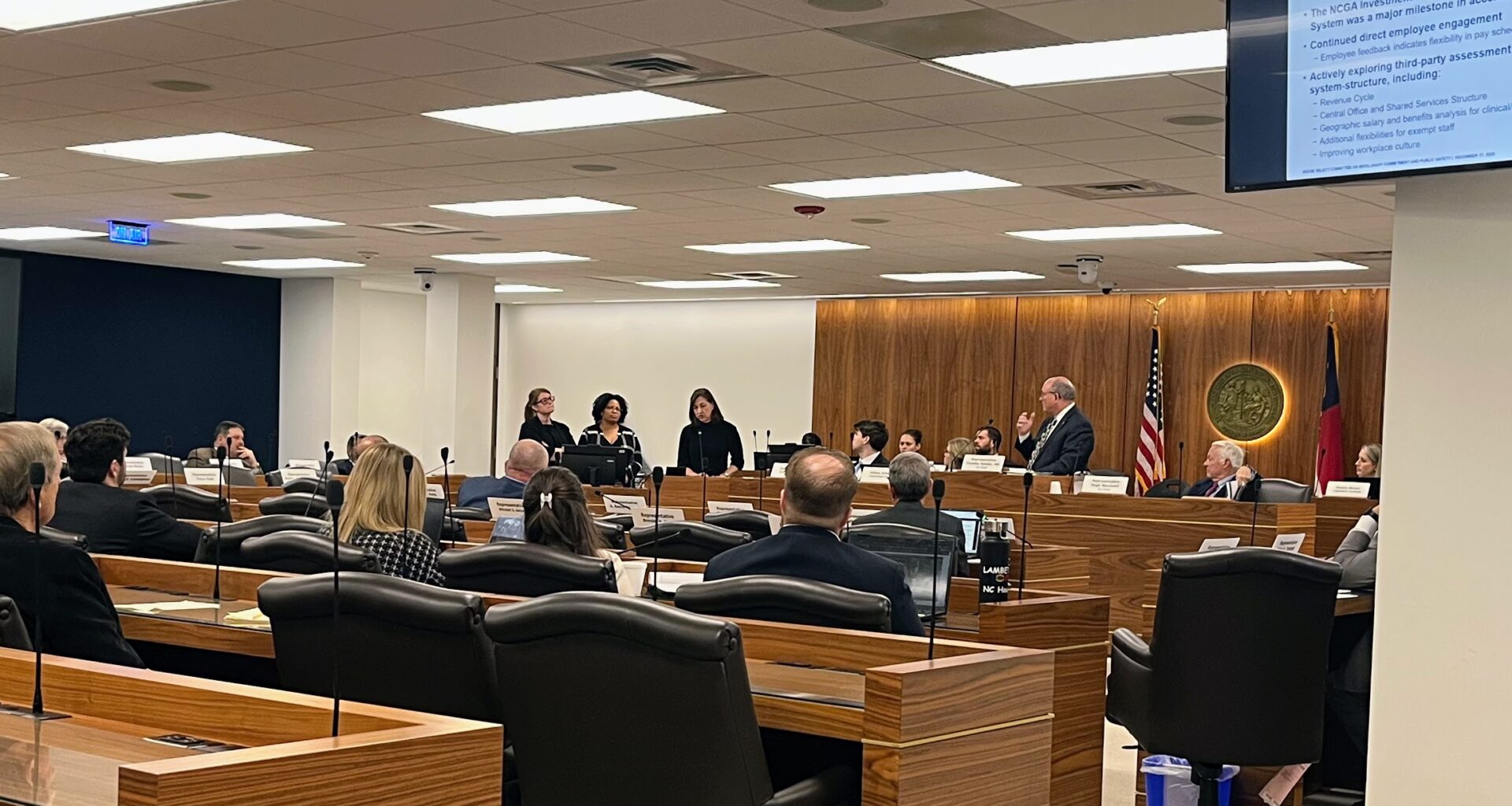
North Carolina lawmakers on a recently formed committee tasked with examining the involuntary commitment process and public safety met in January and February to learn more about outpatient commitments and heard from experts and state officials on these issues. Missing from the lineup of presentations were people with mental health issues who have been through the system and those who advocate for the rights of people with psychiatric disabilities.
One thing committee members learned is that though North Carolina has had outpatient commitment law on the books for decades, there is no current data on how often it’s used. Meanwhile, the mental health infrastructure that supported outpatient commitments has deteriorated. Lawmakers heard from state officials about ways to make this controversial tool more effective.
Who is outpatient commitment for?
Committee members from the state House of Representatives say they’re looking for ways to address the revolving door of people with severe mental illness who cycle in and out of emergency departments, jail cells and psychiatric hospitals.
Since November, the House Committee on Involuntary Commitment and Public Safety has been meeting monthly to better understand the effects of Iryna’s Law, a bill passed hastily last year in response to the fatal stabbing of Iryna Zarutska, a passenger on a commuter train in Charlotte. The man accused in the crime has a history of mental health issues and involvement with the state’s judicial and carceral system.
During the hours-long monthly committee meetings, lawmakers have heard from experts and state officials about the problems plaguing the state’s intertwined mental health and criminal justice systems.
In a presentation to lawmakers in January, Carrie Brown, psychiatrist and chief medical officer at the N.C. Department of Health and Human Services, was careful to note that involuntary outpatient commitments are not appropriate for the vast majority of people with a mental illness.
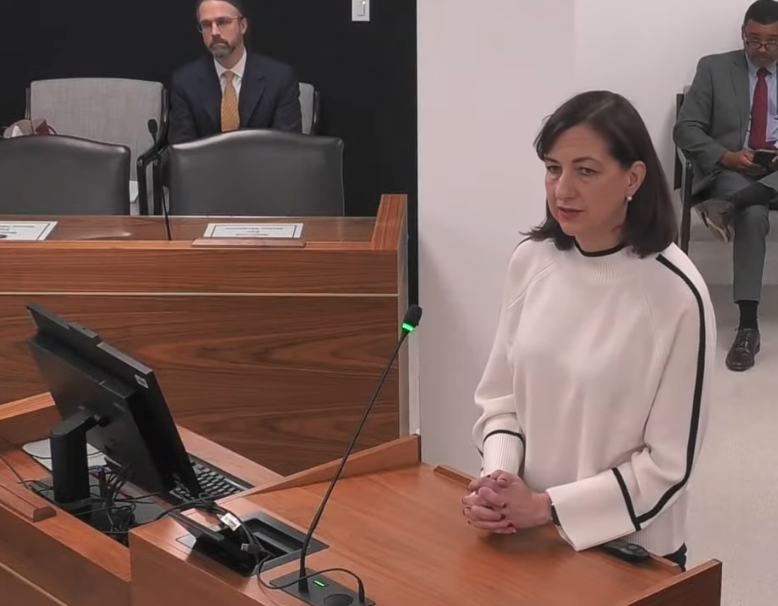 Carrie Brown, DHHS’ chief psychiatrist and chief medical director for North Carolina’s state-operated health care facilities, speaks to lawmakers about outpatient commitment during an IVC committee meeting on Jan. 14, 2026.
The target population for involuntary outpatient treatment is narrow: people with severe psychotic disorders who lack insight into their own illness and, because of that, refuse treatment and medication. An additional criterion would be having a documented history of repeated hospitalization, incarceration or violence.
For these people, when their treatment breaks down in the community, Brown told lawmakers, the system has almost no mechanism to re-engage them before things deteriorate.
“We want to get upstream of that,” Brown said. “We want to be able to prevent crisis episodes, rather than only intervene at the time of crisis.”
Brown also stressed that better training for mental health examiners and judges is needed so they understand that outpatient commitment exists as an option for people who don’t meet the threshold for inpatient care but who still can’t safely manage themselves in the community without structure. She said the tool only works if it operates seamlessly alongside the rest of the mental health system.
That’s a tall order in North Carolina, where the behavioral health system has been in a state of near-continuous restructuring for nearly two decades. Many argue that the system has also been underfunded for years; it ranks near the bottom of all states in the U.S. in the amount of funding allocated to it.
North Carolina’s outpatient commitment law
North Carolina is one of 47 states that have outpatient commitment laws on the books. However, Marvin Swartz, psychiatrist and researcher at Duke University, told the committee there is no reliable data on if or how often it’s being used in North Carolina.
In 2001, Swartz conducted a study in North Carolina on outpatient commitments and found that these patients — when paired with intensive mental health services — were about a third less likely to be rehospitalized, had shorter hospital stays and showed less aggressive behaviors. People benefited the most when the orders lasted six months or longer.
However, he cautioned that the mental health system that existed when he conducted that study has eroded since the mental health reforms of the early 2000s. Swartz explained that when the state stripped counties of their responsibility to provide mental health care and shifted to privatized care, the responsibility for carrying out outpatient commitment orders became “very ambiguous.”
And much of the funding to support these patients disappeared.
“It sort of lost focus in that newly privatized system,” Swartz told the committee. “Privatizing the mental health system has been problematic. There’s probably no going back.”
While the outpatient commitment law in North Carolina still exists, Swartz said there’s no system capable of making it work.
Swartz conducted a follow-up analysis in 2002 and found that people under outpatient commitments felt more coerced into treatment more often, particularly Black patients and those with longer periods of commitment.
Do court orders make a difference?
Some researchers argue the court-ordered treatment doesn’t really improve outcomes. Instead, they say, it’s the enhanced mental health services that people receive that lead to better outcomes.
Mental health researcher Nev Jones recently published an analysis and webinar series discussing three randomized control trials of outpatient commitment conducted worldwide, including Swartz’s study in North Carolina. She concluded that there is no clear evidence that a court order — separate from the intensive services that typically accompany it — produces better outcomes than voluntary treatment. She wrote that voluntary programs such as Assertive Community Treatment and supportive housing programs have a well-established evidence base for improving outcomes for people with serious mental illness without being forced.
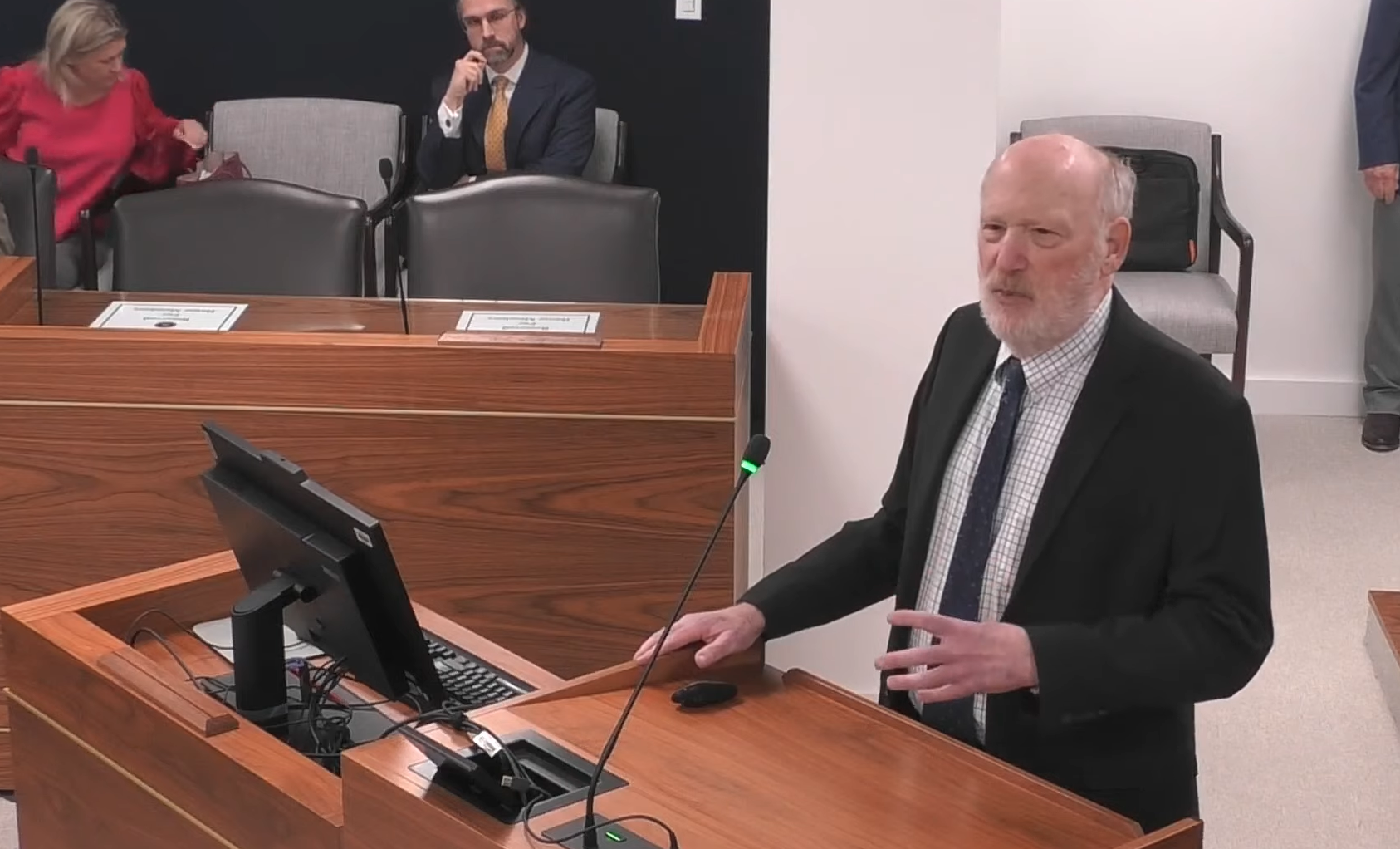 Marvin Swartz, a professor of psychiatry and behavioral sciences at Duke University School of Medicine, speaks to lawmakers on Jan. 14, 2026, about the research he conducted in the early 2000s on involuntary outpatient commitment.
Jones wrote that policymakers considering outpatient commitment “should weigh whether the documented costs of legal coercion, in combination with serious ethical concerns, are justified given the absence of evidence that court orders add benefit beyond what these voluntary services achieve.”
For instance, California launched a program called CARE Court in 2022 in an attempt to get people with serious mental illness off the streets and compel them into treatment. Some families who had struggled for years to get their loved ones help hoped this would finally be the answer.
A couple years into the program, though, many are disappointed by the outcomes. Nonprofit newsroom CalMatters reported that over a two year period, 2,421 petitions for CARE Court were filed, 1,090 were thrown out, 514 voluntary agreements were reached and only 14 CARE plans were involuntarily enforced. That’s in a state with a population more than three times that of North Carolina.
Rep. Tim Reeder (R-Ayden), co-chair of the committee and emergency physician at ECU Health, said that from his perspective the idea of forced treatment is hard to navigate.
He made a comparison to a medical issue: “We have people who have heart attacks and strokes and they continue to smoke. When they do that, they’re making bad health choices, but families don’t go to the magistrate and take out papers and say they’re not taking care of themselves,” he told NC Health News. “It’s the balance of patient autonomy versus beneficence and trying to help people.”
The issue of forced medication in the outpatient setting came up during the committee discussion. Rep. Charles Smith (D-Fayetteville), who said he approached the issue from his background as an attorney, pressed Swartz on whether requiring medication compliance in an outpatient setting could be justified, given that the patients in question may lack the capacity to meaningfully consent to — or refuse — treatment in the first place.
Swartz acknowledged the tension but said the answer is as much political as clinical. Forced outpatient medication has been “a red line in every state,” he said.
Over the last 30 years, there has been a shift toward giving people with disabilities, including mental illness, more autonomy. The 1990 Americans with Disabilities Act dictates they cannot be discriminated against for their disability and must be included in community life. The 1999 Supreme Court decision Olmstead v. L.C. went a step further, mandating that people with disabilities live in the least restrictive settings possible. Meanwhile, disability rights advocates contend that North Carolina already overuses and misuses involuntary inpatient treatment in a way that violates patients’ rights and causes long-term harm.
In North Carolina, forced psychiatric medication can only happen under an involuntary inpatient commitment except in emergencies. Noncompliance with an outpatient order can trigger transport to a hospital for reevaluation of their mental state. A patient could be involuntarily admitted to a hospital if they meet the standard of danger to themselves or others, but that threshold requires more than refusing medication.
Proposed changes
As the committee moves to wrap up its work, lawmakers launched an online portal for public comment that will close on April 1.
The state Department of Health and Human Services has proposed a slate of changes to the committee to strengthen North Carolina’s outpatient commitment law. Under the department’s proposals:
Any petition for outpatient commitment would need to document why it’s the most appropriate option for that individual.
Every court order would include a concrete treatment plan — specifying services, medications and a provider who has already agreed to accept the patient — so that expectations are clear from the start.
Each patient would be assigned a navigator responsible for ongoing monitoring and care coordination. DHHS proposed extending the maximum commitment period from 90 days to 180 days to allow enough time for stabilization.
The department proposed expansion and added accountability of intensive wraparound community services teams.
DHHS also proposed that noncompliance with an outpatient order would result in admission to psychiatric hospital.
Whether lawmakers adopt these recommendations is only the first hurdle. The harder question is whether they can fund it. Any proposed reforms that emerge from this committee — scheduled to be released in a report this spring — will need to clear the legislature and come with real dollars attached. This could be a significant challenge given the budget constraints in Raleigh and in Washington, D.C.
This <a target=”_blank” href=”https://www.northcarolinahealthnews.org/2026/03/02/nc-lawmakers-consider-outpatient-commitment-severe-mental-illness/”>article</a> first appeared on <a target=”_blank” href=”https://www.northcarolinahealthnews.org”>North Carolina Health News</a> and is republished here under a <a target=”_blank” href=”https://creativecommons.org/licenses/by-nd/4.0/”>Creative Commons Attribution-NoDerivatives 4.0 International License</a>.<img src=”https://i0.wp.com/www.northcarolinahealthnews.org/wp-content/uploads/2021/10/cropped-favicon02.jpg?fit=150%2C150&ssl=1″ style=”width:1em;height:1em;margin-left:10px;”>
<img id=”republication-tracker-tool-source” src=”https://www.northcarolinahealthnews.org/?republication-pixel=true&post=66410″ style=”width:1px;height:1px;”><script> PARSELY = { autotrack: false, onload: function() { PARSELY.beacon.trackPageView({ url: “https://www.northcarolinahealthnews.org/2026/03/02/nc-lawmakers-consider-outpatient-commitment-severe-mental-illness/”, urlref: window.location.href }); } } </script> <script id=”parsely-cfg” src=”//cdn.parsely.com/keys/northcarolinahealthnews.org/p.js”></script>