
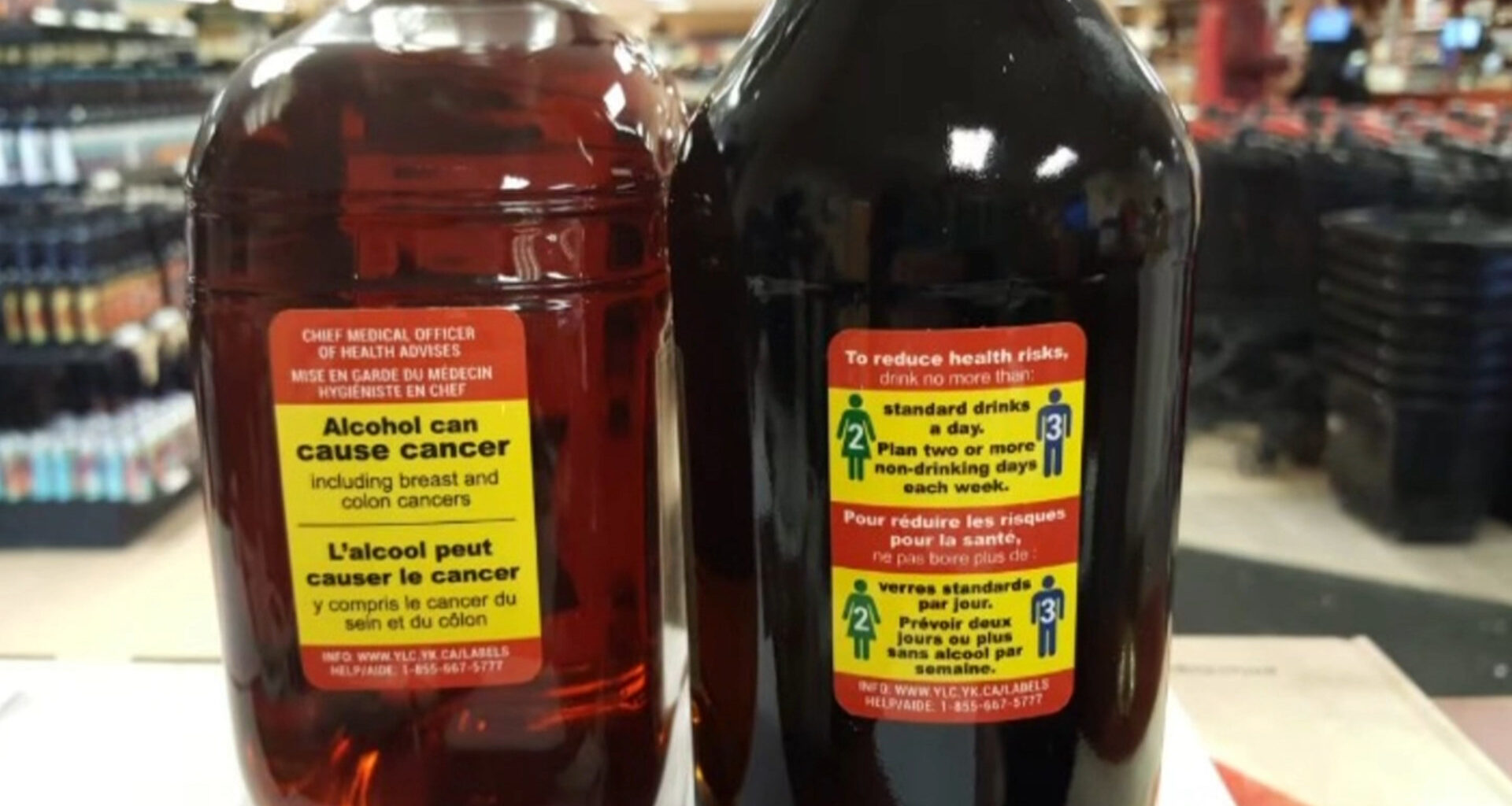
For years, researchers have been calling for warning labels on liquor that resemble those on cigarette packages, with clear text warning of the link of liquor with cancer.
Now, in a new study out of UVic’s Canadian Institute for Substance Use Research, scientists found that those labels could prevent hundreds of cancer diagnoses and deaths.
Researchers used modelling to see what the impact of warning labels and minimum price changes could have on cancer incidences and deaths.
Watch below:
They say the policy of charging a minimum of $2 per serving that bottle holds, combined with cancer warning labels, showed the strongest reduction, leading to 674 fewer cancer cases (down to 8,824 from 9,498) and 216 fewer deaths (going from 3,866 to 3,617)
“We believe this is the first study to model the impacts of warning labels on cancer cases and deaths,” said Canadian Institute for Substance Use Research scientist Adam Sherk.
The reduction was largest in lower-income populations and younger age groups.
“It’ll move people away from those very cheap, high strength products where we can get a lot of alcohol for not very much money,” said Sherk. “And this will reduce our consumption over time, and that will have reduced impacts and health benefits.”
According to the Canadian Institute for Substance Use, researchers consider less than two drinks weekly to be low risk. Between three to six drinks a week you’re at an increased risk for things like breast and colon cancer. After seven, your risks for heart disease or stroke also increases rapidly.
Drinking is linked to 7,000 cancer deaths in Canadians every year. And the more you drink, the higher your risk.
Despite the link, alcohol in Canada doesn’t have mandated warning labels.
“Safe to say it’s time,” said Sherk.
The new research comes as the Canadian Senate considers a bill that would mandate warning labels on alcoholic drinks. Bill S202 is now headed for a third reading. If passed, it would go to parliament. But scientists like Sherk aren’t confident politicians will stand behind the bill.
“The federal government has not shown an inclination, at least at this point,” said Sherk.
In B.C., the Liquor and Cannabis Regulation Branch “is not currently considering drafting policy that would require liquor retailers to place warning stickers on products,” according to the Ministry of Agriculture.
In 2018, Yukon tested putting warning labels on bottles, but just weeks in to the pilot project, the province pulled the plug after push-back from the Canadian alcohol industry.
Years later, that lobby in Ottawa is still going strong, says Sherk.
But some say the health of Canadian’s should take precedent over profit.
“I think people should be aware of what you’re putting in their body, and if you’re withholding that, people can’t make an informed decision” said UVic student Sofia Spiteri.
READ PREVIOUS: Senate debates bill to add warning labels to alcohol packaging