
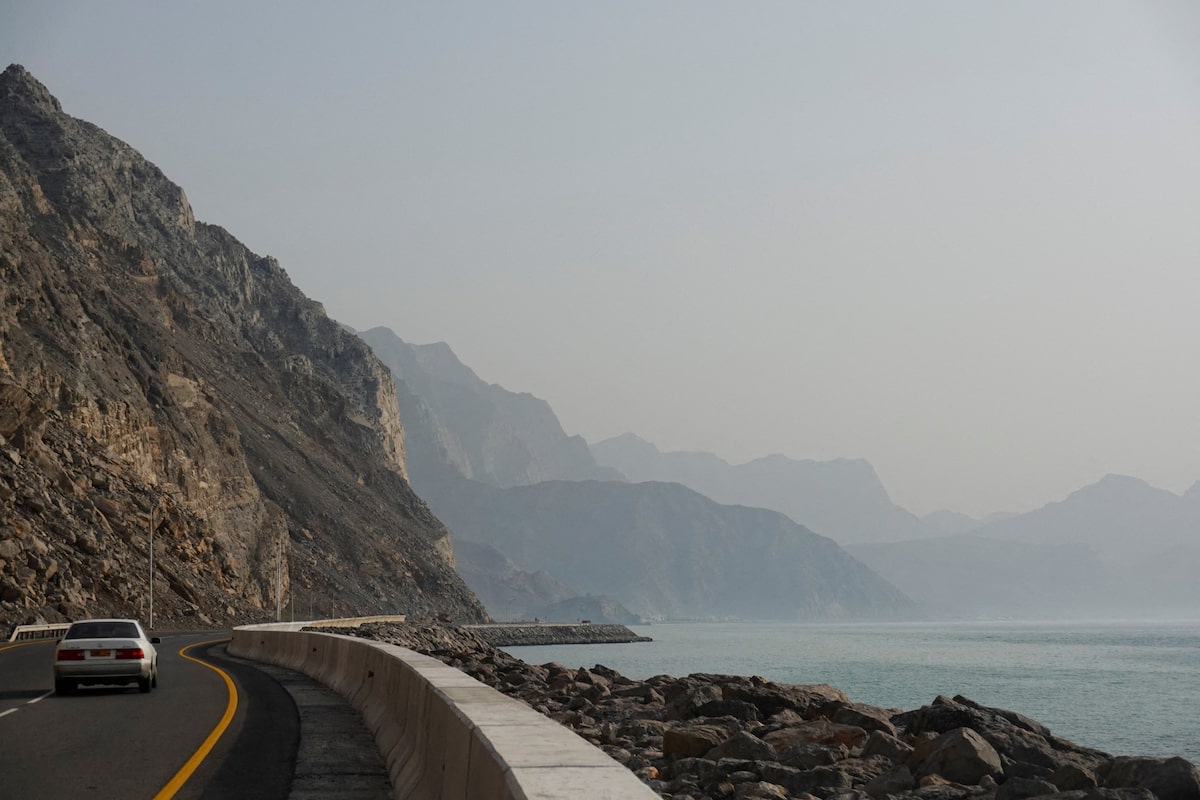
The coast of Musandam overlooking the Strait of Hormuz. U.S. President Donald Trump’s offer of discounted insurance and escorts by navy vessels in the dangerous strait could help lessen the disruption of war and ease oil prices.Amr Alfiky/Reuters
Energy prices surged on Tuesday as the conflict in the Middle East intensified, though an offer by U.S. President Donald Trump to provide insurance and military escorts for ships in the Persian Gulf could ease pressure on jittery oil and gas markets.
As Israeli and U.S. warplanes launched fresh attacks on Iran, and Israel invaded southern Lebanon, Mr. Trump said that he ordered the U.S. development finance agency to provide discounted political risk insurance and guarantees for all commercial ships, especially energy tankers, sailing through the Gulf.
If necessary, the U.S. Navy will escort tankers through the Strait of Hormuz, he wrote on social media.
The rising energy prices are a direct result of the effective closing of the strait, the narrow channel – 33 kilometres across at its narrowest point – that separates the Persian Gulf from the Gulf of Oman and the Indian Ocean. Normally, one-fifth or more of the world’s oil and gas, in the form of liquefied natural gas (LNG), passes through the strait, then on to Asian and European markets.
On Sunday, the Economist Intelligence Unit reported that almost 150 tankers had dropped anchor across the Persian Gulf over fears of attacks, halting exports and pushing up insurance costs.
What to know about the Strait of Hormuz
Before Mr. Trump’s offer to shippers on Tuesday, the markets were rattled from the onset of European trading in the morning, on the fourth day of the attacks on Iran and ever-widening Iranian retaliatory strikes in the region, and the worries spread to North America as the day wore on.
Israel hit Hezbollah strongholds in southern Beirut and launched a ground incursion in southern Lebanon. The Israeli military issued dozens of new evacuation orders in Lebanon on Tuesday. At least 30,000 people have been displaced in Lebanon, according to the United Nations.
The U.S. embassy in Riyadh was hit by two Iranian drones, triggering a fire. Iran’s Revolutionary Guards targeted a U.S. airbase in Bahrain, according to a statement carried by the official Islamic Republic News Agency.
International benchmark Brent crude settled up 4.7 per cent at US$81.40 a barrel, after topping US$83.50 earlier. West Texas Intermediate settled at US$74.56, also a 4.7-per-cent gain. It is up 11 per cent since Friday, the day before the U.S. and Israel began their bombardment of Iran.
Natural gas has far outpaced oil’s rise. The European price, known as TTF, the benchmark for gas traded at the Netherlands hub, was up about 25 per cent after gaining almost 50 per cent the day before. Gas prices in Asia, which is highly dependent on LNG from the Persian Gulf states, jumped 65 per cent.
The war between Israel and Iran is widening, with Israeli Prime Minister Benjamin Netanyahu on Monday playing down fears of an ‘endless’ war, while also expanding operations across Tehran, Lebanon and the Gulf.
Reuters
Economists have warned that sustained high prices for oil and gas could provoke inflation, making it less likely that central banks in the U.S., Canada, Britain and the European Union will trim interest rates. Economists at Deutsche Bank on Tuesday said that “should energy prices stick at current levels, we would expect [Bank of England] rate cuts to slow.”
However, the action in oil futures suggests traders are betting that the disruptions won’t be long-lasting, said Jeremy McCrea, analyst at Bank of Montreal. Contracts for WTI crude for delivery in months beyond June 2026 have not risen to the same degree as earlier contracts, which have spiked.
The escalating energy prices – amid no sign the war will end soon – sent stock prices down in North America and Europe, and more intensely than the previous day.
In Canada, the Toronto Stock Exchange composite index tumbled 756 points, or more than 2 per cent. Despite the sharp gain in oil prices, Canadian energy stocks joined the rest of the market downward, with the S&P/TSX capped energy index falling 0.42 per cent.
A gusher of capital into Canadian oil and gas producers, led by U.S. index funds in recent months exiting the AI sector, had led to a sharp runup in their stock prices, Mr. McCrea said. The group is up nearly 25 per cent from the start of the year. Now, it is being caught up in the overall market swoon, he said.
Oil and gas leap and stocks slump as war in Iran intensifies
Capital Economics said that the latest oil and gas prices don’t, so far, constitute a crisis. If, however, oil climbed to US$90-US$100 a barrel and stayed there, it would intensify inflation and prompt interest-rate measures by central banks, it said.
Mr. Trump is also facing pressure domestically as he struggles to persuade voters that retail gasoline prices are set to fall. His offer of discounted insurance and escorts by navy vessels in the dangerous strait could help lessen the disruption and ease oil prices.
Various reports said 25 LNG carriers were anchored on either side of the strait. QatarEnergy, the world’s largest LNG company, shut output on Monday after its production site was hit by Iranian drones, though the damage appeared minor. Production is unlikely to restart as long as Hormuz is closed to ship traffic.
“Given the central role of LNG exports in Qatar’s economy and in global trade flows, we expect production to be restored within weeks rather than months,” Jan-Eric Fahnrich, a senior analyst at Rystad Energy, said in a research note on Tuesday.
Oil prices surge in response to Middle East conflict
However, the United States has become the world’s largest LNG exporter after eight terminals opened in the past 10 years. Another four are slated to be operating by 2028, including the first exports from Golden Pass LNG in Texas expected within weeks.
By contrast, Shell PLC-led LNG Canada became the first Canadian export terminal for liquefied natural gas when it began shipping to Asia from Kitimat, B.C., in mid-2025.
Prime Minister Mark Carney announced in September that LNG Canada’s Phase 2 expansion plans had been added to his government’s list of major projects of national interest to be considered for fast-tracking.
LNG Canada’s co-owners are financial backers and also “offtake partners” – long-term buyers of LNG in Asia.
Canadian Natural Resources Minister Tim Hodgson said instability throughout the world, as exemplified by the conflict in the Middle East, is placing supply chains increasingly at risk, putting countries on a search for stable suppliers of energy and other resources.
“And you start looking around the world and say, how many countries are there like that? It’s not that many. Canada stands out,” he said in an interview.
With a report from Adam Radwanski