
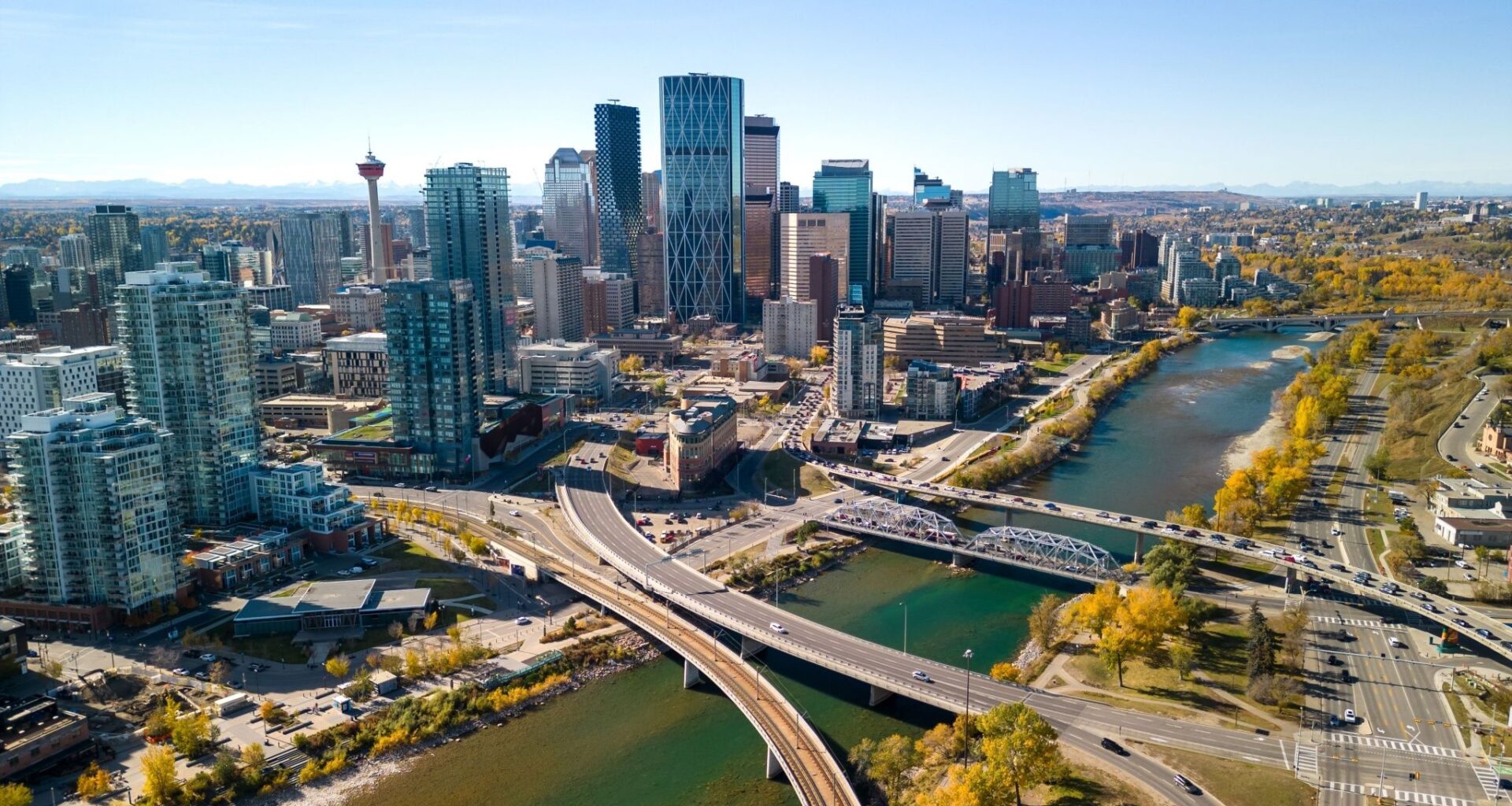
If you’ve ever wondered what Calgary looks like through an outside lens, a German YouTuber just gave the city a review.
The video titled “How did Calgary grow so insanely big?” comes from German content creator Imperatur. His videos, which have amassed over 124 million views combined, feature different cities from around the world.
He notes Calgary as a city that “makes no sense at all,” because most major cities in North America, like New York and Toronto, are close to the water, and while Calgary has the Bow and Elbow Rivers, “neither is deep enough for a cargo ship or commercial transport.”
He then raises a question: “Why did a city of 1.6 million people grow here, in the middle of what was once considered a remote wilderness?”
Imperatur says that while Calgary might seem to be in the middle of nowhere, its location actually has a strategic geography that shaped the city in its early days. He delves into Calgary’s history and the “catalyst” for the city, the Canadian Pacific Railway (CPR).
“Because CPR owned the land, they dictated exactly how the city would function. They laid out a rigid, efficient grid that ignored the winding river banks and placed the tracks directly through the centre of the townside,” he said.
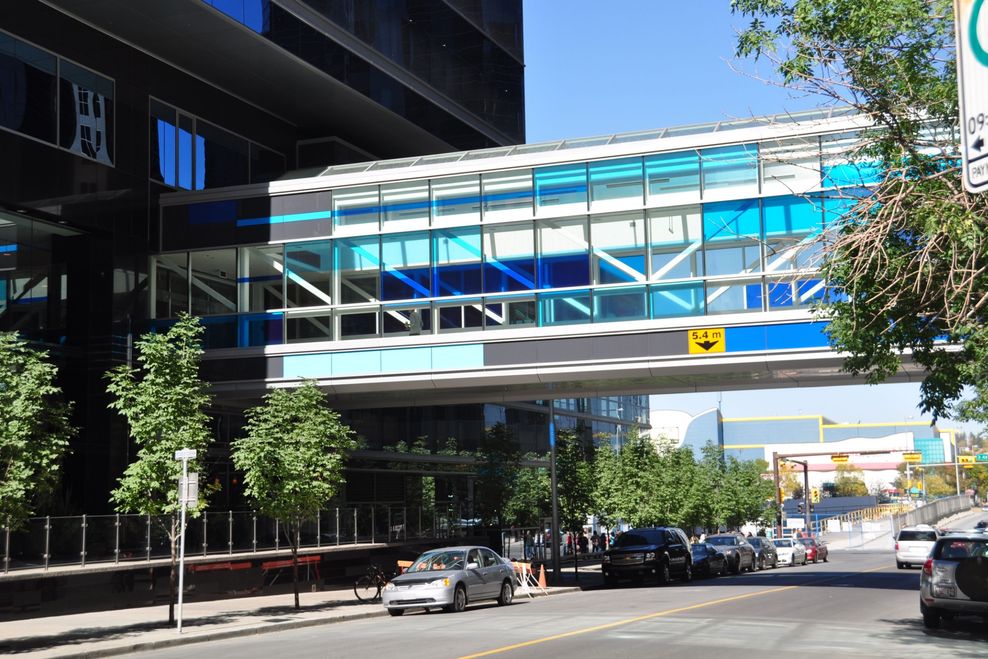
Imperature also talks about Calgary’s weather and the creation of the city’s Plus 15 network. “Because the surrounding prairie offers no natural barriers to wind or extreme cold, the city had to innovate to keep its dense core functional year-round.”
Jeff Whyte/Shutterstock
Spanning 16 kilometres and connecting more than 130 buildings, “This infrastructure transformed the downtown into a two-storey city… It allows Calgary to maintain a vertical dense urban centre even when the temperature outside drops far below freezing.”
He then goes on to talk about Calgary’s industrial sectors. “The city’s true footprint is defined by industry. Because Calgary has no ocean access, it had to become an inland port.” He mentioned the Canadian Pacific Kansas City (CPKC) as a “giant sorting machine” for the region’s goods, like grain and fuel.
He also noted that Calgary is the headquarters for nearly all of Canada’s major oil and gas companies, engineering and pipeline firms that support them, and more growing industries.

LisaBourgeault/Shutterstock
“Huge distribution centres for companies like Amazon and Walmart have appeared.. Utilizing the city’s position as an economic gateway.” Imperatur then makes note that a city built to support trains and big trucks “paved a way for a city built almost entirely for the automobile.”
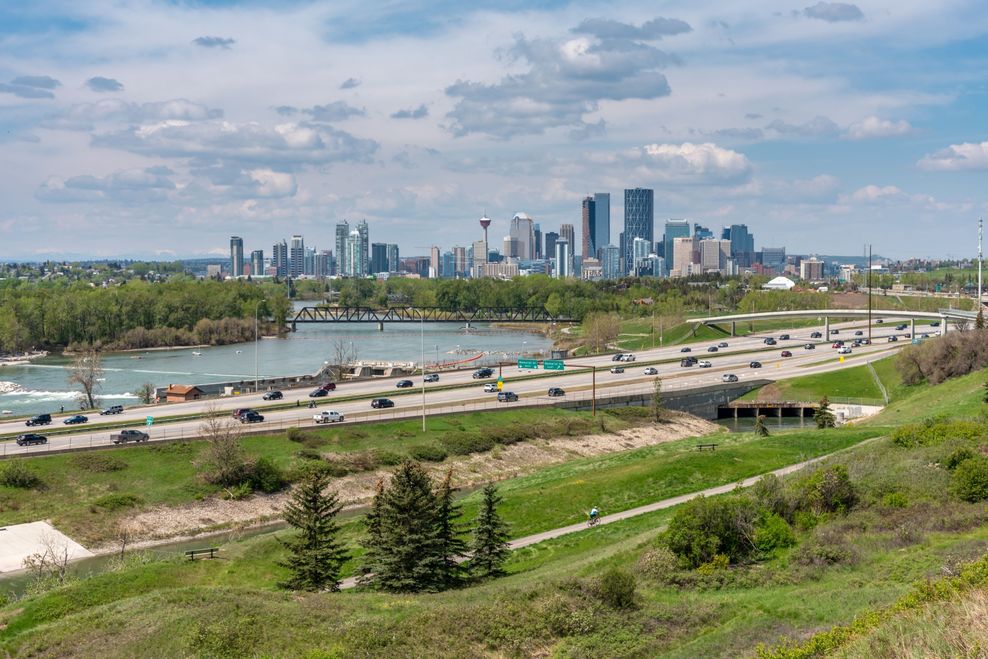
Following typical North American design, older, inner-city neighbourhoods are designed in a grid pattern, while newer communities feature winding roads and cul-de-sacs. While they are intended to keep residential streets quiet, it can make it quite difficult to travel on foot.
“This car-dependent layout has created a very specific urban experience. The infrastructure prioritizes flow and car efficiency over local walkability… This design choice made Calgary a logistical powerhouse, but it also made a car a mandatory tool for survival.”
Jeff Whyte/Shutterstock
For this reason, he calls Calgary a “city of extremes,” noting that Calgarians’ daily lives are often split into two different worlds: either near towering skyscrapers and the Plus 15 network or long commutes across the city because it’s so spread out.
He mentions the CTrain as “a cute light rail system,” but also notes the fact that it only has two lines is “mindboggling.”
Calgary isn’t the only Alberta city Imperatur has delved into. He has also looked into our neighbours to the north, Edmonton.