
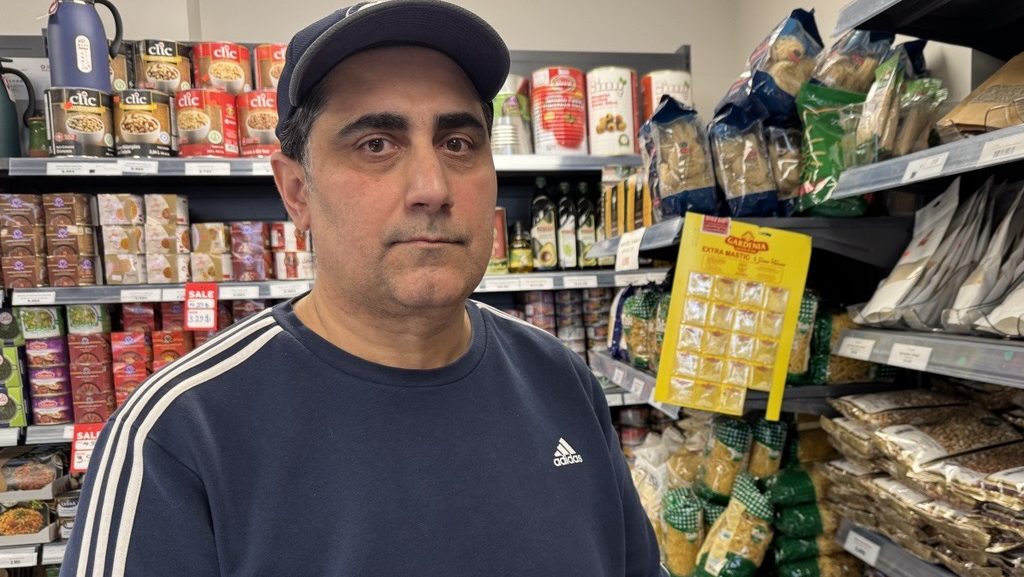
Montreal-based Iranian grocery store owner Reza Nikzad says he expects his shelves to soon empty out following a food export ban imposed by Iran on Tuesday, one of the latest episodes in the escalating war.
“There’s a lot of stress and we don’t know how this is going to end,” the owner of Marché Bazaar in Westmount said.
The specialty grocery store provides the essentials for anyone missing the taste of home, Nikzad said. Shelves are stocked with specialty Iranian rice, tea and canned goods. A nearby counter also serves fresh Iranian food and baked goods.
“There are some unique products which Iranian consumers like to have it all the time,” he said. “The rice is a very special product for them.”
He says the shop draws not only members of Montreal’s Iranian community, but also curious locals.
“They come to our store to learn about the culture of the food,” he said.
But with Iran halting food exports this week, Nikzad said the supply chain will “for sure” be affected.
He said he learned of the export ban through news reports and has already contacted his suppliers in Ontario. The short-term outlook isn’t promising.
“We have whatever is on the shelf at the moment” he said. “In fact, I was in touch with our local supplier in Ontario in the last two, three days. There is no availability in the short-term at the moment.”
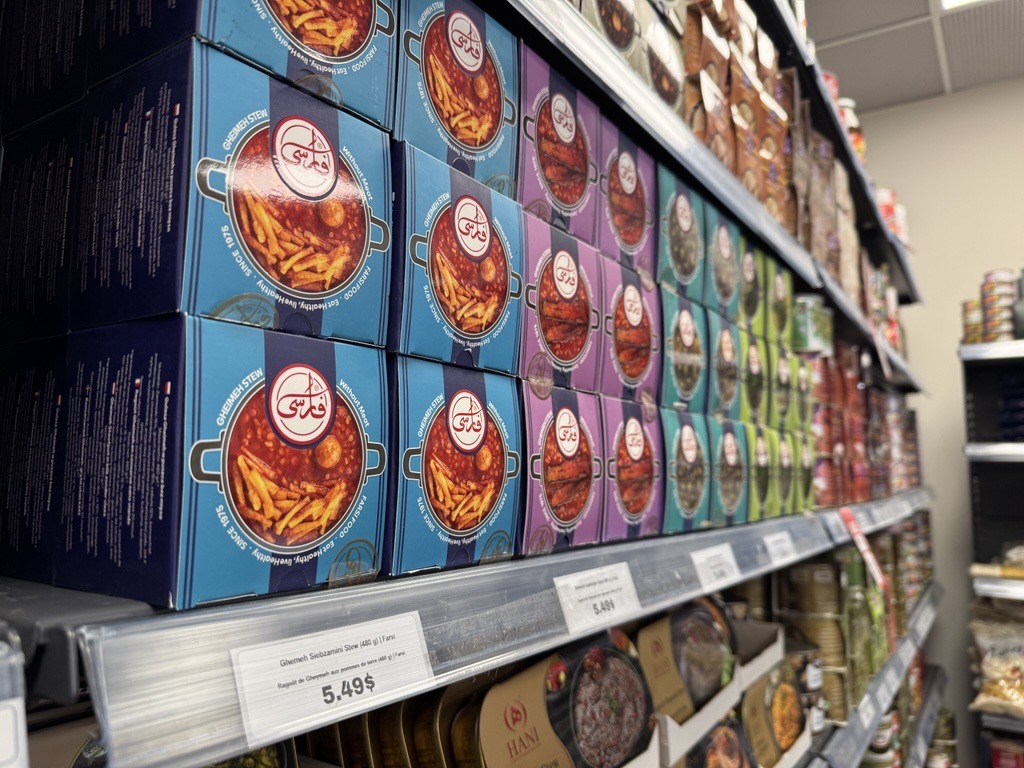 Iranian-imported ready-made meals at Marché Bazaar Westmount (Zachary Cheung, CityNews)
Nikzad said he is looking at other options, including sourcing products from other countries or turning to locally produced substitutes.
“We have to adapt to the alternative,” he said.
Beyond food exports, the conflict is also affecting global energy markets. Iran closed the Strait of Hormuz on Tuesday, a choke point through which roughly 20 per cent of the world’s oil passes.
While Canada does not import oil from Iran, economist Moshe Lander said global disruptions will still ripple here.
“Most energy has now become a global commodity, certainly oil and gas are,” Lander said. “So when you have any disruption in global supply, then it is going to have an impact here at home.”
If countries that previously relied on Iranian oil begin seeking supply elsewhere, that pushes up global prices. Lander says Canadians will likely notice it first at the gas pump.
Higher fuel costs can also drive up transportation expenses across a country as large as Canada — costs that often get passed along to consumers.
“There’s no way that this is going to have a non-inflationary effect the longer that it lasts,” Lander said.
Nikzad said those pressures will likely show up here at home. While prices at his store haven’t gone up yet, he said, a dragged-out war in the Middle East will “definitely” force him to do so.
Marché Bazaar is a slice of home for regular shoppers like Bahar Mirzazadh, who said the store represents more than just groceries.
After being cut off from her family in Iran due to internet shutdowns, Mirzazadh said gathering places like Marché Bazaar help during times of uncertainty.
“It’s really good for us because we support each other,” she said. “War, it doesn’t have any good side for the normal people. It’s just good for politics, not for us.”