
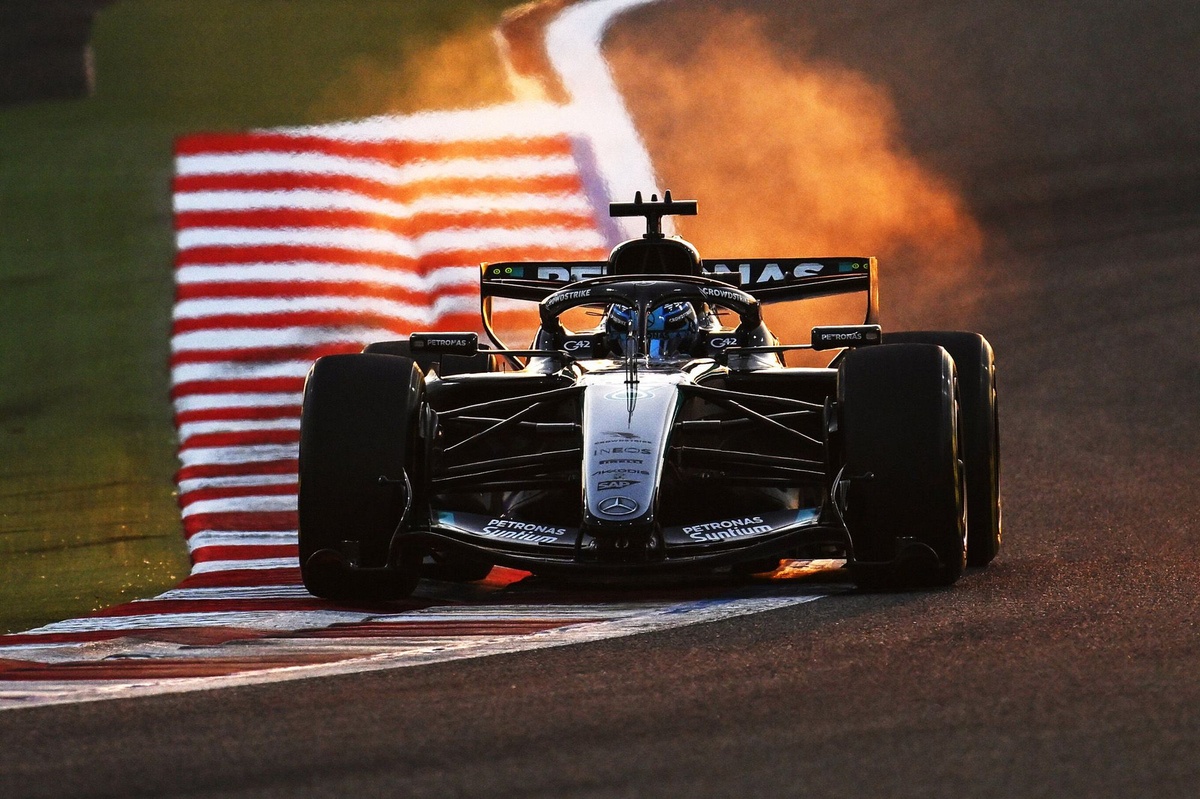
The weeks leading up to the new season have demonstrated two aspects that Formula 1 is particularly good at: blowing a topic completely out of proportion and turning it highly political – but then also finding a compromise that seems to offer something for everyone.
The discussion about the compression ratio, and therefore about Mercedes’ 2026 engine, has shown both aspects in their purest form. It is no coincidence that this issue first leaked in German media at the beginning of January, as some parties could use that publicity to increase the political pressure a little. It was accompanied by a joint letter from Audi, Ferrari and Honda to the FIA, after which the topic quickly took on a life of its own.
At the governing body, it was immediately made clear that all the fuss was somewhat exaggerated, as Nikolas Tombazis considered the performance difference to be much smaller than some had assumed. One important factor should be mentioned: in the public discussion it was rather easily assumed that Mercedes would actually reach the full 18:1 ratio while running – the limit under the previous regulations – whereas in reality the situation appears to be more nuanced.
Whether the FIA liked the uproar or not, this is typical F1. Every potential advantage, no matter how big or small, is viewed with suspicion and fiercely challenged. The leaking of information and the joint letter to the FIA are part of that, just like Toto Wolff’s response, in which he spoke out strongly against “secret meetings” between rivals. It is the political game in its purest form.
A textbook example of an F1 compromise
But just as that is typical in F1, the compromise that eventually emerged is equally characteristic of the series. First of all, the FIA was very keen to nip the issue in the bud before the season opener. That does not mean it won’t be a topic of discussion going forward, but it does mean the FIA wanted to do everything possible to ensure it would not overshadow the start of F1’s new era.
The final compromise offers something for all parties. The introduction of the second measurement – meaning that alongside the check at ambient temperature there will also be one at 130 degrees Celsius – has been brought forward from 1 August to 1 June. The implementation comes earlier than initially proposed, which can be seen as a positive outcome for those who believe that Mercedes gains an advantage from the current situation.
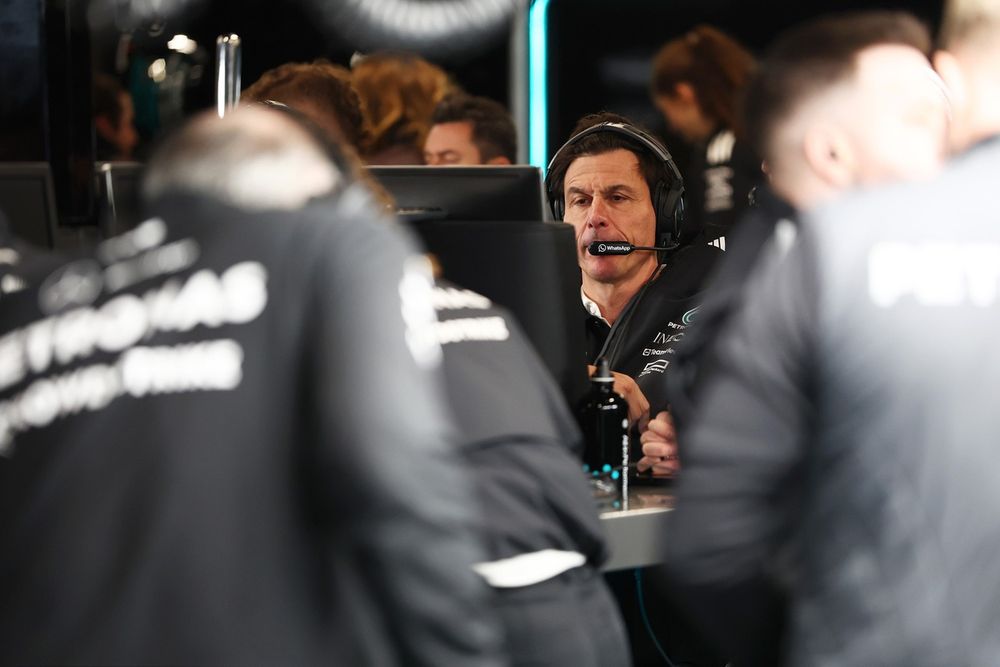
Wolff took aim at his F1 rivals before a compromise was agree unanimously
Photo by: Peter Fox / Getty Images
However, the FIA’s final proposal was adopted unanimously, which implies that Mercedes can also live with it. That is because the compromise also contains something for the brand with the three-pointed star. Mercedes was particularly keen for the cold test to remain in place, something Wolff emphasised in Bahrain.
“I think the way it’s been done now is that it needs to be compliant to the regulations when it’s cold and when it’s hot, so it doesn’t give anybody an advantage. I think the attempt from the other guys was to have it measured only hot, so they could actually have it outside of the regulations [when] cold. So now it’s a fair game for everyone.”
Read Also:
While Mercedes can achieve a higher compression ratio when the engine is hot – something that is often linked to the expansion of materials in the pistons and/or connecting rods – the opposite normally happens: as the engine becomes warmer, the compression ratio can actually decrease. And that is precisely why Mercedes wanted the cold test to remain.
The FIA’s final solution represents a classic compromise: the specific date is a small win for one camp, while the temporary retention of the cold test is a small win for the other
Wolff feared a scenario in which rivals could do more or less the opposite if only a hot test existed – in other words, complying with the 16:1 limit at the 130-degree test, but running a higher ratio under colder conditions if those were no longer measured. That would not necessarily provide a direct advantage under hot conditions, but it would offer rivals a relatively simple way to reach the absolute limit when the engine is at its operating temperature.
To close off that potential loophole, Mercedes strongly pushed for the cold test to remain. And so the FIA’s final solution represents a classic compromise: the specific date is a small win for one camp, while the temporary retention of the cold test is a small win for the other. From 2027 onwards, the compression ratio will only be measured at 130 degrees Celsius, but that element is far less politically sensitive, as everyone will have sufficient time to adapt.
New team principals, new political reality?
The way this discussion has been handled also says something about the new political reality in F1. Despite the opposing viewpoints, it has largely been handled in a constructive way and relatively under the radar. The pure polemics of the past appear to have faded somewhat, in line with the trend of more and more engineers being promoted to the role of team principal.
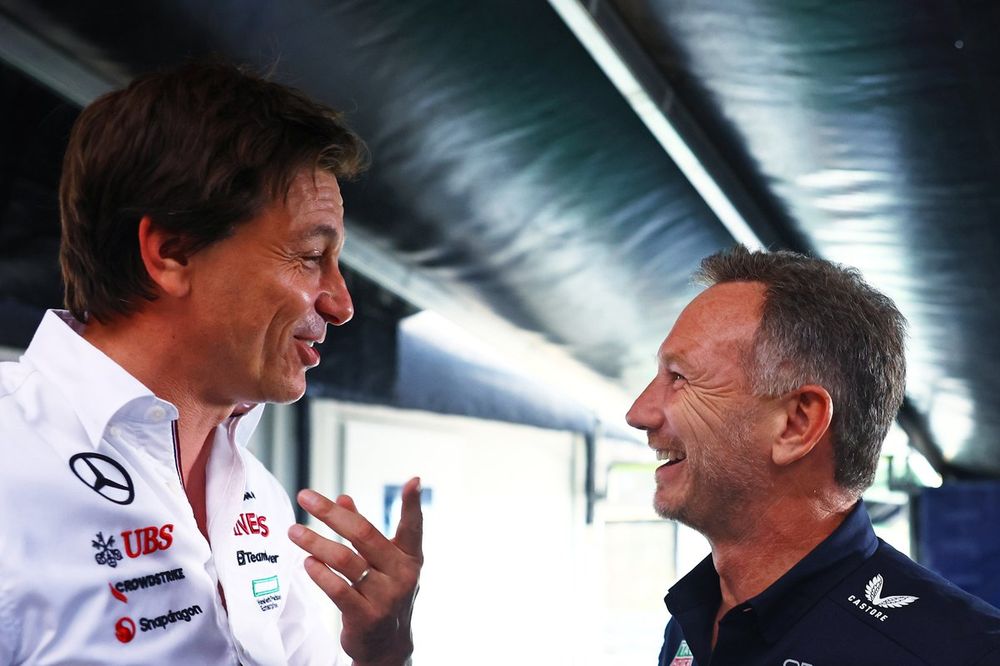
Public spats between team bosses has faded in recent times
Photo by: Red Bull Content Pool
That has made the political landscape a little more pragmatic, with a different type of team boss and fewer confrontations such as those between Wolff and Christian Horner in the recent past. Of course, every team principal still defends the interests of his own organisation – as any leader should – but the subtle difference lies in the way it is done in the public domain.
Where Wolff and Horner often engaged in verbal sparring – exchanges that had considerable entertainment value to some fans and followers – that public element of the political battle has now faded. Whether that is a good or a bad development largely depends on one’s perspective.
Wolff once joked that F1 still needs “assholes”, and that the series requires that show element in the political arena to a certain extent. In 2026, that is considerably less than before. Last year there were still a few barbs exchanged between Red Bull and McLaren, but it never came anywhere near the level of 2021, and certainly not after Laurent Mekies took over in the summer.
The 2021 title fight was iconic both on and off the track, but with this new type of leadership it does not seem likely to return any time soon. Mekies explained that it is partly a deliberate choice: he wants to focus on his own team’s performance rather than on political sparring.
“When it comes to sporting fairness and respecting the competition, we think we can do both: being on the very limit and being respectful to the competition. Sport is a battle between giants, and we feel very strongly in that fight, and we respect our competitors,” Mekies said. “All we have done is to make sure that we, as a group, can concentrate on pure racing and not getting too distracted by the noise around. And do what we fundamentally love to do, which is to try to get these cars to go faster on the track. So that’s all really. Concentrate on what we love to do, push harder than anyone else and try to enjoy it in the process.”
In recent weeks this trend has been visible once again. Yes, opinions differed significantly, but in public it has all remained relatively restrained. The political battle in F1 is still just as alive as ever – and it always will be – but with the current figures at the helm, the show element is somewhat reduced compared to what it once was. Less spectacular to watch perhaps, but a bit more constructive behind the scenes.
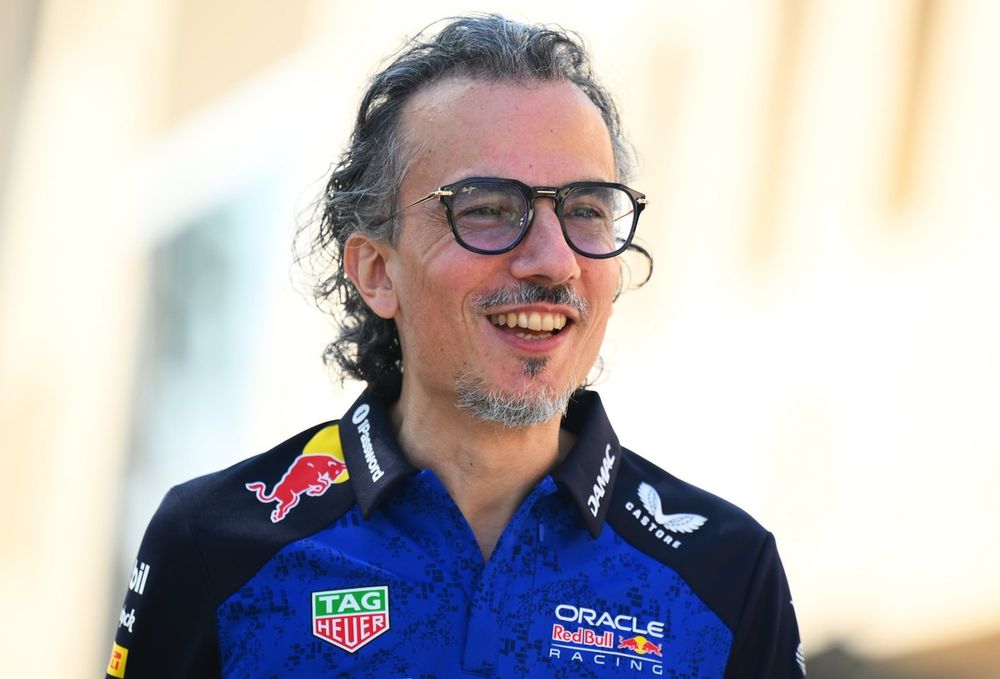
Still political but more collaborative – the new trend within the F1 team bosses
Photo by: Simon Galloway / LAT Images via Getty Images
We want to hear from you!
Let us know what you would like to see from us in the future.
– The Autosport.com Team