
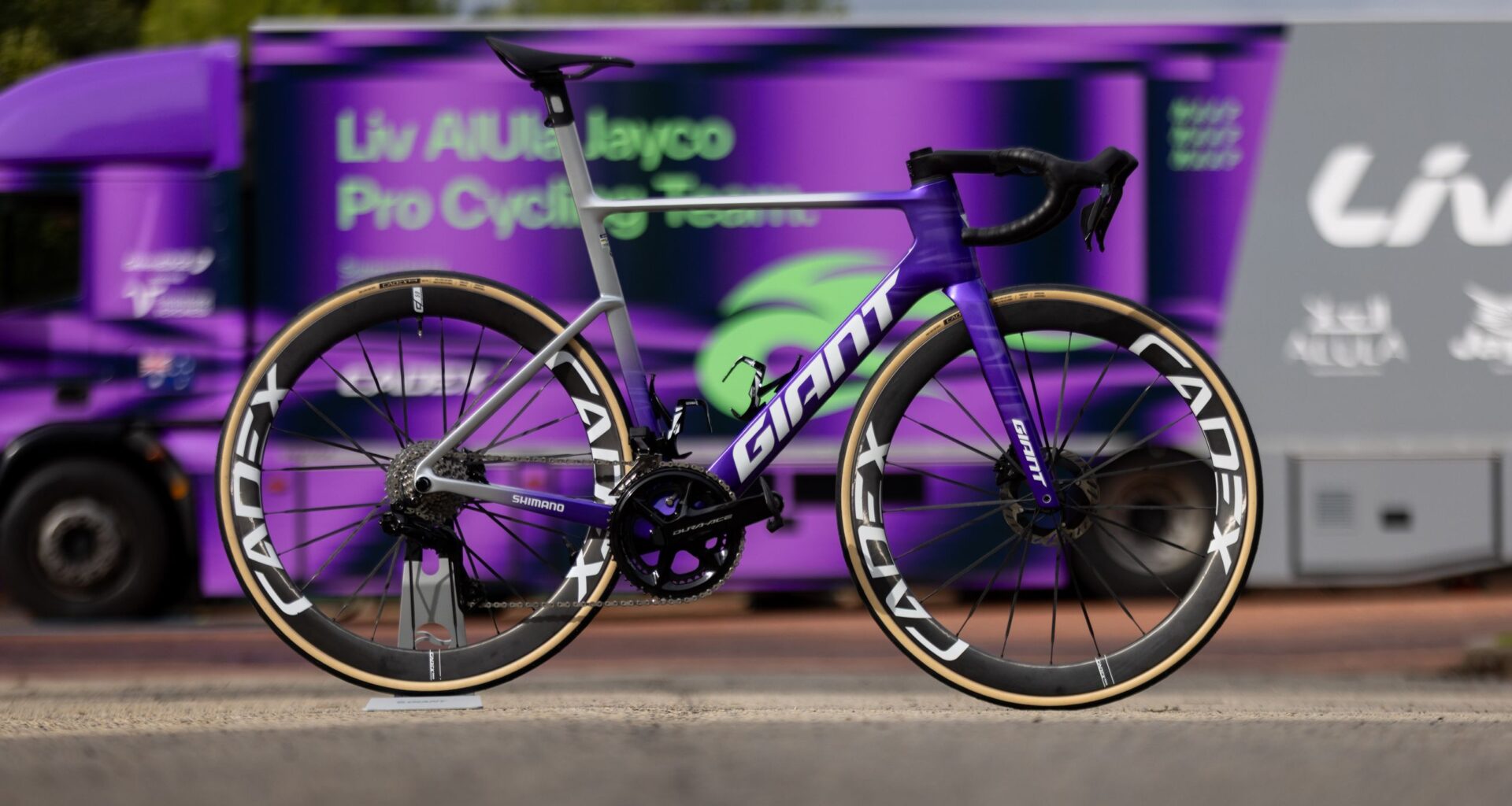
Today, Giant has launched new versions of its Propel aero bike, along with a corresponding update from its sister brand, Liv, to its EnviLiv platform.
The outgoing model is in its fourth calendar year of production, and such are the product cycles in the road bike world that it was starting to feel overdue for a refresh.
The headline figures are an 18.4 watt saving over the outgoing model for the Propel, in the top spec SL variant, though there’s more to this figure than just aerodynamic improvements, but rather a system wide approach that has seen extremely modest changes to the frameset, and gains won in other areas of the spec package like the cockpit, wheels, and tyres. The EnviLiv offers up a significant, but smaller, gain of 8.62 watts.
You may like
A tweaked frameset
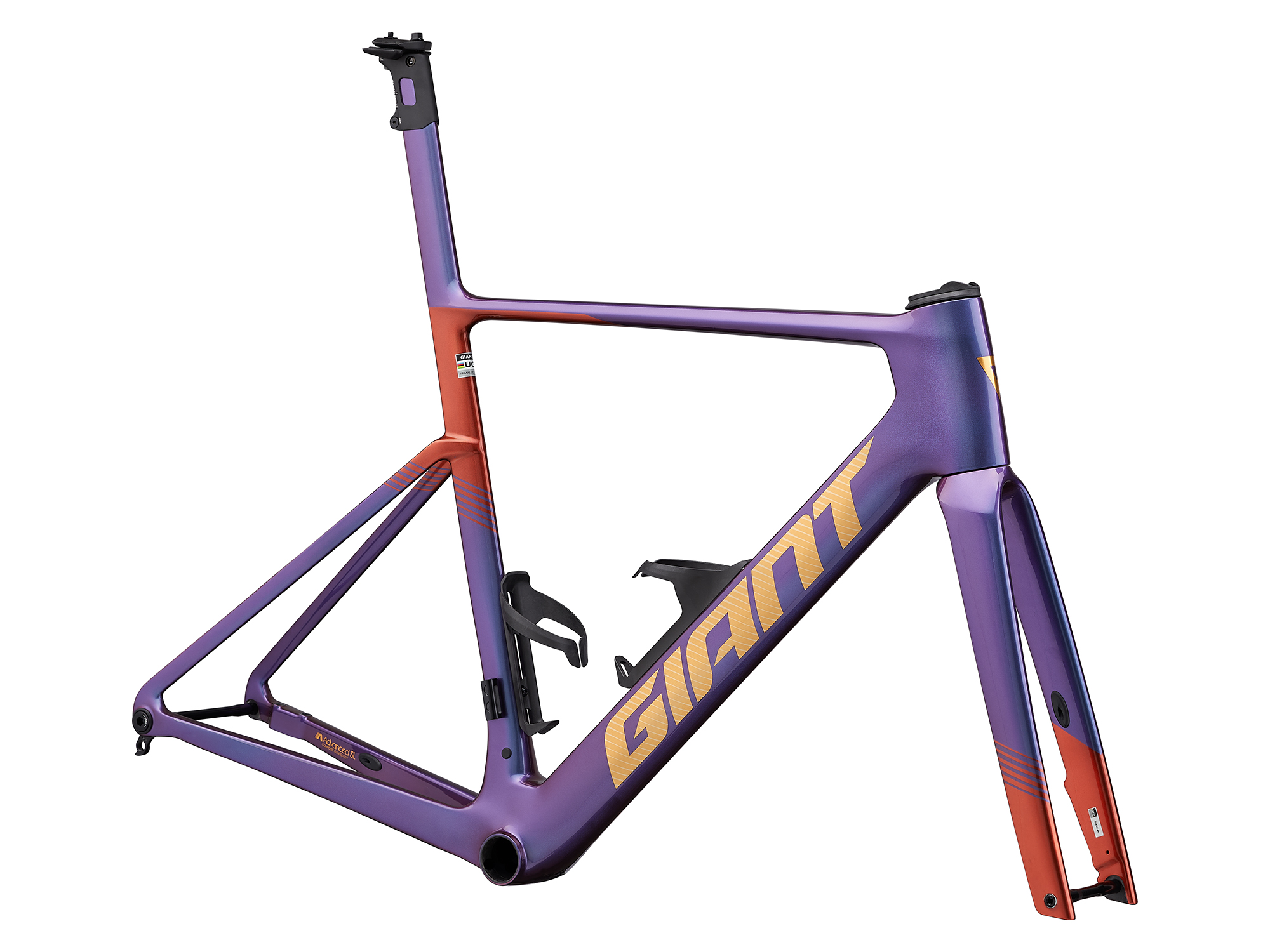
The frameset remains extremely similar to the old model (Image credit: Giant)
Back-to-back, it would be easy to mistake the 2026 Propel for the outgoing 2025 model. The shapes are extremely similar, with the dropped seat stays proving to be a key difference.
Many of the changes have been made under the hood, with tweaks to the manufacturing process creating a 45g saving in the frameset for a size medium. This has been achieved through the use of a single bladder for the front triangle rather than three, and more accurate cold cutting of the carbon sheets, avoiding any warping at the edges from excess heat that can come with laser cutting.
As well as being marginally lighter, the Propel is slightly stiffer, with a claimed 5.7% increase in the stiffness-to-weight ratio, and a 14.8% increase in ‘system handling efficiency’, though it isn’t overly clear what this second metric pertains to. The new EnviLiv also boasts a stiffer pedalling platform, with a 14.7% increase in pedalling stiffness.
It doesn’t appear that there have been any changes to the geometry of either platform, but vertical compliance has been increased by up to 25% at the rear end via the integrated seatpost, and by 12.8% up front via the cockpit, and tyre clearance has been increased to 32mm to account for the trend of wider tyres on the road.
Gains elsewhere in the system
Image 1 of 4
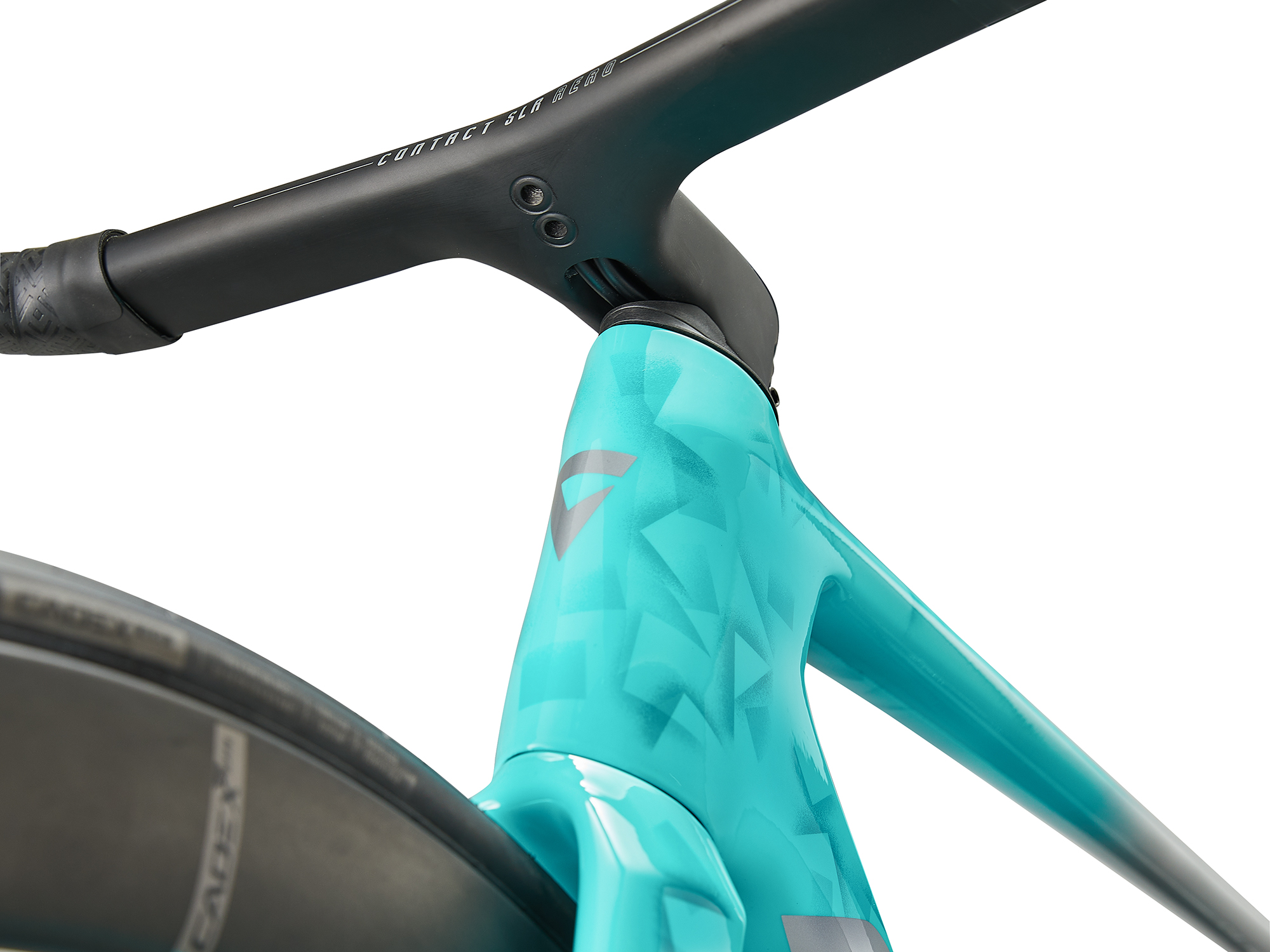 Most of the performance gains come from a new, narrower integrated cockpit(Image credit: Giant)
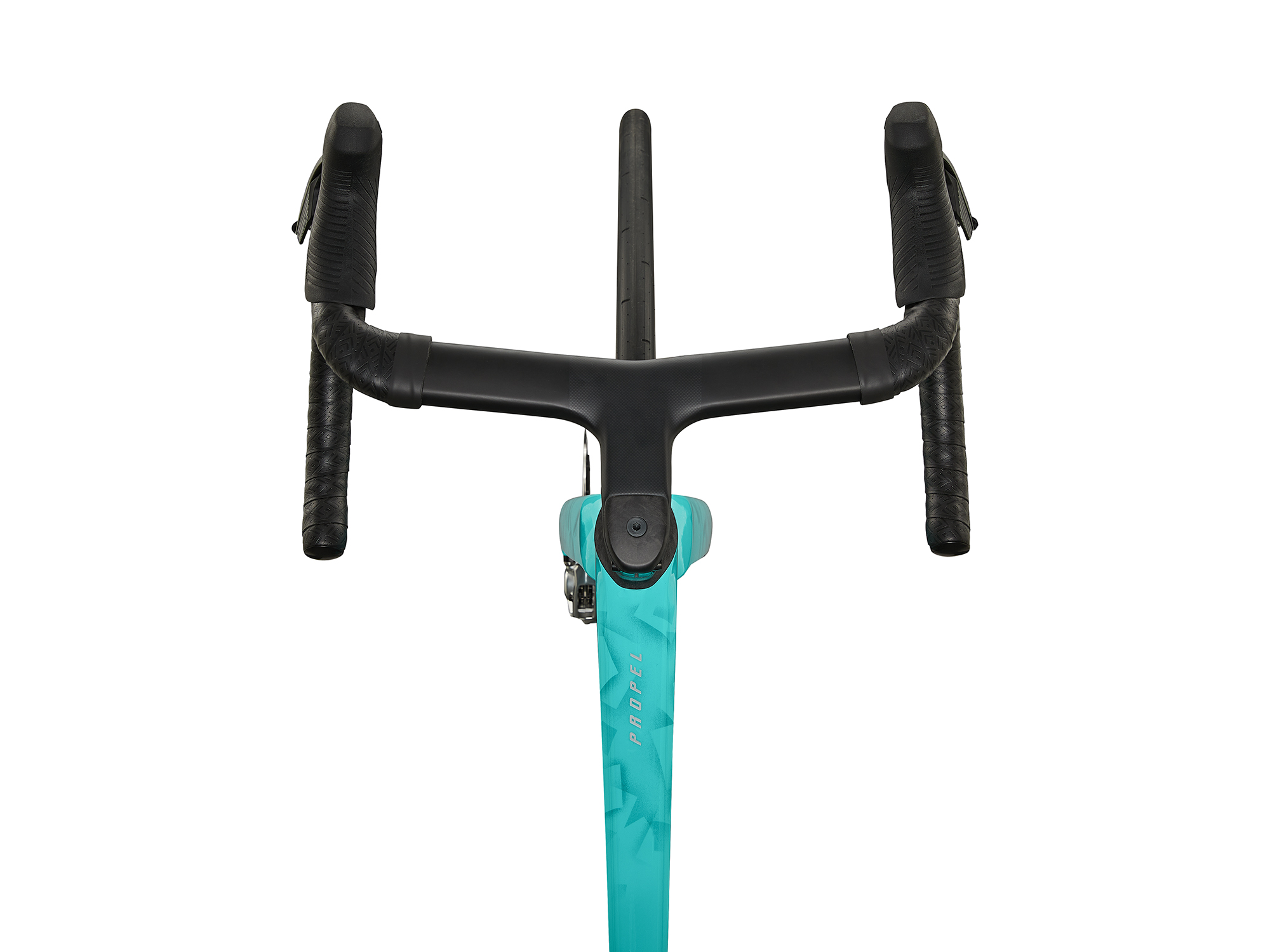 While top end models get it…(Image credit: Giant)
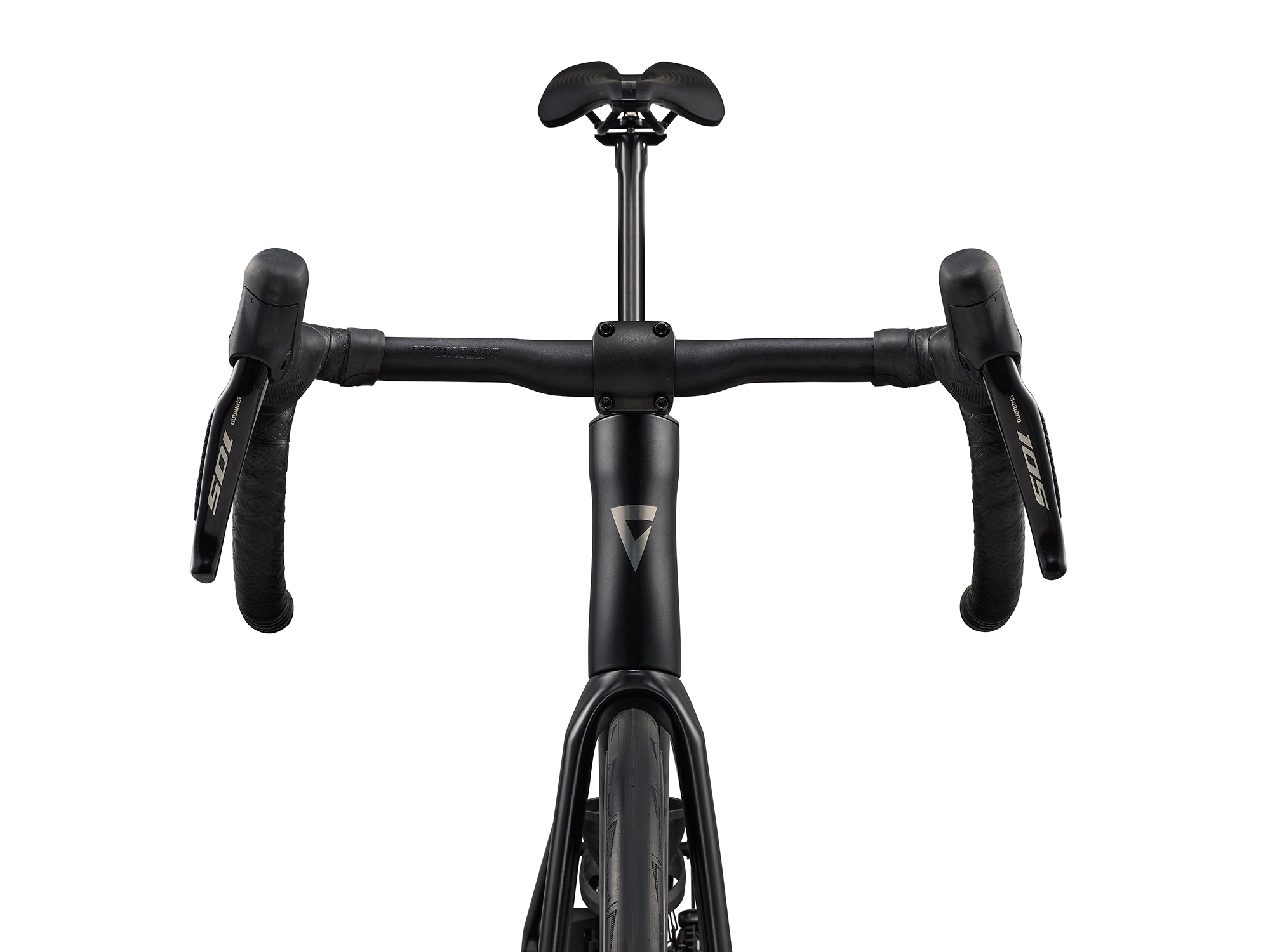 Lower-tier options still get a separate system(Image credit: Giant)
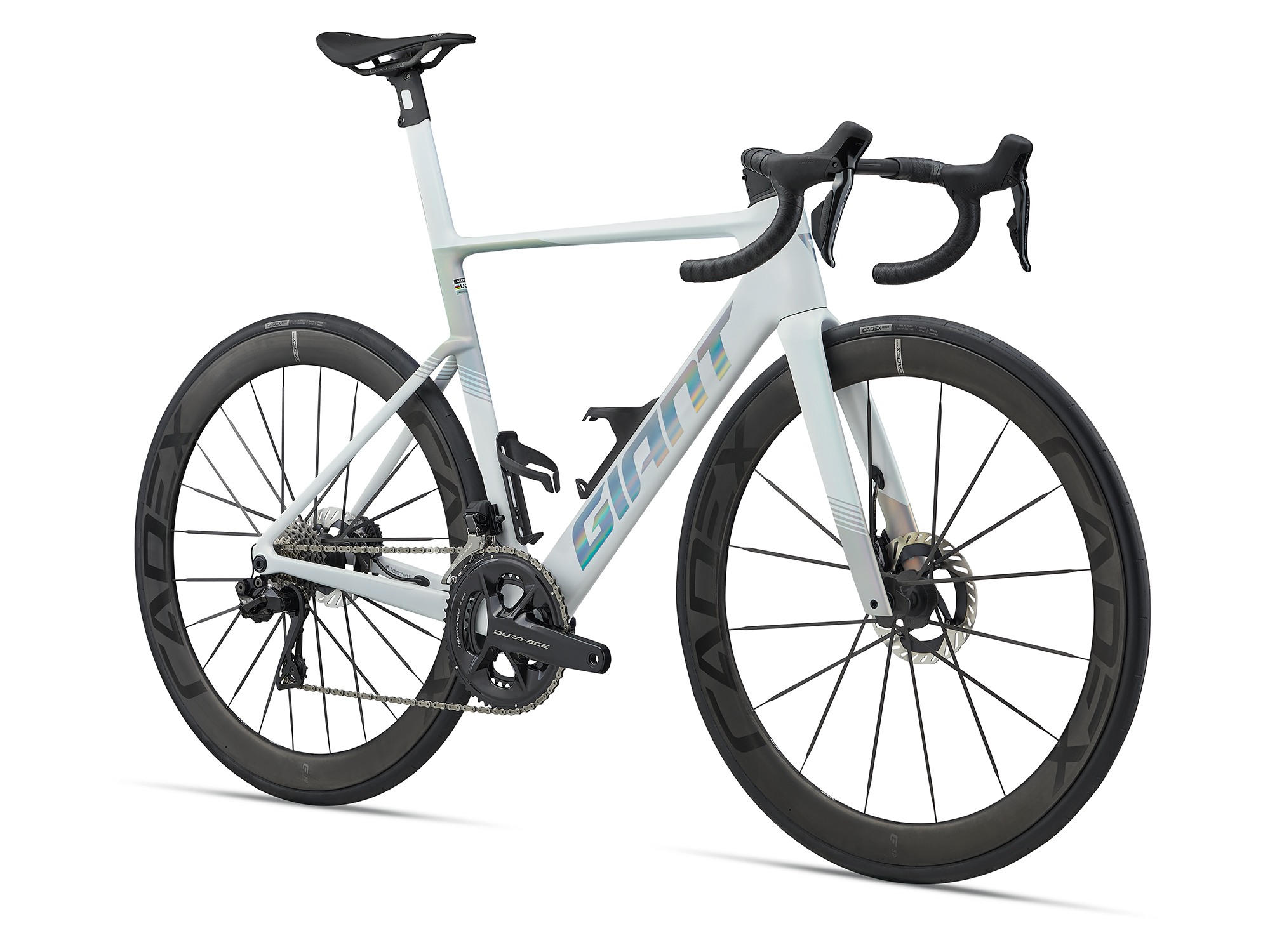 Better wheels and tyres contribute the rest of the performance gains in wattage terms(Image credit: Giant)
With the frameset appearing to only offer extremely modest changes over the outgoing model, the headline figure of over 18 watts faster means the savings have had to come from elsewhere. The old Propel was becoming something of an outlier in that it was still equipped with a separate bar and stem. The new models of both the EnviLiv and Propel now feature a modern-looking, flared, and much narrower cockpit, which is where much of the gains have been realised.
The cockpit alone is likely responsible for the majority of the gains. The like-for-like data provided by Giant for the Propel states that the old bike was tested with 42cm bars, while the new cockpit is 37cm at the hoods, flaring to 40cm at the drops. The bikes were tested with an articulated dummy, and so not only does the cockpit itself account for a smaller frontal area, but it will have certainly placed the mannequin in a narrower stance too, adding non-bike wattage gains. The bikes were also tested across a sweep of yaw angles, though a greater spread than we test at for our own wind tunnel tests, with yaw angles (the angle at which the wind hits the bike) of up to 20º tested, while we stop at 15º, as at race speeds, the likelihood of encountering 20º becomes increasingly unlikely.
The bike and rider, excluding the wheels and tyres, account for 12.42 watts of the pie, with a gain of 0.42 watts coming from the increased aerodynamics of the new Cadex Max 50 wheels and aero tyres, and a further 5.6 watts coming from improvements in rolling resistance from the new Cadex aero tyres versus the older models specced on the previous generation.
What to read next
While the top spec frame was quite a small amount lighter than the previous model, when the system as a whole, including the new cockpit, wheels, and tyres are taken into account, the cumulative weight savings are a much more significant 355g, or 120g for the equivalent EnviLiv model.
Spec options and pricing
The Propel will be offered in six sizes and four build tiers covering Shimano 105, Ultegra, Dura-Ace and SRAM Red. Two frameset options with traditional moveable seatposts are on offer, along with the SL tier with an integrated seatpost that will require cutting to size. These specs are also mirrored to some degree with the EnviLiv, and the full range of options and prices is at the base of this article
Analysis – Why are we sticking to three-year development cycles?
Will Jones
Senior Tech Writer
An 18+ watt saving for a new aero bike is significant, there’s no denying that, but this latest Propel is just one of many new bikes that are released as new models with what can charitably be called tweaks, rather than significant updates. Given the significant differences in cockpit geometry and the fact that the old and new Propel models were compared using an articulated mannequin, I’d put a lot of money on the fact that you could realise the vast majority of the savings on offer by swapping the cockpit on an old Propel to this new model. This is compounded by the fact that the second greatest piece of the pie in terms of gains, the faster tyres in terms of rolling resistance, can also be won by a simple spec upgrade.
The Cadex Race tyre specced on the old model was one of the slowest models when we tested a huge variety of road race tyres, showing a 10.9-watt penalty per tyre over the Continental GP5000 S TR at 40km/h. As the tyres account for 5 watts of improvement in the case of the Propel, or 2.5 watts per tyre (I assume this was a figure for the pair), one could make an old Propel faster than a new Propel simply by swapping the tyres to a set of class-leading tyres.
I am not trying to dunk on the Propel specifically here, but it is a prime example of a machine that I don’t think warranted a ‘new bike’ moniker. The current Propel is a good bike, and offering customers an updated spec package with improved wheels, tyres, and cockpit would have been a cheaper way for customers to realise performance gains.
The same criticism can also be levelled at the new SuperSix Evo, and the latest Pinarello Dogma wasn’t functionally any more aerodynamic than the old one, despite the claims about the ‘aero keel’. All three are symptomatic of what I think is an issue with these well-established models; it’s becoming next to impossible to realise meaningful aero gains to the frameset without fundamentally changing the look of the machine, which brands seem to be reluctant to do due to brand identity.
If we look at really aero machines, many of them are totally clean-slate machines, free from the shackles of historic design language. The Factor ONE, the Van Rysel RCR-F, the Colnago Y1Rs. All are doing something genuinely different and reaping the rewards. The latest Ridley Noah again shows what can be achieved by throwing the old design out and properly refreshing aero bikes for the modern age, and I struggle to see why some brands stick to a three-year development cycle and offer up ‘evolution not revolution’, when revolution clearly works so well. There’s always an exception that proves the rule, and that would of course be the Cervélo S5, but I think this gets away with it thanks to somehow starting from an extremely aero baseline that others have slowly caught up to.
I suspect the latest Propel will be an excellent bike to ride, and will undoubtedly benefit from these spec changes, in much the same way that I adored the latest Dogma, and my colleague Tom liked the SuperSix so much he nearly got his wallet out.
But I can’t help but feel that if the blind following of 3-4 year development cycles was lengthened, or abandoned altogether until bikes had a truly significant update, consumers would see better pricing of bikes in the interim years, and more significant advances over the long term.
Swipe to scroll horizontally
Propel Advanced SL 0 (Dura-Ace)
N/A
£9,999
N/A
Propel Advanced SL 0 (RED)
$13,500
£10,499
€11,999
Propel Advanced SL 1
N/A
N/A
N/A
Propel Advanced SL (frameset)
$5,000
£3,799
€3,899
Propel Advanced SL (team frameset)
$5,300
£3,799
€3,899
Propel Advanced Pro (Dura-Ace)
$8,000
£6,749
€7,999
Propel Advanced Pro 0 (Di2)
NA
£5,799
€6,499
Propel Advanced Pro 0 (AXS)
$7,800
£5,999
€6,499
Propel Advanced Pro 1 (AXS)
N/A
N/A
€4,999
Propel Advanced Pro 1 (Di2)
N/A
£4,599
€4,999
Propel Advanced Pro (frameset)
$3,200
£2,199
€2,699
Propel Advanced 0
N/A
£4,199
€4,799
Propel Advanced 1
$5,300
£3,499
€4,399
Propel Advanced 2
$3,500
£2,599
€2,999
EnviLiv Advanced SL 0
$13,500
£10,499
€11,999
EnviLiv Advanced SL 1
N/A
N/A
N/A
EnviLiv Advanced SL Frameset
N/A
N/A
N/A
EnviLiv Advanced Pro 0
N/A
N/A
N/A
EnviLiv Advanced Pro 0 AXS
$7,800
£5,999
€6,499
EnviLiv Advanced Pro 1 AXS
N/A
N/A
€4,999
EnviLiv Advanced 0
N/A
£4,199
€4,799
EnviLiv Advanced 1
$5,300
£3,499
€4,399
EnviLiv Advanced 2
$3,500
£2,499
€2,999