
/
Newsroom
/
Expanding precision care for patients with advanced Parkinson’s disease
March 5, 2026
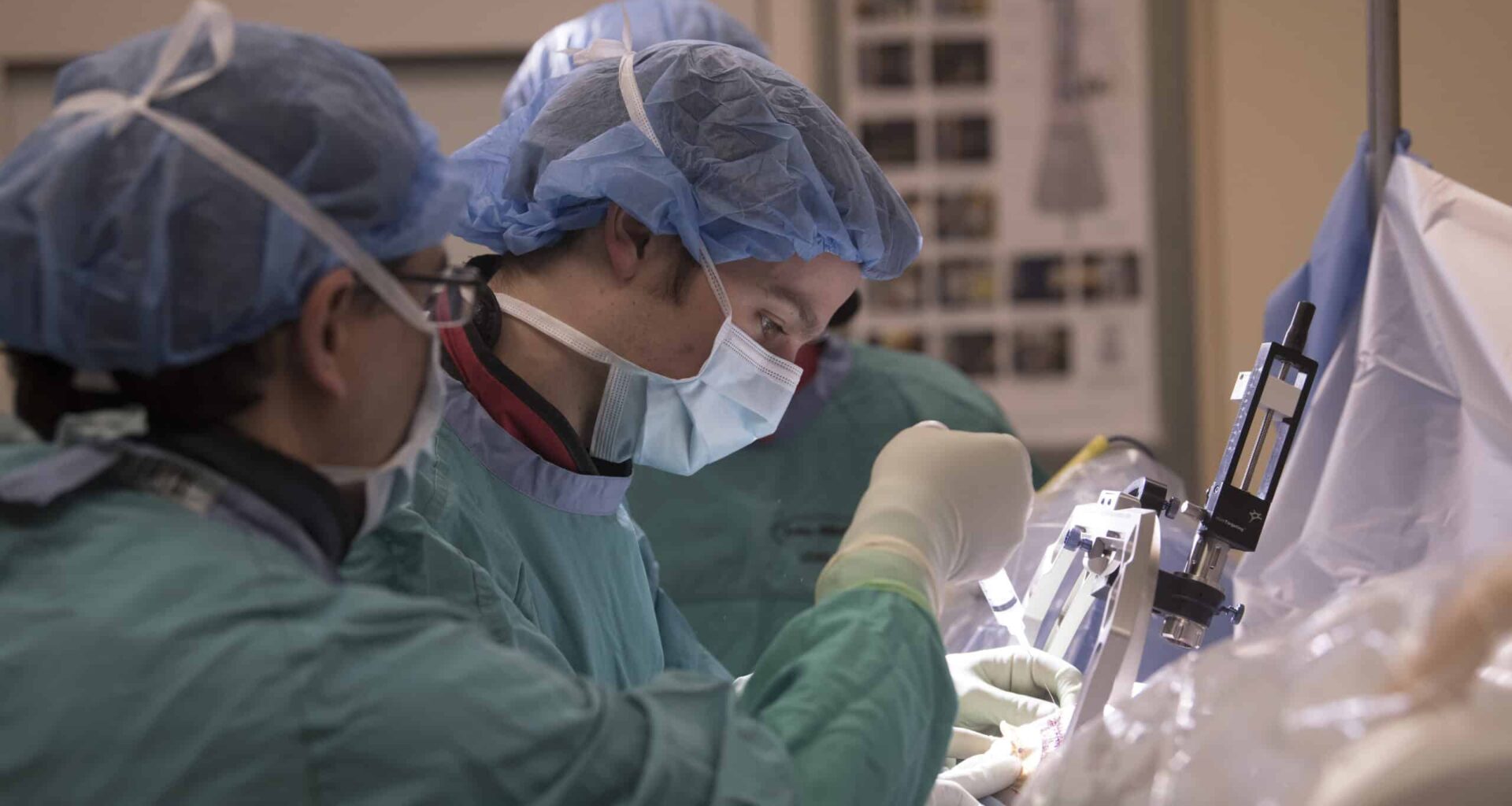
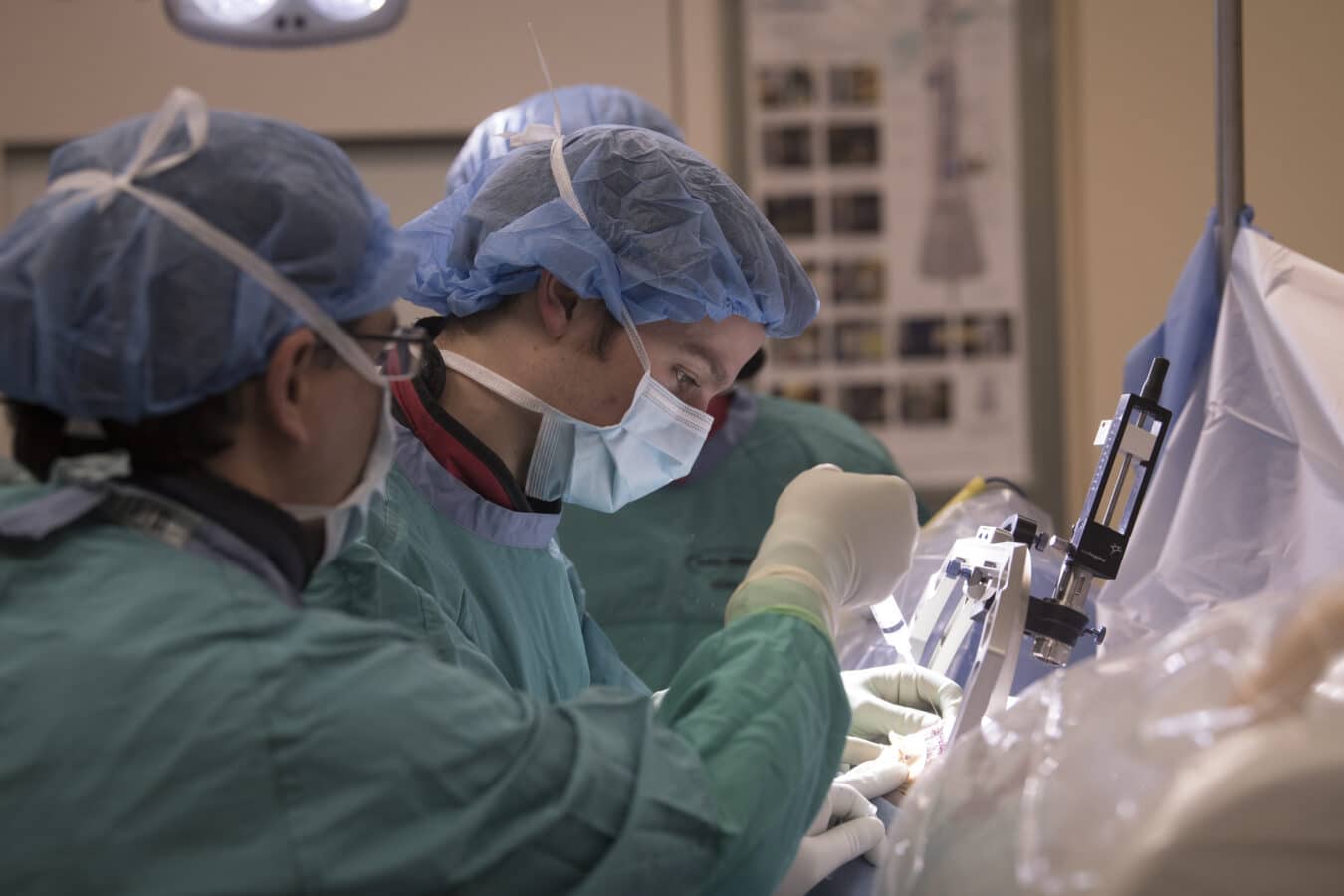
Sunnybrook’s Hurvitz Brain Sciences Program and Harquail Centre for Neuromodulation are expanding access to deep brain stimulation (DBS) for patients with advanced Parkinson’s disease in Toronto. DBS is an approved standard of care for Parkinson’s which targets specific areas of the brain, interrupting the signals responsible for causing symptoms.
Parkinson’s disease is a neurodegenerative condition that occurs when the brain is not able to produce enough dopamine, a chemical that aids in controlling movement, behaviour and cognition. Symptoms of Parkinson’s can include motor issues like tremors, muscle stiffness, slowness of movement and problems with balance. As a progressive disease, patients’ symptoms worsen over time and can interfere with daily activities like speech, swallowing and walking.
Currently there is no cure for Parkinson’s disease, but there are number of different treatments and therapies that are effective in managing symptoms of the disease and improving quality of life.
DBS is a neuromodulation technique that involves implanting electrodes in specific areas of the brain to send mild electric impulses that disrupt abnormal brain activity. At Sunnybrook, the new 7-Tesla (7T) MRI is aiding in procedures like DBS to visualize the intricate structures of the brain in unprecedented detail.
“While it is an invasive treatment for Parkinson’s disease, it is also the most targeted and precise,” says Dr. Ben Davidson, Neurosurgeon in the Hurvitz Brain Sciences Program and Investigator at the Harquail Centre for Neuromodulation at Sunnybrook. “The result is that symptoms are more manageable for longer, dramatically improving the quality of life of patients living with advanced Parkinson’s disease.”
Though it can appear earlier in life, Parkinson’s disease is more common among people aged 60 or older. With Ontario’s growing aging population the prevalence of Parkinson’s is increasing, creating an urgent need to enhance access to different treatment options.
Despite the fact that DBS for Parkinson’s is standard of care and offered at hospitals in Ontario, wait times remain lengthy. By collaborating with clinicians across the city like Dr. Amanda Persaud, Director of the Movement Disorders and DBS Programming Clinic at the Mississauga Institute of Neurological Disorders and Stroke (MINDS), Dr. Ben Davidson and the Harquail Centre is getting more patients the precision care they need.
DBS is just one form of neuromodulation offered at Sunnybrook’s Harquail Centre for Neuromodulation, one of the world’s first to offer a complete range of neuromodulation strategies in one state-of-the-art facility. A recruitment epicentre for first-in-the-world clinical trials of highly sophisticated neuromodulation technologies, experts in the Harquail Centre are providing leading-edge care to influence brain circuitry in movement and neurogenerative disorders, as well as oncology and psychiatry.