
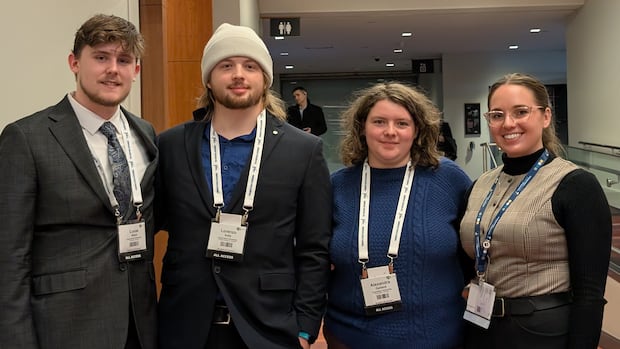
Industry leaders and students say common misconceptions are keeping youth from pursuing mining careers at a time when Canada faces a growing labour shortage.
The Prospectors & Developers Association of Canada held its 94th annual convention in Toronto this week. The four-day event brings together industry leaders, investors, government officials, Indigenous communities and students from around the world.
A key focus this year was shaping the future of the mining industry, including efforts to attract more young people into the field.
The Mining Industry Human Resources Council (MiHR), an independent non-profit that works with companies, labour groups, educators and Indigenous partners, reports significant growth in the sector over the past two decades.
The mining supply services workforce has grown from roughly 7,965 workers in 1999 to 27,165 workers in 2022, an annual growth rate of 5.5 per cent.
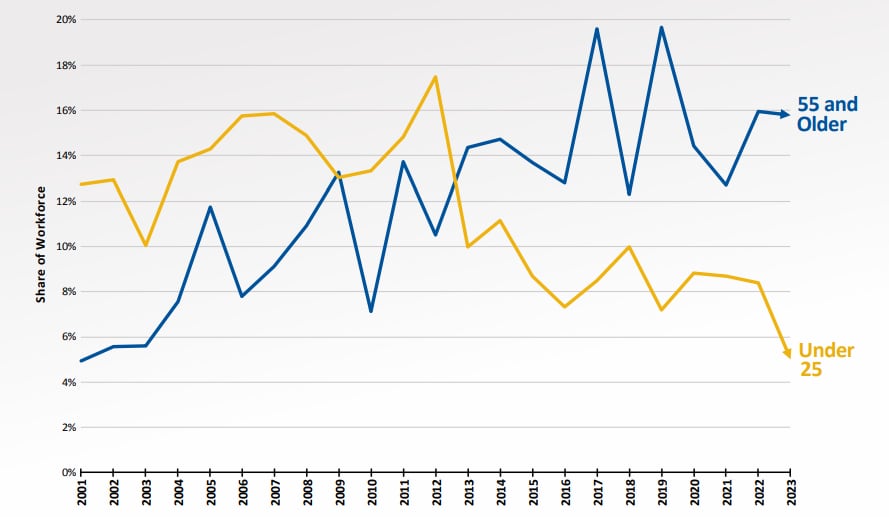 The Mining Industry Human Resources Council shares the data of the mining workforce by age. (Mining Industry Human Resources Council)
But MiHR data also points to a widening age gap. The share of workers under 25 has dropped from 17.5 per cent to five per cent over the past decade. Meanwhile, workers aged 55 and older have increased from 10.5 per cent to 15.8 per cent, raising concerns about future labour shortages as experienced workers retire.
Students say exposure is key
Devon Patterson, a fourth-year earth sciences student at Laurentian University with a minor in environmental chemistry, says many young people simply don’t see mining as an option.
“Mining and mineral exploration are very misunderstood by the general public,” Patterson said.
Patterson, who is from Serpent River First Nation, holds an advanced diploma in chemical engineering technology and discovered geology after taking an elective course.
“I never really got the opportunity to have my guidance counsellors in high school, for example, offer geology or mining engineering as a viable career trajectory,” he said.
He believes outdated perceptions are part of the problem.
“This isn’t their grandfather’s mining industry. This is a new and technologically advanced, environmentally conscious and ethical industry in a lot of ways compared to the past,” he explains.
 Devon Patterson from Serpent River First Nation is in his 4th year in Earth Sciences with a minor in environmental chemistry from Laurentian University. (Prospectors & Developers Association of Canada)
Members of the Laurentian University Earth Science Club echo that concern about awareness.
“Exposure is such a huge part of getting kids to go into these careers. I was fortunate to take the earth and space science class, but the course got cancelled the next year, and there are very few schools that even offer that,” said Ali Garland, a third-year earth sciences student.
Cassandra Ouellette, a fourth-year student and club president, agrees.
“I did not hear about earth sciences at all. I did not know that was a program,” said Ouellette.
She says her graduating class at Laurentian University has about seven students in it. “Some years end up actually being really, really small.”
Lorenzo Kelly, a fourth-year student, says many people misunderstand how interconnected mining is with daily life.
“A lot of people don’t realize how involved it is with our everyday life, like even with your clothing, for example, like you need metals to make the machine parts to make your clothing and like your cell phones,” he said.
Advocates pushing early engagement
Laura Clinton, executive director of Mining Matters, a non-profit funded by government, corporations and individuals, says the popularity of games such as Minecraft often introduces young people to mining concepts. But she says the portrayal can be misleading.
“The biggest misconception for younger kids is that they’ll be playing their video games and seeing pickaxes and shovels and mining for resources, maybe in a game like Minecraft,” said Clinton. “The reality is automation and drones and remote operations.”
Clinton believes curriculum changes and better support for teachers could help make mining more relevant.
“Providing teachers with the resources they need and the confidence and the background to deliver their curriculum with confidence,” she said, is key.
Shawna-Lee Enair-Fox, Indigenous relations co-ordinator for Agnico Eagle Gold Mines a member of the Matachewan First Nation, said conversations need to start early.
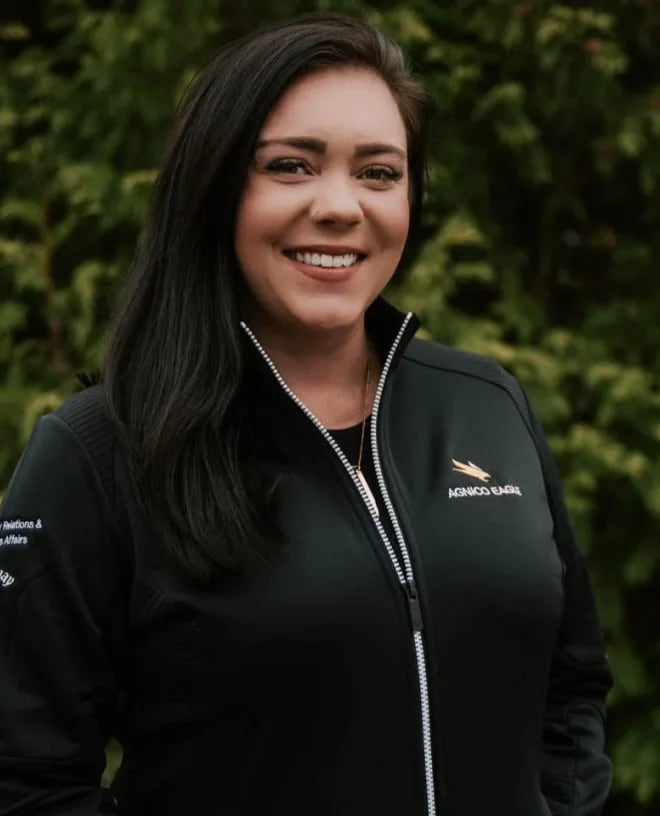 Shawna-Lee Enair-Fox is a member of the Matachewan First Nation and the host of Wild North Adventures TV, a hunting show on Wild TV. (Prospectors & Developers Association of Canada)
“Introducing career paths at a younger age is definitely something that I would think to be beneficial when it comes to encouraging youth to get more into the mining field,” she said, explaining career fairs, simulators and mine site visits should start in Grade 9.
Enair-Fox says parental perceptions can also discourage students.
“There are a lot of parents out there that still view mining as a dirty job, as a dirty career, and dangerous,” she said. “It’s much safer. It’s much cleaner. There’s more science behind it.”
With hundreds of potential new jobs tied to future mine developments, Enair-Fox says the industry is actively recruiting youth straight out of school and offering scholarships and mentorship programs.
“The youth of our future are our future employees,” she said.