
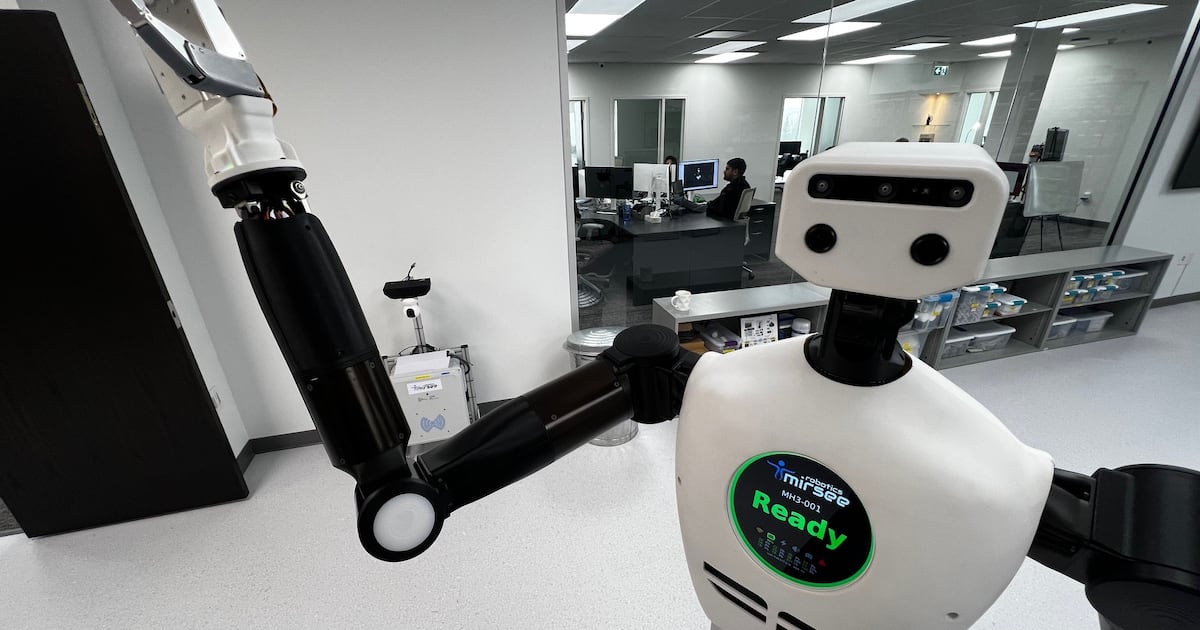
A small Ontario robotics firm says it’s poised to boost production of its humanoid robots as the global race for AI‑driven machines intensifies.
Tarek Rahim, CEO and co‑founder of Mirsee Robotics in Cambridge, Ont., says the company is testing the third generation of its made-in-Canada humanoid robot, known as MH3, with plans to move to a mass‑production model next year.
“I can’t wait for what’s coming ahead. It’s really exciting,” says Rahim of recent attention grabbing developments in the industry.
Last month, a video of robots made by China’s Unitree went viral. It showed the machines performing kung fu punches, kicks and flips in perfect formation. The display stunned viewers worldwide and marked a major leap forward from earlier demonstrations.
“They are delivering humanoids that have incredible performance and value,” says Rahim of the dozens of Chinese companies now making humanoid robots — which are robots that look and move like humans.
“Frankly, I think they are far ahead of Western competitors.”
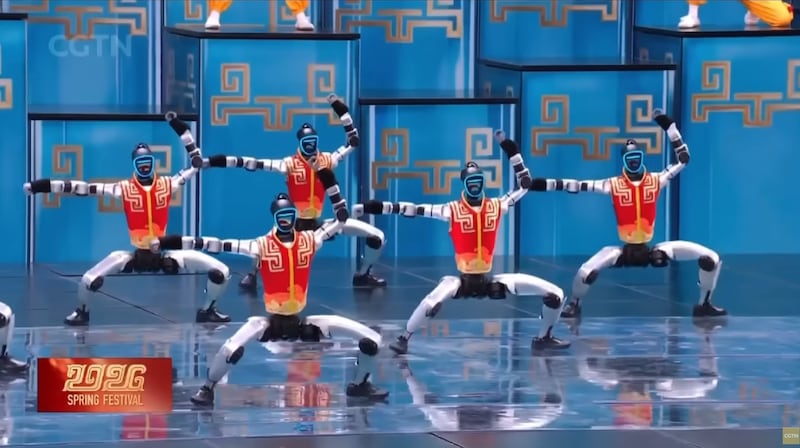 Humanoid robots from China’s Unitree Humanoid robots from China’s Unitree perform synchronized kung fu routines in a viral video that stunned viewers worldwide. (CCTV)
Rahim says he thinks Canada’s federal government could do more to support the sector, which he believes will eventually see huge numbers of robot labourers working in factories and bringing down the cost of goods and services.
“I can’t wait for that to happen,” he says.
Unlike the robots in the viral video, Mirsee’s humanoids move on wheels rather than two legs — a design aimed at boosting battery life and stability, making it harder to knock the MH3 over.
During a demonstration for CTV News, the robot used its Canadian‑made vision system to locate a water bottle on a table, pick it up and move it.
“And that sounds simple, but it’s actually technically challenging to pull off,” says Rahim.
The MH3 is built for industrial environments, manufacturing and logistics, and it could sort items and handle heavy materials — the kinds of repetitive, physically demanding tasks Rahim says are quite dull.
“These are low‑paying jobs that have a very high turnover.”
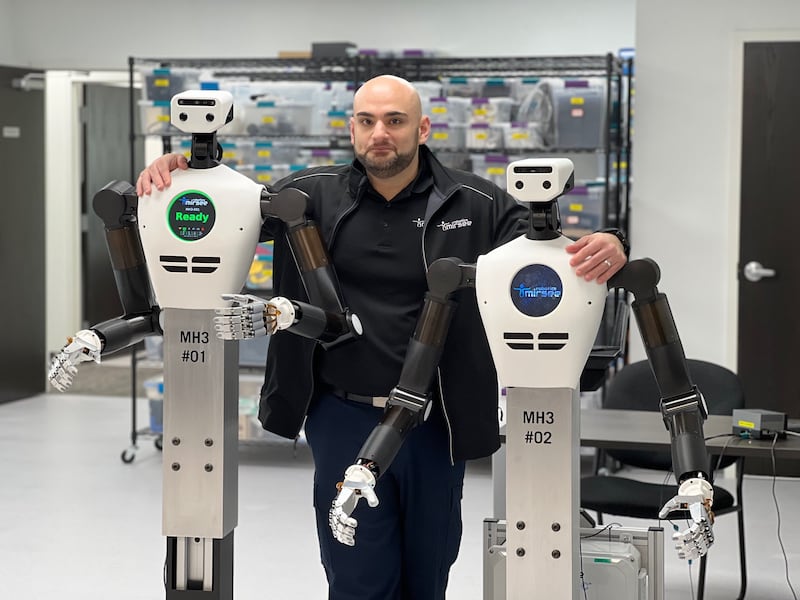 Mirsee Robotics Mirsee Robotics CEO Tarek Rahim stands with two MH3 humanoid robots at the company’s Cambridge, Ont., headquarters. (CTV News)
The company has two of its latest robots and expects to build six more this year. There are still no large‑scale commercial deployments — something Rahim describes as typical for an industry still refining hardware and software.
But things are changing quickly.
Toyota Canada recently announced it will deploy several humanoids at its Woodstock, Ont., assembly plant. The machines, known as Digit, are produced by Agility Robotics in Oregon.
It’s a far cry from what things were like in 2017 when Rahim and co‑founder Robert Ings began working on humanoids.
“Back then it was not a glamorous industry,” he says adding that no one thought AI would reach a point where it would be capable of reasoning.
“Everyone now understands that if we can take that ChatGPT‑like intelligence and put it in a human‑like body, it’ll do just about everything.”
All of the major components for the MH3 — including the batteries — are built by the team in Ontario, which is also adding the ability for the robot to speak and respond to voice commands using AI.
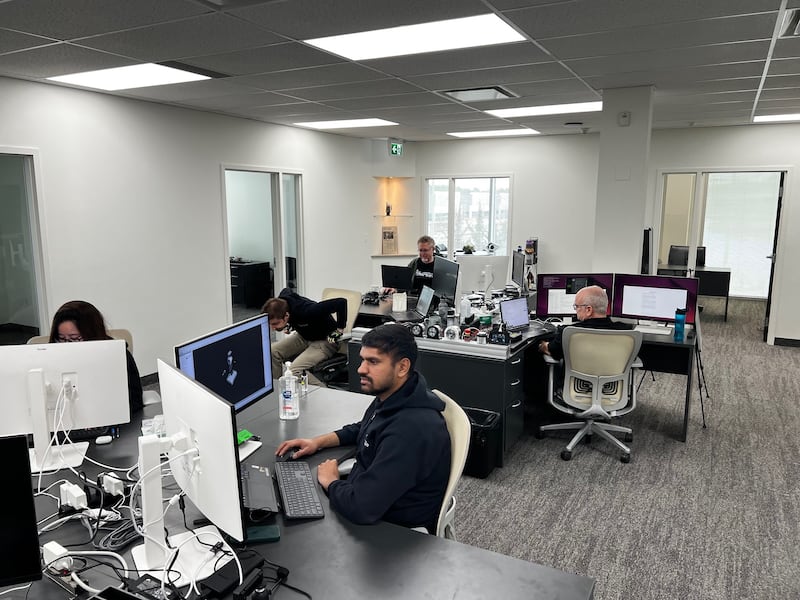 Mirsee Robotics Mirsee hopes to double its staff to around 20 later this year as it moves towards developing a mass production model of humanoid robots. (CTV News)
Some companies have shown humanoid robots for home use, but Rahim believes they remain years away from being affordable or common because of the technical complexity and safety concerns.
Industrial robots are a different case, and Mirsee plans to double the size of its team to 20 in the next six months.
“We are on an exponential growth curve and the timing is right,” says Rahim. “Things are coming together.”
Rahim believes the changes will be bigger than the automotive revolution in the early 20th century.
“So there will be more robots than cars, and it’s only a matter of time before we see these machines everywhere.”