


Listen to this article
Estimated 5 minutes
The audio version of this article is generated by AI-based technology. Mispronunciations can occur. We are working with our partners to continually review and improve the results.
A new Canadian app is aiming to help shoppers stretch their grocery dollars as food prices continue to climb.
Gofer.run, developed in North Bay, Ont., compares grocery prices across multiple stores in a user’s neighbourhood and recommends the cheapest combination of products and stores based on a shopper’s list.
Mark Sherry, co-founder of Gofer.run, says the free app scans prices online and calculates the best option depending on how many stores a user is willing to visit, whether that’s one store or several.
“We created a previous app called One Red Maple that helped people find local options for goods,” said Sherry. “We looked around, and we decided that groceries were the space that we could really help people in because of the price of groceries and also that it’s difficult to compare prices across many stores.”
WATCH | Grocery prices in Canada continue to rise at the fastest rate in nearly two years: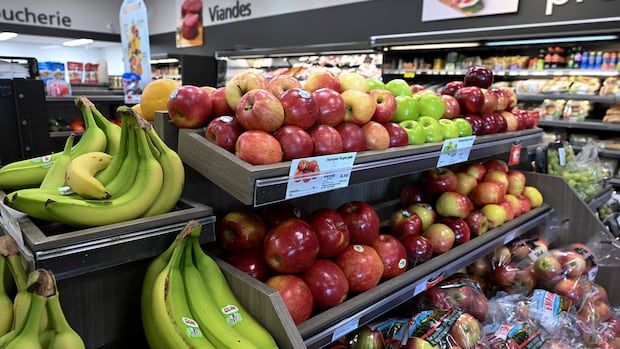
Climbing grocery prices defy cooling inflation
Canada’s overall inflation rate has cooled, but grocery prices continue to rise at the fastest rate in nearly two years. Experts say food prices will likely be volatile for the next couple of years.
Food inflation in Canada remains high compared with other G7 countries. The January 2026 consumer price index report shows food inflation at 6.3 per cent, following increases of more than 25 per cent over the past five years.
How the app works
Users enter or upload a grocery list into the app, which then compares prices for each item across nearby stores. Behind the scenes, the app checks store websites for price data and analyzes products by unit price, such as cost per 100 grams or millilitres.
“Let’s say you have cherry tomatoes on your grocery list,” Sherry said. “We basically take that item, and we shop that item in every single store in your neighbourhood, and you define how big your neighbourhood is.”
The app then filters those results using artificial intelligence to make sure the results match the item requested.
“We then use artificial intelligence to go through and make sure it is cherry tomatoes,” he said. “We do that for every single product. And then we look at all the products and say, OK, what’s the best combination of products and stores to go to to lower your overall cost?”
Developing the technology took roughly two years, Sherry says, as the team worked to build a system capable of comparing large amounts of data in real time.
“If you have 50 items in your grocery list, and let’s say you’ve got 10 grocery stores in your neighbourhood, it will take you literally four hours just to go through all the websites to find the products that match your items on your list,” he said. “Nobody’s going to do that.”
Expert says AI raises questions for consumers
An artificial intelligence researcher, speaking generally, says consumer apps that use AI raise interesting questions around the impact on the environment and privacy.
David Eliot, a PhD candidate at the University of Ottawa and author of Artificially Intelligent: The Very Human Story of AI, said while AI systems do have environmental costs, those impacts need to be considered in context.
“AI uses a lot of water, and it is using a lot of energy, and that is a concern,” he said. “Once you actually isolate it on its own compared to coffee farming, compared to many other industries that we already have current environmental impact, IT is actually quite negligible compared to these industries.”
 David Eliot is a PhD candidate at the University of Ottawa, where he researches the social and political effects of artificial intelligence. (TechPolicy.Press)
Beyond how the technology works, Eliot says tools that analyze shopping habits can also raise broader questions about privacy and how consumer data may be used.
“The environmental impact and forefronting that sometimes distracts us from other major issues of AI,” he said. “We’re creating data about our shopping lists. We’re creating data about our buying habits, about our pricing habits. What amount of change will make us change our behaviour? How much cheaper does the ketchup need to be at a store 10 kilometres away for us to actually go to that store?”
As more digital tools enter the retail space, Eliot says the technology could influence how people shop, while also prompting wider conversations about how artificial intelligence fits into everyday consumer decisions.
“We’re seeing grocery stores adding digital pricing now so they can change the prices during the day. So you’re starting to see this become more data-finding, like how do we extract the most value out of the consumer here,” he explained. “That shift is slowly happening, but the AI and big data age is requiring different thoughts about what is privacy, why should we have privacy, and what are we comfortable with.”
The gofer.run has an extensive privacy policy and includes a note from Sherry which says, “We do not use or sell your personal information for financial gain. Ever.”