
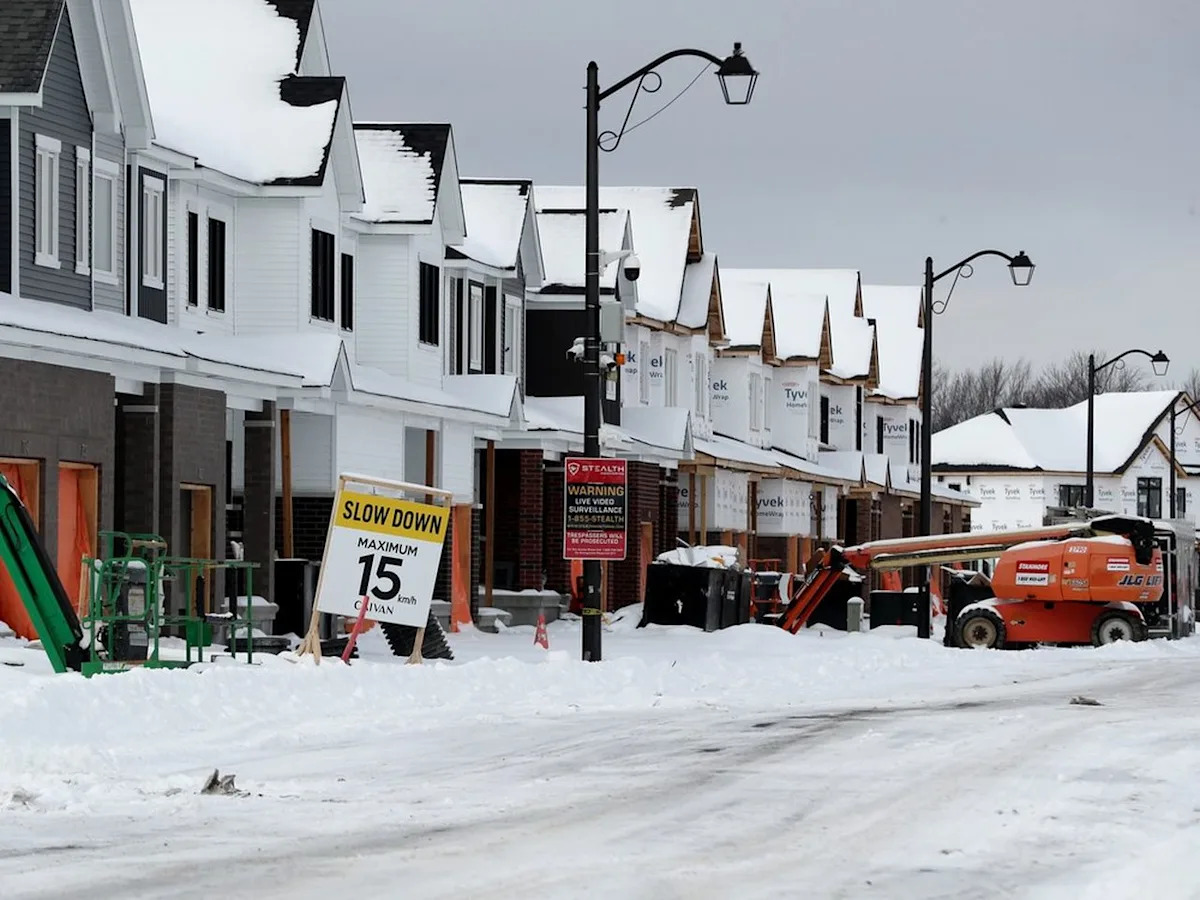
A new index by the Canada Mortgage and Housing Corporation (CMHC) shows Canada’s housing crisis has eased over the years but still remains at historic highs, and has even spread to cities outside Vancouver and Toronto.
That includes Ottawa, where housing affordability for homeowners has nosedived since 2019.
According to the index, the city experienced two waves of housing unaffordability. The first wave happened between 1999 and 2011, when there was less economic activity happening in Ottawa because of stagnant wages and inflation.
The second wave started in 2020 and lasted until 2022. High interest rates, along with supply chain disruptions and increased homebuilding costs, contributed to a sharp decrease in housing affordability in Ottawa.
“There’s been some catch up since then. The index has improved consistently since 2022 until 2025, which is the last data point we have,” said Mathieu Laberge, chief economist for the CMHC, in an interview with the Ottawa Citizen.
“Of course, there’s still a lot of way to go to go back to pre-COVID levels, but it’s on the right path … We forecast some price appreciation in the housing market (over the next few years), but none of the same levels we’ve seen during the COVID-19 pandemic. That gives us some hope, because that means incomes will be able to catch up over time with housing prices, which is a driver for affordability.”
The CMHC’s housing affordability index was published almost a week after the National Housing Bank released its newest Housing Affordability Monitor report, which says Ottawa’s housing market is becoming more and more expensive.
Data from the report suggested that the average price tag for a non-condo residential unit is around $764,858, and the annual household income needed to afford a home in that market is around $173,814 a year. It will take an individual or a family around 60 months to save the amount required for a down payment, the report added.
For condos, the average price tag is around $403,382, and the annual household income needed to afford one of those units is around $93,370 a year. It will take an individual or a family around 24 months to save the amount required for a down payment.
But Laberge said it’s more important to look at the diversity of available units in Ottawa’s housing market.
“It’s important that there are entry level, mid-market and higher-end units available. What we’re seeing right now is the mid to higher end of the market is pretty well supplied right now,” he noted.
“The affordable part of the market still needs more supply. It’s still a very tight market.”
It’s not just aspiring homeowners feeling the squeeze.
The CMHC’s housing affordability index also shows a volatile rental market in Ottawa, with prices increasing and diving every year or so.
While the rental market saw a decrease in affordability between 2015 to 2020, it has since stabilized, Laberge said.
Ottawa’s average rental prices have historically been in line with other major cities nationwide, he added.
“I think this is good news for Ottawa. That means the rental market is still relatively affordable or attainable,” the economist said.
Laberge noted, however, that renters typically have less discretionary spending to manage broader inflationary pressures. This means it’s harder for renters to reallocate their spending or borrow funds in the short term to cover increased costs.
As a result, their housing budgets are much tighter, reducing their ability to pay for a rental unit.
“People that can afford a mid- to high-end rental or a rental condo will find options. But on the more affordable or attainable end of the market — units for folks like firefighters, teachers, nurses, etc. — it’s still a very tight market. That explains a lot of the volatility,” Laberge said.
Laberge said there’s hope in the horizon for renters, however. Vacancy rates are increasing, which means there are a lot more options for renters.
The pace of rent growth is also slowing down, he said. While rental prices are still increasing, it is happening at a much slower pace, allowing incomes to catch up.
Programs like the federal government’s Build Canada Homes initiative and the City of Ottawa’s Affordable Housing Community Improvement Plan will also incentivize the development of affordable units in the city, which will help with affordability, the economist noted.
“I’m pretty optimistic for the rental market going forward. It’ll happen in a couple of years, but we will see some improvement over time,” Laberge said.
“There’s been a lot of action from all levels of government — provincial, federal and municipal — to actually make sure that the rental market is well supplied … There has been interventions by governments to make that happen.”
Laberge said he feels empathetic towards people who are struggling to find affordable housing, especially when it feels like prices aren’t coming down quickly enough.
“I totally empathize with people who are finding it tough. I know it may be hard, but the data is showing that things are slowly improving,” he said.
“Hang tight. It’s coming, it’s there. There’s been a lot of interventions to actually accelerate that, and what we’re seeing is it’s working.”
Our website is your destination for up-to-the-minute news, so make sure to bookmark our homepage and sign up for our newsletters so we can keep you informed.
Related