
sanjay puri’s sculptural design in india
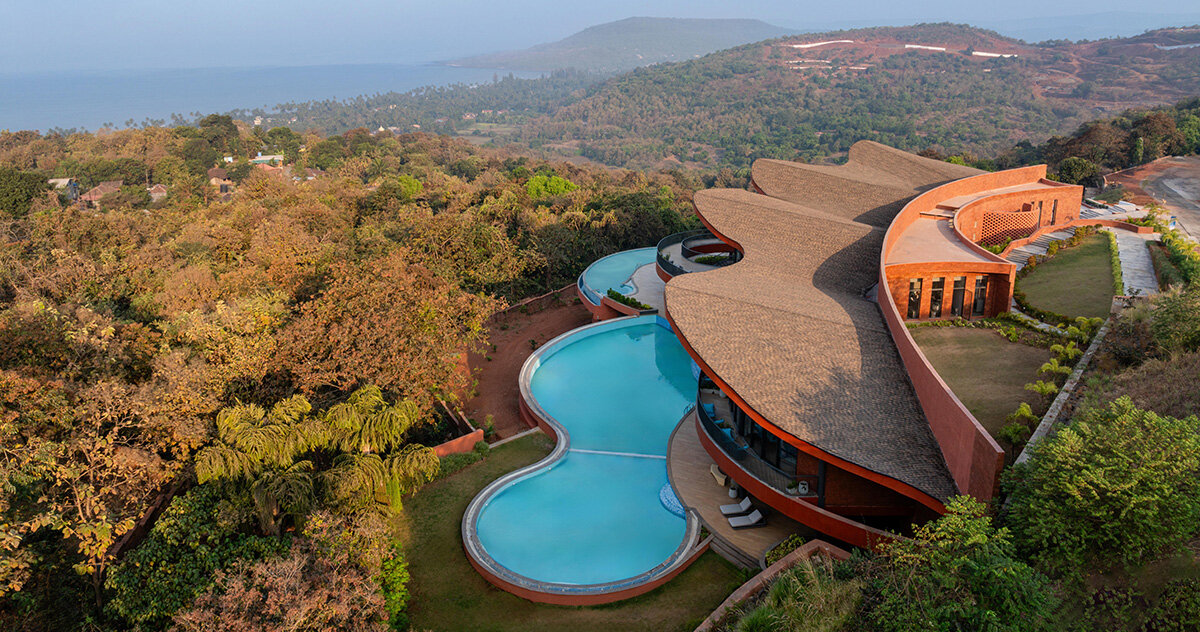
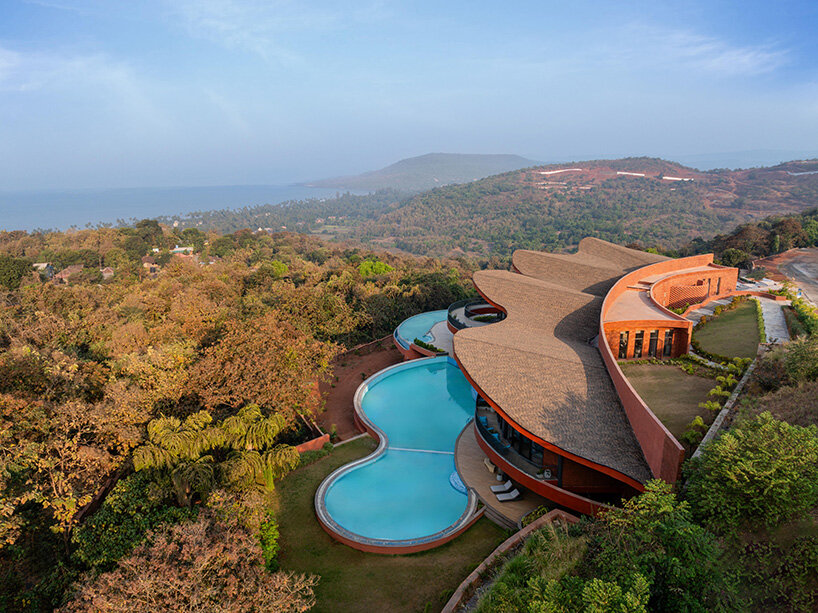
Sanjay Puri Architects takes to a steep hillside over the Arabian Sea in Anjarle, India, to complete its Crest Nine community center. Rather than occupying the hilltop as a single object, the building follows the terrain, its curved volumes emerging gradually from the descending landscape.
The access road sits above the project, placing the entrance several meters below street level. Visitors move downward along a broad staircase and a gently curving ramp that traces the edge of a planted garden. This approach leads toward a long circulation spine that organizes the building and guides movement throughout.
images © Vinay Panjwani
Curving Volumes Across the Hillside
At Crest Nine, the architecture by Sanjay Puri transitions from a restrained curved entrance wall into a sequence of larger parabolic forms that step across the hillside. Each volume rises to a different height, creating a varied skyline that echoes the terrain beyond. Courtyards and planted pockets appear between the built masses, introducing open air spaces that shift the scale of the complex as visitors move through it.
The design team distributes hospitality and leisure programming across these sculpted volumes. An indoor sports room, gymnasium, restaurant, bar, and guest suites occupy the upper level, each opening onto wide curving decks facing west toward the ocean. These outdoor terraces extend the rooms outward to create a continuous visual connection to the coast.
Sanjay Puri Architects’ Crest Nine sits on a steep hillside overlooking the Arabian Sea
the fluid roof structure
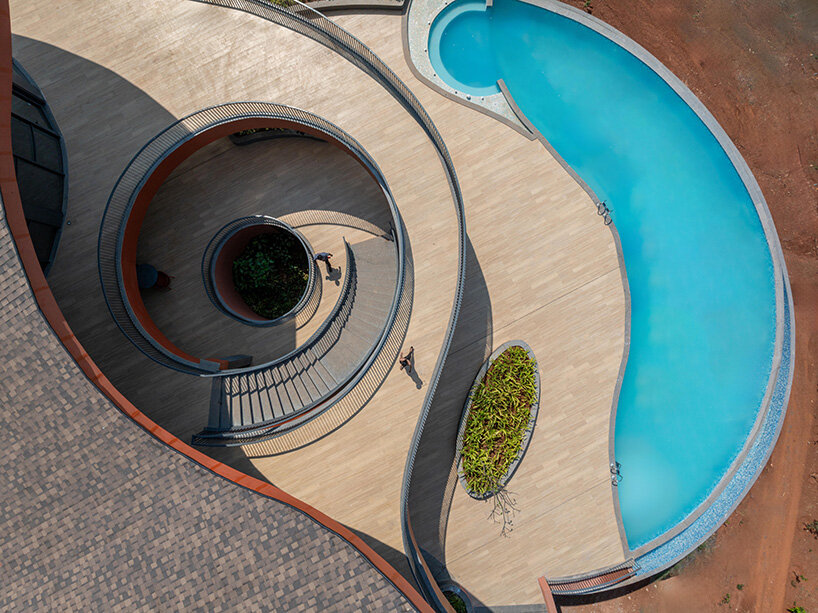
At the center of the building, a circular courtyard organizes vertical movement. A sculptural stair wraps around this open void and descends to the lower level, where the project expands into a series of recreational spaces arranged around the swimming pool terrace. Three pools, a health club, and an open cafeteria share this level, with a broad deck designed for informal gatherings and outdoor activity.
The roof structure plays an important role in shaping the spatial experience. Its sectional profile rises above the main volumes and dips toward the courtyards between them, forming deep overhangs that shade the decks. These extended edges provide protection during intense sun and seasonal monsoon rains while maintaining open views across the site.
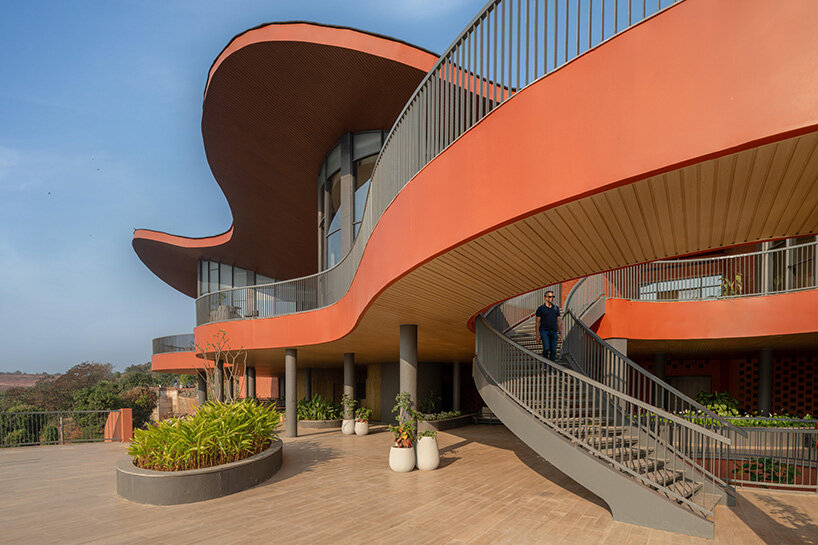
a sequence of parabolic volumes steps across the slope to follow the natural terrain
crest nine’s environmental performance
Locally-sourced laterite stone forms the primary exterior surface of Crest Nine, giving the building a warm red tone that resonates with the soil and rock of coastal Maharashtra. The material provides a textured backdrop for the sweeping curves of the architecture and reinforces the connection between the project and its setting.
Environmental performance informs many of the design decisions. Nearly seventy percent of the built area operates through natural ventilation rather than mechanical cooling, supported by the open courtyards and cross ventilation across the decks.
Daylight reaches every interior space, reducing dependence on artificial lighting during the day. The roof structure uses a metal framework finished with shingles, while local labor and regional materials contribute to a lower embodied carbon footprint.
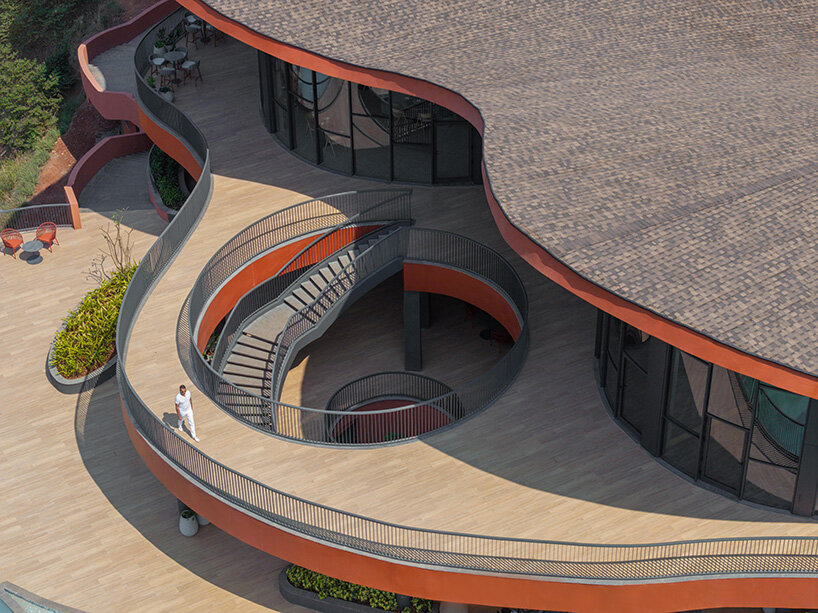
the community center descends through a wide staircase and a gently curving ramp
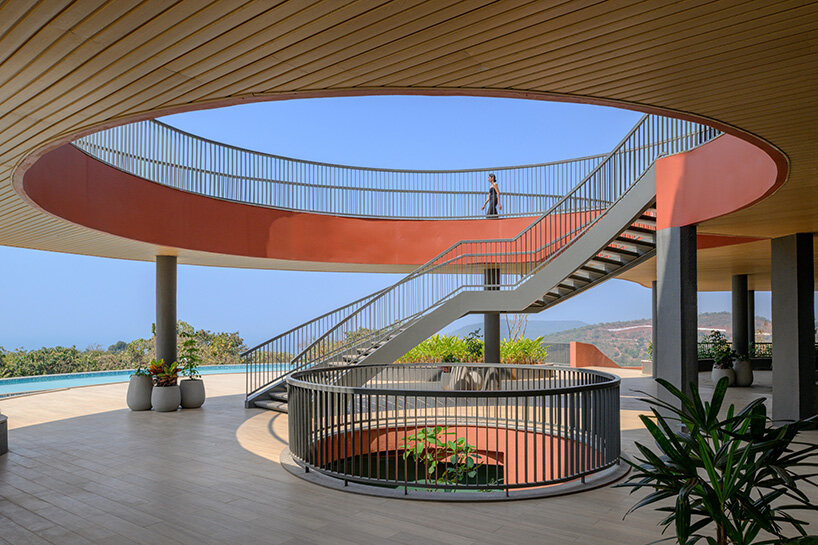
courtyards and landscaped pockets create open spaces between the curved built forms