

Those looking to rent may find lower prices compared to a year ago in Mississauga and the Greater Toronto Area.
Mississauga saw rents drop by nearly seven per cent as the average asking rent for all residential properties in Canada declined 2.8 per cent year-over-year in February to $2,030, marking the 17th consecutive month of annual rent decreases, according to the latest National Rent Report from Rentals.ca and Urbanation.
Rents fell to their lowest level in 33 months, down 7.4 per cent compared to two years ago, while remaining 2.3 per cent higher than three years ago, the report noted.
“Canada is undergoing its largest downturn in rents in recent history,” said Shaun Hildebrand, president of Urbanation. “The supply that everyone has been waiting so long for has arrived at a time when demand has slowed, creating a rare opportunity for renters to take advantage of better affordability.”
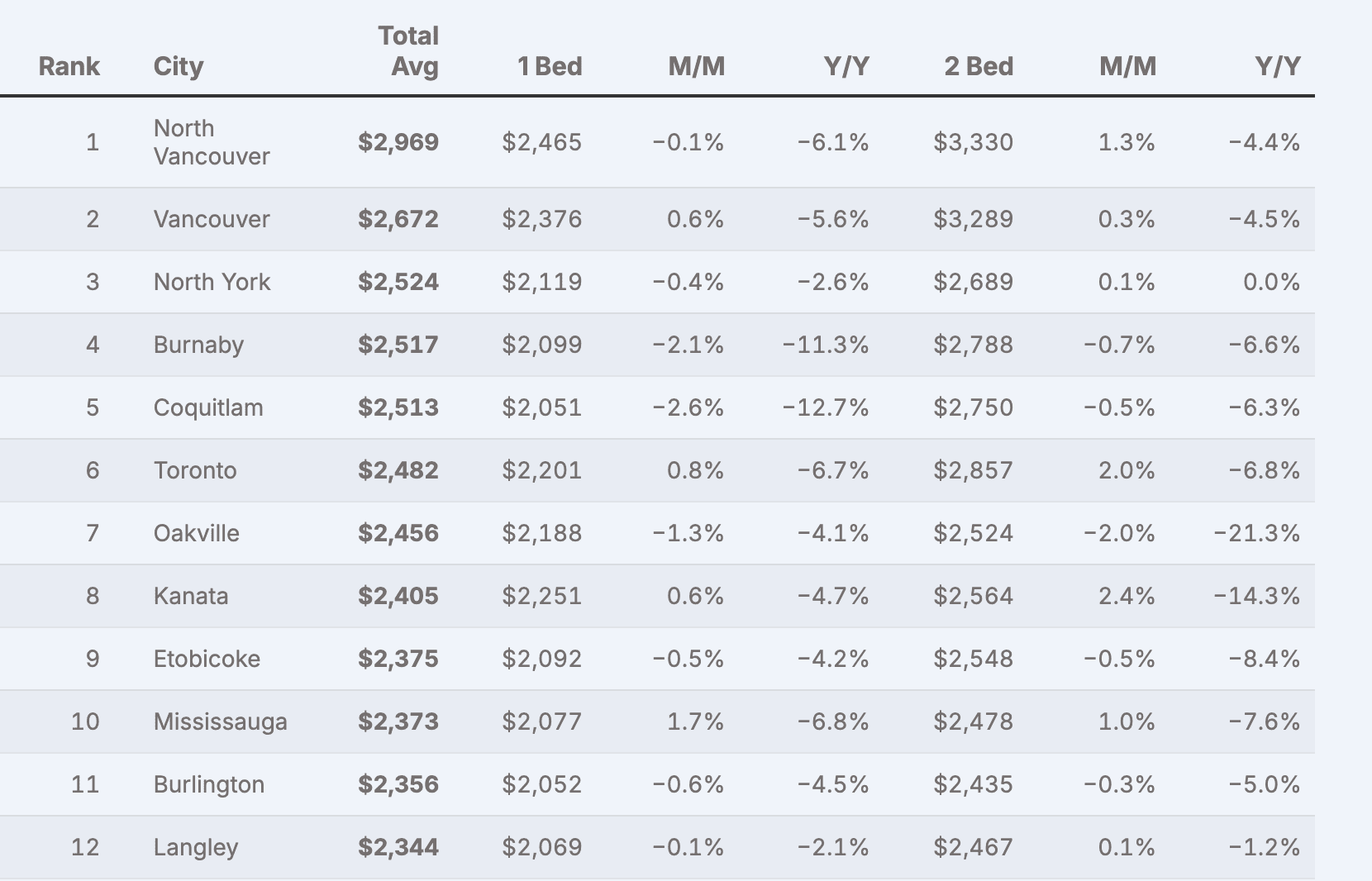
In Mississauga, one-bedroom units dropped 6.8 per cent to $2,077 last month compared to February 2025. A two-bedroom unit came in at an average of $2,478, a 7.6 per cent decline year-over-year, the report found.
The overall average of $2,373 ranks Mississauga as the 10th most expensive city, below Etobicoke and Oakville, to rent in Canada.


While the rental market tends to slow in the winter months, the seasonal decline in rents was larger than usual this year, the report noted. On a month-over-month basis, rents fell by 1.3 per cent, the largest monthly decline seen since November 2025 and the largest decrease in the month of February since 2020.
Over the past two years, rents have fallen by 7.4 per cent from February 2024, but remain 2.3 per cent higher than in February 2023. And rents are still well above the pandemic dip seen in 2021.
While asking rents remain above pre-pandemic levels, wage gains have outpaced asking rent increases over a six-year period, resulting in an overall improvement in affordability for Canadian renters, the report noted.
As rents continue to soften and average weekly wages show moderate gains, the affordability of rent as a percentage of renter household income has continued to improve.
The average rent in February accounted for 29 per cent of average renter household income, down from 31 per cent a year ago and 34 per cent two years ago, and below the standard 30 per cent affordability benchmark.
See the full report here.
INsauga’s Editorial Standards and Policies
Last 30 Days: 32,392 Votes
All Time: 1,253,796 Votes
1267 VOTES
How often do you shop at brick-and-mortar clothing stores?
WIN A $100 GIFT CARD
Subscribe to INsauga’s daily email newsletter for a chance to win a $100 Amazon gift card.