
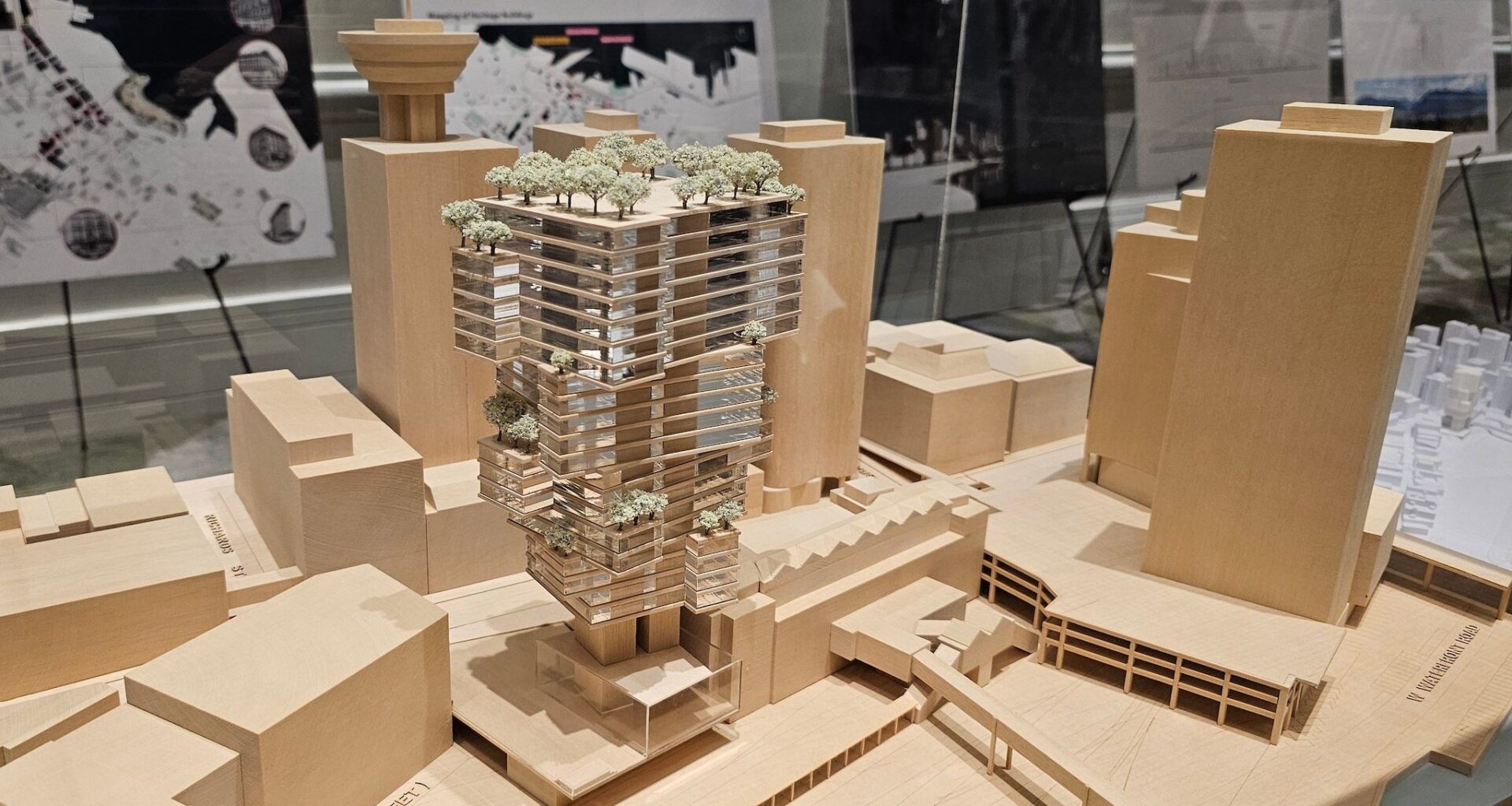
Canadian commercial real estate giant Cadillac Fairview is making another attempt to advance its long-planned office tower beside Waterfront Station in downtown Vancouver, this time with a completely redesigned 416 ft. tall, 22-storey proposal by a different architectural design team aimed at addressing previous heritage and urban design concerns.
As previously reported by Daily Hive Urbanized in January 2026, the new development permit application for “CF Waterfront Tower” at 601 West Cordova St. (previously addressed as 555 West Cordova St.) in downtown Vancouver calls for a 417,000 sq. ft. office tower rising from what is currently a surface parking lot immediately east of the landmark 1914 station building.
Designed by Vancouver-based James Cheng Architects, the new concept replaces earlier, more controversial schemes by Chicago-based Adrian Smith + Gordon Gill Architecture (ASGG).
After more than a decade of stalled attempts, both architect James Cheng and Cadillac Fairview vice-president of development Matthew Cavanaugh assert the latest version represents not just a design shift, but a change in process and tone.
In an interview with Daily Hive Urbanized on Feb. 23, 2026, Cheng said his team approached the project by re-examining the site’s layered heritage and Indigenous, industrial, and urban contexts.
“We have two major different approaches than the previous one. We looked at the heritage question very seriously. So the first thing we did was to go back to the beginning, which means when it’s just a virgin forest,” said Cheng.
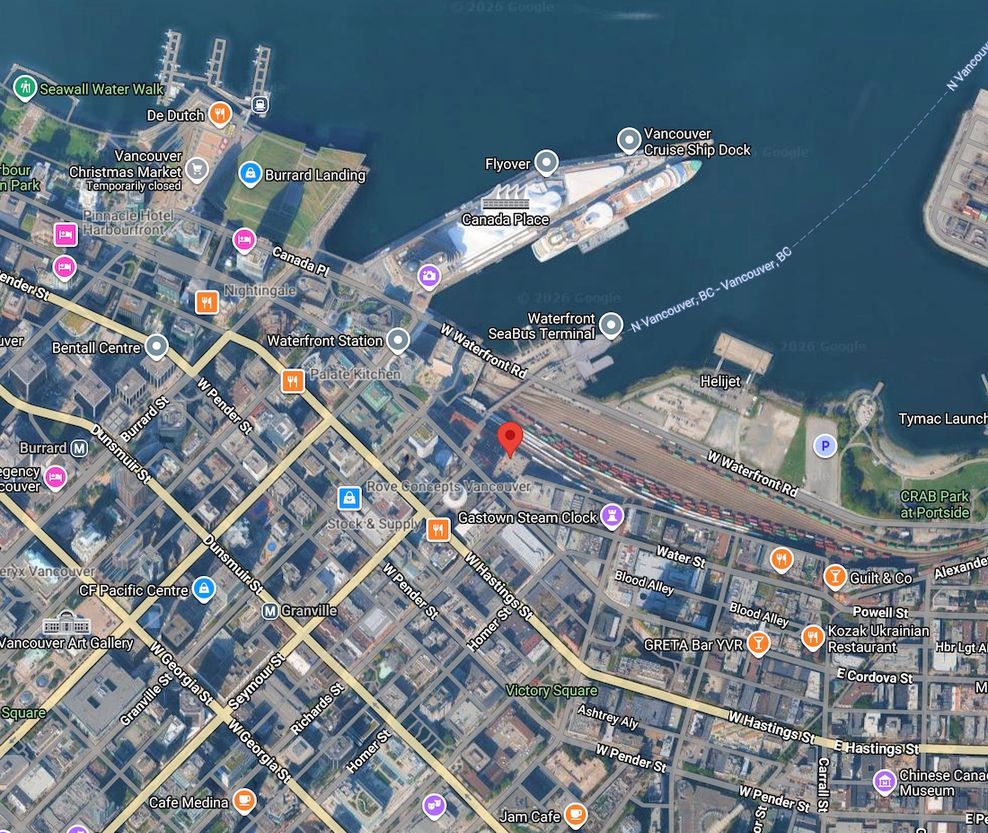
Site of 601 West Cordova St., Vancouver. (Google Maps)
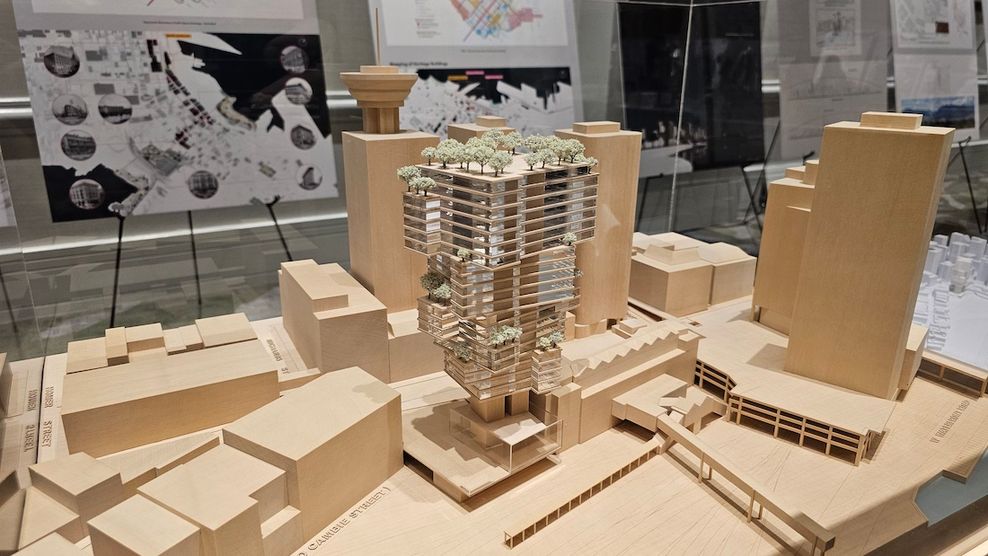
2026 concept of 601 West Cordova St., Vancouver. (Kenneth Chan)
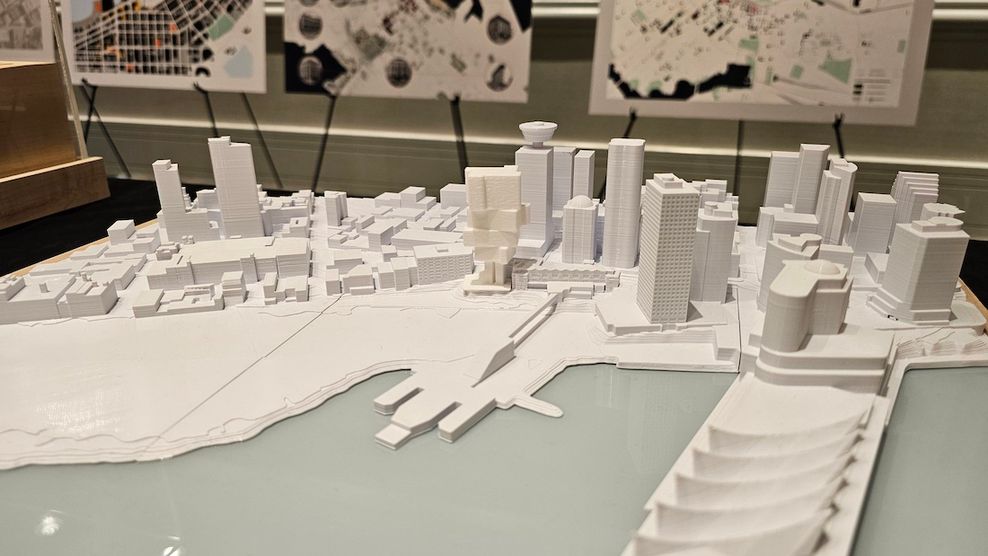
2026 concept of 601 West Cordova St., Vancouver. (Kenneth Chan)
From that starting point, the design evolved around a central metaphor — a building lifted like a tree trunk, with its canopy above eye level to preserve openness at grade.
“So for us, that’s the inspiration for the building, is to preserve the open ground plane so that when people walk around, they can always see the water and the mountain and lift the building up like a tree,” said Cheng.
He described how the analogy translates spatially: “When you walk around the forest, you can see through the forest because the branches are up high and you can see.”
Creating a new urban plaza and maximizing views
The lifted building form from the ground level is intended to minimize the visual competition with Waterfront Station and maintain public views toward Burrard Inlet and the North Shore mountains — concerns that were central to opposition to earlier versions of the project.
Cheng also emphasized the site’s unique urban geometry, where multiple historic street grids converge.
“Because this is starting where Vancouver started, there’s three different grids,” he said, explaining how the building form responds to those intersecting alignments.
“So that when you look out and look in, then you can see the building actually respond.”
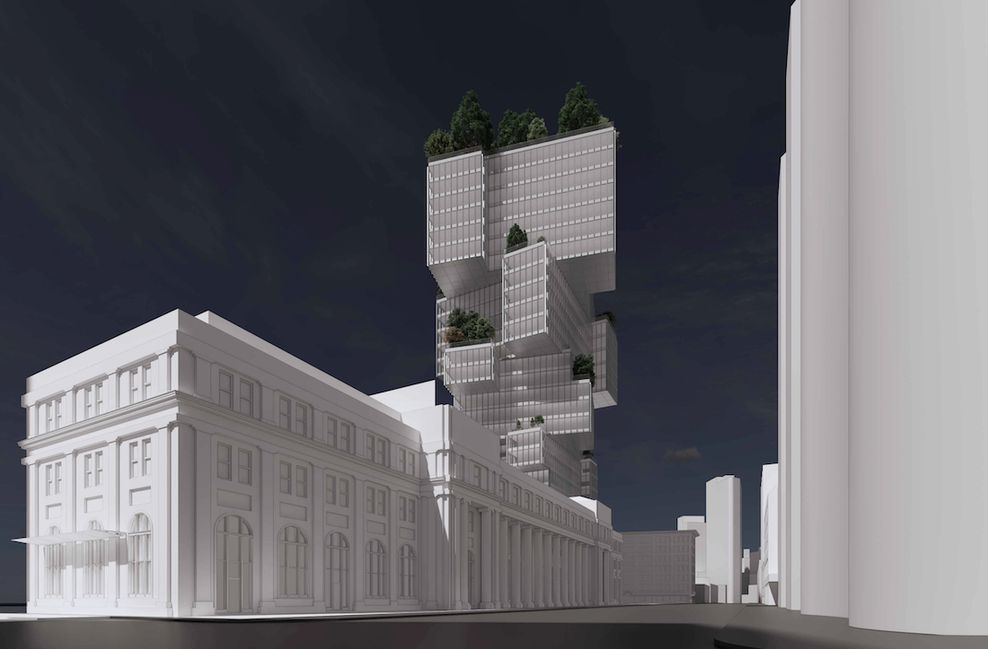
2026 concept of 601 West Cordova St., Vancouver. (James Cheng Architects/Cadillac Fairview)
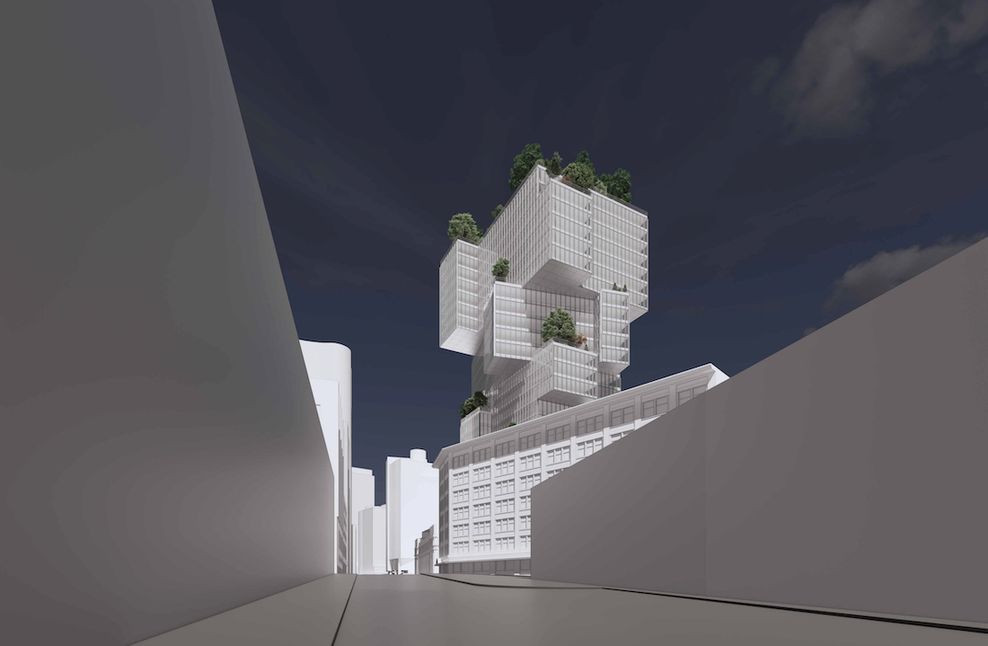
2026 concept of 601 West Cordova St., Vancouver. (James Cheng Architects/Cadillac Fairview)
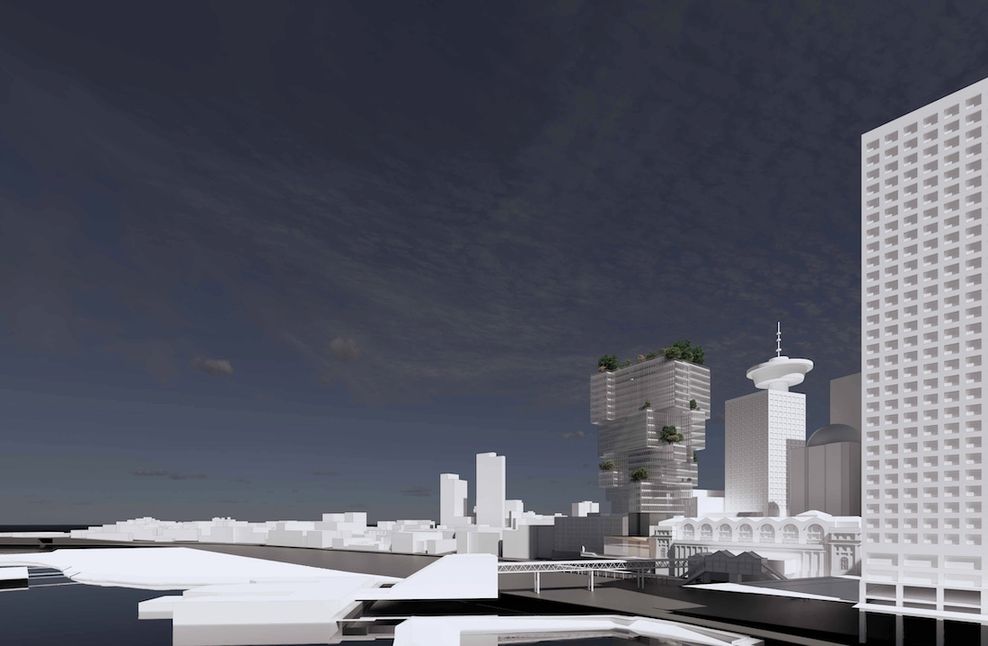
2026 concept of 601 West Cordova St., Vancouver. (James Cheng Architects/Cadillac Fairview)
The upper portion of the tower is broken into sections that are slightly rotated to match the different street directions, while also making the building feel less overwhelming next to Gastown’s smaller heritage buildings.
Cheng said the site’s specific location — on the border between Gastown and the Central Business District — makes a taller building appropriate, but it still needs to be carefully designed so it fits in.
“So this is right at the edge. So the tall building does not belong in Gastown. It needs to be here,” he said, referencing a model of his design.
One recurring concern with earlier proposals was the potential loss of open space. Although it is technically a privately-owned surface vehicle parking lot, the paved area immediately east of Waterfront Station has long been used by the public as a place to gather and enjoy the views.
Cheng framed the redesign as an opportunity to improve that condition.
“To create a plaza here, linking the heritage building and making it a nice gateway entrance to Gastown is helping the businesses and people here,” he said.
Cavanaugh echoed that emphasis on preserving open space.
“One of the things we’ve really tried to do by landing the building in such a small envelope is maintain the plaza space,” Cavanaugh told Daily Hive Urbanized in an interview.
“I think we have over 70 per cent of the area of the existing parking lot is actually staying as open space and is being converted from a parking lot into a plaza.”
By minimizing the base podium and lifting more mass upward, the tower footprint is reduced compared to earlier concepts.
Existing condition:
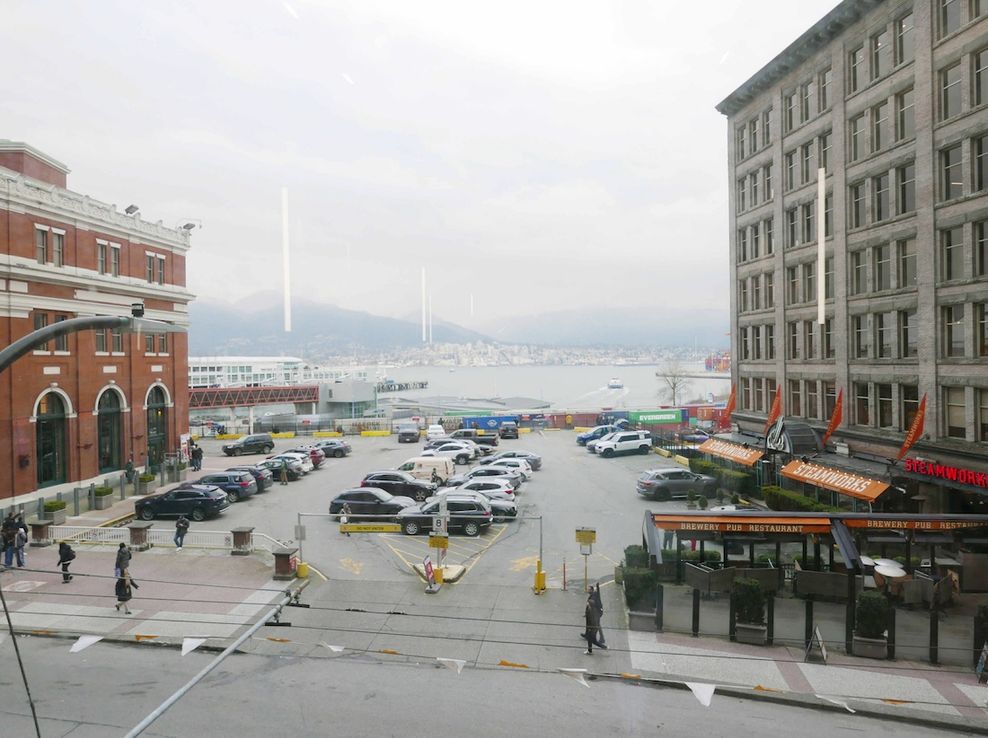
Site of 601 West Cordova St., Vancouver. (James Cheng Architects/Cadillac Fairview)
Future condition:
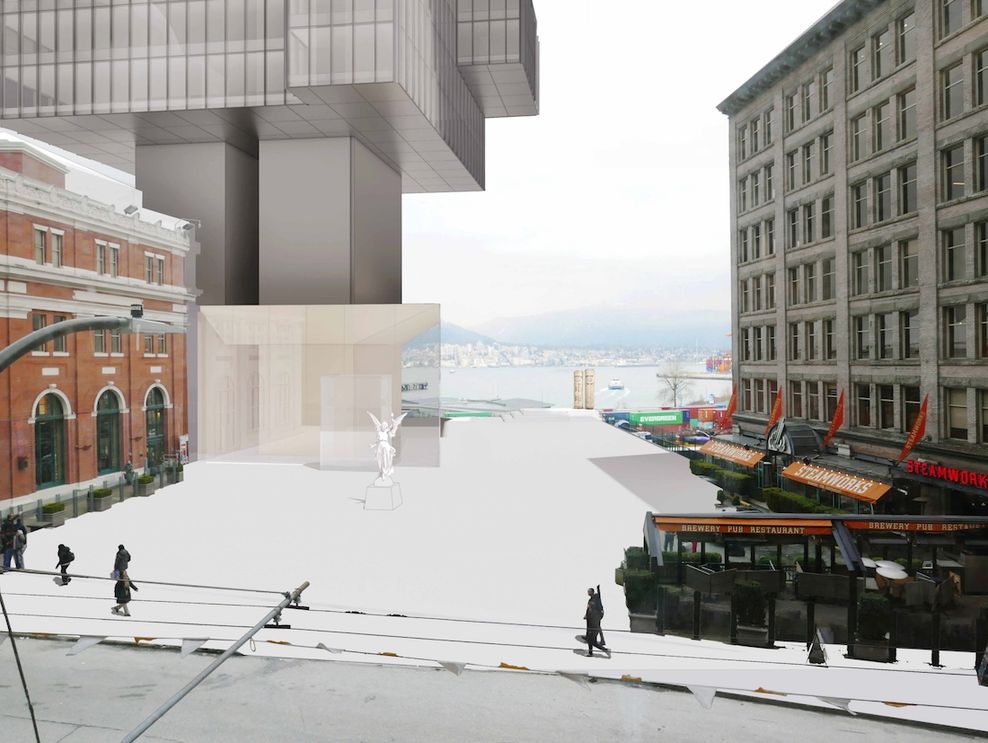
2026 concept of 601 West Cordova St., Vancouver. (James Cheng Architects/Cadillac Fairview)
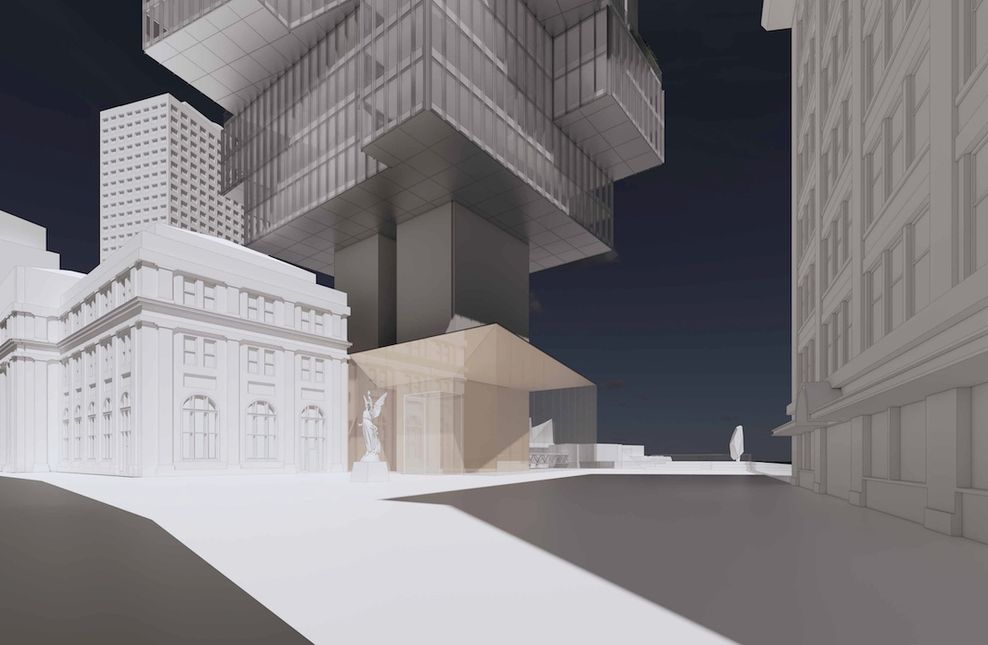
2026 concept of 601 West Cordova St., Vancouver. (James Cheng Architects/Cadillac Fairview)
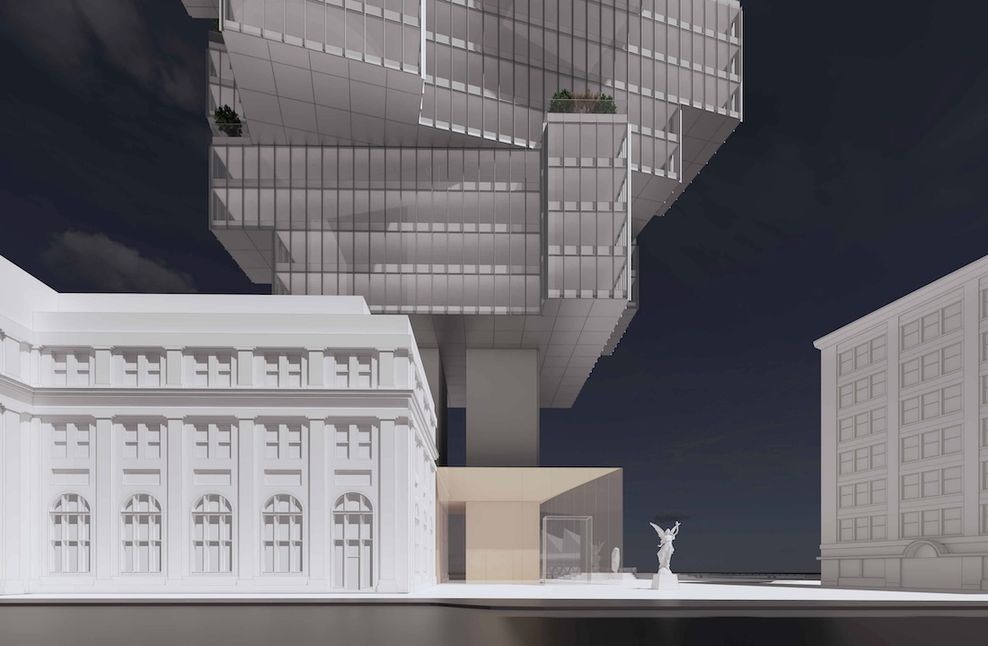
2026 concept of 601 West Cordova St., Vancouver. (James Cheng Architects/Cadillac Fairview)
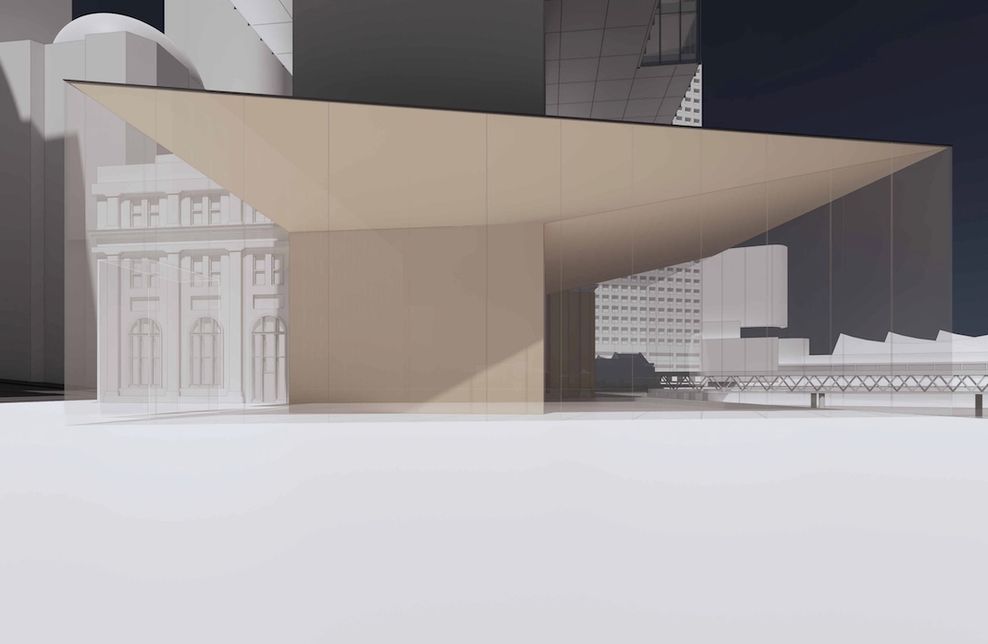
2026 concept of 601 West Cordova St., Vancouver. (James Cheng Architects/Cadillac Fairview)
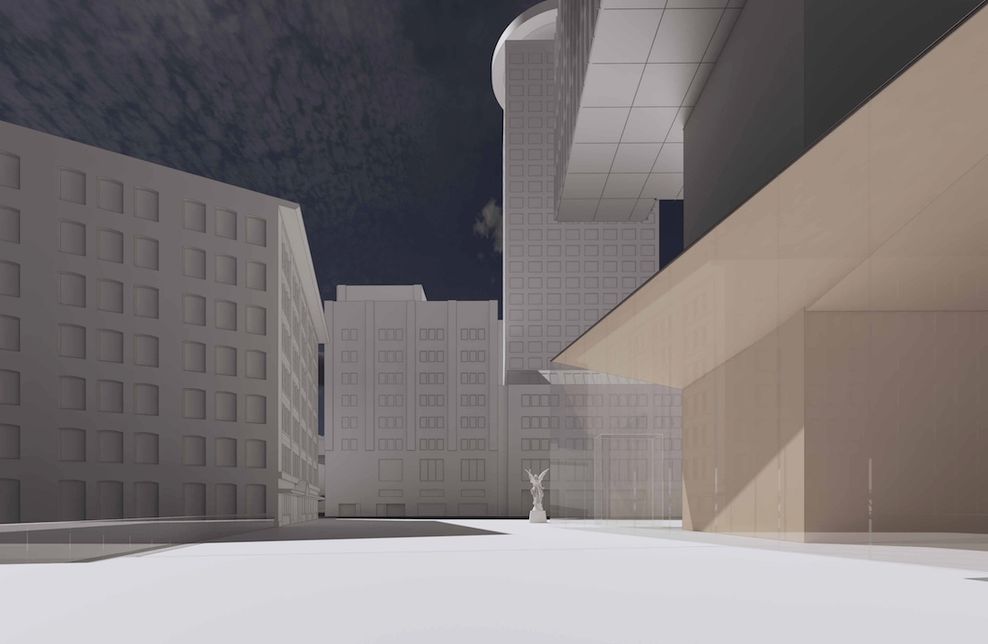
2026 concept of 601 West Cordova St., Vancouver. (James Cheng Architects/Cadillac Fairview)
Beyond tackling aesthetics
Cadillac Fairview previously submitted two versions of the tower — development permit applications in 2014 and 2020 — designed by ASGG, which is perhaps best known for designing Dubai’s Burj Khalifa. Both concepts, previously commonly referred to as the origami and crystal towers, did not advance through the municipal government’s approval process.
“We were really happy with the designs that we got from Gordon Gill and from ASGG in general. We thought they were great designs, and we did two designs with them,” said Cavanaugh.
“The first one probably was a little bit more kind of critiqued than the second one… We thought both were great pieces of architecture, and yet both were kind of met with some concern.”
However, the City of Vancouver’s Urban Design Panel (UDP) did not like the first concept, while the second concept hit a wall with the City’s Heritage Commission.
Ultimately, he said, the previous challenges were not simply aesthetic.
“The issue seems to be more of our approach as far as engagement, City process, and understanding the local market,” said Cavanaugh.
He described Cheng as “not just a very accomplished architect but also knows the city of Vancouver inside and out.”
Cheng, for his part, said the team undertook an intensive collaborative process.
“So we actually had a four-day workshop with all the stakeholders around, all the agencies, including the port, TransLink, Pavco, everything. As well as the neighbours,” he said.
The outcome, he said, was broader alignment on long-term waterfront planning.
“Because nobody can tell the port what to do. But the port also wants to be part of the city,” said Cheng.
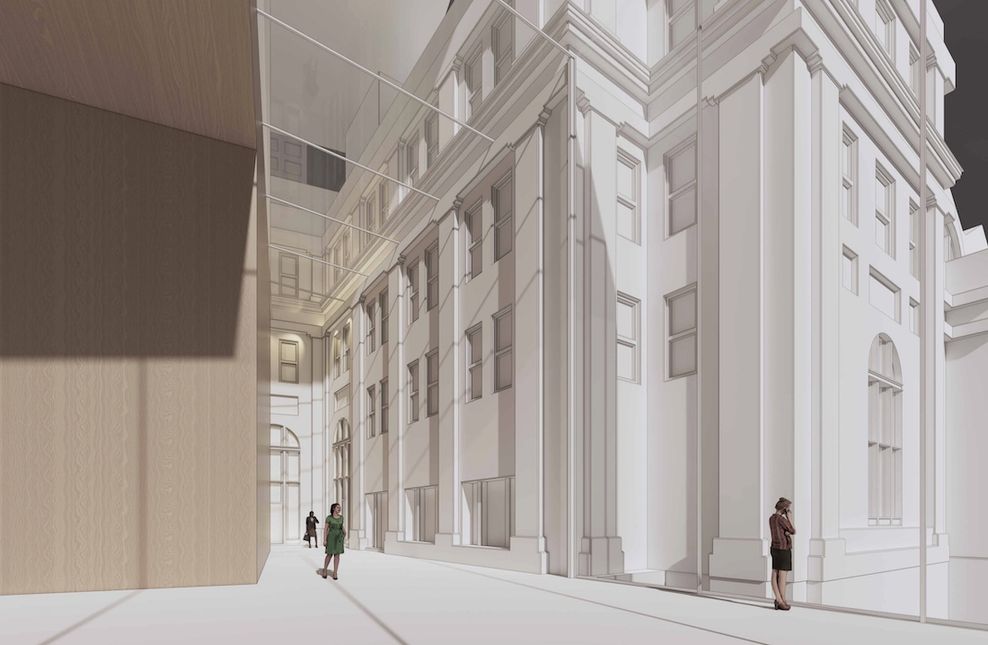
2026 concept of 601 West Cordova St., Vancouver. (James Cheng Architects/Cadillac Fairview)
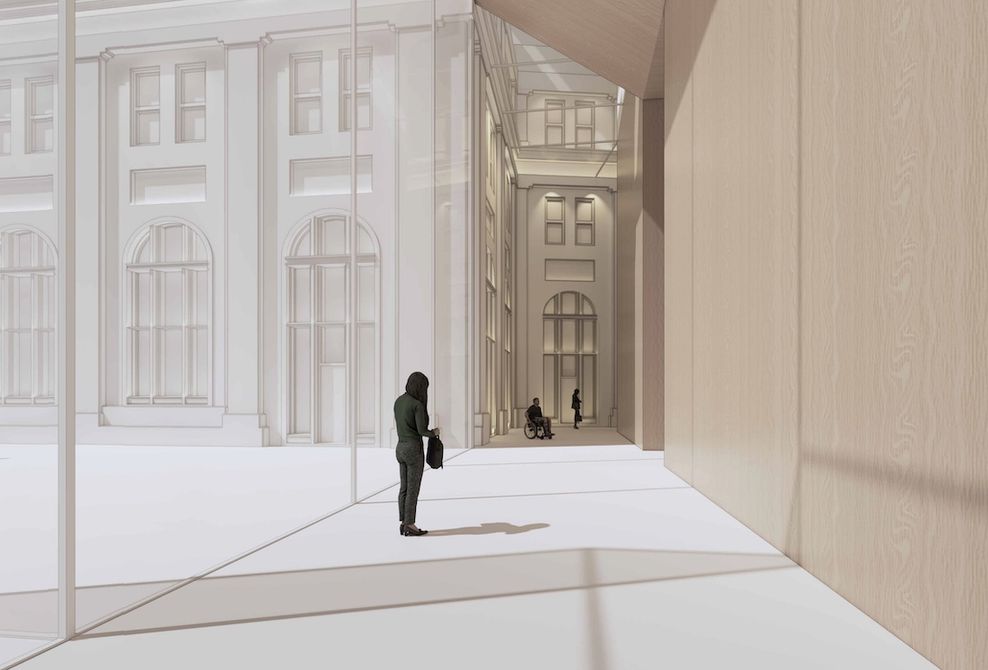
2026 concept of 601 West Cordova St., Vancouver. (James Cheng Architects/Cadillac Fairview)
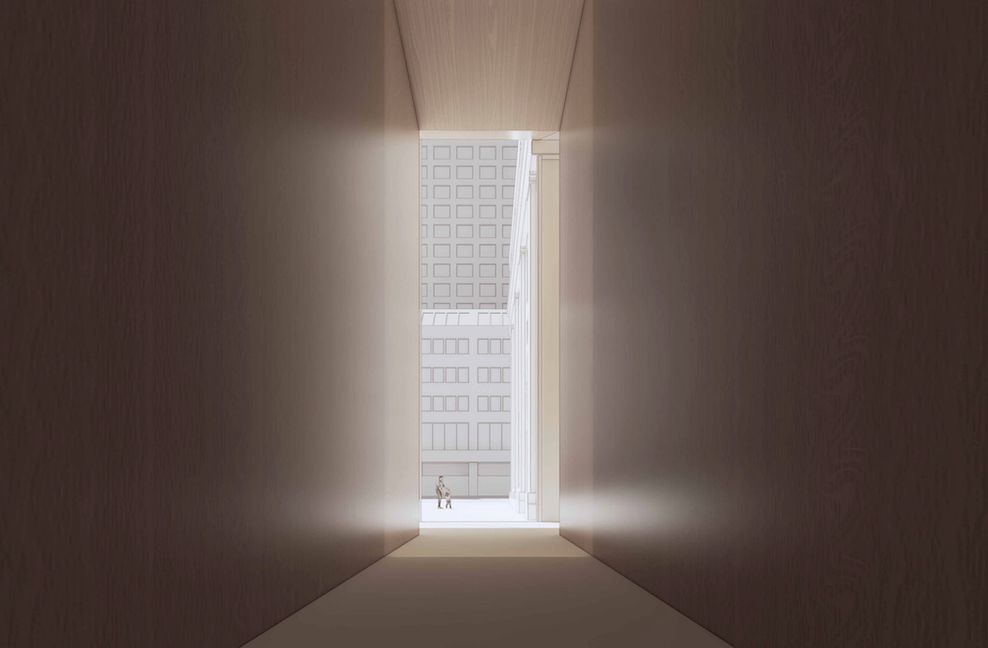
2026 concept of 601 West Cordova St., Vancouver. (James Cheng Architects/Cadillac Fairview)
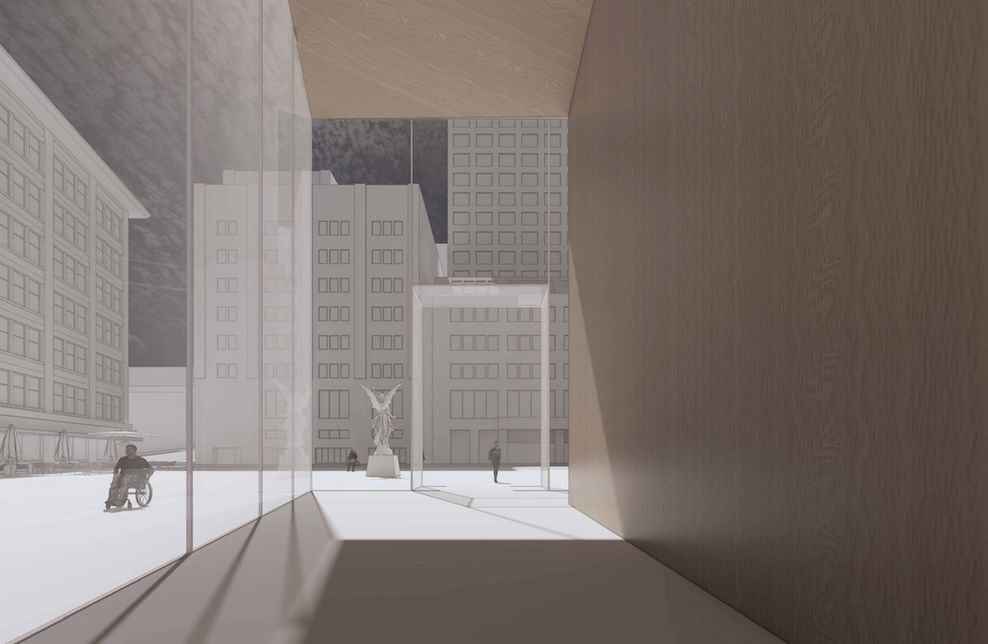
2026 concept of 601 West Cordova St., Vancouver. (James Cheng Architects/Cadillac Fairview)
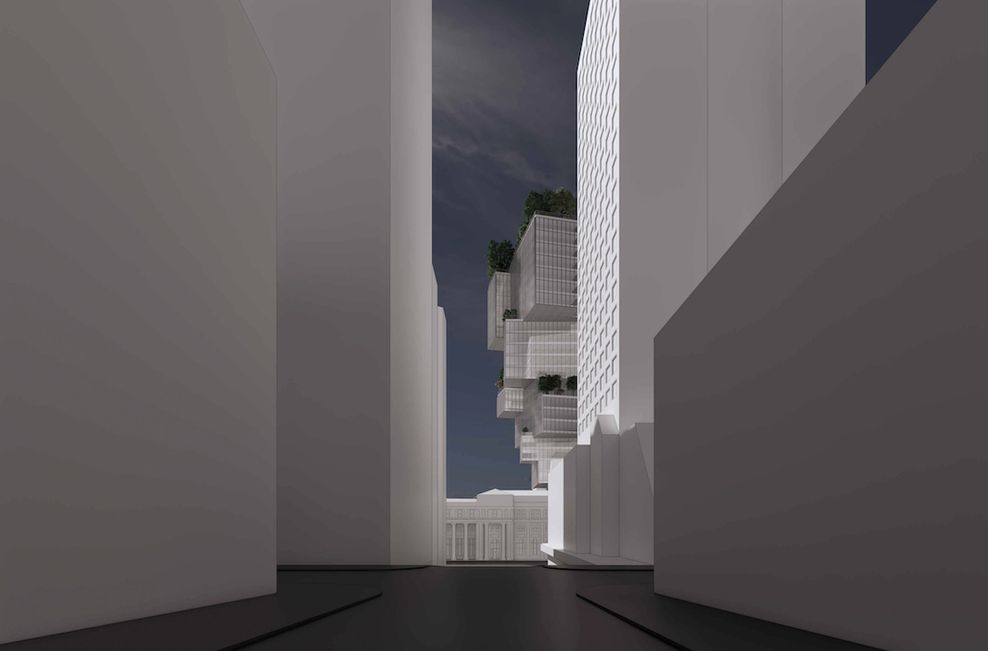
2026 concept of 601 West Cordova St., Vancouver. (James Cheng Architects/Cadillac Fairview)
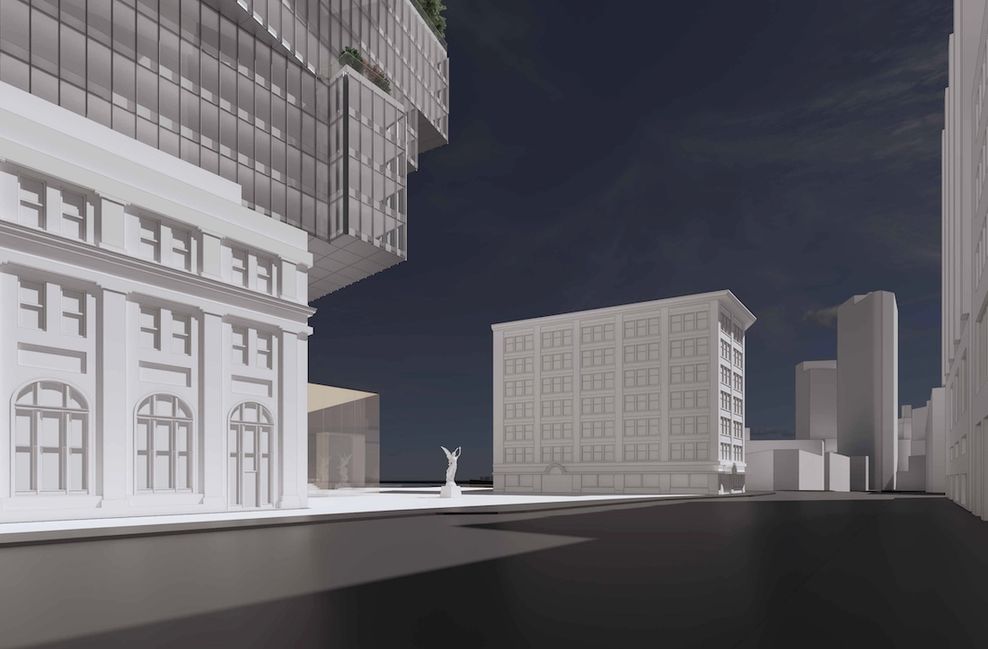
2026 concept of 601 West Cordova St., Vancouver. (James Cheng Architects/Cadillac Fairview)
Like the previous iterations, this proposal includes no new underground vehicle parking, instead relying on existing stalls within Cadillac Fairview’s nearby waterfront properties and limited spaces beneath the station.
“So we’re going to be utilizing existing parking from our waterfront portfolio. And there will be a limited number of stalls available for the tower underneath Waterfront Station,” said Cavanaugh.
Cheng characterized the public transit adjacency as a major strength.
“So this is the most sustainable thing because next to the transportation hub, you don’t need to build a lot of parking. So all the people that work here can just come by SeaBus or SkyTrain or bus. And the West Coast Express,” he said.
“So this is the best place to put this type of a building.”
Cadillac Fairview bets on downtown Vancouver’s office market revival
The timing of the project — amid a still-recovering office sector — raises obvious questions. Cavanaugh argued that long development timelines make present conditions less relevant than future demand.
“We see a lot of strength in the Vancouver office market kind of emerging out of the turbulence of the last several years. We do see renewed interest in the office sector,” added Cavanaugh, who has been leading this project for 12 years. He pointed to signs that leased office vacancy rates may have peaked, with downtown Vancouver’s vacancy rates — while currently elevated — being the lowest among major city centres in Canada and the United States.
Moreover, there is currently no new major office supply in the development pipeline in Vancouver’s market, with other projects proposed and approved years earlier now stalled or cancelled entirely.
He noted that construction on CF Waterfront Tower would take roughly four years following development permit approval and tenant pre-leasing. But all of this hinges on finding a lead tenant for the building, as they would not be building it on speculation. He says the squarish-shaped floor plates are attractive and efficient for tenants to occupy, with some protrusions o multiple levels that enable unique offices, meeting rooms, and amenity spaces.
The protrusions also create rooftop space for mid-building outdoor terraces. Moreover, the entirety of the tower rooftop is envisioned as a large outdoor amenity space. There are some similarities between this concept and Cheng’s design work for the nearby 2023-built The Stack office tower.
Cheng is also known for designing Park Hyatt Vancouver (originally known as the Shangri-La Vancouver — the tallest building in Vancouver — as well as Rogers Tower (originally known as Shaw Tower) and the Fairmont Pacific Rim tower.
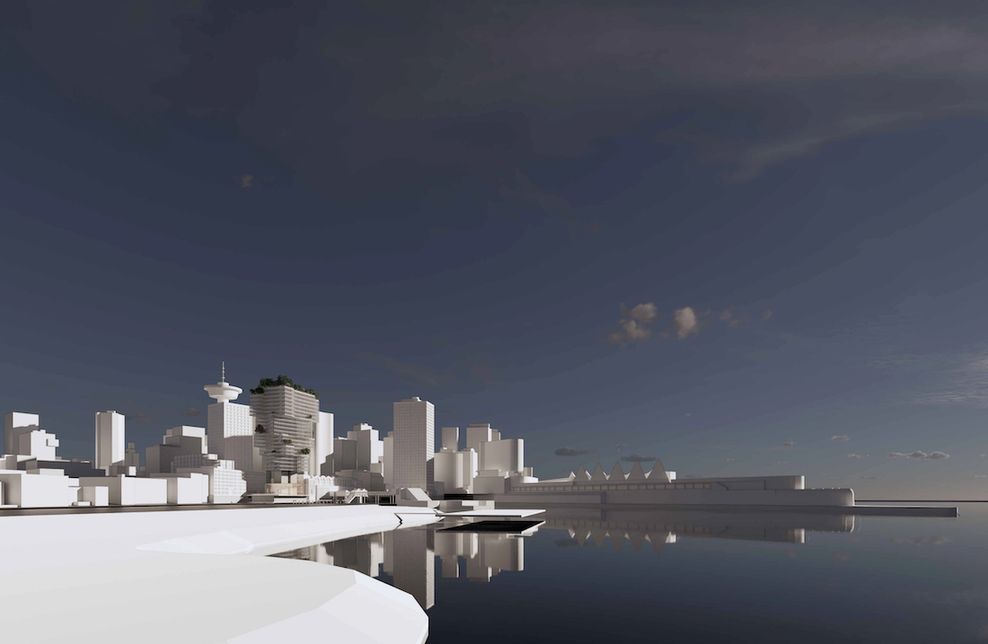
2026 concept of 601 West Cordova St., Vancouver. (James Cheng Architects/Cadillac Fairview)
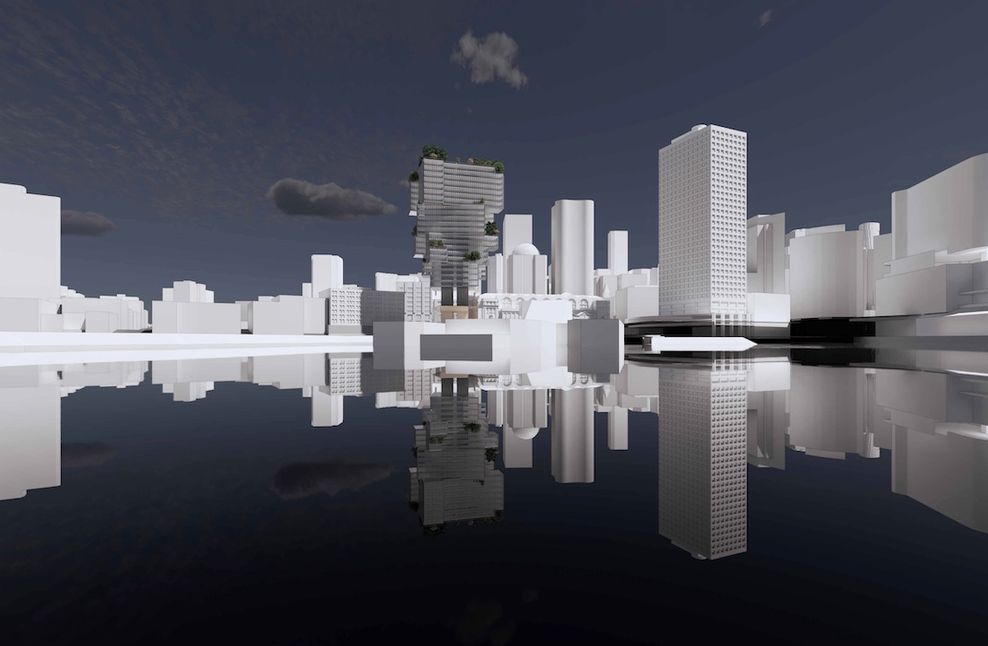
2026 concept of 601 West Cordova St., Vancouver. (James Cheng Architects/Cadillac Fairview)
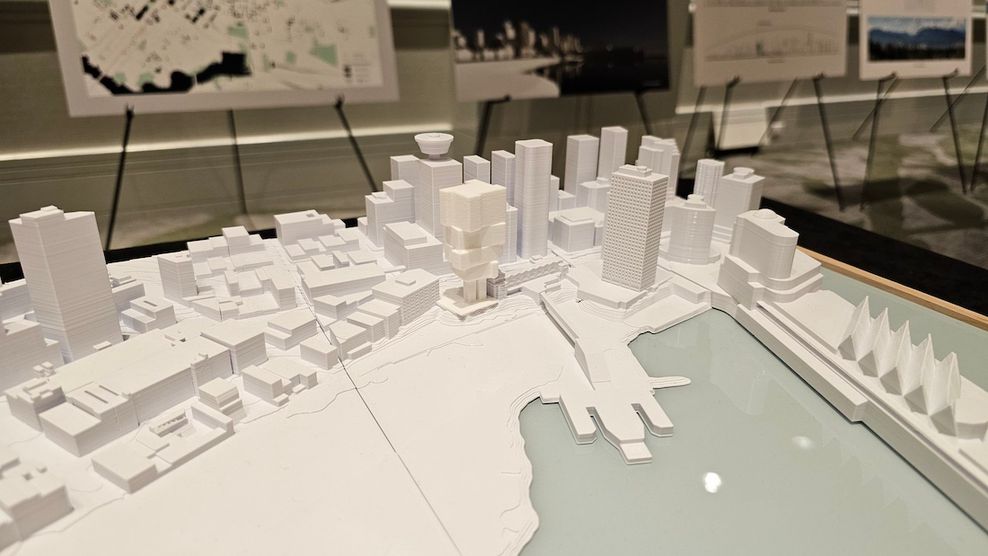
2026 concept of 601 West Cordova St., Vancouver. (Kenneth Chan)
Beyond market fundamentals, Cavanaugh framed the tower as a catalyst for a largely stagnant part of the waterfront.
“East of Canada Place looks the exact same as it did 30 years ago,” said Cavanaugh.
“We think that this building will be a spark that can really kind of stimulate a lot of interest and investment into the area east of Canada Place.”
“I think we solved the rational criticism”
The proposal will be reviewed by the City’s Heritage Commission today and the UDP on Wednesday before heading to the City’s Development Permit Board (DPB) in May 2026. As this is not a rezoning application — as the proposal’s form and uses already align with existing zoning — there will not be a public hearing with Vancouver City Council; this decision will be made by City staff in the DPB.
For Cheng, the hope is that a more contextual, collaborative approach will finally carry the project forward.
“I think we solved the rational criticism,” he said, while acknowledging that architecture inevitably invites subjective debate.
For Cadillac Fairview, the stakes extend beyond a single tower. The company owns multiple nearby properties and is deeply involved in long-term waterfront planning discussions.
Whether this iteration of the Waterfront Station tower succeeds where others failed could also hinge on whether the municipal government agrees that lifting the building — like a tree in a forest — truly leaves room for everything else to grow.
The proponents believe this concept provides ample flexibility for the future evolution of Waterfront Station into a world-class transit hub, and the new redevelopment potential and public spaces that will be enabled immediately to the north, above the Gastown railyard.
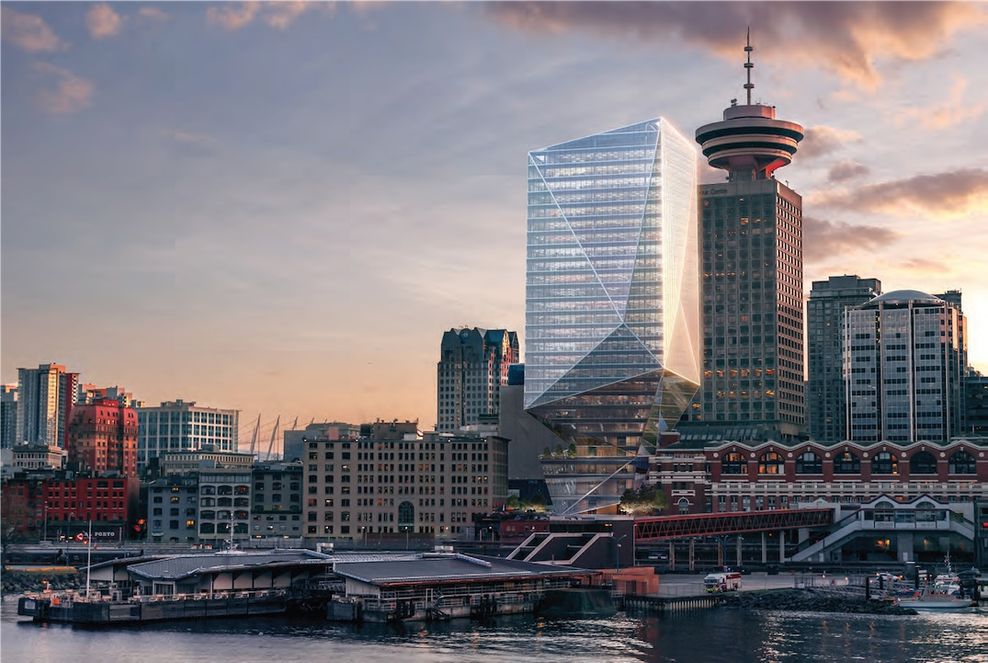
Cancelled: January 2020 artistic rendering of 601 West Cordova St., Vancouver. (Adrian Smith + Gordon Gill Architecture/Cadillac Fairview)
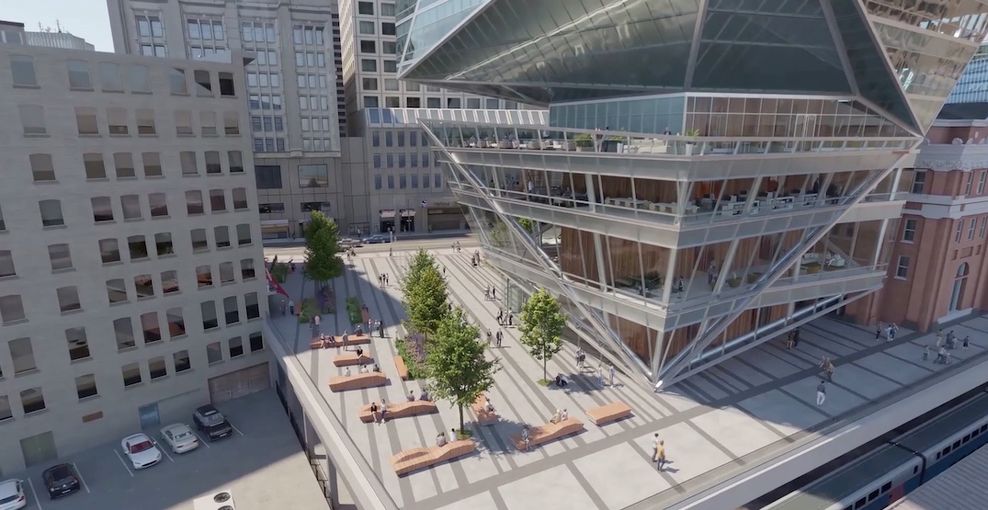
Cancelled: January 2020 artistic rendering of 601 West Cordova St., Vancouver. (Adrian Smith + Gordon Gill Architecture/Cadillac Fairview)
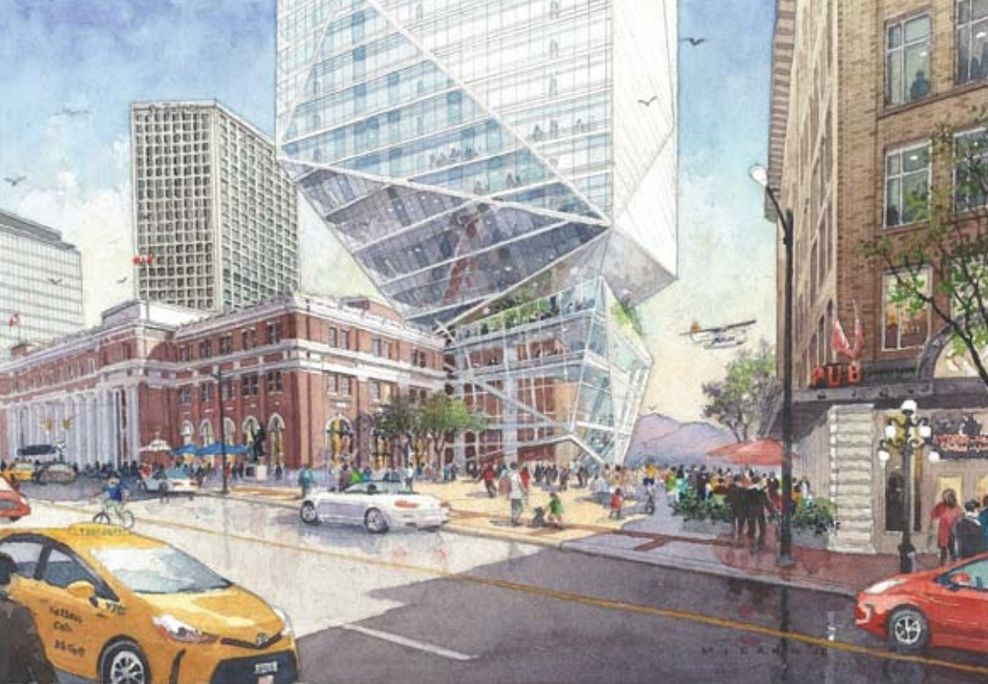
Cancelled: January 2020 artistic rendering of 601 West Cordova St., Vancouver. (Adrian Smith + Gordon Gill Architecture/Cadillac Fairview)
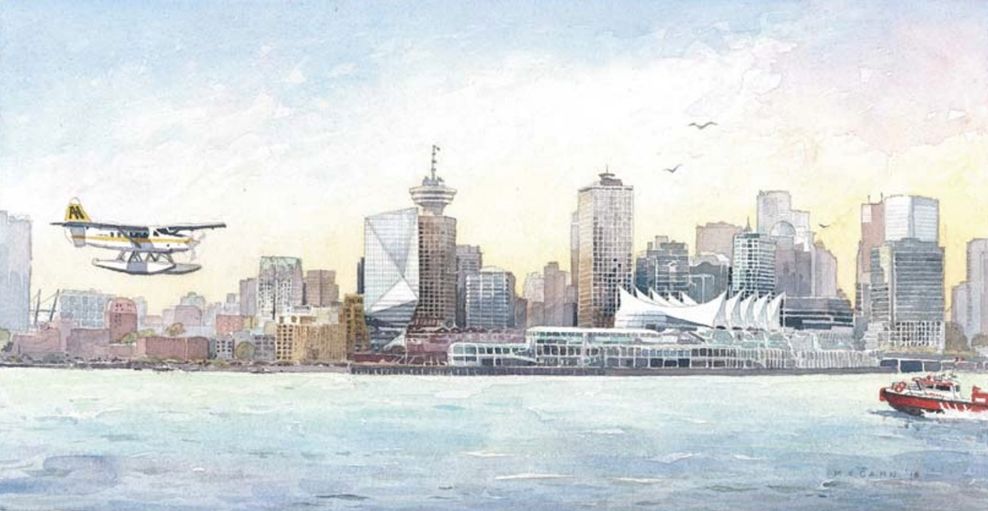
Cancelled: January 2020 artistic rendering of 601 West Cordova St., Vancouver. (Adrian Smith + Gordon Gill Architecture/Cadillac Fairview)