
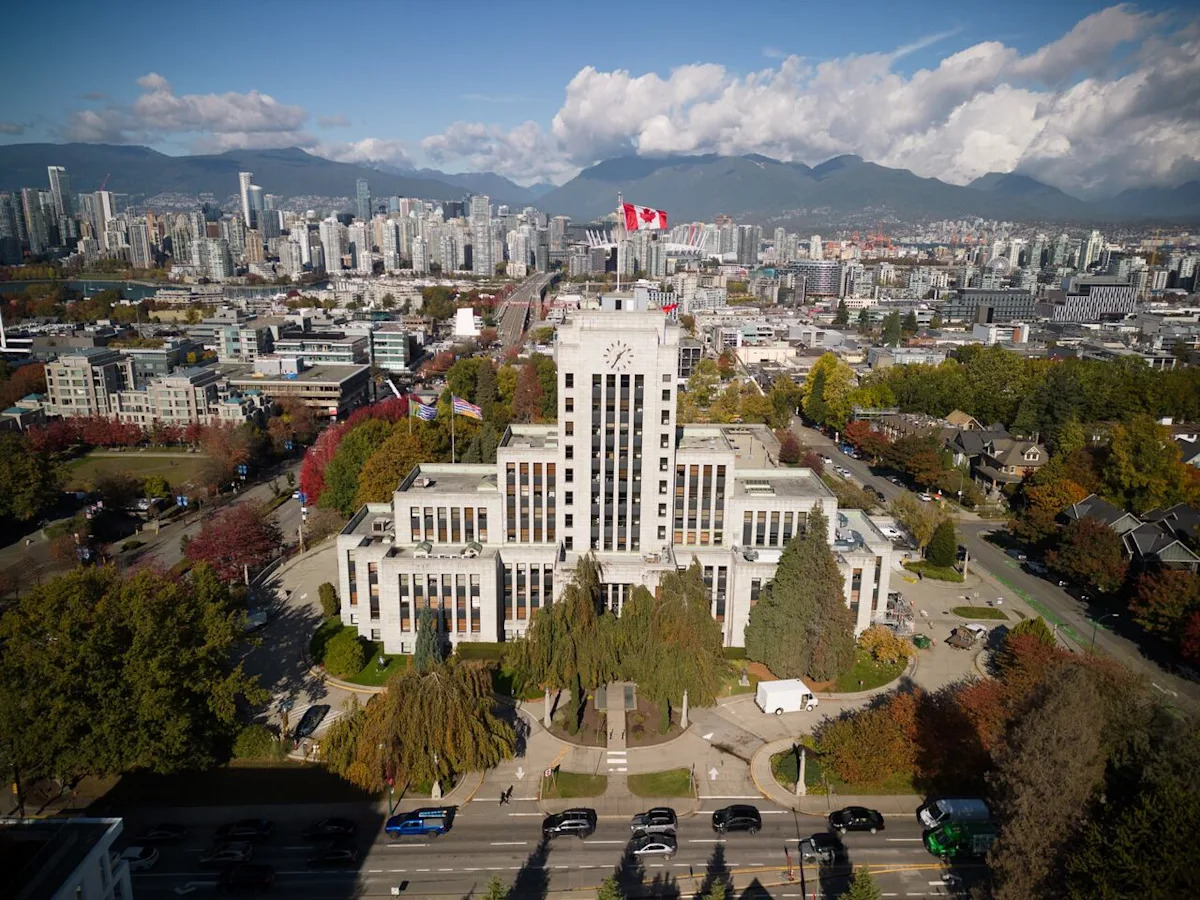
The next 30 years of Vancouver’s growth and change are up for discussion at a public hearing Tuesday evening.
The city’s proposed Official Development Plan, or ODP, maps out the land use for neighbourhoods across Vancouver, fusing together a web of civic policies, plans and strategies. Staff say it will create a cohesive vision of the future.
The ODP is an adaptation of the Vancouver plan, which was also a city-wide land-use strategy passed by council in 2022.
But the Vancouver plan was not enshrined in city bylaw — the ODP must be.
All future development must be consistent with the ODP, which is required to be reviewed and updated at least every five years, starting in 2030.
From where high-rise towers can be built, to what kind of businesses are allowed in which areas, the plan also outlines a future transportation network and future parks and public spaces for the city’s growing population.
And growth is coming: Vancouver is expected to grow by 240,000 residents to a total population of about 998,000 by 2050.
LISTEN | What is Vancouver’s proposed Official Development Plan?:
The provincial government has required the City of Vancouver to pass an ODP by June 30.
One of the major changes resulting from an ODP is that, under provincial legislation, development applications that are consistent with the plan cannot go through the public hearing process if they propose at least 50 per cent residential floor space.
Rezoning would still be subject to staff review and could go through public consultation, according to a city staff report; council would still consider and decide the matter at a regular council meeting.
Clarity for residents or imposing planners’ will?
While current city councillors aren’t permitted to say how they plan to vote prior to a public hearing, Coun. Sarah Kirby-Yung, with Mayor Ken Sim’s majority ABC party, said residents want information on future plans.
“They’re passionate about their neighbourhoods,” Kirby-Yung said. “They want to understand what policies and plans are, how things are going to change.”
“And I think that level of clarity and transparency is really important.”
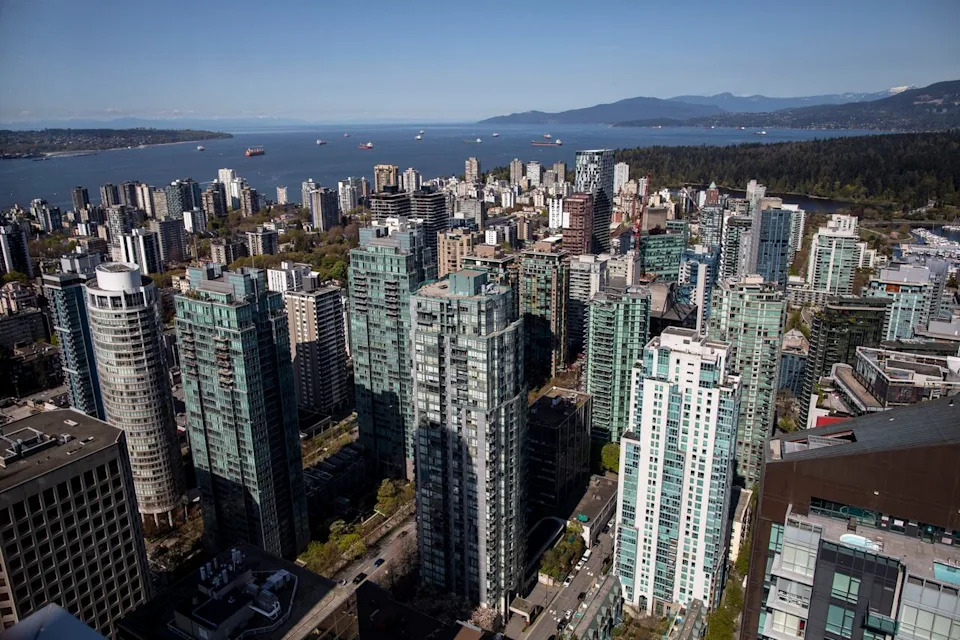
One former city councillor wanted more public feedback on Vancouver’s Official Development Plan, while another says the plan takes into account residents’ considerations around housing. (Ben Nelms/CBC)
Colleen Hardwick, a former councillor planning to seek TEAM Vancouver’s mayoral nomination, said the ODP has not gone through enough public consultation and is too “top-down” from planners.
“Instead of representing the will of the people, we are imposing our will on you.”
But another former city councillor Adriane Carr, whose 2018 motion called for what would become the Vancouver Plan, said the city has been consulting for years.
“It wasn’t staff that … said this is the way we should go; it was the public themselves who said we need a more fair distribution and more robust amounts of really affordable housing.”
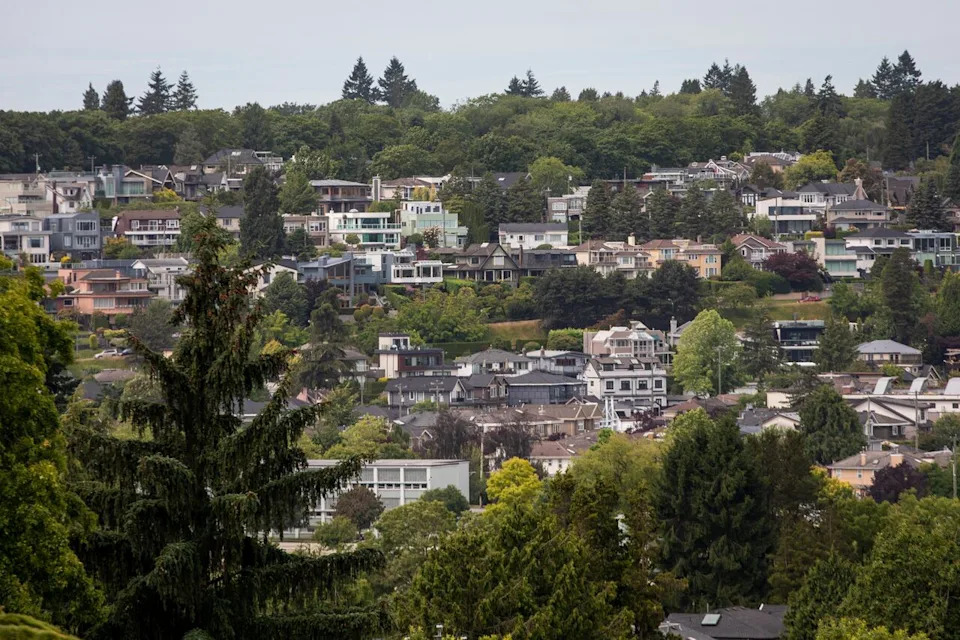
The City of Vancouver says its low-density residential areas ‘consume’ about 65 per cent of the residential land base while providing for about 35 per cent of the population. (Ben Nelms/CBC)
Mapping growth
Much of the ODP is meant to codify and replace Vancouver’s existing plans, such as its housing strategy and climate emergency action plan, as well as area-specific development plans like those for Coal Harbour and East Fraser Lands. But it won’t mean repealing existing area plans like the Broadway Plan or Cambie Corridor Plan.
The ODP also incorporates recent planning principles, including increased density (generally in the form of highrise towers) around SkyTrain stations, multiplex neighbourhoods throughout the city and “villages” of walkable communities.
One of Vancouver’s current challenges, according to the ODP, is “underutilized neighbourhoods.”
“As of 2025, low-density residential areas consume about 65 per cent of the residentially zoned land, while providing for approximately 35 per cent of the population.”
More than a third of the city’s residential neighbourhoods do not have enough residents to support local businesses, according to the plan.
The public hearing will begin at 6 p.m. in council chambers and livestream online.