
For proponents of safer Winnipeg streets, it felt like one step forward, two steps back.
On March 4, Winnipeg city council’s public works committee voted to ask the provincial government to amend the Highway Traffic Act, thus enabling the city the power to lower the default speed limit on residential and minor collector streets to 40 km/h from 50 km/h. The motion from the public works committee must be passed by council at its March 26 meeting.
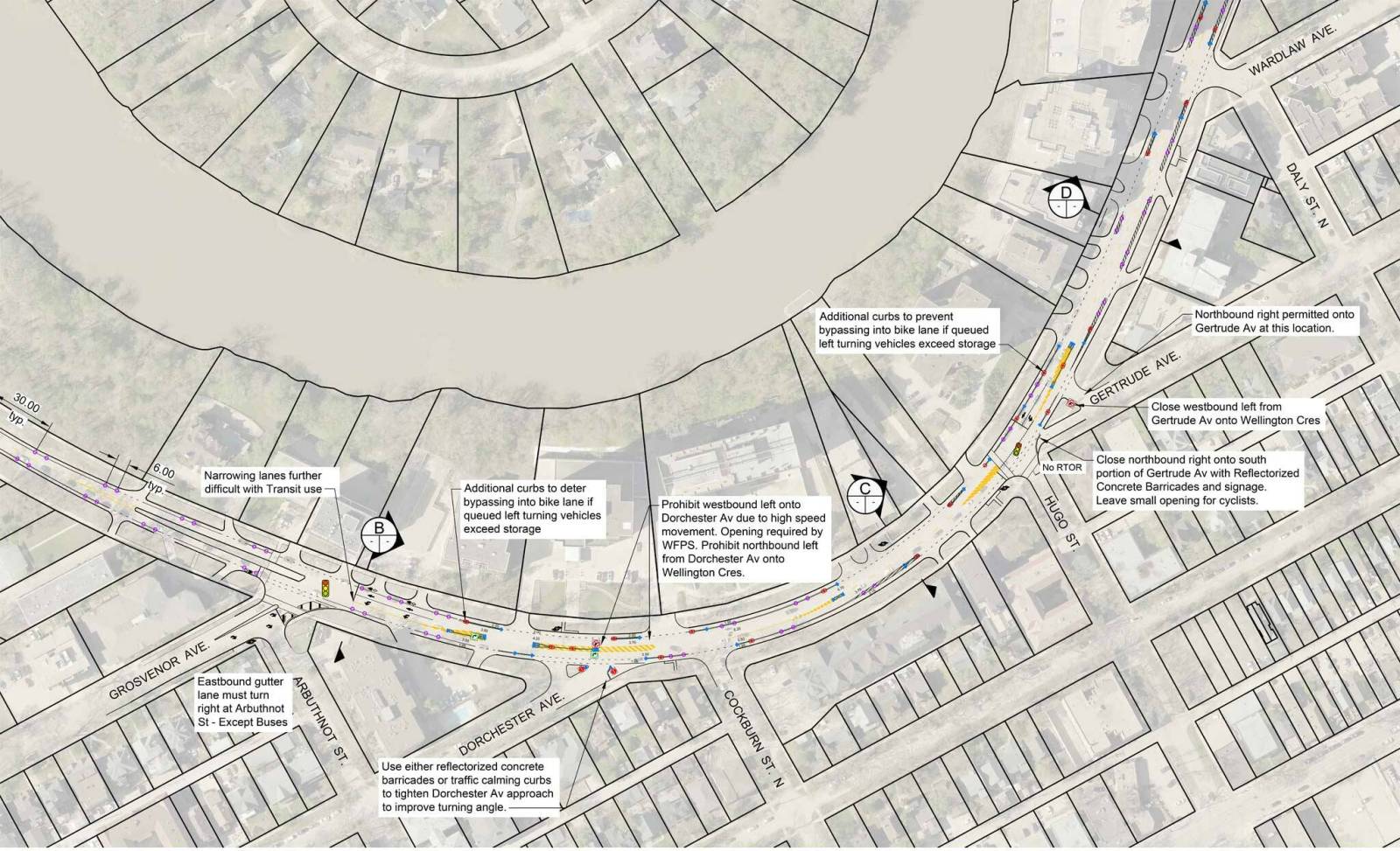
At the same meeting, the committee voted to accelerate the city’s plan to construct permanent bike lines on Wellington Crescent in 2027. The city had initially planned to construct a temporary lane this year and spend $5.5 million to install a permanent lane in 2029. The successful motion, by Coun. Ross Eadie (Mynarski) came only after a similar motion had earlier been defeated.
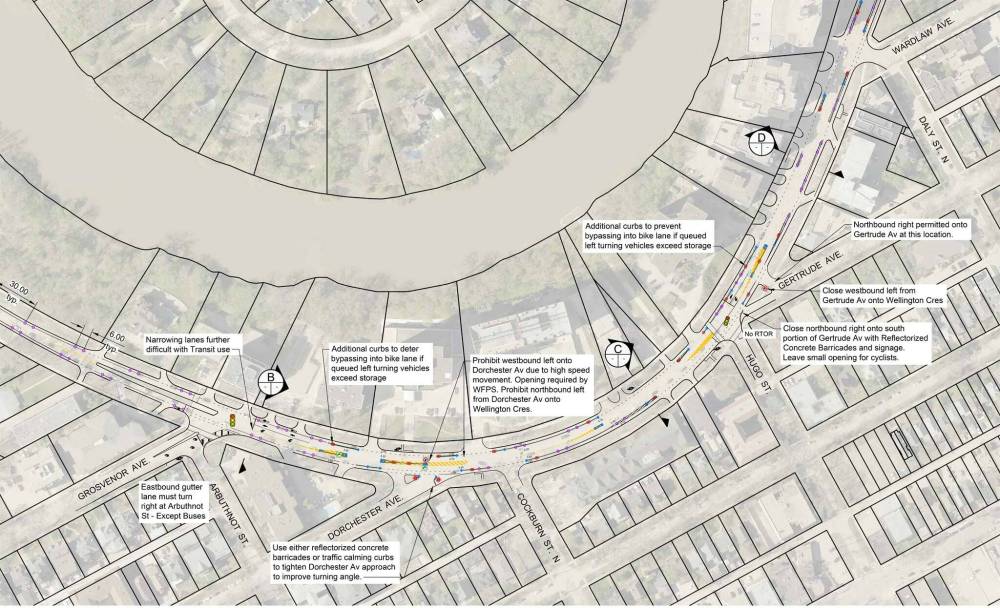
Dozens of Winnipeggers attended the meeting to speak in favour of lowering speed limits and establishing a permanent bicycle lane on Wellington Crescent.
“The elected officials are undermining the will of the community. Why are we fighting so hard for this?” asked Robyn Dyck, a director of Bike Winnipeg, a local cycling advocacy group. “It’s frustrating and tiring and disheartening. Speed reduction should be treated as an urgent, citywide safety intervention, not something that can wait until after the 2026 city election.”
Bike Winnipeg supports reducing the speed limit — but has long advocated for a 30 km/h default on residential streets. The group also supports a permanent bike lane on Wellington Crescent, which was the scene of a fatal hit-and-run accident that led to the death of cyclist Rob Jenner on June 6, 2024, but insists that a temporary lane should be in place until a permanent lane can be completed.
David Patman, manager of transportation planning for the City of Winnipeg, spoke about the consultation process for potential bike lanes along Wellington. He said that, in general, the public supports a permanent bike lane and that implementing a temporary plan will give the public service more time to come up with a design for a permanent lane that would address any issues unforeseen in the design phase.
“We can move things around with the temporary and fine-tune it,” Patman said. “We shouldn’t be afraid of these ideas. We shouldn’t just say, ‘Oh, it’ll never work in Winnipeg.’”
A pair of northeast city councillors spoke against the recommendations. Coun. Jeff Browaty (North Kildonan) spoke against lowering the default speed limit and “the radical bike lobby.”
“Let’s be clear, this change will not make our city safer,” Browaty said. “Pilots in other communities have shown drivers don’t magically slow down just because a sign changes. Without real enforcement or physical traffic calming measures, people ignore the new limit.”
Coun. Russ Wyatt (Transcona) spoke in support of a new three-way stop at Pandora Avenue East and Ravenhurst Street, as well as improving Dugald Road pedestrian infrastructure, but against the new permanent bike lane on Wellington Crescent.
“With so many demands to fix our existing crumbling infrastructure, and with key sections missing in our existing bike path network, why is council once again going to cave into the noisy bike lobby interest group when such dollars need to be saved or spent elsewhere first?” Wyatt read from a press release that he released earlier that morning.
Many delegates who spoke expressed a sense of urgency that policies should be implemented quickly to better protect pedestrians and cyclists .
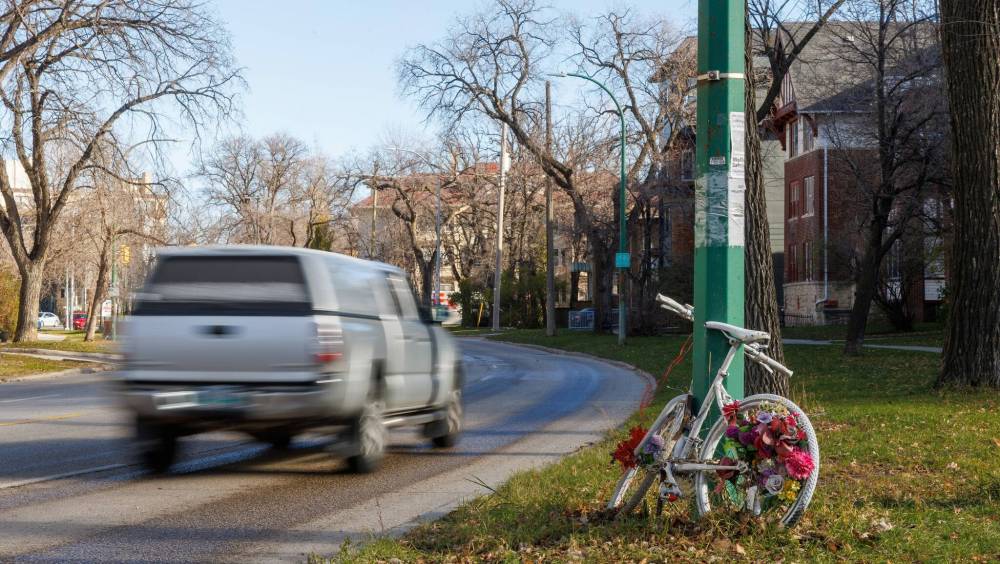
File photo
On March 4, the standing policy committee on public works approved a motion to accelerate the plan for permanent bike lanes to be built on Wellington Crescent in 2027. Initially, the city had planned to spend $5.5 million to do so in 2029.
Ian Walker, a teacher and school trustee in the Louis Riel School Division, refuted Browaty’s argument that lower speed limits would not result in greater safety, citing numerous examples across Europe and North America where lower speed limits have resulted in safer streets.
“I can assure you I am not radical,” Walker said. “I am a parent and a Grade 1-2 teacher … I am a pedestrian, I ride a bicycle, I ride transit, and I drive a car, too. Everyone can get along on our road network.”
“So often in our city, all discussion of active transportation and road safety is viewed through a driver vs. cyclist dichotomy,” Matthew Carvel, an area resident, said in support of a permanent bike lane on Wellington. “We need to move past this. Safe, active transportation is not simply a lifestyle choice. It is a public health measure, a climate action strategy, and a way to make our communities more vibrant.”
“I would love for more people to experience the joy of cycling and walking safely,” said Ann Loewen, a physician who spoke in favour of improvements to Wellington Crescent. “In my profession, I would like to encourage more people to cycle or walk, which I do, but I have to modify the condition about cycling, to only do it if you can be safe.”
“Safety delayed is safety denied,” said Dyck, of Bike Winnipeg. “They had due diligence, they had consultations. The public service pushed hard. We appreciate their work. They tried to bring some logic to the chaos. This is about public safety.”
Patman explained that asking the province to change the Highway Traffic Act is just the first of many steps required to make speed-limit changes. If the province approves the request, another vote of first the public works committee and then the full city council would be required to actually change the default limits.

Sheldon Birnie
Community Journalist
Sheldon Birnie is a reporter/photographer for the Free Press Community Review. The author of Missing Like Teeth: An Oral History of Winnipeg Underground Rock (1990-2001), his writing has appeared in journals and online platforms across Canada, the U.S. and the U.K. A husband and father of two young children, Sheldon enjoys playing guitar and rec hockey when he can find the time.
Email him at sheldon.birnie@freepress.mb.ca
Call him at 204-697-7112
Our newsroom depends on a growing audience of readers to power our journalism. If you are not a paid reader, please consider becoming a subscriber.
Our newsroom depends on its audience of readers to power our journalism. Thank you for your support.