
Getty
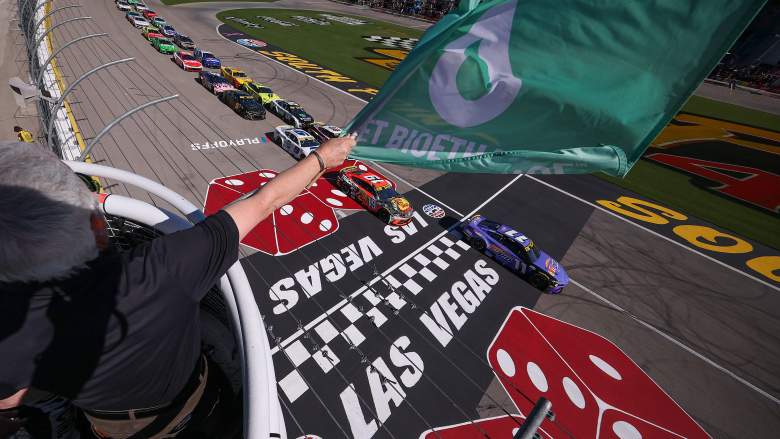
Las Vegas Motor Speedway hosts two NASCAR Cup Series races each season, including the Pennzoil 400 presented by Jiffy Lube.
The NASCAR Cup Series is headed back to the desert.
On Sunday, drivers will take on Las Vegas Motor Speedway in the Pennzoil 400 presented by Jiffy Lube, one of the fastest and most competitive intermediate-track races on the schedule.
Las Vegas has become one of the most important stops on the NASCAR schedule. The 1.5-mile oval regularly produces high speeds, multiple racing grooves, and the kind of late-race battles that can shake up the championship standings.
Before the green flag drops in Nevada, here are five things every NASCAR fan should know about Las Vegas Motor Speedway.
1. Las Vegas Motor Speedway Is a 1.5-Mile Tri-Oval
Las Vegas Motor Speedway is a 1.5-mile tri-oval, the same track length used by several other major NASCAR venues, including Kansas, Charlotte, and Texas.
Intermediate tracks like Las Vegas make up a large portion of the NASCAR Cup Series schedule, and they tend to produce some of the most balanced racing in the sport. Cars carry a lot of speed, but drivers still have to manage tire wear, handling, and track position over long runs.
Sunday’s Pennzoil 400 will cover 267 laps around the speedway, totaling 400.5 miles.
2. The Track Opened in 1996
Las Vegas Motor Speedway opened in 1996 and quickly became one of the most important motorsports venues in the western United States.
Although the facility opened in 1996, it did not host its first NASCAR Cup Series race until 1998. Mark Martin won that inaugural event, helping establish Las Vegas as a regular stop on the NASCAR schedule.
Today the complex hosts a wide range of racing events throughout the year, but NASCAR remains the centerpiece of the calendar.
The track was reconfigured in 2006, adding progressive banking that helped create multiple racing grooves. That change helped create multiple racing grooves and made side-by-side racing much more common during NASCAR races at Las Vegas.
3. Banking Helps Create Multiple Racing Lines
One reason Las Vegas races tend to be competitive is the track’s progressive banking.
The turns feature 20 degrees of banking, which allows drivers to carry significant speed through the corners. The design also gives drivers room to experiment with different lines, whether they run close to the bottom of the track or higher up against the outside wall.
When multiple grooves come into play, passing opportunities increase, especially during restarts and late-race battles.
4. Tire Wear Often Decides the Race
Even though Las Vegas is known for speed, managing tire wear is still one of the biggest challenges drivers face.
As the race goes on and the tires lose grip, cars can become difficult to handle on long green-flag runs. Drivers who conserve their tires often become faster later in a run, while others fade.
Because of that, crew chiefs constantly have to balance pit strategy, track position, and fresh tires when deciding whether to take two tires or four during pit stops.
5. Las Vegas Is Now a Key Stop on the NASCAR Schedule
Las Vegas Motor Speedway now hosts two NASCAR Cup Series races each season.
The spring race is the Pennzoil 400, while the track also hosts a playoff race in the Round of 8, one of the final events that determines which drivers advance to the NASCAR Championship race.
That playoff date has elevated Las Vegas into one of the most consequential stops on the entire NASCAR calendar.
Maggie MacKenzie Maggie MacKenzie covers NASCAR for Heavy.com. She previously worked for NASCAR.com, where she reported, wrote, and edited race-weekend coverage and traveled to key events throughout the season. She has more than ten years of experience in sports media and is based in Boston, Massachusetts. More about Maggie MacKenzie
More Heavy on NASCAR
Loading more stories