
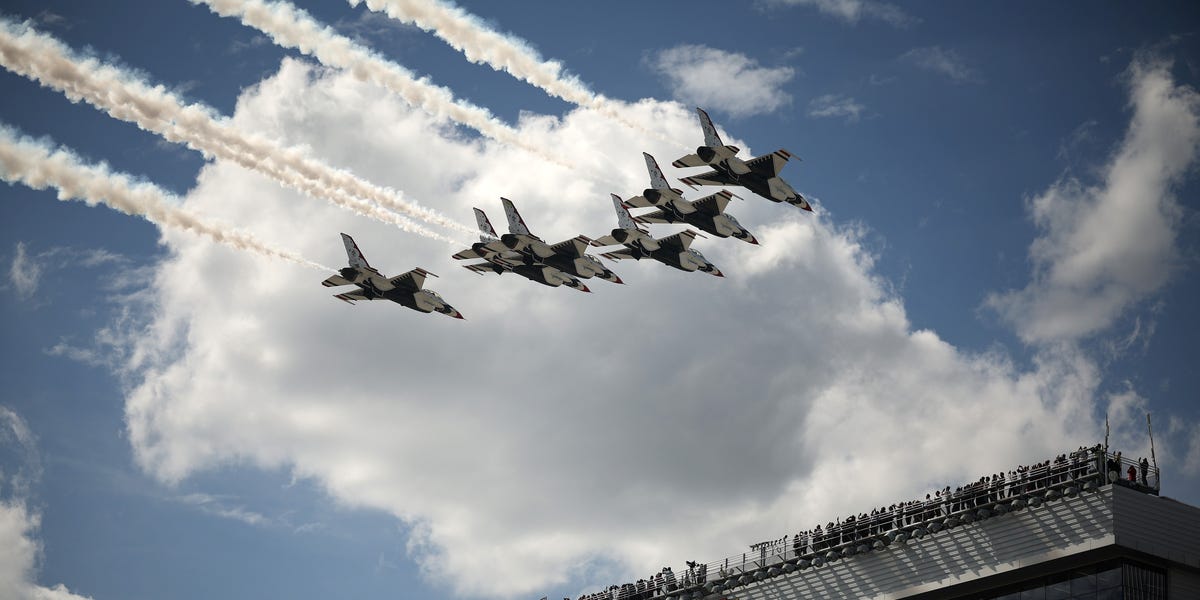
Due to the g-forces NASCAR drivers endure during a race, US Air Force Thunderbirds pilots say they can execute maneuvers when giving rides to the competitors that they couldn’t perform with people who don’t operate high-performance vehicles on a daily basis.
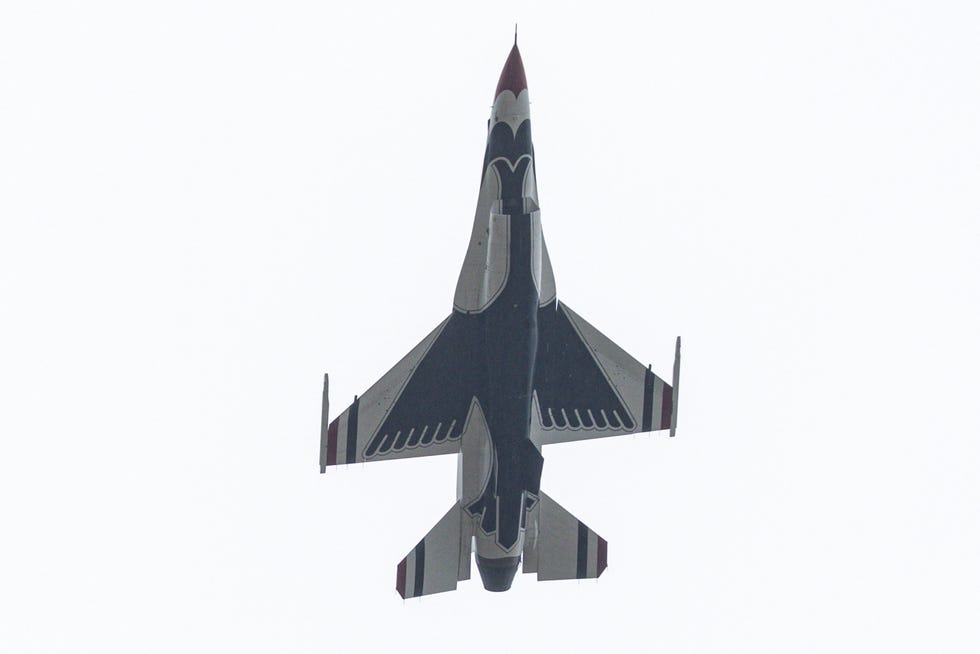
“We got to show them some dog fighting,” Maj. Samuel Larson said after he and Lt. Col. Tyler Keener gave rides in their F-16 Fighting Falcons to John Hunter Nemecheck and Connor Zilisch. “They handled it well above average. Both got into 9.2 gs, which is pretty impressive for our first flight.”
Related Story
The Thunderbirds are based at Nellis Air Force Base which is located behind Las Vegas Motor Speedway. Even though the Thunderbirds are an aerial demonstration team, they are part of the United States active combat force and can be combat-ready within 72 hours. Nellis is also the home of the 57th Wing, so it’s not unusual to see fighter jets practicing maneuvers while attending an event at the 1.5-mile track.
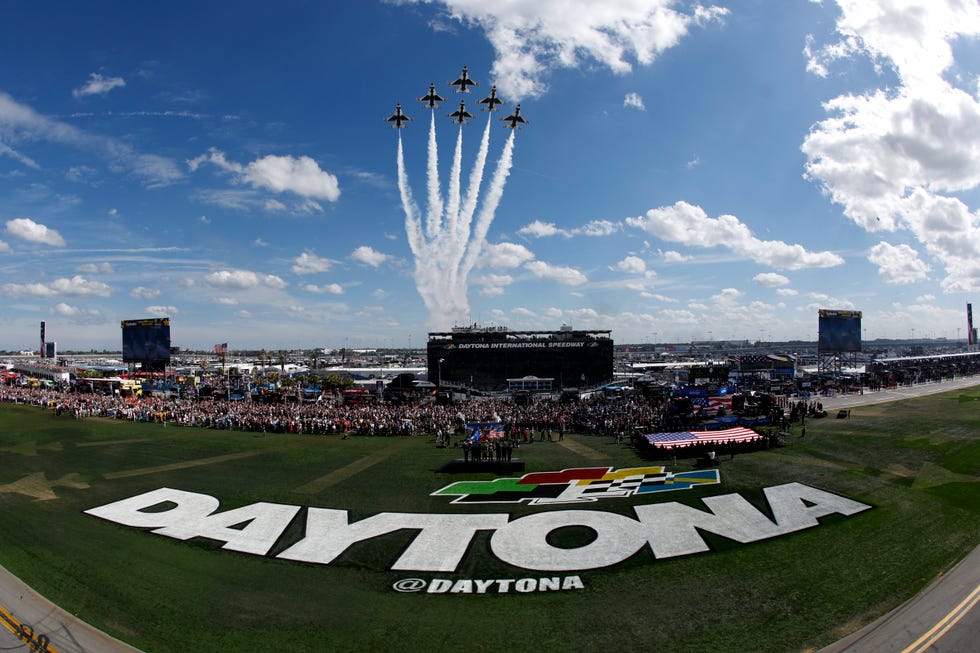
For 16 consecutive years, the Thunderbirds have performed the flyover for the season opening Daytona 500. This year prior to the prestigious event was when Nemechek and Zilisch received their Thunderbird indoctrination.
NurPhoto//Getty Images
Keener said they were initially given clearance for an unrestricted climb up to 10,000 feet from the Daytona Beach, Florida, airport.
“We stayed as low to the runway as we could and then pulled straight up in the air, 7 gs on that initial pull, and then right up to 10,000 feet in a matter of seconds, and then out to the air space to do everything,” Kenner said. “That was totally based on their (the drivers’) attitude, their level of enjoyment, and their capability.
“I felt like 9 gs didn’t sound crazy to me until you’re holding it for three, four, five seconds.”
“Even if drivers get sick, we’re always confident that drivers are going to be incredible passengers in the jet based on how they can handle machinery and performance and how fit they are. At one point we got to the negative-g portion of the (flight) sortie. I have a bag that I typically carry with me with some of my gear in it. We’re upside down pushing a negative g, and my bag flew back to Connor and he’s like, ‘I have your stuff.’”
During a race, NASCAR drivers typically experience 3 to 5 gs of lateral force while on an oval’s banked turns. The steeper the banking the higher the g forces. The 3 to 4 gs a driver feels are comparable to what astronauts feel during a shuttle launch. At 5 gs, a driver’s head and helmet can weigh more than 60 to 70 pounds.
Related Story
“There were a couple of times we did 9 gs,” Zilisch said. “I think the thing that surprised me most was how long it lasts. You can get up to 50, 60, 70 Gs in a really bad (racing) crash, but it’s instantaneous. I felt like 9 gs didn’t sound crazy to me until you’re holding it for three, four, five seconds.”
Larson said they try to give their passengers a “heads up” regarding a maneuver, but that doesn’t always happen,
“There might have been a couple times I forgot to warn John Hunter (Nemechek),” Larson said with a smile.
Sean Gardner//Getty Images
Nemechek described flying with the Thunderbirds as “probably one of the most amazing experiences of my life.” He admitted he was “pretty close” to getting sick at one point, because he felt like his stomach was halfway up his throat.
Zilisch echoed Nemechek’s sentiments, calling it “one of, if not the coolest” experience he’s ever had.
“Everything that they do inside the cockpit of those things, it’s pretty incredible,” Zilisch said.

A North Carolina native, Deb Williams is an award-winning motorsports journalist who is in her fourth decade covering auto racing. In addition to covering the sport for United Press International, she has written motorsports articles for several newspapers, magazines and websites including espnW.com, USA Today, and The Charlotte Observer. Her awards include the American Motorsports Media Award of Excellence, two-time National Motorsports Press Association writer of the year, and two-time recipient of the Russ Catlin award. She also has won an award in the North Carolina Press Association’s sports feature category. During her career, Deb has been managing editor of GT Motorsports magazine and was with Winston Cup Scene and NASCAR Winston Cup Scene for 18 years, serving as the publication’s editor for 10 years. In 2024 she was inducted into the NMPA Hall of Fame.