
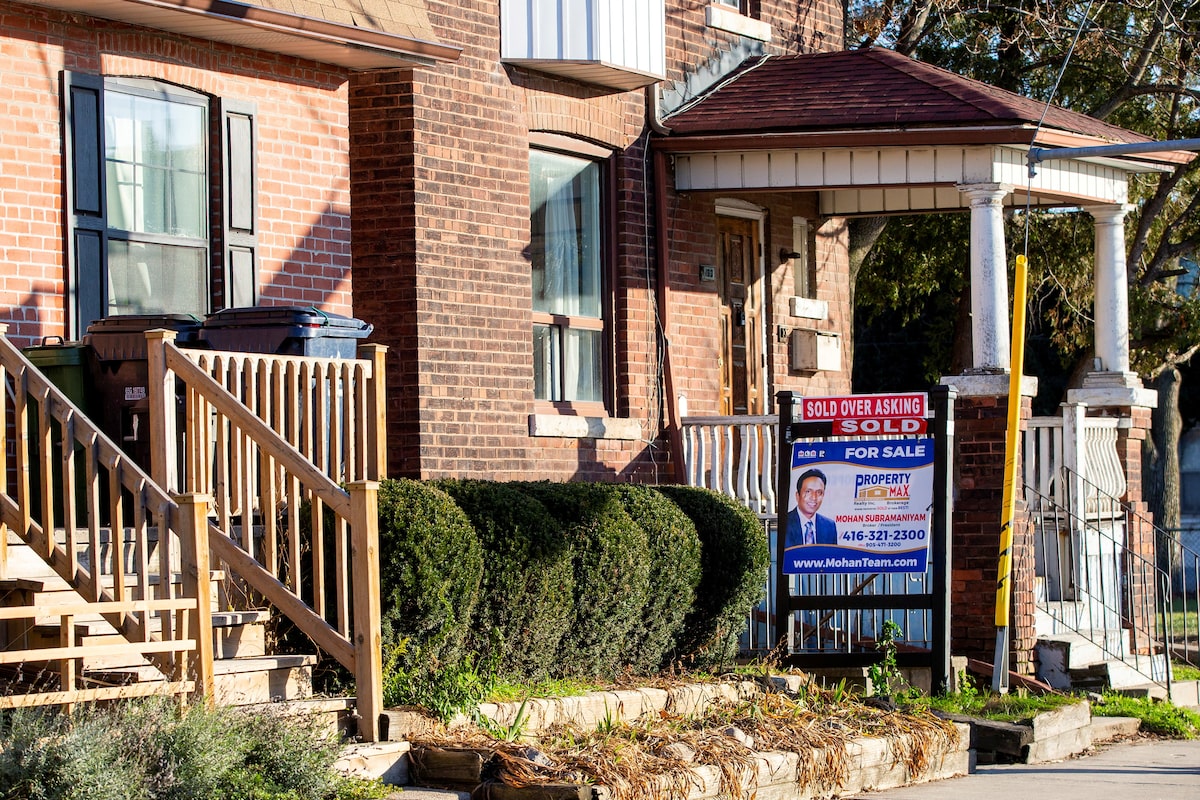
A for sale sign is displayed outside a home in Toronto. War in the Middle East has upended Bank of Canada rate expectations and could lead to higher mortgage rates.Carlos Osorio/Reuters
2026 was supposed to be an unremarkable year for mortgage rates.
The Bank of Canada was signalling that it would hold interest rates for the foreseeable future, and bond yields (which lenders base their mortgage rates on) were trending down and keeping fixed-rate mortgages low.
Now, the conflict in the Middle East has completely upended that narrative. Iran has shut down the Strait of Hormuz, causing a major spike in oil prices. The increase could result in widespread inflation, which would spur the BoC to hike rates. Meanwhile, the Canada five-year bond yield has already jumped from the 2.7 mark to 3 per cent for the first time since the beginning of 2026.
All of this spells higher fixed and variable mortgage rates. Victor Tran, a mortgage specialist for Rates.ca, said lenders he works with at his brokerage have already increased fixed rates by 10 to 15 basis points since the beginning of the Iran war.
So if you’re a homeowner who’s renewing your mortgage this year or looking to purchase your first home, what should you do? There are two likely scenarios to consider.
How to choose a mortgage rate in war time
The first is that U.S. President Trump backs off from the war quickly, like he did after he came out swinging for a global trade war and talked boldly about acquiring Greenland from Denmark. This is the outcome that CIBC deputy chief economist Benjamin Tal believes is most likely.
Mr. Tal expects the war might be short-lived, and adds that it would only take weeks or months for markets to return to normal after a quick end to the conflict. After that, we’d likely return to the same boring trajectory for the rest of 2026, in which rates remain stable (at least until the next major shakeup from the Oval Office).
Even if you’re inclined to think that the war will end quickly, however, now is a good time to get a rate hold from your potential mortgage lender. Most lenders will allow you to hold a rate for 120 days before signing, and fixed three-year and five-year rates today are still quite competitive at the mid-3 per cent mark.
“People need to lock in rates right now,” said Mr. Tran of Rates.ca, who added that he’s advising all of his clients to secure rate holds as soon as possible.
Holding a rate now also prepares you for the second possible scenario, in which the war in Iran is only beginning and will drag on for the foreseeable future. This is a more troubling outcome for people renewing their mortgages – especially if you’re renewing a mortgage from the early pandemic days and are already expecting your payments to spike.
Mr. Tal said the BoC will be forced to increase interest rates if the war continues, because if oil prices continue to rise, that would apply broad inflationary pressure across the economy.
According to data from Bloomberg, markets have already reacted to this possibility by pricing in expectations that the central bank will hike rates by a quarter per cent by the end of 2026. (For now, markets and experts such as Mr. Tal expect the BoC to hold rates when it convenes next week.)
Bond yields could also continue to swell during an extended war, putting more upward pressure on fixed mortgage rates.
Mr. Tran says that Canadians need to be proactive in this kind of tumultuous economic environment.
For those who are worried about higher payments or the possibility of losing their job, Mr. Tran recommends reaching out to a broker or your lender well before your renewal to discuss whether you have options for extending your amortization, if necessary, to help lower your monthly payments. He added that doing so could insulate you from inflation or allow you to hang on to your home if you lose your job.
The type of mortgage you have and its insurance status will dictate how much flexibility you have. In some cases, changing your amortization or switching providers could require time-consuming legal work. Mr. Tran said that if you leave this process to the last minute, you may be limiting your options or your ability to extend your amortization.
Meanwhile, a rate hold is a worthwhile option with zero risk if you’re planning to sign with a new mortgage lender. If rates end up dropping, you can still take the lower price.
For people who plan to stick with their current lender, rate holds aren’t generally available. Instead, borrowers can opt to renew as much as six months early.
Borrowers today are likely to still have lower mortgage rates from the pandemic, so an early renewal to a higher rate might not seem like a good idea. But if you’re anxious about a prolonged conflict leading to much higher interest rates, Mr. Tran says it’s an option you can consider.
“Typically when the lender offers early renewals, they’re not the most attractive rates, but it depends on individual circumstances,” he says. “But it’s not a bad option if a person foresees higher rates in a few months.”