
CTV News’ U.S. Political Analyst Eric Ham on how politics will play into the course of the conflict between U.S. and Iran.
Eric Ham is based in Washington, D.C. and is a political analyst for CTV News. He’s a bestselling author and former congressional staffer in the U.S. Congress and writes for CTVNews.ca.
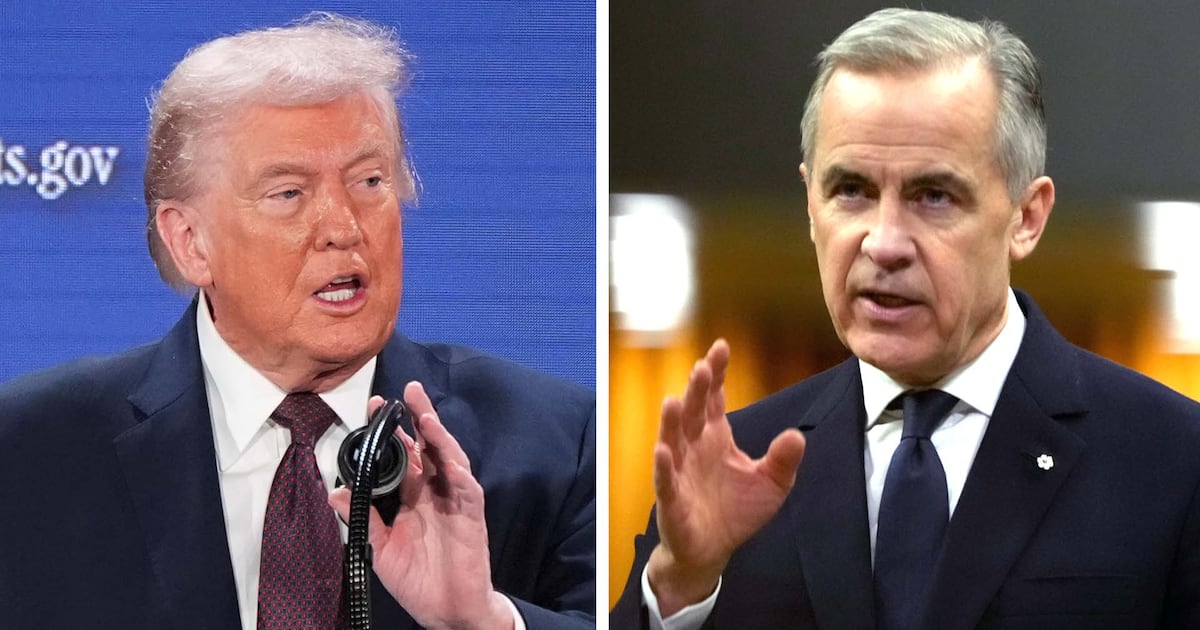
Notwithstanding U.S. President Donald Trump’s latest trolling of Prime Minister Mark Carney, in which he once again referred to him as future “Governor of Canada,” at least this time he kept Ottawa out of his direct crosshairs.
The U.S. decision to attack Iran has seen American allies in the region endure the wrath of Tehran’s response. However, as the U.S. continues to flail and the president portends America’s hasty exit from the military entanglement, it is Ottawa’s standing and potential leverage over upcoming CUSMA talks that provide an opening.
The latest jobs reports revealed the U.S. economy lost 92,000 jobs and the unemployment rate ticked up to 4.4%. Long-term unemployment also surged higher, with the average duration of unemployment at 25.7 weeks, the longest since December 2021.
Trump needs a win
The grim news comes just as President Trump confronts historically low approval ratings. According to various polls, more than half of the American people disapprove of the president’s handling of his job. Adding insult to injury, once-stalwart allies are abandoning the nation in droves just as the president grows more isolated at home. Now, more than ever, the White House needs a win.
Ottawa’s desire to maintain CUSMA could be the salve to the Trump administration’s self-inflicted wound. The free-trade agreement has greatly benefited each country and the region as a whole. Always the master seller, President Trump would enthusiastically promote a newly negotiated framework, complete with improvements and additional safeguards.
Such a move would certainly assuage U.S. markets and C-Suite executives already jittery over the growing shocks caused by the war in the Middle East. Such a win could also stop the hemorrhaging of the president’s political support.
A political win could go a long way in stopping the precipitous slide the president’s party has experienced in recent special elections. This brief respite for Canada comes as many other U.S. partners struggle to contain the growing crisis impacting their markets and economies.
Japan’s Nikkei saw its stocks dramatically plummet on the news of skyrocketing oil prices. Moreover, EU finance ministers are scrambling to contain the economic fallout caused by the White House’s surprise military operation.
In fact, the collateral damage has been both swift and exacting for much of the world. In some instances, global leaders are fighting to ward off a two-front war: the actual strikes plaguing the region and a volatile commander-in-chief.
Canada escapes the carnage
President Trump has threatened to end all trade with Spain and castigated the U.K.’s Prime Minister Keir Starmer for their refusal to join the war effort. Thoroughly ironic, considering the White House has routinely diminished European allies since returning to power. The Trump administration routinely lashes out at NATO, berates the European Union and continually undermines the multilateral democratic framework built and upheld by Western powers for generations.
Surprisingly, however, the harm has been less severe for America’s northern neighbour, compared to the growing carnage impacting other nations aligned with the U.S. Not just economic catastrophe, heads of government are absorbing baseless attacks from the thin-skinned president as they opt out of another misguided military incursion in the Middle East.
Canada, surprisingly, has remained relatively unscathed; both from the war’s direct impact as well as from President Trump’s direct ire. In fact, on Feb. 28, hours into the U.S. airstrikes, the Canadian Association of Chiefs of Police wrote that “based on current intelligence, there is no indication of any imminent threat to Canada or Canadians.”
More from Eric Ham: