
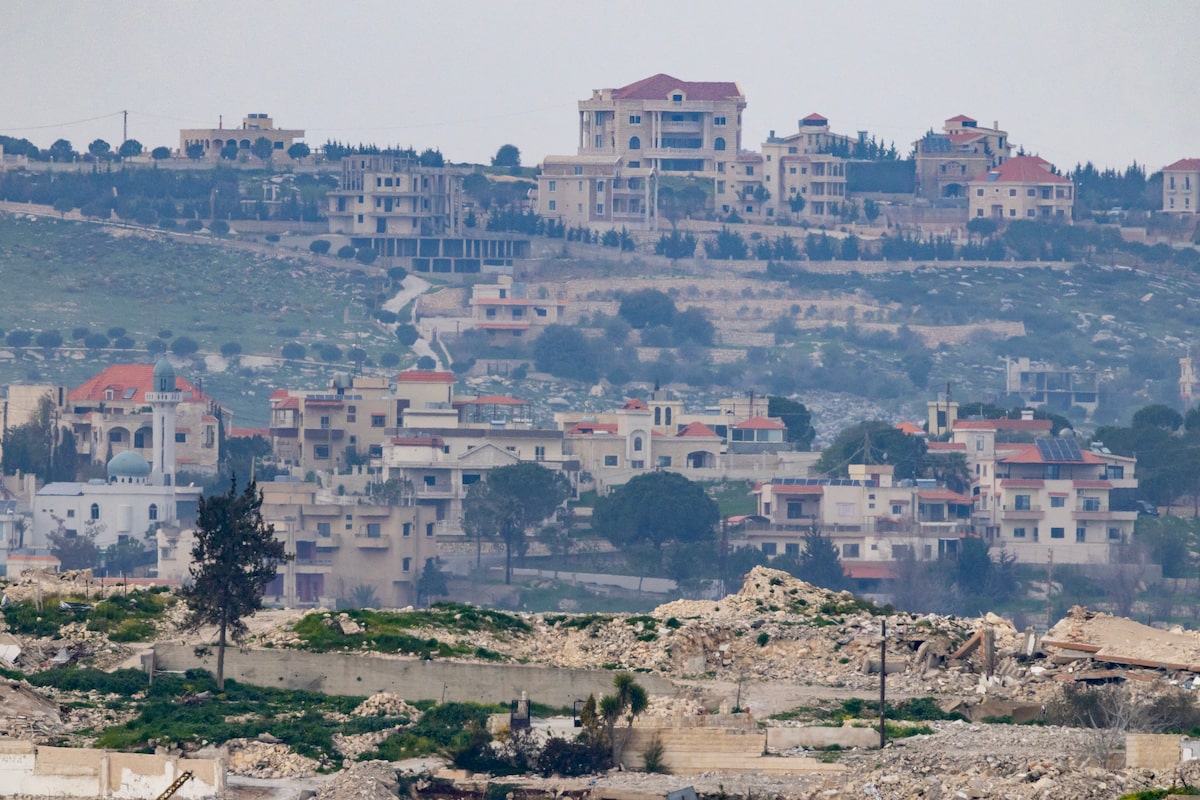
Destroyed buildings are seen in the Lebanese village of Yaroun from Upper Galilee, in northern Israel, on Friday.ODD ANDERSEN/AFP/Getty Images
Americans and Canadians worry that the war in the Middle East will boost the cost of filling their Ford F-150 pickups by 20 or 30 bucks. Residents of the poor, energy-deficient countries in the Middle East worry that they won’t be able to drive their cars at all, or keep the lights on. Or afford the next meal.
For many North Americans and Europeans, the Middle East is synonymous with oil. Saudi Arabia, Iran, Qatar, Kuwait, the United Arab Emirates and other Persian Gulf states are fairly wealthy hydrocarbon economies and the backbone of the OPEC cartel. Drill a hole in the sand pretty much anywhere in those countries and out spurts oil and gas.
But the Middle East is no energy democracy. Lebanon, Jordan and Egypt – especially the former two – import most of their oil and gas. The average incomes in these countries are low. When energy prices rise, the pain sets in and the ripple effect can be savage. Food prices climb and public finances get damaged. Even before the war, imported oil was responsible for one-third of Lebanon’s deficit, said Lebanese economist Kamal Hamdan. “Oil has always been a big burden on us,” he said. “It will become a bigger burden.”
In Beirut, rumours are rife that fuel rationing is imminent. Some drivers bringing portable plastic cans to load up on spare gasoline. Lebanese have endured fuel crises in the past, but know this energy shock is different.
Signs of misery, bravery and civic duty as Beirut is overwhelmed by displaced Lebanese
The Strait of Hormuz that separates the Persian Gulf from the Indian Ocean is effectively closed. Almost no ships laden with oil or liquefied natural gas (LNG) have travelled through the narrow channel since the U.S. and Israel began their aerial assault on Iran on Feb. 28.
The captains fear an Iranian attack, or the ship owners can’t afford the suddenly outrageous insurance costs. In recent days, Iranian missiles or drones have set several tankers ablaze as part of their economic war against the West. It’s working. Early this week, Brent crude went as high as US$119 a barrel, double the December price. On Friday, Brent was at US$100 in spite of frantic efforts, including the lifting of sanctions on Russian crude and opening up of strategic petroleum reserves, to knock prices down to pre-war levels.
The Lebanese economy has been in sustained, severe recession since 2019. The banks are in non-stop crisis. The government is in deadlock. The currency has collapsed; one U.S. dollar now buys 90,000 Lebanese pounds, which no one wants. (Lebanon is unofficially a U.S.-dollar economy.)
And now the country, under invasion by Israel as it seeks to destroy the remnants of the pro-Iran Hezbollah guerrillas that it failed to eliminate in the 2024 Hezbollah-Israel war, faces a fuel crisis. “I would say that this economy should brace for impact,” says Diana Kaissy of Lebanon, a World Bank energy governance consultant and energy specialist at the Resource Justice Network. “This energy crisis could bring consumers to their knees.”
Explainer: How the Iran war is affecting countries in the Middle East and wider world
Lebanon is particularly exposed to fuel shortage because the clapped-out public power company, Électricité du Liban (EDL), can keep the lights on only a few hours a day, or less. Deliveries from the country’s main fuel-oil supplier, Iraq, have been scant in recent months because Lebanon has not paid its bills.
The country functions – barely – because private generating companies take up the EDL slack. But they too can’t function if there’s no fuel, or it becomes unaffordable. Oil tankers on the high seas will go to the ports where they can get the highest price for their cargo, and that’s not Lebanon. Blackouts have crippled the city in the past and they may do so again.
An Israeli navy vessel patrols the Mediterranean Sea near an oil platform in Israel’s offshore Leviathan gas field, in September, 2024.Ariel Schalit/The Associated Press
Jordan also faces an energy emergency. It gets most of its gas from Israel’s Leviathan gas field, in the Eastern Mediterranean, which began producing in late 2019 and turned the country into energy export powerhouse, with Jordan and Egypt under contract for long-term deliveries.
But wars are not kind to contracts, and fearing that Iran would bomb Leviathan, Israel shut down the field on the first day of the war. The gas in storage in Jordan should last a few weeks. The country faces a genuine crisis if Hormuz and Leviathan stay closed into the spring.
Ditto Egypt, which gets about 20 per cent of its gas from Leviathan. Egypt’s own gas production has been falling since 2022, making it ever more reliant on imported fuel. The government of President Abel Fattah el-Sisi fights a constant war against rising food prices and he may lose this one as oil and gas prices surge.
The government raised the price of gasoline and cooking gas by double-digit rates after the war started, meaning the new bread price caps designed to protect the poor may not survive as cooking costs increase. The war on Iran is hurting consumers all over the planet; it is hurting the poor the most.