
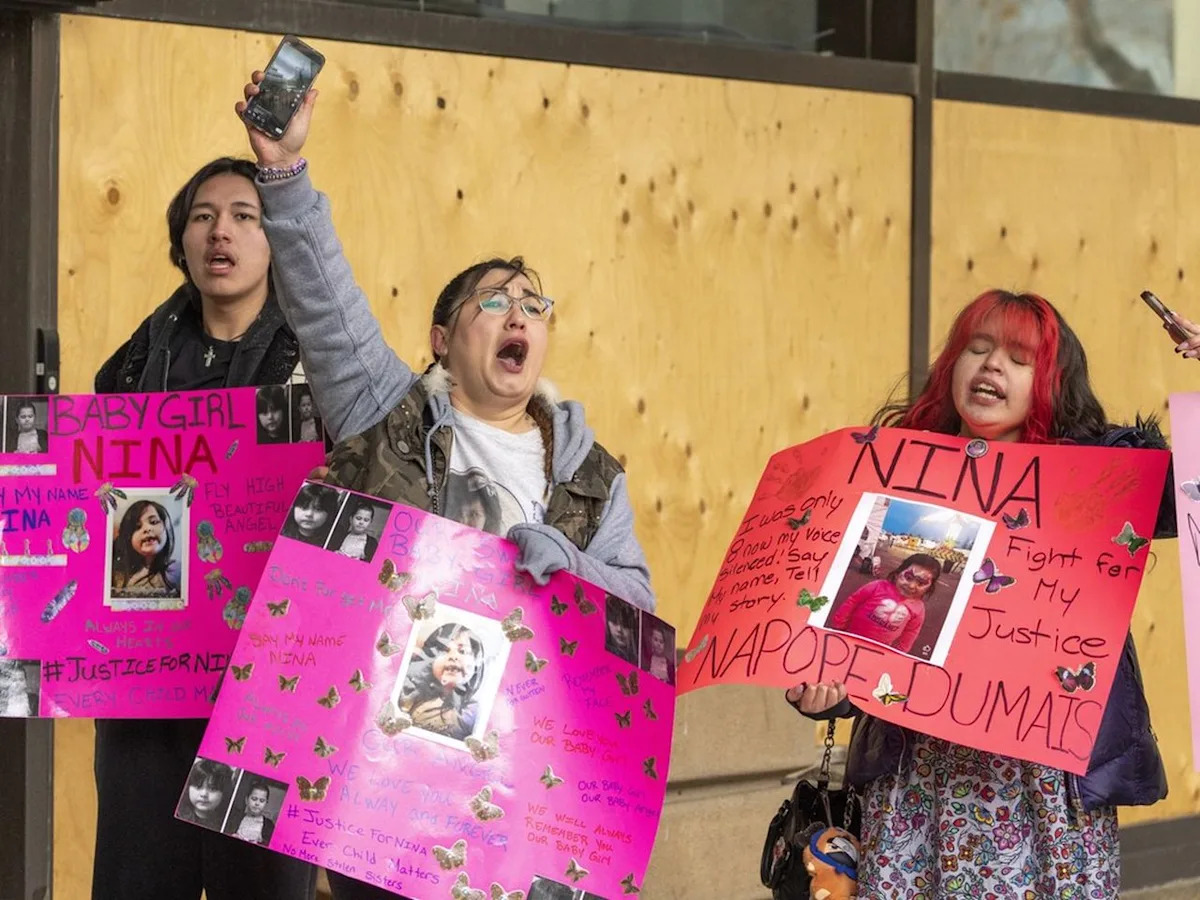
It was a stunning rebuke — a sitting judge dressing down a police service in some of the strongest terms possible, going so far as to suggest their conduct may have violated the law.
What happens now, though, remains unclear.
Last month, Court of King’s Bench Justice Jody Fraser sentenced Ashley Rattlesnake to eight years in prison for the manslaughter death of Nina Napope Dumais, an eight-year-old girl who died while in Rattlesnake’s care.
Much of Fraser’s decision, however, focused on the actions of the Edmonton Police Service who, in an unprecedented move, publicly criticized the Crown’s handling of the case and threatened to release disturbing details about the young girl’s death if prosecutors didn’t back off an alleged plea deal.
Police Chief Warren Driechel later said the information might be released if police felt the sentence wasn’t strong enough, putting Fraser himself in the crosshairs. Fraser called the actions of EPS “reprehensible” and said they might amount to obstruction of justice.
“The veiled threat that they may release more information about this matter if they are not happy about the sentence I impose comes dangerously close, and may actually cross the line, into an attempt to willfully obstruct, pervert, or defeat the course of justice in a judicial proceeding,” Fraser said.
Fraser went so far as to say he had made his decision “without any fear of the Edmonton Police Service’s possible actions,” which he called “so far beyond what is acceptable conduct by the police service.”

Pictured is a framed photo of Nina Napope Dumais, an eight-year-old girl who was killed more than two years ago.
What happened in the case?
Nina was one of four children under Rattlesnake’s care. During her short life, she suffered what Fraser called “terrible” physical abuse. On the day of her death — April 22, 2023, — Rattlesnake and a man were using drugs in her bathroom when the children started to fuss. When Rattlesnake returned, she told the man “something had happened” and asked him to come to the other room. He emerged and saw Nina lying on the bedroom floor, unconscious and bleeding beside a hole in the wall.
Rattlesnake called friends, who packed Nina’s body into a hockey bag and left it in the bed of a broken-down pickup on Samson Cree Nation. The man with whom Rattlesnake had been using drugs went to police.
How did EPS become involved?
Edmonton police investigated and charged Rattlesnake with murder. Those who helped hide Nina’s remains were charged with committing an indignity to Nina’s body. Two pleaded guilty last year and were sentenced to just under three years in prison.
The case entered uncharted territory, though, at a police press conference in September. Megan Hankewich, EPS’s top lawyer, released a copy of a letter she had authored — with Driechel’s endorsement — to the assistant deputy minister in charge of the Alberta Crown Prosecution Service.
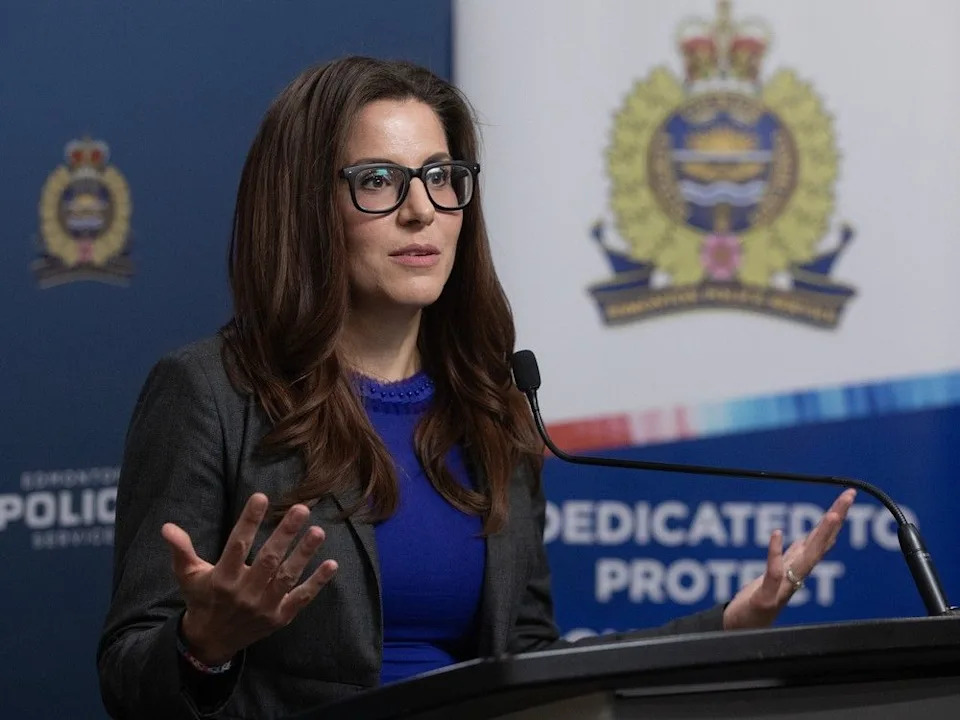
Edmonton Police Service acting executive director of legal services Megan Hankewich speaks to media about the Ashley Rattlesnake case on Sept. 10, 2025.
The letter outlined the police service’s objections to an alleged plea deal to manslaughter in the case — as well as other frustrations with the Crown. Hankewich argued a plea to the lesser charge would amount to “a significant miscarriage of justice,” saying the abuse Nina suffered was among the worst investigators had ever seen. She said if the Crown went ahead, EPS would release graphic details about Nina’s death so the public “can properly assess whether this prosecution and plea agreement were conducted appropriately.”
Hankewich also threatened to “advocate in the public forum for a stronger prosecution service” — a line which took on new significance when two senior Edmonton prosecutors lost their jobs.
What was the reaction to EPS’s move?
Nina’s family have railed against the eight-year sentence given to Rattlesnake and said they support EPS’s intervention in the case. Premier Danielle Smith also spoke approvingly of the move.
Legal groups, however, said EPS’s actions were inappropriate. Courts have long stressed the need for separation between police and the prosecution to prevent wrongful convictions. Several lawyers noted detectives hand their files to the Crown when the case is strongest, and that the court process often whittles down what the prosecution can prove beyond a reasonable doubt.
During pre-trial proceedings, the first-degree murder charge against Rattlesnake dropped to second-degree when prosecutors decided they couldn’t prove Nina’s killing was planned and deliberate. A significant hurdle to proving second-degree was the fact the girl suffered the head injury in a room where the were no witnesses.
Manslaughter, which Rattlesnake admitted to in September, does not require the Crown to prove an accused intended to cause someone’s death, and unlike murder does not carry an automatic life sentence.
What’s happened with the Crown
Adding fuel to the fire was the apparent firing of two senior Crown officials, including Scott Niblock, the chief Crown in Edmonton. While he was not the prosecutor on the Rattlesnake case, Niblock would have been consulted on the decision to accept a plea to a lesser charge. A source told Postmedia Niblock and deputy Ryan Abrams were escorted off the property in November.
Kimberley Goddard, the assistant deputy minister to whom EPS addressed the letter, has since been named a judge. Justice Minister Mickey Amery said the move to terminate Niblock and Abrams was made by Elizabeth Wheaton, Goddard’s temporary replacement, and that the ministry had no say in the decision.
The departure of the two Crowns sent chills through the prosecution service, with the Alberta Crown Attorneys’ Association saying prosecutors need new employment protections to insulate them from “political or improper external influence.”
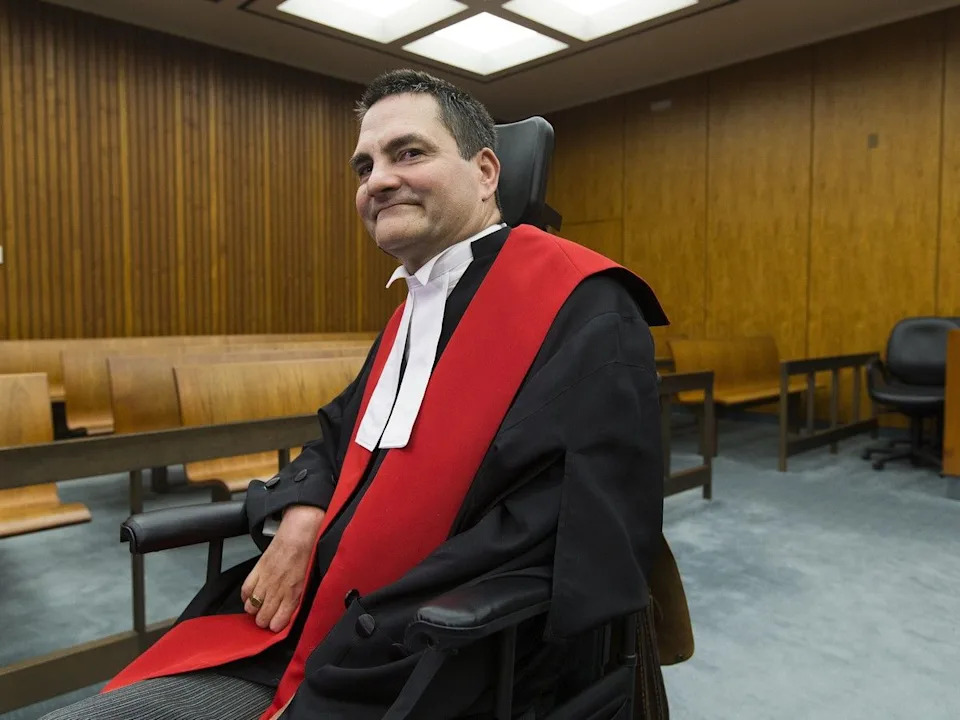
Court of King’s Bench Justice Jody Fraser before his swearing-in in 2017.
What did the judge say
Fraser ultimately accepted Rattlesnake’s guilty plea. During sentencing last month, he settled between the Crown — which asked for nine years in prison — and the defence — which sought seven years.
Fraser slammed Rattlesnake for the abuse Nina endured, noting the little girl had sepsis and other injuries at the time of her death. He said Rattlesnake “callously” ignored the girl’s suffering, noting Nina might have lived if Rattlesnake had sought immediate medical attention.
Instead, Rattlesnake and her associates “treated Nina’s body almost as trash,” then lied to police about where she was, the judge said.
Nevertheless, Fraser said a manslaughter plea in the case was “completely appropriate” given the Crown couldn’t prove how Nina suffered the fatal head injury.
What happens now?
Fraser said an eight-year prison term is in line with past sentences for similar offences. He granted Rattlesnake reductions for both her guilty plea and the public attention EPS brought to the case, known as a “collateral consequence.”
Fraser also urged police leaders to brush up on the difference between police and prosecutors, noting numerous courts have found “when that separation is not present, miscarriages of justice can happen.”
Beyond that, it remains to be seen whether anything comes of Fraser’s obstruction of justice comments. A judge suggesting someone broke the law doesn’t mean that person will be charged, said Criminal Trial Lawyers’ Association president Shawn King.
“It’s a suggestion that somebody go do something about it,” King said. He noted it’s not uncommon for judges to find witnesses lied on the stand, which does not automatically result in a perjury charge.
King said if anyone were to pursue a criminal complaint against EPS, it would have to be the alleged victims of obstruction — in other words Fraser, the Crown, or Rattlesnake herself. There is no indication anyone has done so. ASIRT, Alberta’s police watchdog, said it isn’t investigating the case, while the RCMP declined to comment.
Hankewich, for her part, could face professional misconduct proceedings for her role. King said the CTLA filed a complaint with the Alberta Law Society, the province’s independent lawyer regulator, but was told one was already in the system. The law society declined to comment.
Fraser notably compared Hankewich’s actions to those of ex-justice minister Kaycee Madu, who the law society reprimanded and ordered to pay $39,000 in legal costs for calling then-EPS chief Dale McFee after receiving a traffic ticket.
Edmonton police said they are reviewing Fraser’s decision and declined to comment.
Related
Bookmark our website and support our journalism: Don’t miss the news you need to know — add EdmontonJournal.com and EdmontonSun.com to your bookmarks and sign up for our newsletters.
You can also support our journalism by becoming a digital subscriber. Subscribers gain unlimited access to The Edmonton Journal, Edmonton Sun, National Post and 13 other Canadian news sites. The Edmonton Journal | The Edmonton Sun