

Listen to this article
Estimated 3 minutes
The audio version of this article is generated by AI-based technology. Mispronunciations can occur. We are working with our partners to continually review and improve the results.
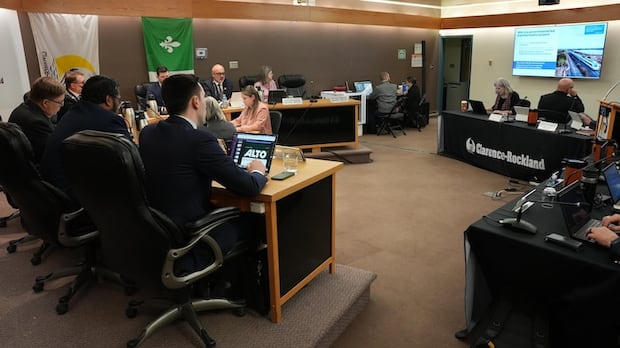
Councillors for a community east of Ottawa say they’re left with more questions than answers about how the proposed Alto high-speed rail network will impact the municipality following a recent visit from the Crown corporation in charge of the project.
The 1,000-kilometre rail network would stretch from Ottawa to Toronto, slashing travel time with electric trains reaching up to 300 km/h.
Construction on the first leg between Montreal and Ottawa is expected to begin in 2029-30.
A final route hasn’t been presented yet by Alto, but it has shared an interactive map illustrating the boundaries of the corridor under study.
On Thursday, Alto representatives took questions from councillors in Clarence-Rockland about the project, which isn’t planned to offer any local stops in the municipality. Several councillors asked about land expropriation as well as road and trail network changes.
“I think our goal was to put their feet to the fire and just get as much information as we possibly could, but also make them aware of all the things that we’re thinking of so that when they go back, they’re able to actually have those conversations,” said Mayor Mario Zanth.
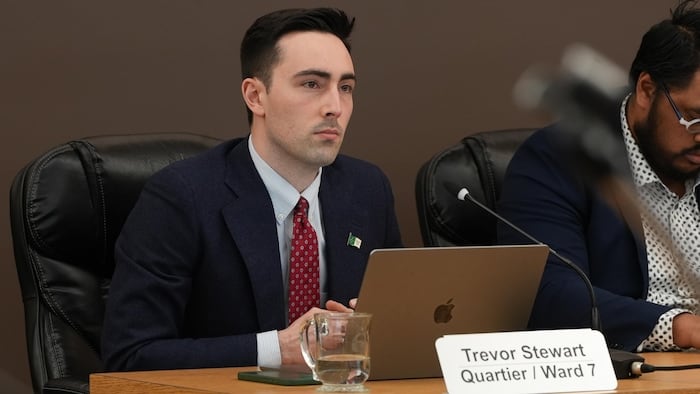 Coun. Trevor Stewart said he was left with more questions than answers about the high-speed rail project after hearing from the Crown corporation overseeing it. (Nelly Albérola/Radio-Canada)
But some members of council and a number of residents who attended the meeting left unsatisfied.
“I come out of it a little bit frustrated and with a few more questions than I do have answers,” said Coun. Trevor Stewart, who worries farmers will be disproportionately affected by the project.
Local farmer Roman Kaelin worries people who have their land split won’t receive compensation.
“I think it’s being kept quiet more so that there’s less restriction or less resistance against the project,” Kaelin said.
Alto representatives respond
Representatives from Alto told councillors the corporation will keep liaising with municipalities to understand how the project will affect people. Compensation for farmers and municipalities facing road and recreational trail changes will be considered, they added.
Councillors were also reassured that land acquisitions would not begin before 2027, and that while expropriation is an option, negotiation with landowners would be the preferred approach.
At the Senate’s national finance committee earlier this week, Transport Minister Steven MacKinnon stressed the urgency of obtaining royal assent for Bill C-15 to move forward with land acquisitions swiftly.
“That is worrying when it comes to the overall organization of the project,” Stewart said.
Earlier this year, Alto’s president and CEO said the corporation is aiming to share a detailed route by the end of 2026.
The total project is expected to cost between $60 billion and $90 billion.