
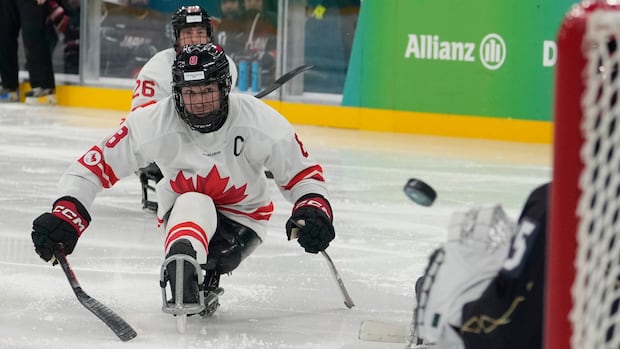
The Paralympics will come to an end on Sunday, but the contingent of athletes travelling back to Canada does not include any New Brunswickers.
And one disability advocate says sport and recreation equity in the province is just not there yet.
“There’s still this culture of looking at … adapted sport recreation as an afterthought, when really, every New Brunswicker deserves the right to play,” said Haley Flaro, the executive director for Ability New Brunswick.
“And so we need to invest more time in physical activity strategies that are inclusive.”
Fifty Team Canada athletes, along with four guides, went to the 2026 Milano Cortina Paralympic Games, which ran from March 6 to March 15.
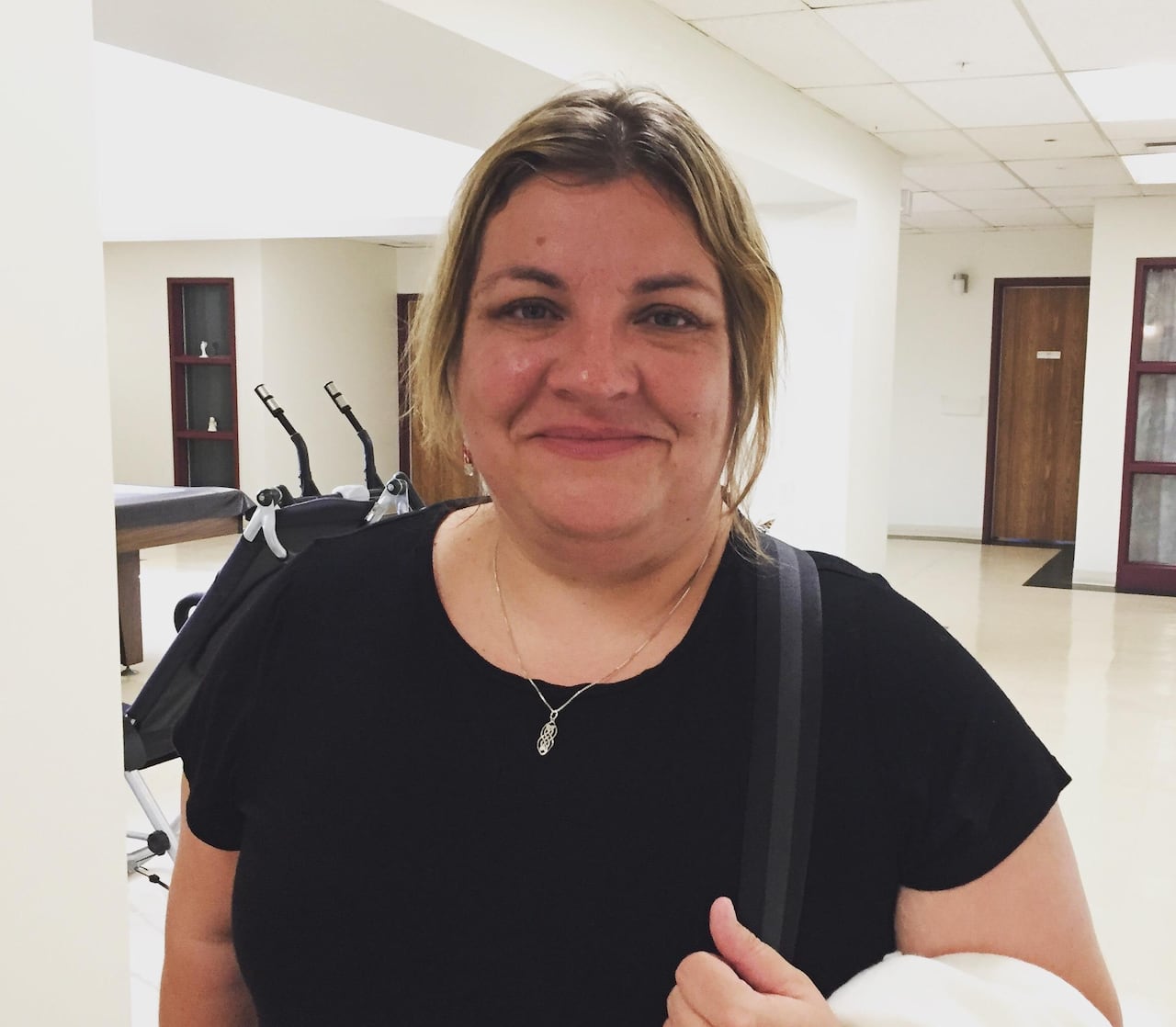 Haley Flaro, executive director of Ability New Brunswick, says a big barrier to Para sports is the cost of specialized equipment. (Radio-Canada)
New Brunswick was the only Canadian province, not including territories, that didn’t have an athlete at the Games.
“As a smaller province, we should be doing better than other parts of Canada that certainly exceed us in this area,” said Flaro.
Her organization is preparing a response to Let’s Get Moving New Brunswick!, the province’s new physical activity strategy, which she said was disappointing and concerning, she said.
One large roadblock to people participating in Para sports is the cost of adapted equipment, Flara said.
She said an able-bodied person could purchase a pair of skates for under $200, but someone wanting to try out Para ice hockey would need to buy a sled.
High-quality sleds customized to a player’s specifications could reach up to $1,000, according to the Canadian Paralympic Committee.
And Flaro said if someone wanted to get into a wheelchair-based sport, they would likely require a multi-sport chair. Depending on the sport and the athlete’s needs, that could cost up to $5,000, Flaro said.
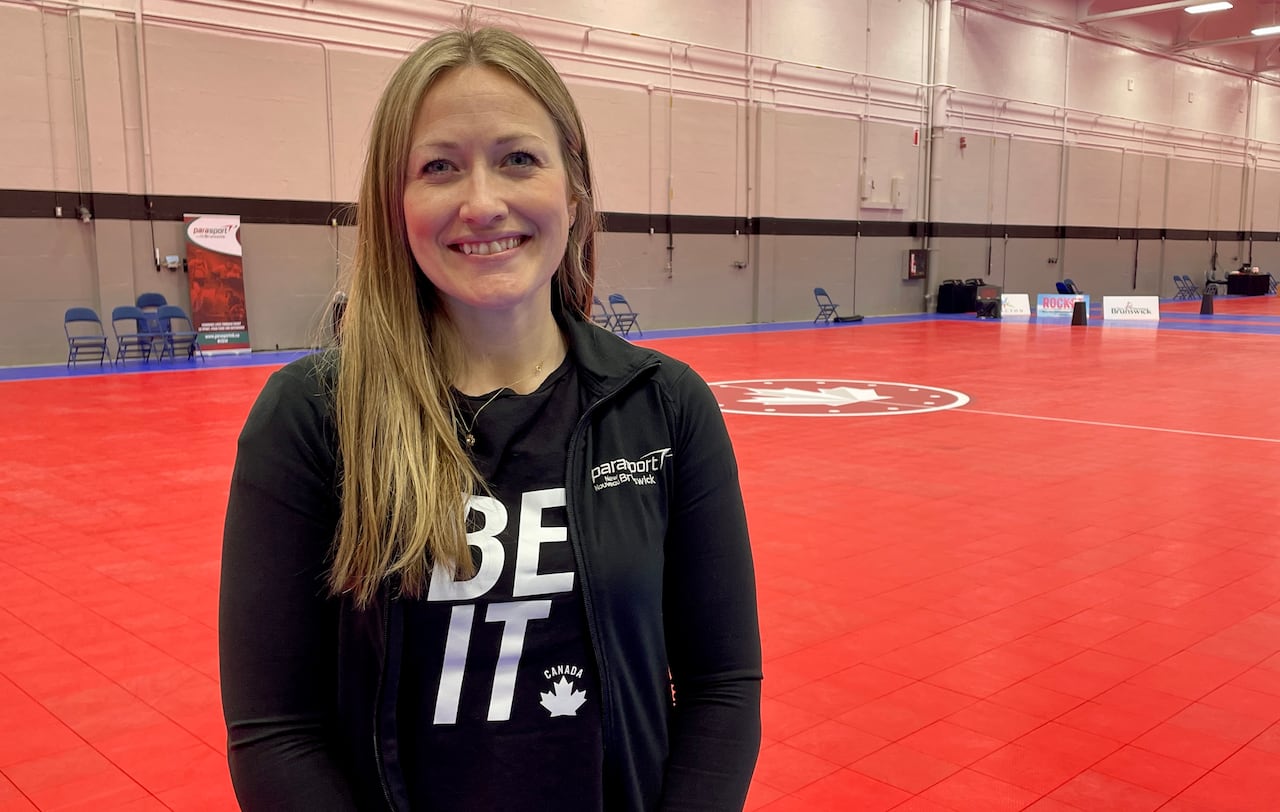 Sally Chamberlain, executive director of Parasport NB, said she thinks awareness is especially important, so potential Para athletes can know what pathways are available in the province to get into Para sports. (Submitted by Sally Chamberlain)
“One of the things that guts me the most is that we still have to pass the hat when an athlete with a disability needs specialized equipment to go and try out for national teams or, you know, try out for competitive teams, because there is no program in New Brunswick to fund specialized competitive equipment.”
Sally Chamberlain is the executive director for Parasport N.B., the provincial sport organization for the four non-integrated Paralympic sports: wheelchair basketball, wheelchair rugby, bocce and goalball.
At the last summer Paralympic Games, there were five Paralympians from New Brunswick: swimmer Danielle Dorris, cyclist Alexandre Hayward, triathlete Kamylle Frenette and wheelchair basketball players Colin Higgins and Desiree Isaac-Pictou.
Chamberlain said one reason there are more summer Para athletes from New Brunswick is that Canada as a whole sends a larger contingent in summer than in winter. There are also more summer Paralympic sports, 23, than winter, six.
New Brunswick had little presence four years ago at the Beijing Paralympics as well.
Chamberlain said for those who compete in individual sports, it can be easier to train remotely, living in New Brunswick but still training for elite performance. She said New Brunswick’s wheelchair basketball infrastructure also has a stronger foundation than some other sports.
Currently, she said, there are only two active Paralympic winter sport programs in New Brunswick: a wheelchair curling program out of Saint Andrews and Para hockey programs out of Fredericton and Moncton.
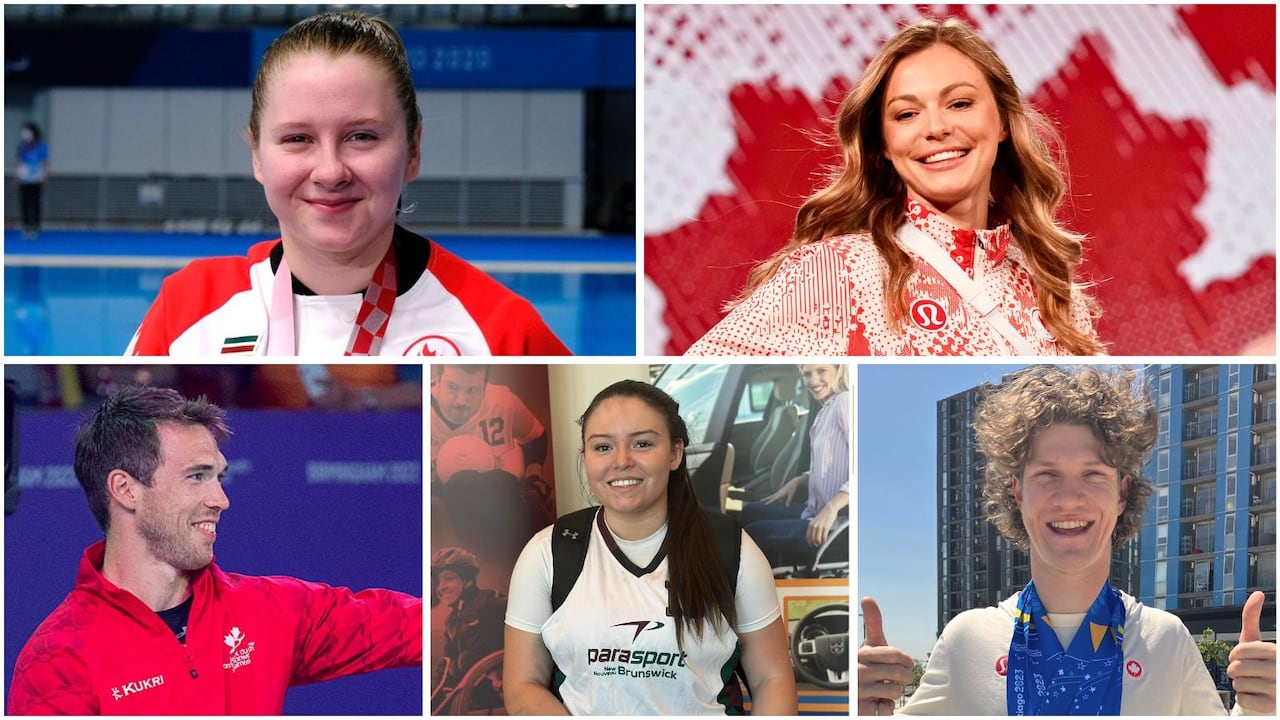 Five New Brunswickers competed in the Summer Paralympics. Clockwise, from top left, are swimmer Danielle Dorris of Moncton, triathlete Kamylle Frenette of Dieppe, cyclist Alexandre Hayward of Quispamsis and wheelchair basketball players Desiree Isaac-Pictou of Ugpi’ganjig, near Dalhousie, and Colin Higgins of Rothesay. (Milan Maglov/CBC, Chris Young/The Canadian Press, Submitted by Sally Hutt, Prapti Bamaniya/CBC, Andrew Vaughan/The Canadian Press)
New Brunswick Para athletes could play a bigger role in the next Paralympics. There are some NextGen Para hockey players from the province who are up and coming, Chamberlain said.
Still, it can be difficult to find coaches for Para sports and difficult to find accessible training facilities.
Mark Fawcett, who attended the Paralympics as the technical coach for the Para snowboard team, said he thinks winter sports are accessible in New Brunswick. But, he said, it it comes in waves — and sometimes it just depends on the program.
“Who’s got a really enthusiastic coach running their club, for instance — things like that, those really matter,” said Fawcett.
Chamberlain said she thinks awareness is especially important, so potential Para athletes can see and know the pathways available in the province to get into Para sports.
“I think that the Paralympics are creating an amazing platform for people with disabilities … to see what they can achieve,” said Chamberlain.
“I think a lot of Paralympians will say the hardest part is to just try it, but you never regret trying it.”