
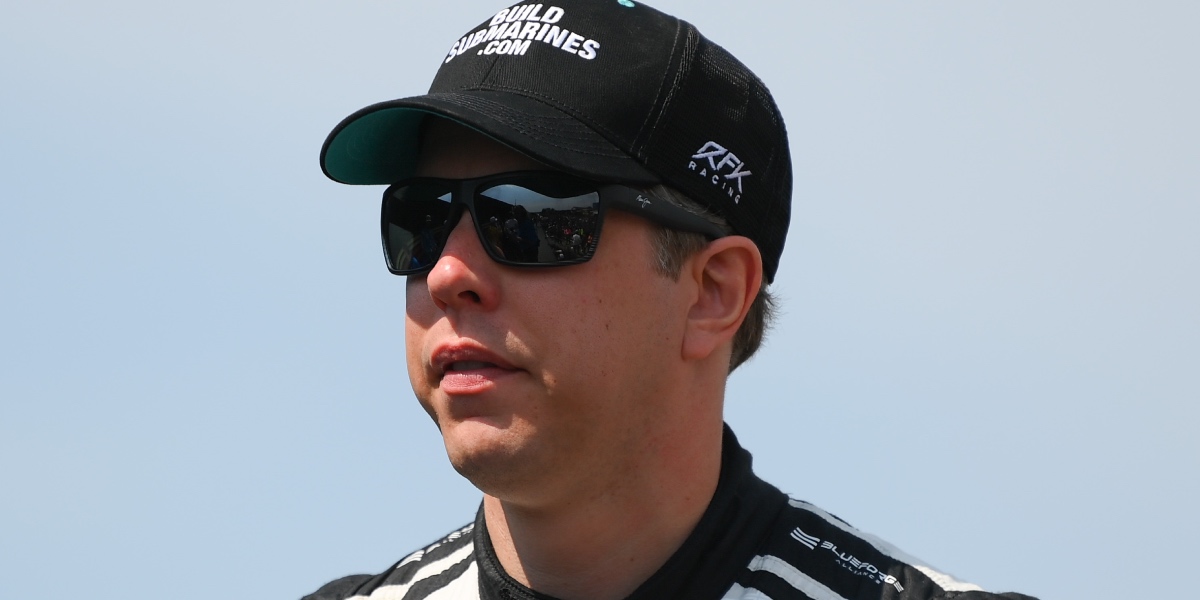
Brad Keselowski believes one of NASCAR’s most debated topics in adding horsepower might not work the way many fans expect. Speaking on the latest episode of The Dale Jr. Download, the RFK Racing co-owner explained why increasing horsepower in the Cup Series, especially at Phoenix, can actually make cars slower over the course of a long run.
“Horsepower is great,” Keselowski said. “The crazy thing about adding more horsepower at Phoenix is cars really don’t go faster. In fact, there’s an argument to be made that they go slower with more horsepower.”
Keselowski pointed to this past weekend’s race in the desert as an example of how the extra power changed the dynamics of a run. According to him, the speed gain from additional horsepower only shows up early, particularly on fresh tires.
“If you look at it, the cars are maybe a tenth or two faster at most at the beginning of brand-new tires with more horsepower,” he explained. “But at the end of the run, let’s say we’re talking 60-plus laps, they’re like three to four tenths slower with more horsepower.”
That difference in performance over the length of a run, Keselowski said, can actually improve racing. As tires wear and the cars begin to slow down, drivers are forced to manage grip and throttle more carefully, which opens the door for passing opportunities.
“I think that’s part of what the drivers were trying to say to NASCAR and to the key stakeholders of the sport,” Keselowski added. “When you have a discrepancy where the cars are a little bit faster at the start of the run and slower on the longer run, that just opens up opportunities for more passing.”
In his view, that dynamic was visible during the Phoenix race itself: “You saw more passing at Phoenix than you’ve seen in a long time because of that,” he explained.
Still, the concept can feel counterintuitive at times. While more horsepower sounds like it should automatically produce faster lap times, Keselowski said the extra power often accelerates tire wear and makes the car harder to manage during extended green-flag runs.
“If I just said, ‘Run the 60 fastest laps you can run all by yourself,’ there’s an argument to be made that having more horsepower, you actually go slower,” Keselowski elaborated. “Because you wear the tires more, you do all kinds of things, and by the end of the run, that really hurts you.”
Despite that, teams still need horsepower to remain competitive in traffic, particularly during restarts when acceleration can determine whether a driver gains or loses multiple positions: “If you don’t have horsepower, you’ll get run over,” Keselowski explained. “You’ll get passed, and then you can’t pass those guys back.”
To illustrate the concept, Keselowski compared the situation to experiences earlier in his racing career in late model competition, where some teams would intentionally restrict their engines to improve overall performance.
“I remember running late models where guys would show up with 750 or 800 horsepower,” he said. “And then they’d put a restrictor plate on their car voluntarily because they had too much horsepower and the car would actually go faster that way.”
For Keselowski, the lesson is simple. Horsepower alone doesn’t guarantee speed. Instead, the balance between power and long-run pace ultimately determines how fast a race car can truly be, and that was on full display this past weekend.