
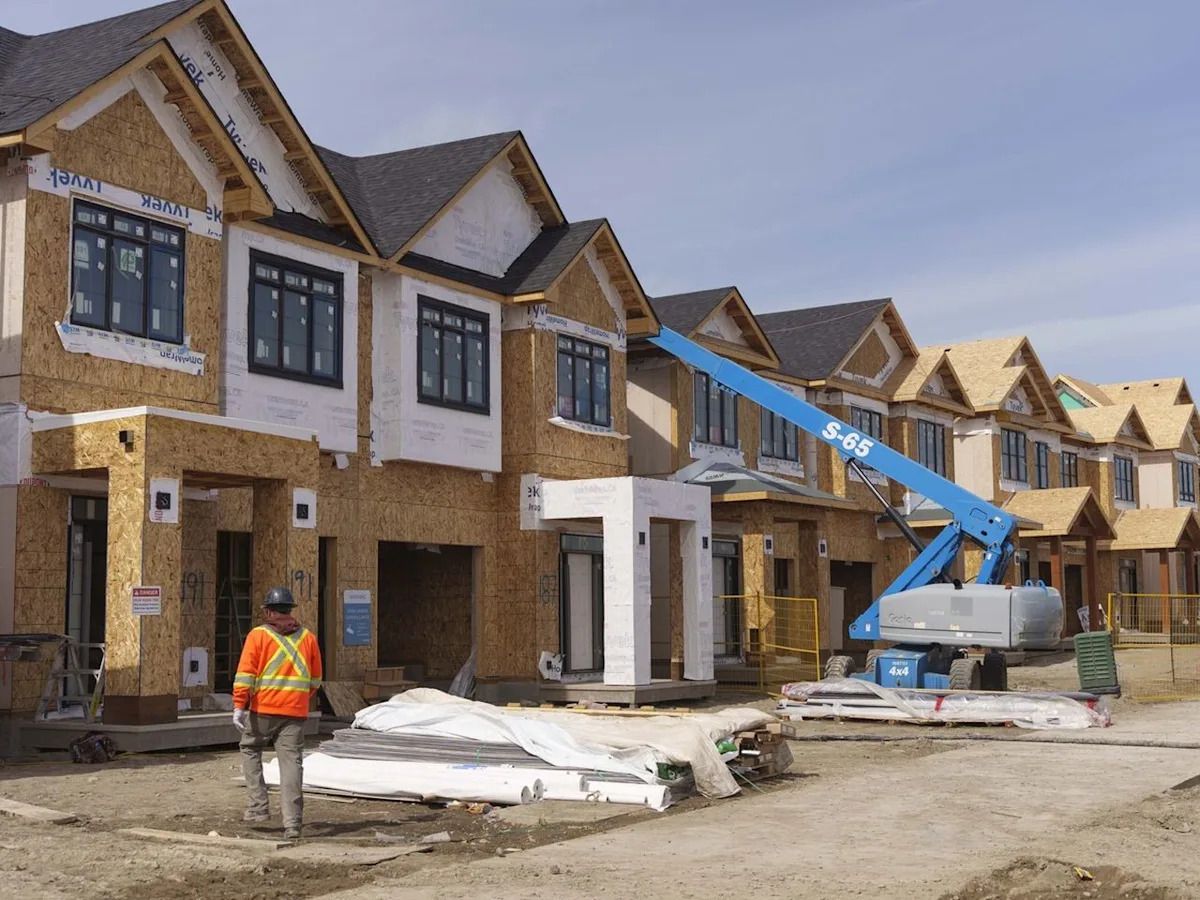
The city’s once tight housing market conditions have slackened considerably with no segment of the market more affected than multi-family housing.
A boom in new housing development with record starts in 2024 and 2025 — much of it in multi-family rental — has added more than 50,000 new units to the market, the recent Canada Mortgage and Housing Corp. Housing Market Outlook 2026 notes.
Potentially, another 23,000 to 30,000 starts could come this year, it predicts.
“Demand has dropped off significantly for new homes,” says Taylor Pardy, lead economist for the Prairies at CMHC.
“We’re still seeing a pace of absorption of new homes that is fairly strong, but it’s just a situation where supply is significantly outrunning demand.”
That’s particularly evident among multi-family — purpose-built rental, condominium apartments and townhomes. Many of the units on the ownership side were constructed with investors in mind who would seek to rent them in Calgary’s sizable secondary rental market. The rise in new ownership and among purpose-built rentals — often started when migration to the city was at market levels post-pandemic — is now adding supply to the market resulting in significant adjustments on the resale side, the report notes.
“We’re definitely seeing more balanced conditions for resale,” Pardy says. “There’s more choice.”
Calgary Real Estate Board statistics from February show total resales fell about 11 per cent year over year. From February 2024, sales are now down almost 29 per cent. The largest decline has been on the apartment side of the market. Sales are down 27 per cent year over year, and off almost 46 per cent from 2024, when real estate was booming amid high migration.
At the same time, inventory for all housing is up 16 per cent.
“That influx of money post-COVID and record population growth were huge drivers,” says Jasmine Young, vice-president of advisory at Zonda, a market data firm tracking Canada’s multi-family sector.
“Certain developers were even marketing their (Calgary) projects in Toronto.”
Young notes these were condominiums projects pitched to Ontario investors, an attractive investment premise in 2024 when vacancy was below two per cent. Today, however, vacancy is five per cent and expected to rise to more than six per cent by 2027, CMHC forecasts. Zonda statistics for Calgary’s new multi-family for ownership market in the final three months of 2025 reveal rising inventory for concrete and wood frame apartments, and new townhomes. Townhome inventory is as high as wood frame inventory, it shows.
Young points to demand still generating sales, but buyers are price-point conscious, running up against builders’ economic constraints. Builders can only construct units at certain price levels and remain profitable, while many buyers are limited by how much they can afford to borrow.
Market confidence is another issue, Young says.
“It’s not that they don’t want to buy; it’s a waiting game because people still think prices will fall.”
CMHC does forecast potential declines in the average price over the next three years, though it also points to scenarios where prices rise. Affordability challenges for buyers seeking single-family homes — the most in-demand homes — are likely to continue, Pardy notes.
“We’ll see what the spring market brings, but at least up until now, the outlook is not too concerning given the economic and trade uncertainty we have seen over the last year.”
The snapshot is different for multi-family — a “different beast,” he adds.
“With slowing in population growth in 2026, we’re anticipating a market low point with a lot more multi-family supply coming when demand is slower, particularly for rental.”