
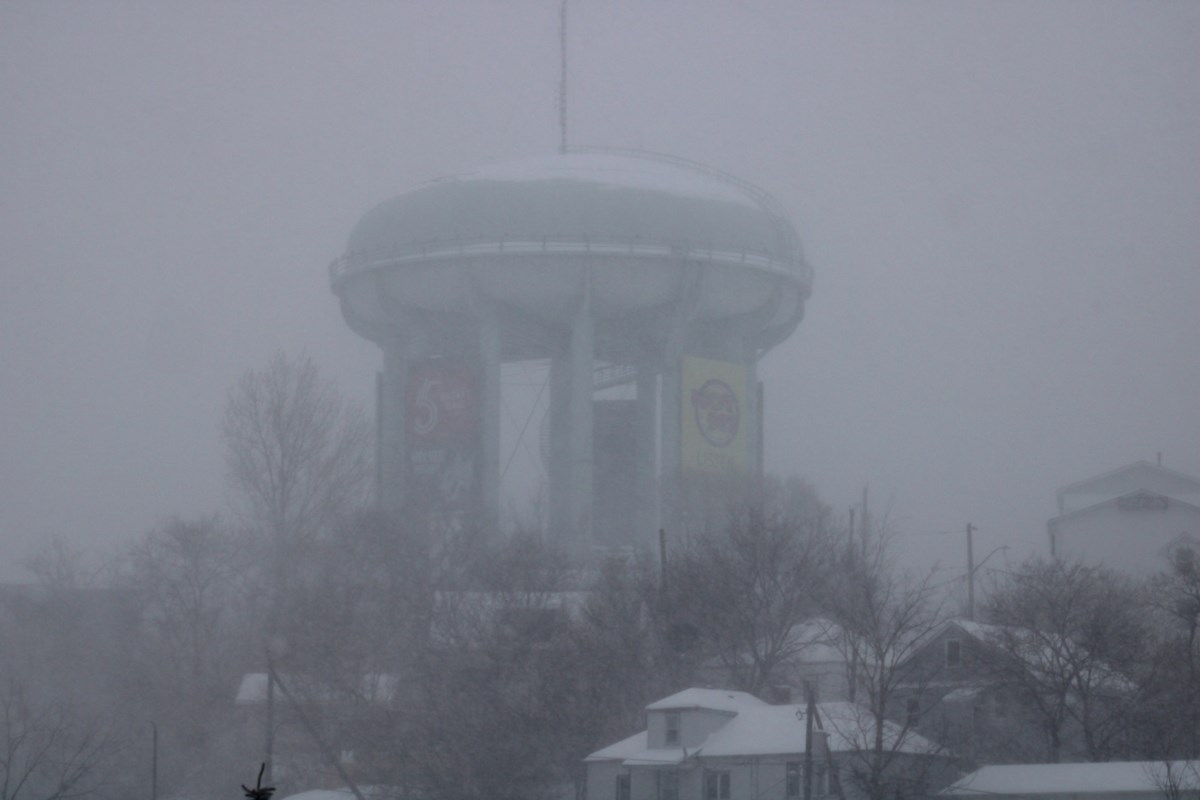
Residents around Sudbury reported hearing thunder as snow fell, a phenomenon known as thundersnow. While uncommon in colder months, it can occur when contrasting air masses collide under the right conditions
The skies around Sudbury are being touched with a flash of thunder and lightning, and though rare phenomenon, thundersnow is the real deal.
Welcome to the north.
Thunderstorms occur when an air mass becomes so unstable that it overturns, sometimes violently. This usually happens when drastically different temperatures meet, such as when the air closer to the ground is unusually warm and humid and the air above it is unusually cool. Because the lower layers of air are colder — and have a lower dew point — in the wintertime, these kinds of atmospheric clashes are very unusual during colder months. Still, thundersnow does happen.
Thundersnows are most common in the Great Lakes region, when cold air blows across the relatively mild water of the Great Lakes, forcing the air upwards rapidly enough that the instability causes lightning and thunder in conjunction with heavy snow. This same effect can happen along the East Coast, when an icy cold Nor’easter moves in to a region on the heels of a warmer front.
If you capture images or video of the storm or its aftermath, send them to [email protected] and we might feature them on our site.