
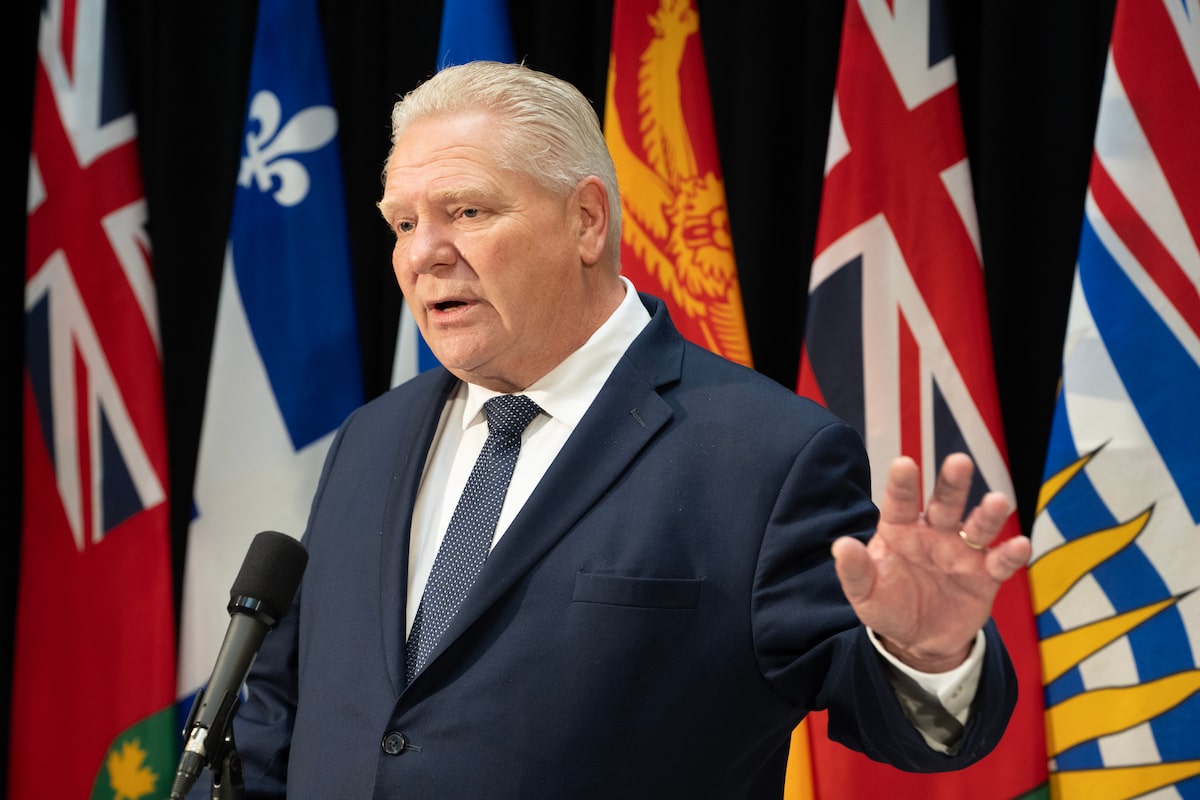
Ontario Premier Doug Ford speaks with reporters before the First Ministers Meeting in Ottawa in January.Adrian Wyld/The Canadian Press
Ontario Premier Doug Ford is defending his government’s decision to exempt him and his cabinet ministers from freedom of information requests, and said he needs to keep his personal cellphone records hidden to protect the privacy of private citizens who contact him.
Mr. Ford commented for the first time Monday on his government’s announcement last week that the Premier, cabinet ministers and their offices would no longer be subject to freedom of information requests and will be able to keep documents and e-mails about their decision-making secret.
It also means the Premier’s cellphone records, which the government had been fighting in court to keep private, will remain shielded from the public.
Mr. Ford regularly gives out his phone number at public events and said thousands of people text and call him expecting discretion.
Ontario to introduce bill exempting Premier, cabinet from FOI requests
“I was sworn to confidentiality for constituents, and I’m not going to release personal, confidential information about people’s lives. That’s what it comes down to,” Mr. Ford said at an announcement in Brockville, Ont., about a new correctional facility.
“I have an idea. Judge me or judge our party on decisions, not on conversations that we have in a cabinet office or conversations that people trust that you are not going to release.”
However, the province’s current freedom of information rules already include broad exemptions for cabinet discussions and for the personal, confidential information of individuals.
On Monday, Mr. Ford repeated his government’s reasoning that the proposed changes are needed to update the “antiquated” 40-year-old legislation to ensure cabinet ministers can have frank conversations about policy decisions in confidence.
He said the changes also align with policies at the federal level and in most provinces. Opposition parties and other critics, however, have decried the move and said it is an attempt to shield the government from scrutiny and accountability.
The proposed changes follow the government’s loss in a court battle over the call logs from Mr. Ford’s personal cellphone, which he uses for government business. A court in January sided with the province’s Information and Privacy Commissioner and ordered the records released, but the government had said it would appeal.
Opinion: Doug Ford stomps all over Toronto, again
Mr. Ford on Monday said he receives a thousand calls a day and has thousands of unread text messages.
“Every personal problem people have, they call me. I feel like a psychologist every day trying to solve everyone’s personal issues. That is not good to release it,” he said.
Stephen Crawford, Ontario’s Minister of Public and Business Service Delivery and Procurement, said the government also intends to address predatory information-gathering from foreign countries and companies, which Mr. Ford suggested comes from China.
“We’ve got to protect ourselves against the Communist Chinese that are infiltrating our country, Canada, the U.S., everything, into our education system, into high-tech companies. That’s who we have to protect from,” Mr. Ford said.
Ontario NDP Leader Marit Stiles said Mr. Ford is coming up with “ridiculous excuses” to justify his changes to the FOI system.
“The Premier isn’t worried about China, he is worried about what the people of Ontario will see when his phone records are released,” she said in a statement Monday.
“This is democratic backsliding, plain and simple. The Premier is making every excuse under the sun to justify changing the rules so he and his Cabinet can hide from public accountability.”
Opinion: If Toronto can’t imagine its future, Doug Ford will
If passed, the legislation, to be introduced in the spring, would quash existing and future requests for any document held in the Premier’s office and the offices of any of his cabinet ministers, such as their e-mails, internal memos and meeting schedules.
The proposed exemptions would also cover offices of MPPs who serve as parliamentary assistants, a group that includes all but a handful of the 79 Progressive Conservative MPPs.
The changes could also affect other access to information battles launched by media outlets, advocacy groups or the opposition. One of them involves a political staffer’s messages related to the government’s aborted attempt to remove land owned by a handful of connected developers from its protected Greenbelt, an affair that is subject to an RCMP probe.
Ontario’s freedom of information watchdog condemned the exemptions. In a statement last week, Information and Privacy Commissioner Patricia Kosseim called the proposal “shocking” and “alarming.” Noting that existing rules protect personal and confidential information, she said the change is “about hiding government-related business to evade public accountability.”
And she linked the move to Mr. Ford’s phone-records case: “By changing the law retroactively, the government’s message is plain: if oversight bodies get in the way, just change the rules.”
With reports from Jeff Gray and Tom Cardoso