
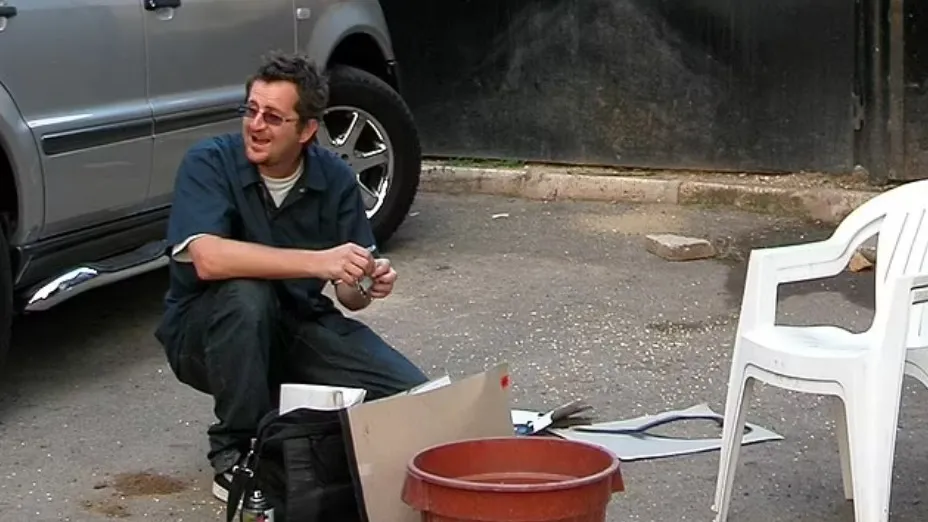
A news agency says it has uncovered the identity of Banksy, the world’s most famous graffiti artist, after an investigation led to a 26-year-old police report.
The artist, who has left his mark on the world’s streets for three decades, has been named by Reuters as Robin Gunningham, after it discovered records of a misdemeanour committed in New York in 2000.
It has long been speculated that this is the real name of Banksy, who emerged from the Bristol art scene to become one of the world’s most famous artists.
The investigation by Reuters also states that Gunningham then changed his legal name to David Jones, one of the most common names in Britain.
Under this name, it was reported that the artist had travelled to Ukraine, where he painted murals. Immigration records cited by Reuters said that this David Jones had left Ukraine in October 2022 on the same day as Robert del Naja, a founding member of Massive Attack, who is known to have moved in similar circles to Banksy.
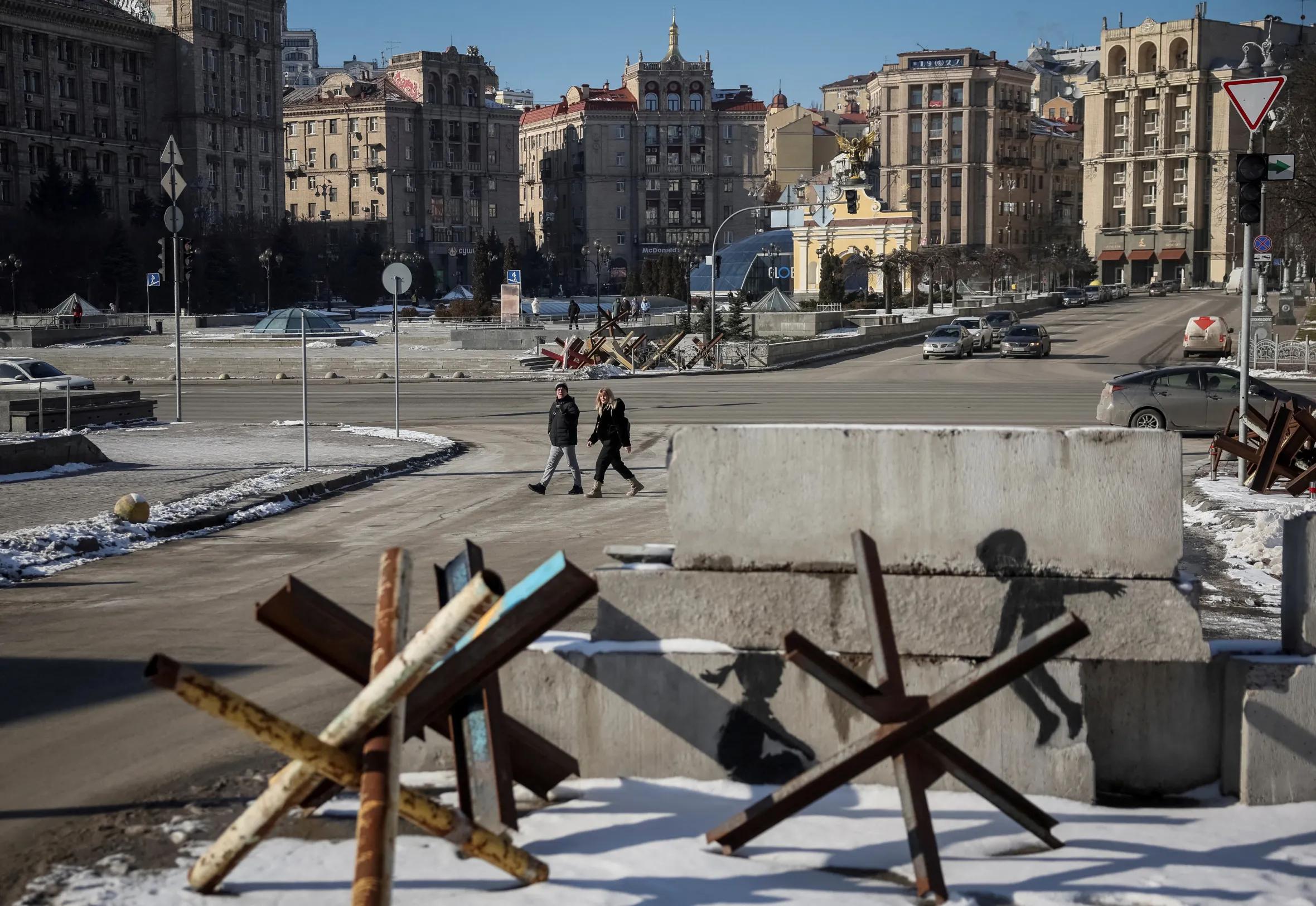 A work by Banksy in KyivGleb Garanich/Reuters
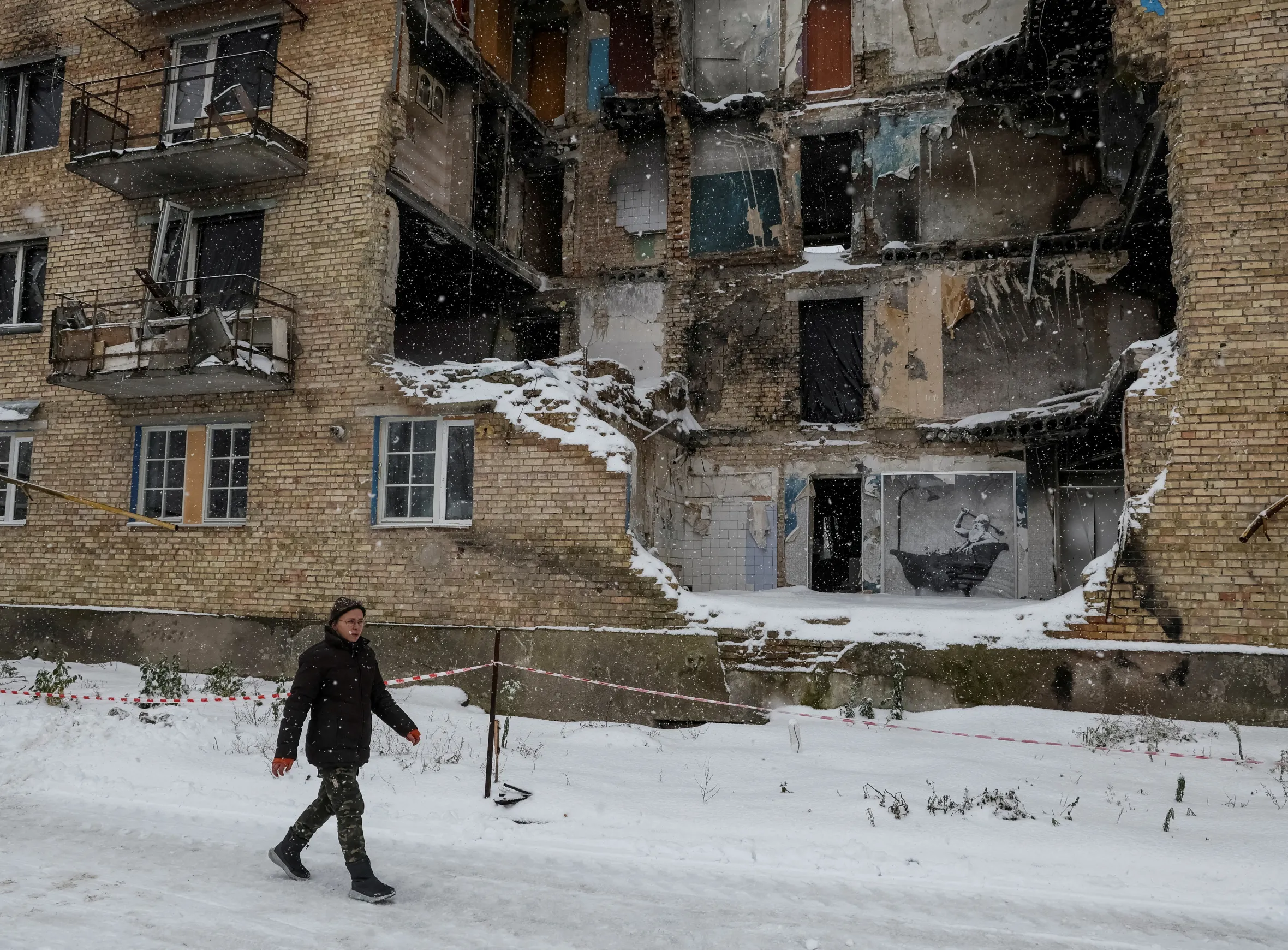 Another painting in the village of Horenka, UkraineGleb Garanich/Reuters
It said that the date on Jones’s passport matched that on the documents of Gunningham.
Banksy’s real identity has been a conundrum ever since he appeared on the British art scene.
Those who know his real identity, such as his former manager, Steve Lazarides, who subsequently fell out with the artist, have repeatedly preserved his anonymity.
Reuters defended its investigation, saying that there was a public interest in understanding the identity and career of any public figure who influenced discourse.
Banksy’s stencil paintings featuring social commentary have become some of the 21st century’s highest value artworks.
According to Reuters, Banksy had “decided to say nothing” in response to its findings.
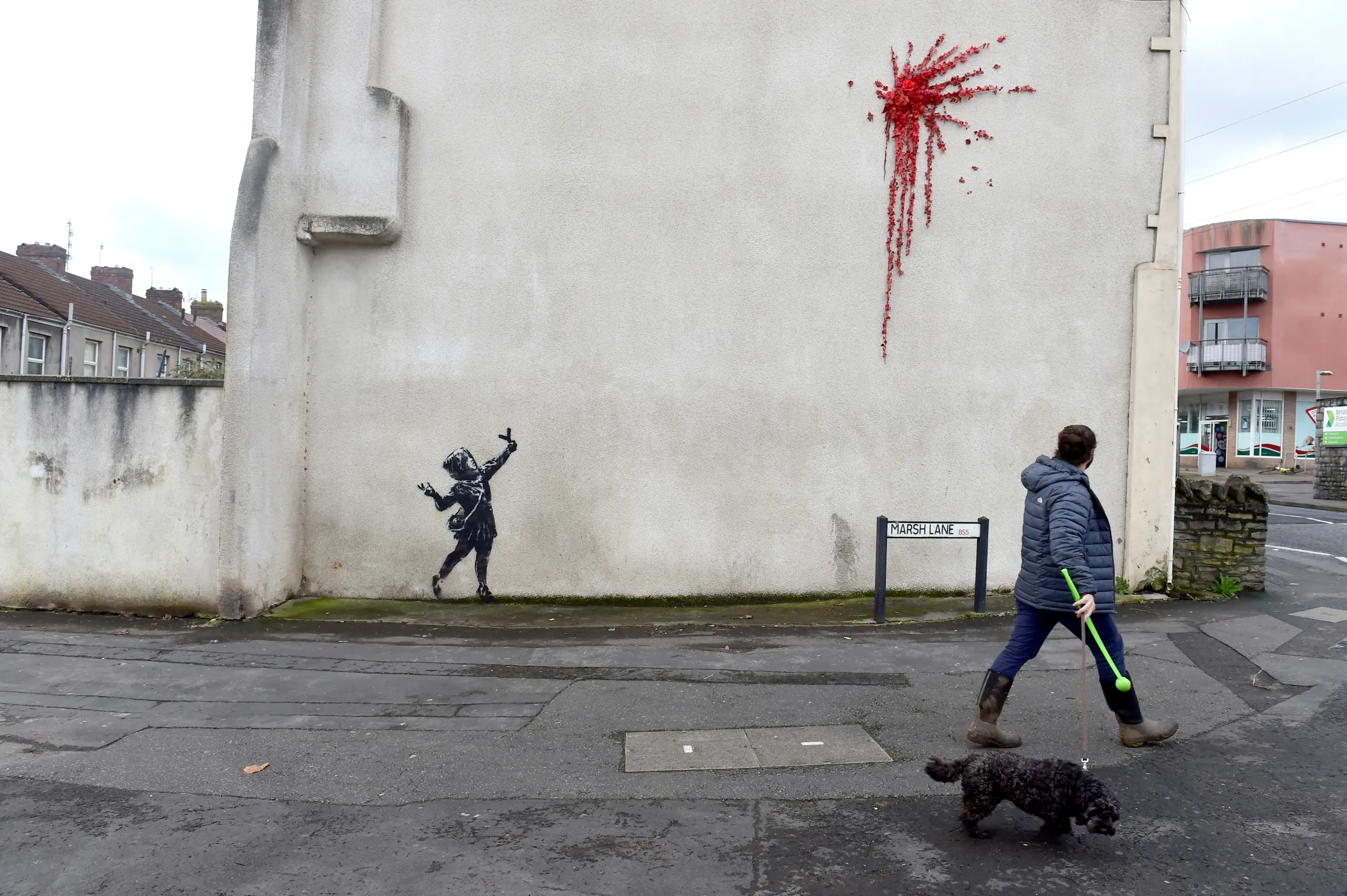 A work by the artist in Bristol, where he began his careerRebecca Naden/Reuters
Mark Stephens, Banksy’s lawyer, told the agency that Banksy did not accept that “many of the details contained within your inquiry are correct” and said that publishing the report would violate the artist’s privacy, interfere with his art and put him in danger.
Banksy had first been “identified” as Gunningham in a Sunday newspaper in 2008, although his manager at the time denied it.
According to the Reuters report this month, however, Robin Gunningham was arrested in New York in September 2000 and confessed to a misdemeanour after a Manhattan billboard for Marc Jacobs clothing was defaced.
According to what Lazarides wrote several years later, the “artist” had “doctored the Marc Jacobs Men billboard so that the model had goofy teeth” and drew a “giant speech bubble”.
The bubble was, however, empty. According to Reuters, this was because Gunningham had been caught by police officers.
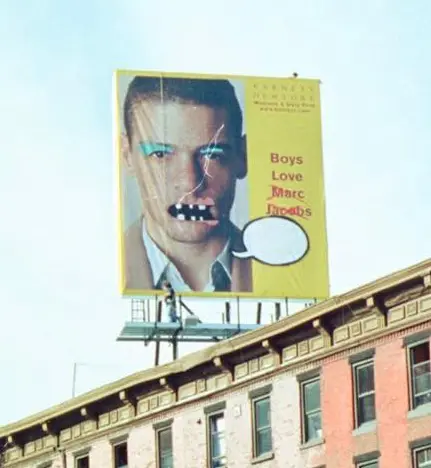 The defaced Marc Jacobs billboard in Manhattan
It said that police documents and court filings, including a handwritten confession, identified Robin Gunningham as the culprit.
The confession states: “The evening the night of September 17th I had been out drinking at a nightclub with friends when I decide to make a humorous adjustment to a billboard on top of the property on Hudson st.”
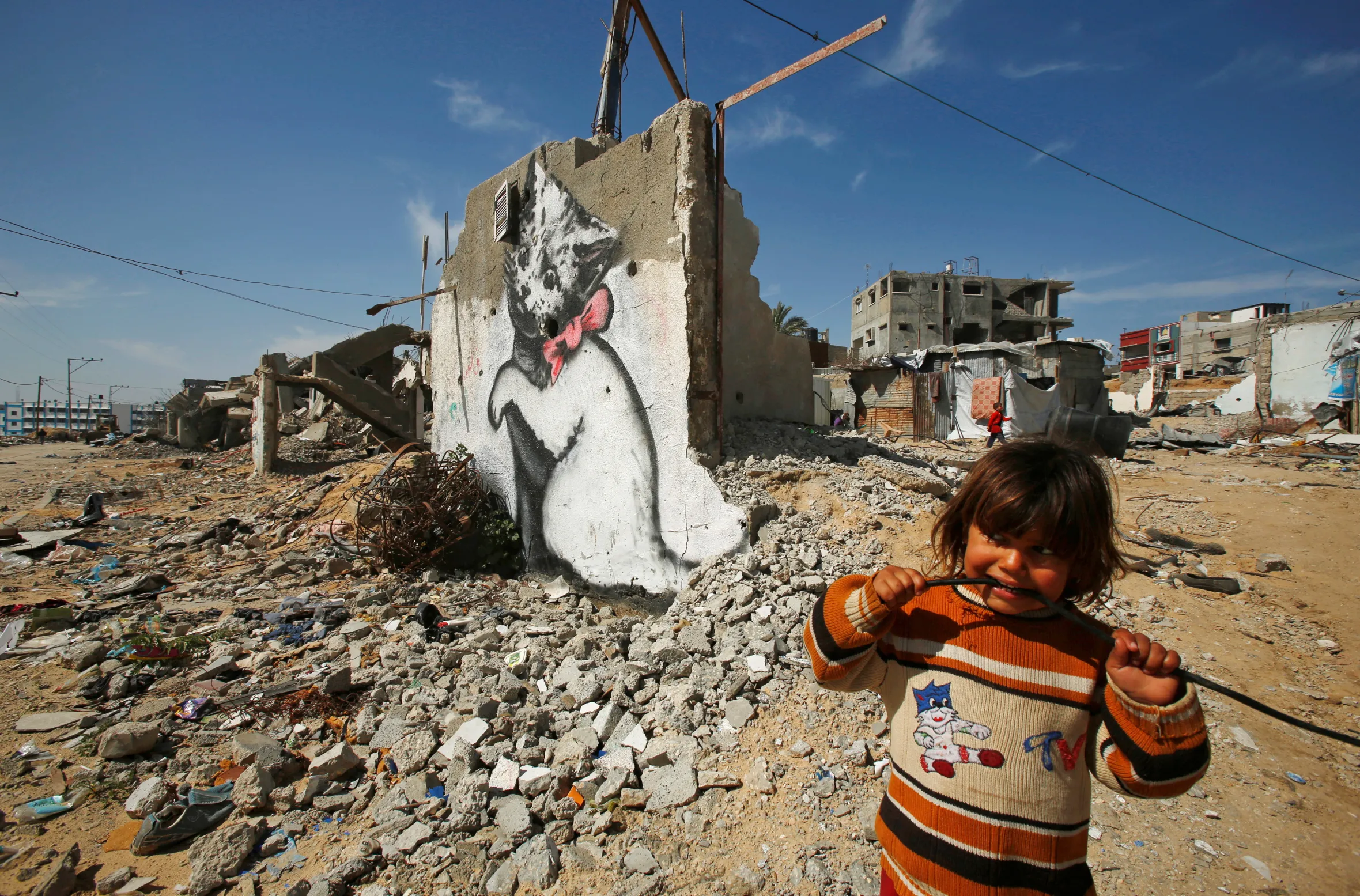 A mural on the remains of a house in Gaza that was destroyed by Israeli shelling in 2014Suhaib Salem/Reuters
The agency said that Gunningham later posted $1,500 bail in exchange for his passport and felony charges were reduced to a misdemeanour charge of disorderly conduct. He was subsequently fined $310 and completed five days of community service.
Reuters said that it had used geolocation tools as well as image comparisons for its investigation into the artist’s real identity.