

Listen to this article
Estimated 4 minutes
The audio version of this article is generated by AI-based technology. Mispronunciations can occur. We are working with our partners to continually review and improve the results.
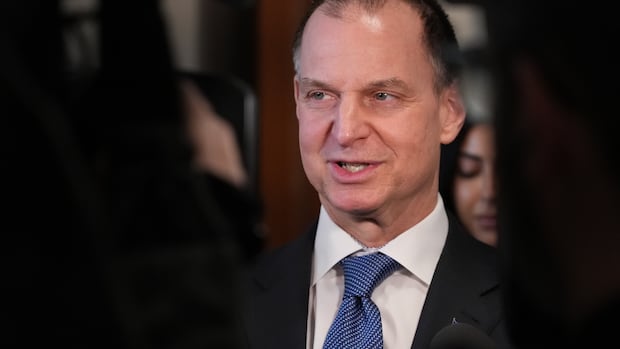
Finance Minister Eric Girard is set to table Quebec’s provincial budget on Wednesday — less than a month before the Coalition Avenir Québec (CAQ) chooses a successor to Premier François Legault.
The budget, Girard’s eighth, comes as he seeks a third mandate under the CAQ banner in the upcoming October election.
In his November economic update, Girard reported a $12.4 billion deficit for Quebec, including payments to the Generations Fund, representing 1.9 per cent of the province’s GDP.
Despite the approaching election campaign, Girard is downplaying the expectations of a “pre-election budget.” Speaking to Radio-Canada on March 6, he described the budget as “sober and targeted.”
“There won’t be any electoral promises or things like that,” Girard said, noting that while health and education can expect “adequate funding,” the government would also heed calls for increased infrastructure investment.
Difficult year ahead
The budget arrives against a backdrop of immense fiscal and geopolitical pressure.
Girard warned that 2026 is shaping up to be a difficult year for Canada and pointed to the instability surrounding the renewal of the Canada-United States-Mexico Agreement, which the Trump administration has threatened to terminate, alongside looming tariffs on timber, steel and aluminum.
“If the United States withdrew from the agreement, it would likely trigger a recession across North America — not just in Quebec and Canada, but also in the U.S.,” Girard said.
“On top of that, we have a short-term war in the Middle East, which adds another layer of uncertainty,” he added.
However, he noted a potential upside: a positive revision of the trade deal could see the economy outperform the one per cent growth currently projected for 2026.
Path to a balanced budget
A primary challenge for Girard will be restoring the credibility of the government’s timeline to eliminate the deficit by 2029-30.
In November 2025, the interim auditor general flagged the government’s plan as incomplete, noting that measures for more than half of the intended savings remained undetermined.
Emna Braham, executive director of the Institut du Québec, noted that the government has yet to identify measures for how it will cover roughly $8.5 billion of the deficit.
“One of the things we expect to see in the next budget is a bit more precision on how to reach a balanced budget,” Braham said, adding that “the budget’s credibility is at stake.”
She acknowledged the difficulty of the task given it is the final budget before an election campaign.
Leadership candidates kept in the loop
Girard defended the timing of the budget — which will be tabled weeks before the April 12 leadership vote — as a matter of stability.
To ensure continuity, Girard confirmed to Radio-Canada’s Tout un matin that he reviewed the budget “line by line” with leadership candidates Christine Fréchette and Bernard Drainville.
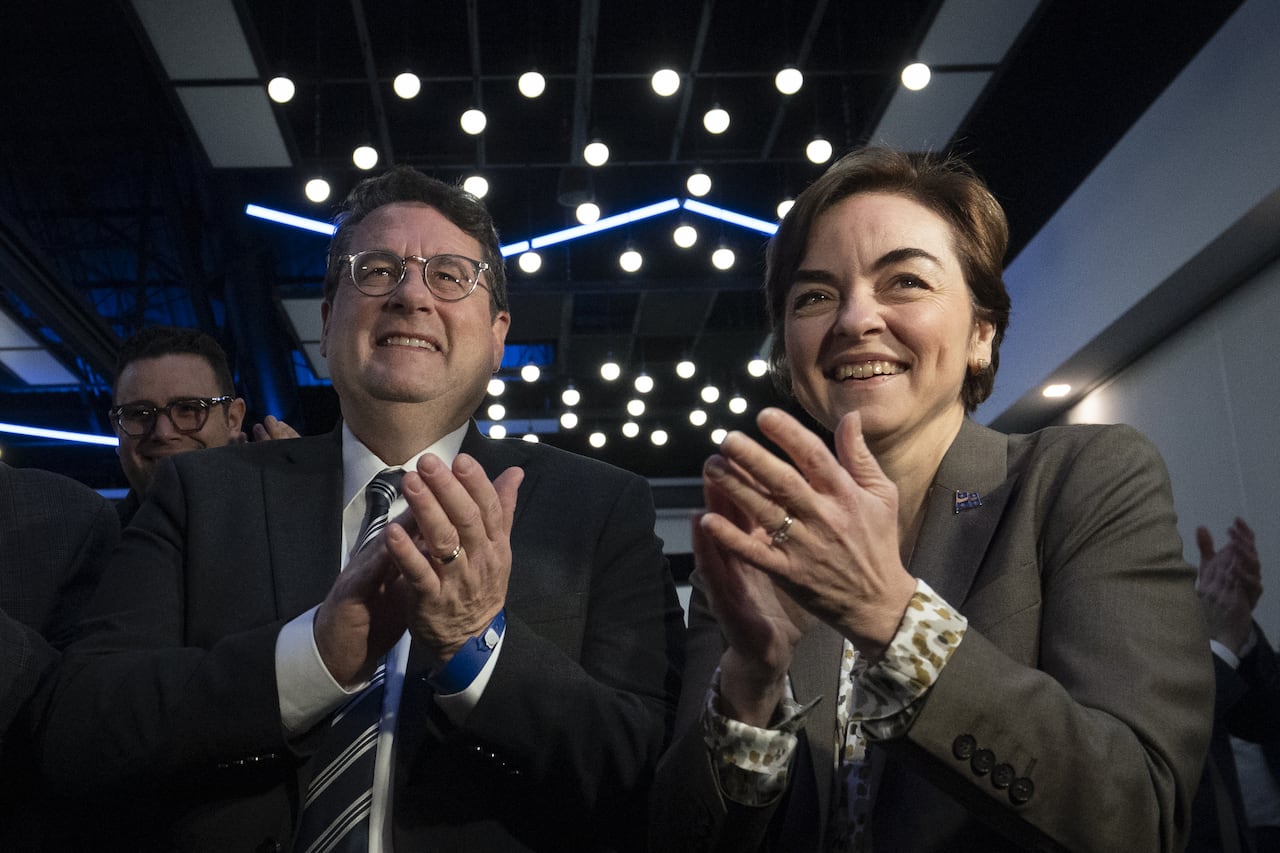 Former environment minister Bernard Drainville and former energy minister Christine Fréchette are vying to become the province’s next premier. (Ivanoh Demers/Radio-Canada)
“The fiscal year ends on March 31, and there is a great deal of global uncertainty… [and] government agencies and community organizations that require predictability,” Girard said.
Philippe Gougeon — founder of Gougeon Économique Politique and Girard’s former chief of staff — suggested the political transition has actually strengthened Girard’s hand.
“His decision-making power was greater than usual because, previously, there was a premier who would have stayed put,” Gougeon said.
He noted that because Girard “couldn’t play favourites” with the candidates, he had more leeway to advance his own fiscal priorities.
“The other key players involved simply do not have the same clarity regarding their future roles,” Gougeon said.