
Summary
The first round of investments from a $375-million fund for Indigenous-led conservation in the territory is being distributed to 21 Indigenous partner governments.
The funds will support activities on three Tłı̨chǫ protected areas, which cover roughly half of Tłı̨chǫ territory and represent a region three times larger than Banff National Park.
Funds will also support new and existing Guardians programs, which will generate steady jobs and preserve cultural knowledge that would otherwise be lost.
We’re trying out staff-written summaries. Did you find this useful? YesNo
A landmark initiative in the Northwest Territories is disbursing $21.6 million to Indigenous governments to support protected areas and Guardian programs.
The funds represent the first round of investments from the Our Land for the Future Trust. The trust came out of an agreement signed in 2024 by the federal government, territorial government, 21 Indigenous governments and private donors that invested $375 million into Indigenous-led conservation in the territory.
The investments were announced Feb. 26 at a meeting in Yellowknife, where the agreement’s partners gathered to review progress.
“It’s an exciting announcement,” Dahti Tsetso, the trust’s chief executive officer, told The Narwhal. With the agreement finalized and funds transferred to the trust’s account, money is now flowing to Indigenous governments to support conservation work at the community level: protecting diverse ecosystems, culturally and spiritually important areas and wildlife habitats.
That, she says, “was always the vision.”
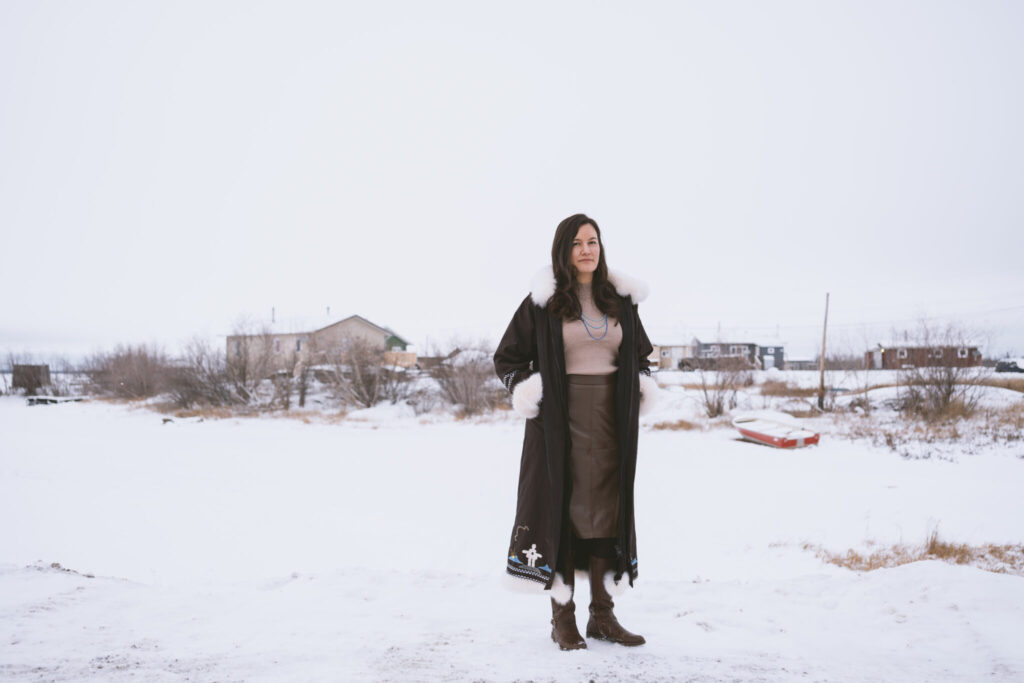 Dahti Tsetso, chief executive officer of the Our Land for the Future Trust, says the funds will support both new and ongoing work led by 21 Indigenous partner governments. Photo: Pat Kane / The Narwhal
In this first round of funding, Tsetso says each of the 21 Indigenous partner governments is getting resources to work toward area-based conservation goals as well as Guardian and stewardship goals.
In some cases, this will mean managing existing protected areas, such as Edéhzhíe in the Dehcho region or Thaidene Nëné near Łutsël K’é. In other cases, funds will support communities looking to explore or advance protected areas. Both Ka’a’gee Tu and Sambaa K’e First Nations, for example, have been working to establish protected areas that would conserve culturally and ecologically significant zones, home to wildlife such as moose, fish, waterfowl and caribou.
“There’s a number of initiatives that have been ongoing for quite some time,” Tsetso says. “Now the trust can help support their efforts.”
She adds that all of the Indigenous partners have ambitions to either initiate or expand their Guardian work. For instance, the K’ahsho Got’ine Guardians in Fort Good Hope are looking to expand, while the Gwich’in are developing a regional Guardian program.
Protecting roughly half of Tłı̨chǫ lands
The Our Land for the Future agreement covers existing protected areas in the territory, but it’s also expected to support 200,000 square kilometers of new protected and conserved areas, contributing to the federal government’s commitment to protect 30 per cent of Canada’s land and water by 2030.
Last week’s announcement recognized a big step toward that goal. In November 2025, three protected areas on Tłı̨chǫ lands were officially recognized as Indigenous protected areas by the federal government and added to a national database. The online database is currently being updated to reflect more lands and waters protected as of the end of 2025, according to a spokesperson from Environment and Climate Change Canada.
The three protected areas are known as Tłı̨chǫ Nàowoò K’è Dèt’àhot’ı̨ı̨, Gowhaèhdǫǫ̀ Yek’e Aet’ı̨̀ı̨ K’è and Tıts’aàdı̀ı Nàdèe K’è Wexoedıı.
Altogether, they span 22,565 square kilometers— equivalent to about three times the size of Banff National Park, and encompassing about half of Tłı̨chǫ lands.
“It is a great piece of work,” Tłı̨chǫ Grand Chief Jackson Lafferty says.
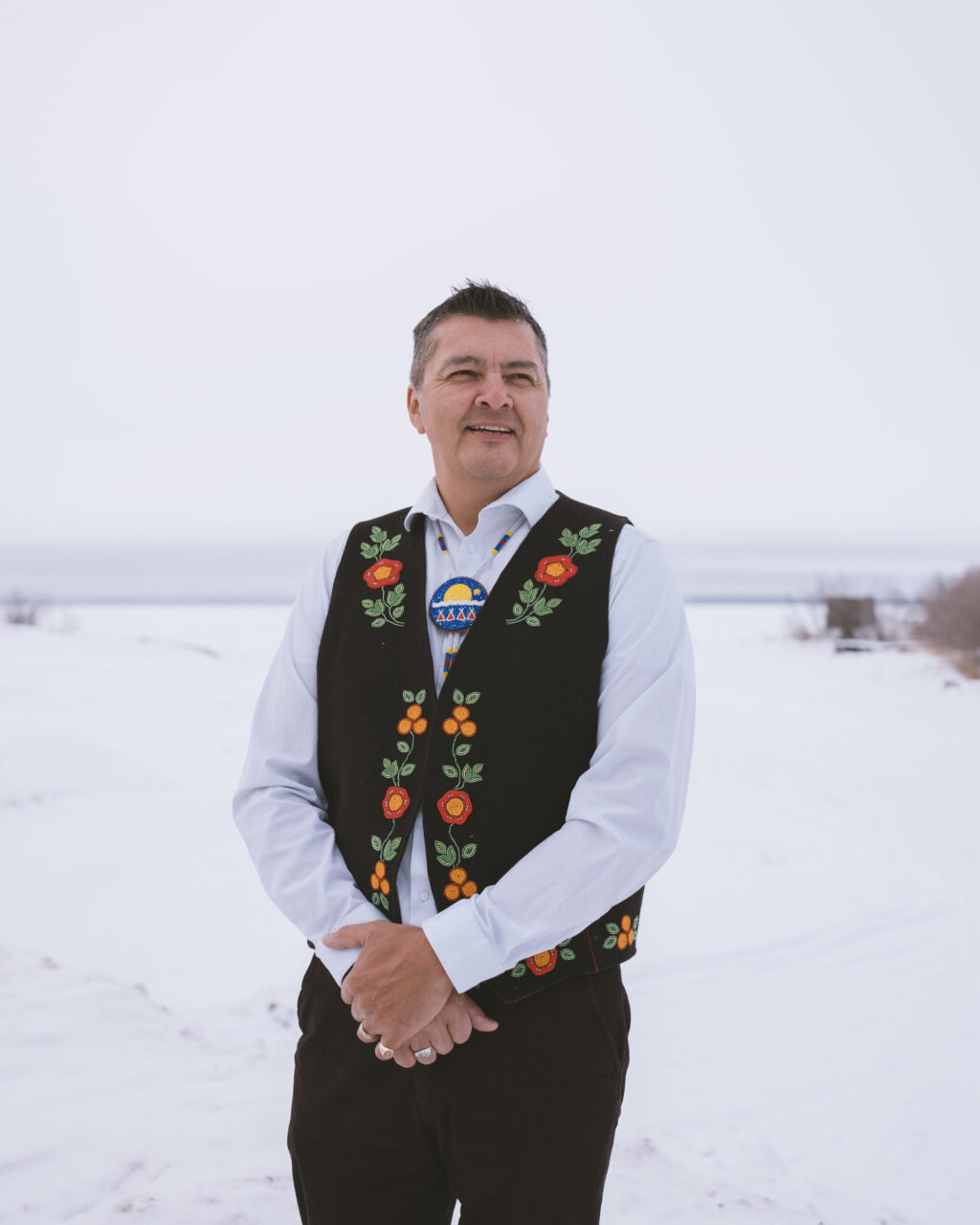 Jackson Lafferty, Grand Chief of the Tlicho First Nation, says development is taking place alongside conservation. “It’s a balancing act,” he says. Photo: Pat Kane / The Narwhal
He adds that there are also large areas where development is being promoted to support economic self-sufficiency. “It’s a balancing act,” he says. “We’re doing what we can to conserve and also develop.”
Tłı̨chǫ Nàowoò K’è Dèt’àhot’ı̨ı̨ is aimed at preserving Chief Monfwi’s trails: traditional winter and summer travel routes that connect the four Tłıc̨hǫ communities as well as important cultural and harvesting areas, Brett Wheler, senior policy advisor on sustainability and resource management with the Tłı̨chǫ Government, says.
Similarly, Gowhaèhdǫǫ̀ Yek’e Aet’ı̨̀ı̨ K’è prioritizes the preservation of the ancestral Įdaà Trail, which connects Great Bear Lake to Great Slave Lake. There are important waterways and watersheds situated roughly halfway along the route.
Finally, Tıts’aàdı̀ı Nàdèe K’è Wexoedıı extends along the shoreline of the north arm of Great Slave Lake, and will protect habitat for birds and other wildlife such as caribou.
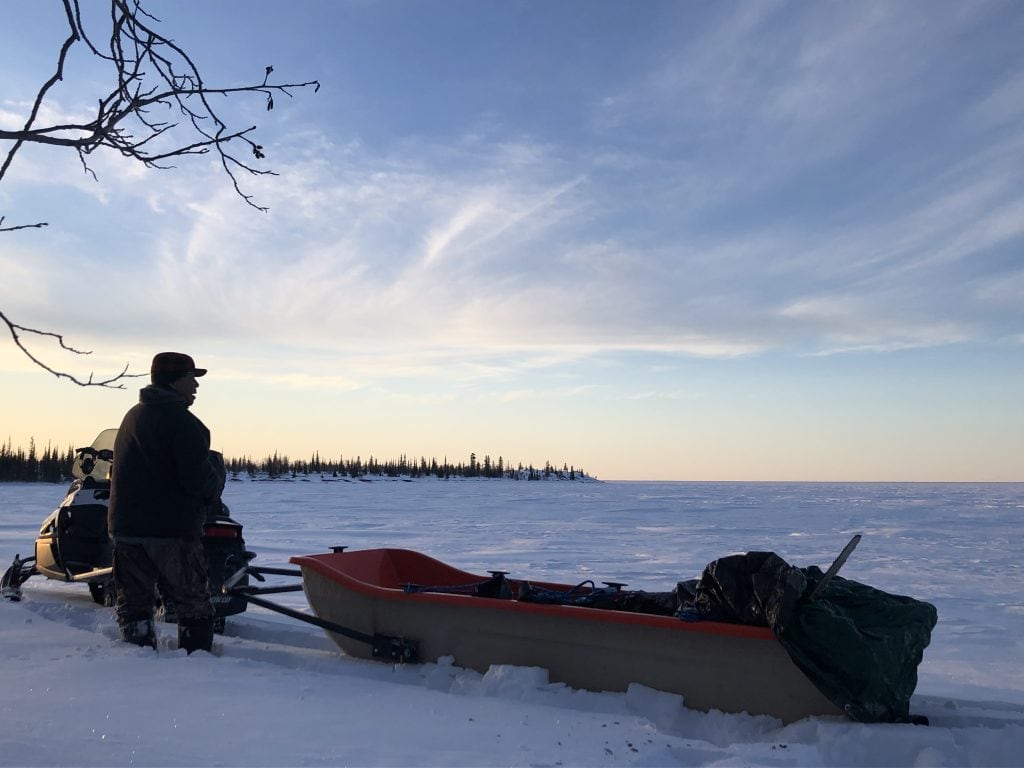 The three protected areas encompass several historic trails and waterways used by the Tłıc̨hǫ people since “basically forever,” says Brett Wheler. They will also protect critical habitat for birds and wildlife. Photo: Supplied by the Tłıc̨hǫ Government
“These areas have been important for Tłıc̨hǫ people for a long time, basically forever,” Wheler says. Although Tłıc̨hǫ people have protected the areas since time immemorial, a lack of resources to get people on the land had kept them from fully realizing their vision of stewardship.
The funds from the trust will support the “people component” of the protected areas, Wheler says, including Guardian work, environmental monitoring and cultural programming. One intention is to hire people full time — though the Tłıc̨hǫ Government already has several monitoring programs, patchy funding has meant most employees work on a part-time or casual basis.
The trust served as a catalyst for having the areas officially designated and recognized by the federal government, Wheler explains. In anticipation of funds flowing from the Our Land for the Future, Tłı̨chǫ law governing land protection was updated in 2023. In 2025, the federal government deemed the three areas equivalent to other protected areas, such as national or territorial parks, for achieving conservation goals. As a self-governing nation, the Tłı̨chǫ Government is the sole decision-making authority on its 39,000 square kilometres of land. A land claims and self-government agreement signed in 2003 gave the Tłı̨chǫ Government ownership of surface and subsurface rights on these lands.
Stephanie Behrens, the Tłıc̨hǫ Government’s manager of lands protection and renewable resources, echoes Wheler.
“Our Elders have always said that the wildlife and the land need us to be out there,” she says. “Having this pot of money really ensures that we’re able to do that.”
Guardians funding will bring jobs, protect culture
Behrens says the intent is to hire two full-time Guardians in each of the four Tłıc̨hǫ communities, along with a Guardian manager.
Employing Guardians full-time will also provide jobs in an economically challenging time for the region, Behrens says. The territory’s three diamond mines have long been major employers, but are all expected to close by the end of the decade. One is shutting down this month, and the two others are struggling financially.
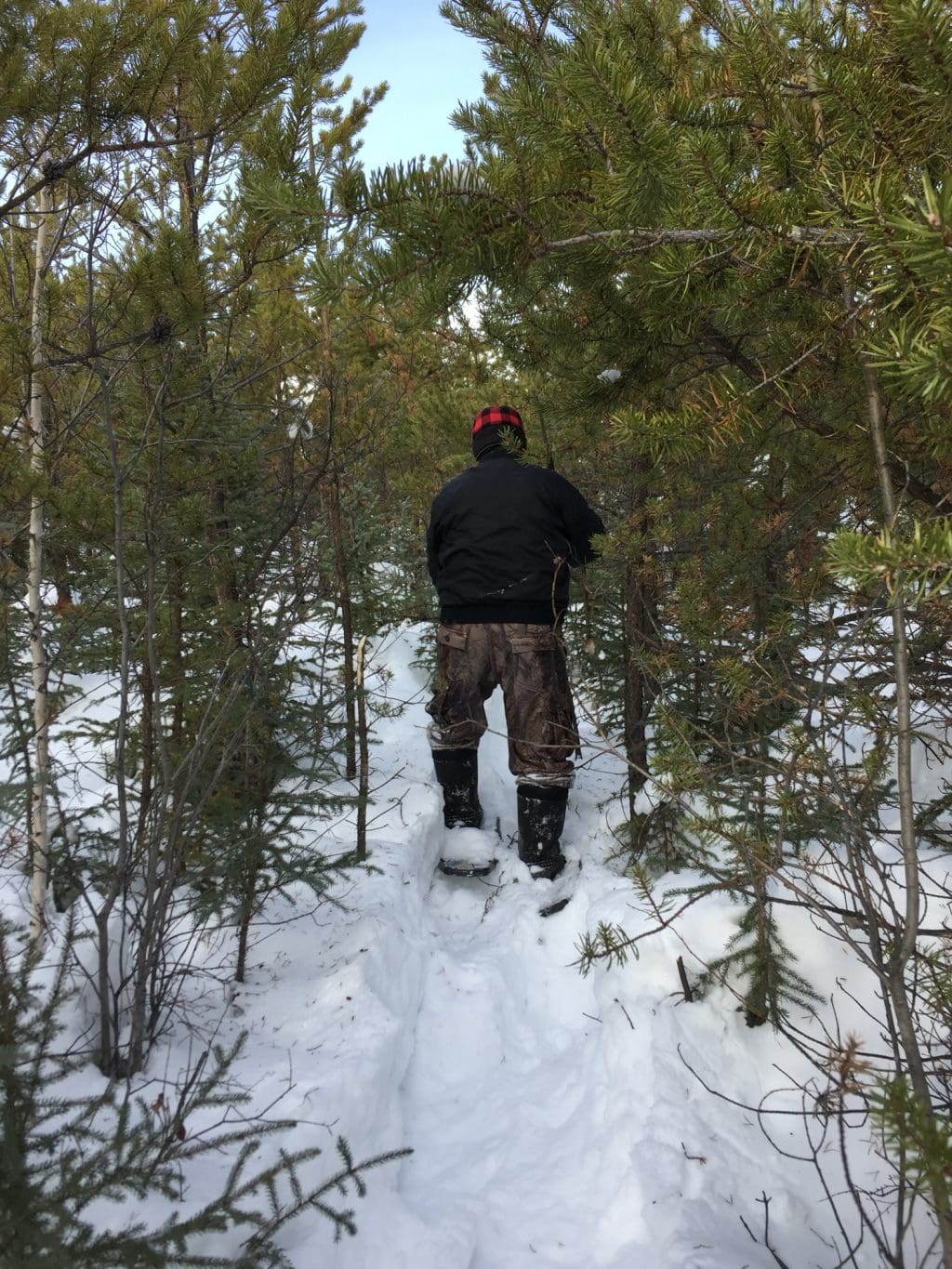
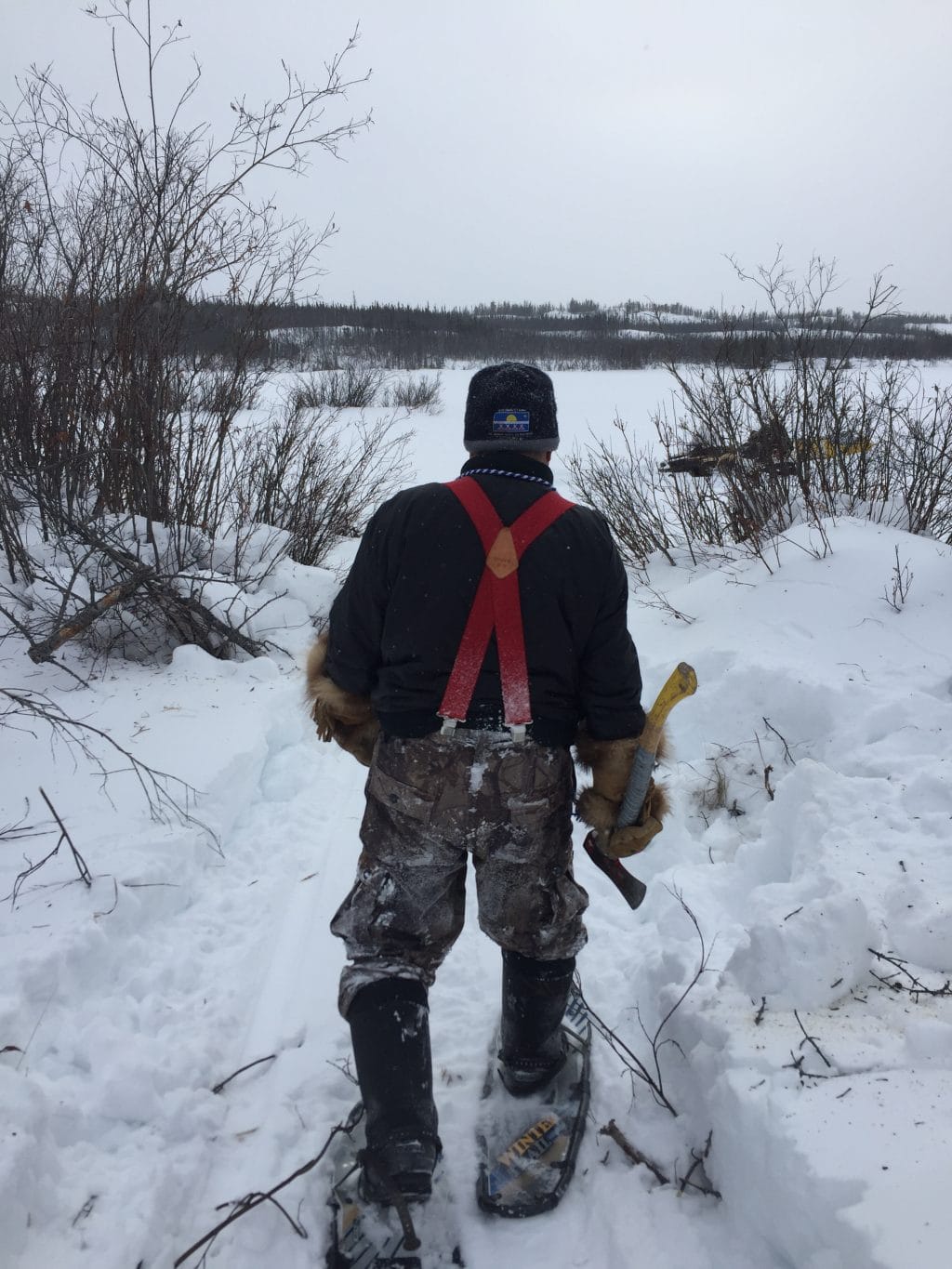
Restoring and maintaining cultural trails will be a key part of Guardians work, Brett Wheler told The Narwhal. Eight new Guardians will be hired, along with a Guardian manager. Photos: Supplied by the Tłıc̨hǫ Government
Tłıc̨hǫ Guardians will help implement work set out for the protected areas, including stewardship, monitoring and harvesting. The work will support the Tłıc̨hǫ Government’s language and cultural programs, but also provide opportunities for individuals to exercise their culture, Wheler says. Elders will provide Guardians with guidance on how to re-establish and maintain cultural trails, along with a network of camps and cabins.
A lot of that cultural knowledge might otherwise be lost.
“There are only a handful of people that actually know these historic trails,” Behrens says, adding much of her work is guided by her late grandfather’s vision. As an Elder, he was involved in negotiating the Tłıc̨hǫ self-government agreement.“To be able to utilize these trails once again in the way that our Elders and ancestors used to do, I think he would be extremely proud,” she says.