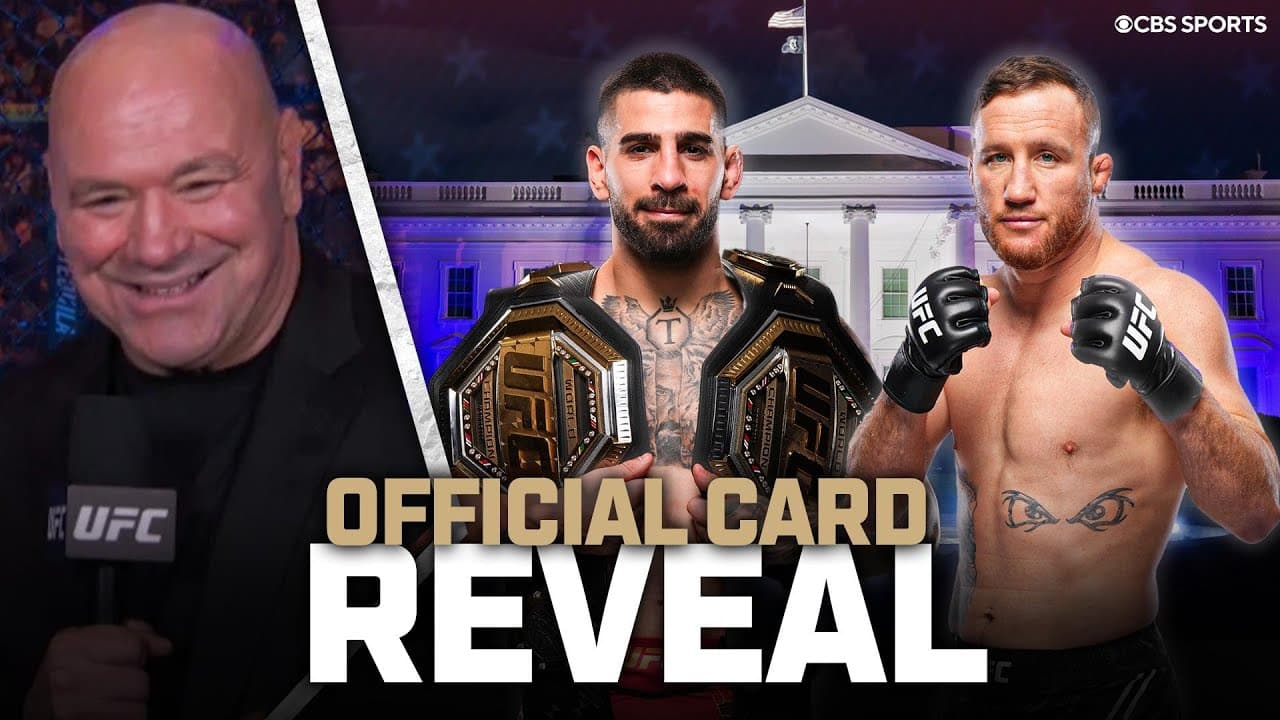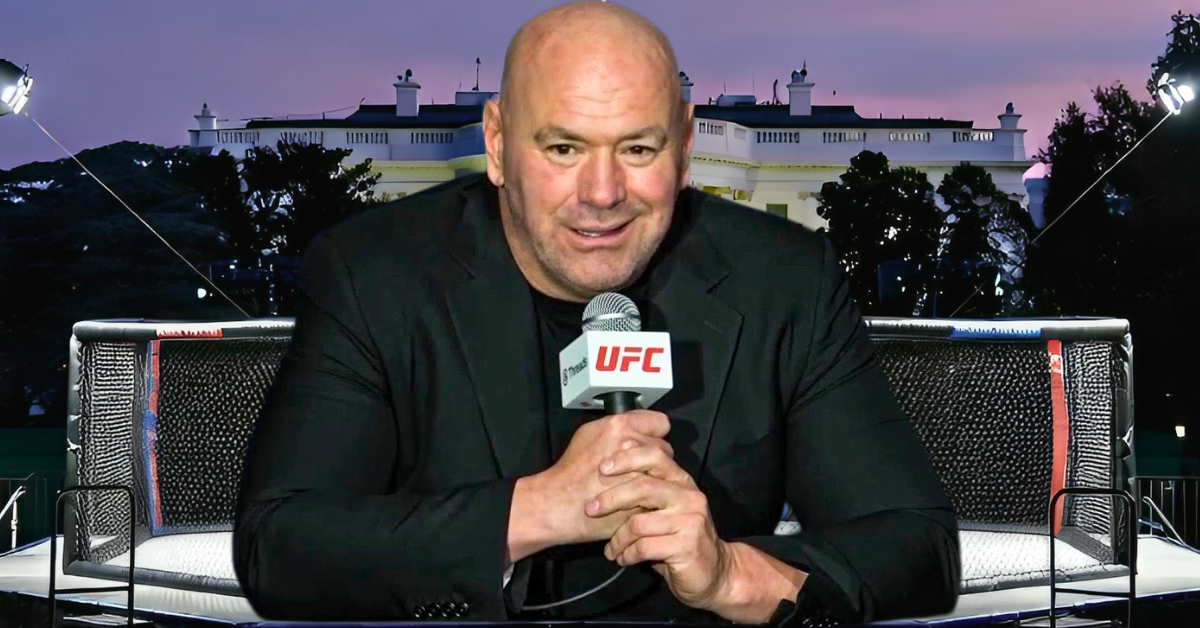
The UFC’s biggest card of the year now finds itself in jeopardy of going unsanctioned.
The MMA promotion has announced a historic event, UFC Freedom 250, set for June 14 on the South Lawn of the White House in Washington, D.C. The event serves as a symbolic tribute to the 250th anniversary of the United States Declaration of Independence.
The event is set to feature a blockbuster championship doubleheader. In the main event, reigning lightweight champion Ilia Topuria will put his title on the line against interim titleholder Justin Gaethje in an unification clash.
Meanwhile, the co-main event will see light heavyweight king Alex Pereira move up a division to square off against Ciryl Gane for the interim heavyweight title.
However, UFC Freedom 250 is now under intense scrutiny from the District of Columbia Combat Sports Commission regarding its regulatory status.
UFC Freedom 250 Could Go Down As Unsanctioned, Warns DC Commission
The central issue is jurisdictional. The White House sits on federal land, which places it outside the regulatory authority of any city or state athletic commission.
The UFC has informed the D.C. Combat Sports Commission that it does not intend to obtain the required permit, citing the site’s federal designation as grounds for bypassing the standard licensing and oversight process.
During a recent interview with The Washington Post, commission chair Andrew Huff revealed that the UFC considers the $100 permit unnecessary, arguing the event is “taking place on federal land.” He is not directly challenging the promotion’s legal reasoning, but rather the precedent it could set.
Huff’s concern is that it may allow any promoter, not just the UFC, to stage events on federal property and bypass athletic commission oversight altogether.
This raises the possibility that smaller or less credible promotions could exploit the same loophole to stage dangerous mismatches, license fighters who might not pass proper medical clearance, and operate without essential safety measures simply by hosting events on federal property such as a national park or government complex, beyond the reach of state oversight.
The UFC has dealt with similar scenarios in the past. When hosting events in regions without established athletic commissions, including parts of the Middle East, the promotion has relied on its own internal oversight, complete with medical teams and safety protocols.
By most accounts, that system has operated responsibly. However, Huff’s concern is not centered on the UFC’s track record. The real issue, he argues, is the regulatory gap itself, one that does not distinguish between responsible promoters and those who may cut corners.
What “Unsanctioned” Means For Fighters On UFC Freedom 250 Card
Without official sanction, any bouts held on the South Lawn would be classified as non-regulated bouts (NRBs) and would carry no official recognition from athletic commissions. As a result, wins and losses would not be reflected on fighters’ professional records.
That means Ilia Topuria and Justin Gaethje could headline what has been billed as one of the most historic events in UFC history and still walk away with nothing to show for it on paper, a significant complication for title unification and long-term legacy record keeping.
The UFC has yet to publicly respond to the commission’s statements. With the event roughly 90 days away, the regulatory standoff remains unresolved.