
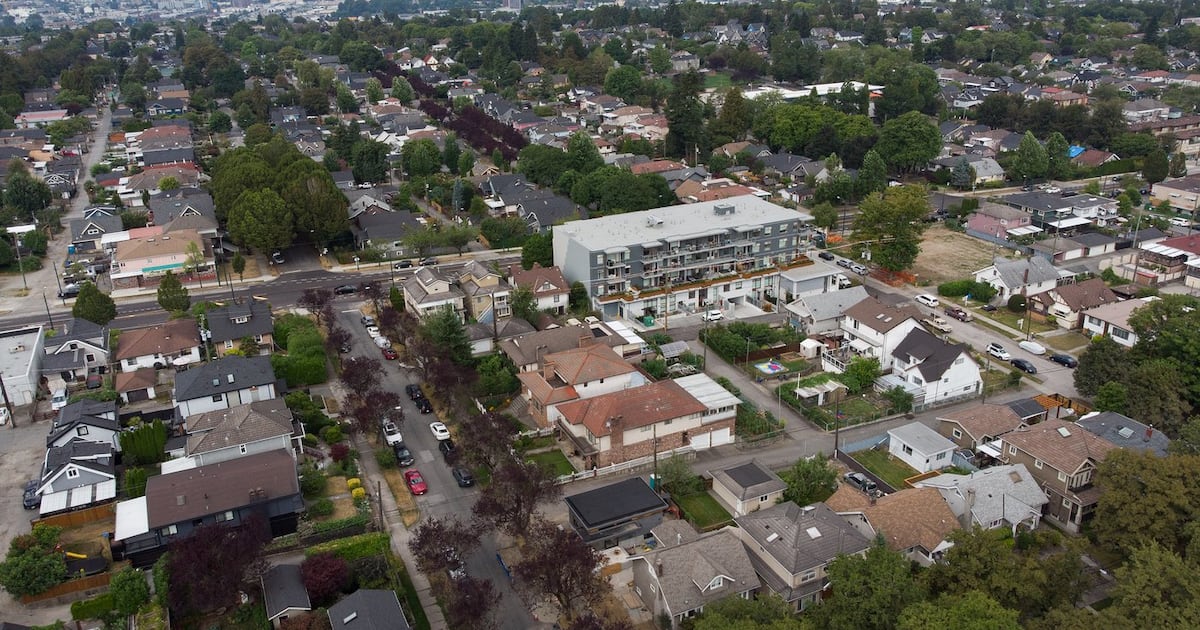
Robert Kavcic, senior economist at BMO Capital Markets, joins BNN Bloomberg to assess Canada’s housing market.
Canada’s population decline is reshaping housing demand, with the rental market loosening and investor activity fading as growth slows sharply.
BNN Bloomberg spoke with Robert Kavcic, senior economist at BMO Capital Markets, who says the adjustment is already feeding through the economy, with housing expected to remain subdued as interest rates stay elevated and demand normalizes.
Key TakeawaysCanada recorded its first year-over-year population decline since the Second World War, marking a sharp reversal from rapid growth in 2024.Tighter immigration policy is quickly reducing rental demand, with rents already easing as non-permanent resident inflows slow.The housing market remains weak, with demand subdued and activity expected to stay soft through 2026.Investor participation has dropped significantly as falling rents and higher borrowing costs weaken cash flow incentives.Ontario and British Columbia are seeing the largest impacts, reflecting previously elevated levels of non-permanent residents. Robert Kavcic, senior economist at BMO Capital Markets Robert Kavcic, senior economist at BMO Capital Markets
Read the full transcript below:
ROGER: Canada’s population shrank again. It’s another headwind for an already soft housing market and a broader economy now facing higher uncertainty after the Bank of Canada held rates and warned about fallout from the Iran war. Let’s bring in Robert Kavcic, senior economist at BMO Capital Markets. Robert, thanks very much for joining us.
ROBERT: Of course. Thanks for having me.
ROGER: Two quarters in a row — I want to make sure I’m reading this right — the last two quarters of 2025, Canada’s population declined?
ROBERT: Yes. Two quarter-over-quarter declines to end the year. And then, probably most tellingly, this is the first time we’ve seen a year-over-year decline in population growth going back to the Second World War, which is the run of data that we have for Canada. So that’s a dramatic swing from an environment where we were adding almost one and a half million people per year — roughly three and a half per cent population growth at one point. That’s a major swing for the market and for the economy to absorb.
ROGER: And what is it like to adjust when we go from that surge to a negative? Can the economy adjust quickly, or does it take time?
ROBERT: The adjustment is happening quickly in some segments. I think almost the minute the federal government put caps on non-permanent resident inflows, you saw the market respond by loosening up the rental market. That’s probably the clearest example. It happened almost immediately. Before that, the market was really frustrating policymakers, who were trying to chase it with more supply. The minute those caps were put in place, the demand curve backed off, the market rolled over and rents started to come down.
In other areas, like consumer spending and the labour market, it’s been a bit slower. What we’re seeing now is labour force growth flattening out, and the unemployment rate has stabilized off the high levels we saw last year. So it is flowing through.
ROGER: And for the housing market, for some people this is good — if you’re renting or looking to buy. But if you already own, you’re probably worried.
ROBERT: It’s certainly part of the process of getting back toward housing affordability in Canada. From day one, we’ve argued this was a demand shock, not necessarily a supply issue, because builders were effectively building every unit they could. Normalizing demand conditions is pushing us back toward affordability — not to pre-pandemic levels, but closer to something more sustainable relative to incomes and mortgage rates.
ROGER: Which areas will be affected the most?
ROBERT: Within housing, it’s the rental market first and foremost. Big swings in non-permanent resident flows affect rental demand almost immediately. That’s where the market has shifted the most.
The spillover is that investors have largely vanished. Without price appreciation, they have to rely on rental income, and with rents falling and borrowing costs still relatively high, the cash flow just doesn’t work.
Geographically, the federal government is targeting non-permanent residents at five per cent of the population. The biggest imbalances were in British Columbia and Ontario, where that share was closer to seven, eight or nine per cent. Not surprisingly, those regions saw the largest population declines in late 2025.
ROGER: Now add in the Bank of Canada holding rates — no real surprise. What impact does that have?
ROBERT: It leaves us in an environment where the housing market continues to move sideways through 2026. If mortgage rates were closer to three per cent, that would likely re-ignite demand, but we’re not going to get there.
From an investment standpoint, cap rates relative to borrowing costs still don’t make much sense. Even if there was a case for rate cuts, geopolitical developments and higher oil prices are pushing that possibility further out. So any hope that lower rates will tighten the housing market this spring is probably off the table.
ROGER: And briefly, south of the border — the Federal Reserve decision is also expected to hold.
ROBERT: Yes, that’s our call and what markets are pricing in. Similar story — even if the Fed was leaning toward easing, geopolitical risks are forcing it to stay on the sidelines longer. We expect the Fed to remain on hold through the summer, with any potential cuts coming late in the year, possibly September or December.
ROGER: We’ll leave it there. Robert, thanks very much.
ROBERT: Great. Thanks for having me.
ROGER: Robert Kavcic is senior economist at BMO Capital Markets.
—
This BNN Bloomberg summary and transcript of the March 18, 2026 interview with Robert Kavcic are published with the assistance of AI. Original research, interview questions and added context was created by BNN Bloomberg journalists. An editor also reviewed this material before it was published to ensure its accuracy and adherence with BNN Bloomberg editorial policies and standards.