

Listen to this article
Estimated 4 minutes
The audio version of this article is generated by AI-based technology. Mispronunciations can occur. We are working with our partners to continually review and improve the results.
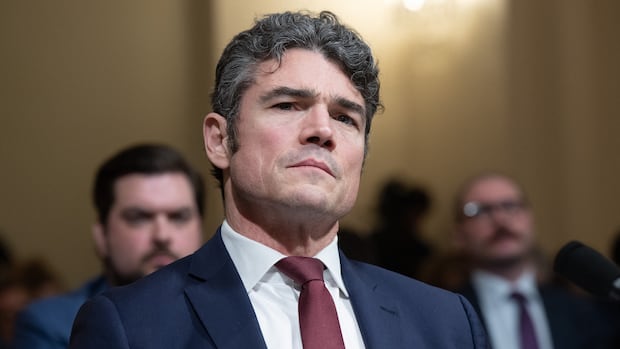
Joe Kent, the former U.S. counterterrorism director who resigned this week over concerns about the Iran war, said Wednesday that he and other senior officials “were not allowed” to share their doubts about the airstrikes with U.S. President Donald Trump.
Speaking on Tucker Carlson’s podcast, Kent said the president relied on a small circle of advisers in making his decision to strike Iran. He also claimed Israel forced Trump’s hand and said this happened despite there being no evidence that Iran posed an imminent threat to the U.S.
“A good deal of key decision makers were not allowed to come and express their opinion to the president,” Kent told the conservative pundit. “There wasn’t a robust debate.”
Kent’s comments offer an inside glimpse into Trump’s decision to strike Iran on Feb. 28 and underscore the risk of the war dividing his political base. The comments also suggest there were concerns about the strikes within the administration.
As head of the U.S. National Counterterrorism Centre, Kent was in charge of an agency tasked with analyzing and detecting terrorist threats. His work was overseen by U.S. Director of National Intelligence Tulsi Gabbard, who on Wednesday said that it was up to Trump — and Trump alone — to decide whether Iran posed a threat.
Gabbard, a veteran and former member of congress from Hawaii, has previously criticized talk of military strikes in Iran. She has not said what she thinks of the current strikes and a spokesperson has declined to respond to questions.
Kent declined to tell Carlson who blocked his access to Trump.
WATCH | Intel chiefs testify before senate committee about Iran threats: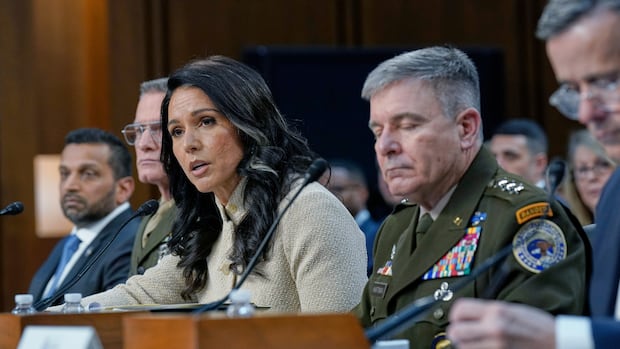
U.S. intel chiefs questioned on Trump’s war planning and Iranian threat assessments
U.S. intelligence officials, including Director of National Intelligence Tulsi Gabbard and CIA Director John Ratcliffe, testified Wednesday before the Senate Intelligence Committee’s hearing on worldwide threats. Senators questioned the officials on the specific intelligence provided to U.S. President Donald Trump prior to the start of the war with Iran.No intel to back up nuclear weapon claims: Kent
Kent said no intelligence suggested that Iran was working to develop nuclear weapons, and that he believes Israel was able to force the U.S. to act by promising to act first, potentially putting U.S. interests in the region at risk. He said Israeli officials and U.S. media pundits helped make the argument that Iran was a threat.
“The Israelis drove the decision to take this action,” Kent told Carlson. He cited comments from U.S. Secretary of State Marco Rubio and U.S. House Speaker Mike Johnson suggesting that Israel’s plans prompted the U.S. to take action.
Kent, who has previous connections to right-wing extremists, said Israeli Prime Minister Benjamin Netanyahu and other Israeli officials personally lobbied Trump, often with information that U.S. officials couldn’t confirm.
“When we would hear what they were saying, it didn’t reflect intelligence channels,” Kent said.
His claim that an “Israeli lobby” was behind Trump’s decision to launch the war has drawn criticism from Jewish groups and others who said it amounted to antisemitism.
Kent chose to make his first public remarks since his resignation during an appearance with Carlson, who has also faced criticism for rhetoric seen as antisemitic.
Trump has rejected Kent’s criticism
Trump has offered shifting reasons for the strikes and has pushed back on claims that Israel forced the U.S. to act.
On Tuesday, he rejected Kent’s criticism of the war and said he always thought Kent was “weak on security.” Trump continued that if someone in his administration did not believe Iran was a threat, “we don’t want those people.”
“They’re not smart people, or they’re not savvy people,” Trump said. “Iran was a tremendous threat.”
The White House did not immediately respond to questions about Kent’s comments on Carlson’s show.
As a Green Beret, Kent saw combat in 11 deployments before retiring to join the CIA. He also endured tragedy: His wife, a Navy cryptologist, was killed by a suicide bomber in 2019 in Syria, leaving him with two young sons. Kent, 45, has since remarried.
Kent told Carlson that he decided to resign after it became obvious that his concerns would be ignored and he determined that he could not “in good conscience” be a part of it.
“I know this path that we’re on, it doesn’t work,” he said.