
As I do every year, I’ve written up a handful of younger big leaguers who I think are candidates to make a significant improvement this season, whether it’s from a change in skills, a change in role or just positive trends from them over the last year or two. These players have exhausted their rookie eligibility but are still in the early stages of their careers.
Last year’s breakout candidates list was a mixed bag. Jo Adell was a hit, posting his best year at the plate and nearly doubling his career high in homers. So was Junior Caminero, who hit 45 homers in his first full season after an uninspiring 43-game stint in 2024, also raising his average and OBP slightly. Iván Herrera went from five homers in 72 games to 19 in 105 games and was slowed only by injury. James Wood earned an All-Star nod and finished in the top 40 in MLB in wRC+. Miguel Vargas, who was on my “others considered” list, had a mild breakout as well. On the flip side, Spencer Arrighetti wasn’t very good and then got hurt twice, Brooks Lee hit slightly better than he did the year before but remained a well below-average hitter, and Logan O’Hoppe lost 45 points off his OBP.
BEAT OUR EXPERTS
Predict how you think the tournament will
play out. Can you beat one of our experts?
My picks for 2026 breakout players aren’t in any particular order, and the only requirements I have are that they no longer be rookie-eligible and that their performance to date has been mediocre enough that they can still improve (and thus break out) from here.
Jac Caglianone, OF, Kansas City Royals
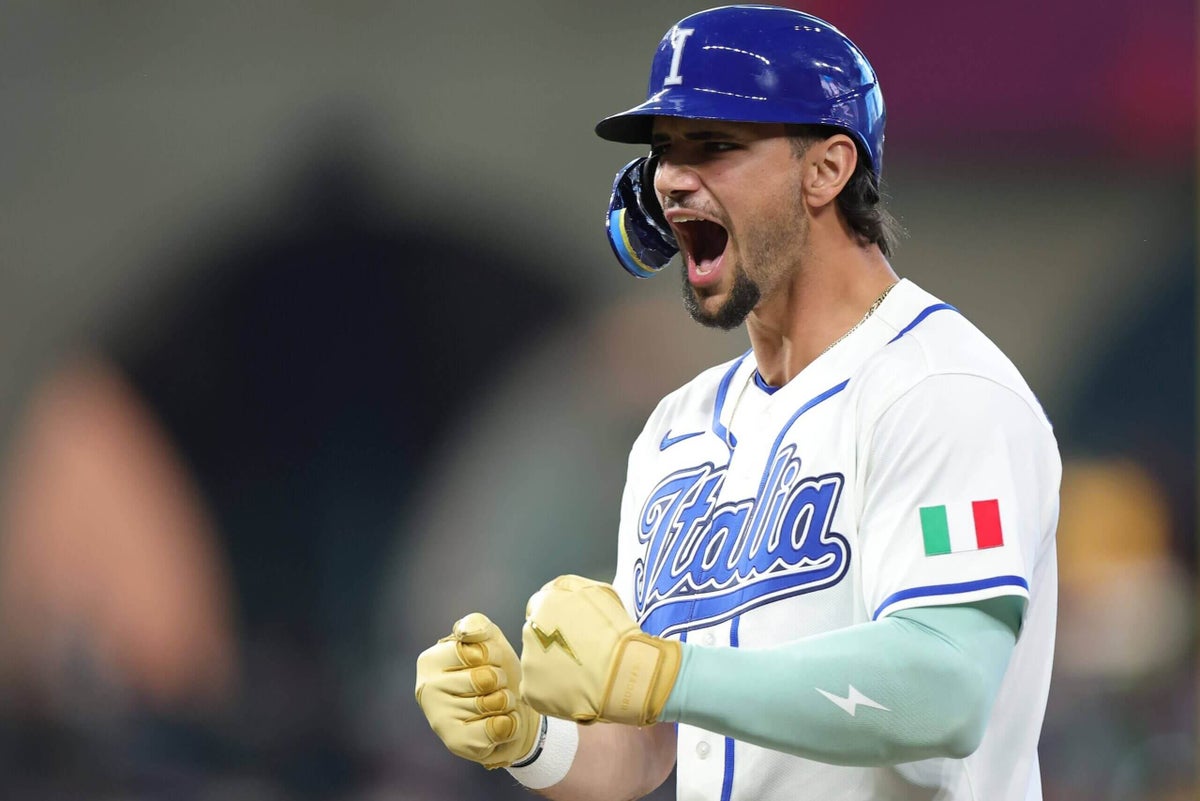
I feel like everyone and their brother is calling for a Caglianone breakout this year, and why not, given how incredibly hard he hits the ball and how well he hit everything up through Triple A. He’s already off to a torrid start this spring between his time with the Royals and his caffeine-laden stint with Team Italy. (I love espresso, but there’s no way my heart or stomach could survive drinking that much.)
He was awful in his big-league debut last year, and I think a big part of that is that he never stayed at any level long enough for opposing teams to adjust to him and force him to adjust back. He also became an extreme groundball hitter, with nearly a quarter of his balls hit in play pulled on the ground — a recipe for a low BABIP. He’s never been that hitter before, and he doesn’t look like that hitter this spring. It’s not sustainable; if he’s really that guy, we all missed on him in the MLB Draft.
Ezequiel Tovar, SS, Colorado Rockies
Tovar showed up this spring about 10-15 pounds stronger, which should help him continue the upward trend in his batted-ball quality from last year, when he gained about a half a mile per hour on his average exit velocity and boosted his max exit velocity and Barrel rate. He didn’t do much in five games in early spring training action, but he has gone off for Team Venezuela with plenty of hard contact.
Tovar has shown the ability to pull the ball in the air for power, and he has already demonstrated the high-end exit velocities to get to 20-plus homers, but his bat speed hasn’t been enough to get to big-league fastballs consistently. The added strength should help in that department, and if he holds some of the improvements in his swing decisions from 2025, he should best his 2024 season in offensive production and total value.
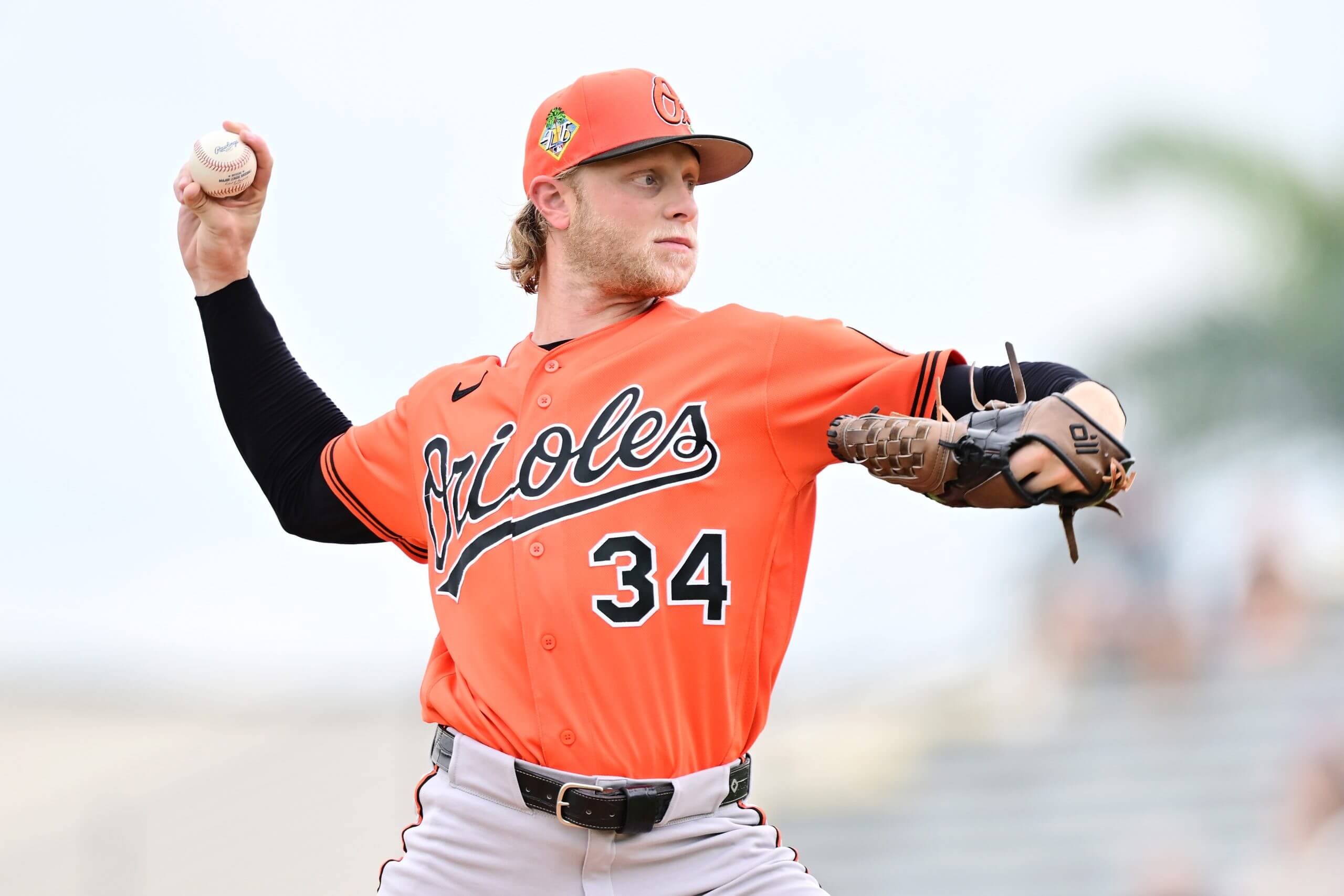
Shane Baz has a new home park and an arsenal that looks ready for a breakout season. (Julio Aguilar / Getty Images)
Shane Baz, RHP, Baltimore Orioles
I said at the time of the trade that sent Baz from the Tampa Bay Rays to the Orioles that I thought he was a top breakout candidate for 2026, given the changes in his repertoire over the course of last season and the fact that he’s been healthy and mostly effective for a year and a half. Making half his starts at Steinbrenner Field partially ruined Baz’s 2025 season, as he gave up 18 of his 26 homers at home. He also lost his feel for his slider, but he’s using it again and getting better induced vertical break on the pitch already this spring. And he introduced a kick-change last year that gives him his best weapon ever against lefties. He has got the stuff, control and delivery to be a top-of-the-rotation starter.
Eury Pérez, RHP, Miami Marlins
Pérez came back last June from Tommy John surgery, which cost him all of the 2024 season. He returned with his stuff intact, if not slightly better than when we last saw him on a mound, but his fastball command wasn’t back yet, which is typical for guys in their first year back from UCL replacements. He was a top 10 prospect in the sport before his elbow blew, ranking as the top pitching prospect in the minors in January 2023. I’m banking on him becoming what I thought he’d become before he got hurt in the first place: a frontline starter with a plus fastball and maybe a 70 changeup, along with enough of a slider to function as a third pitch and make him stronger against righties.
Coby Mayo, 3B/1B, Orioles
I’m pretty bullish on the Orioles’ outlook for 2026, and the presence of two of their players on this list is partly why. Mayo finished somewhat strongly last year; in September, he started swinging the bat more often, especially on strikes, and saw better results, although September numbers can be skewed by weaker competition. He’s swinging the bat even more often this spring and taking fewer strikes than ever, which is both a path to success for him, given his propensity to pull the ball and hit it hard, and a path for him to keep his job when the Orioles’ various injured incumbents return from their IL stints. I’m just hoping they don’t give Ryan Mountcastle any at-bats that should go to Mayo.
Cade Cavalli, RHP, Washington Nationals
Cavalli didn’t pitch in the big leagues in 2023 and 2024 while he was recovering from late-2022 Tommy John surgery, with some setbacks along the way. When he returned to the majors in the second half of last year, he was better than when we’d last seen him (when he was probably pitching with a partial tear anyway). His velocity was up across the board, with a 1.5 mph gain on his four-seamer and a 2.6 mph gain on his two-seamer, and his curveball had more depth. He had also swapped out his traditional slider for a cutter that averaged 93.5 mph. Some of the change was probably due to a higher arm slot, which would tend to produce more vertical break on a curveball.
Cavalli generated a ton of groundballs last year, which helped mitigate some of his fastball command issues, although in a small sample this spring, he has been more four-seam heavy than he was in 2025. In his 10 starts in the majors last year, he gave up more than a hit per inning, with seven homers in 48 2/3 innings pitched, and struck out only 40. I think those will flip; he’ll strike out well more than a batter an inning and bring those contact and hard-contact rates down — enough to be at least a league-average starter and the Nationals’ best pitcher.
Evan Carter, OF, Texas Rangers
This one comes with an asterisk: I think Carter will break out, but as a platoon player. He hits right-handed pitching well enough to see him playing like an All-Star against them. His 2025 season was ruined by multiple fluky injuries, only one of which (a lower back strain) is a long-term concern since he’s previously had a stress fracture in that part of his back. He has never hit lefties in the majors, going 5-for-60 with no extra-base hits and 21 strikeouts, so I’m not going to predict any change there, but he’s healthy right now, and I expect him to fulfill at least some of the promise he showed in the Rangers’ run to the championship in 2023.