
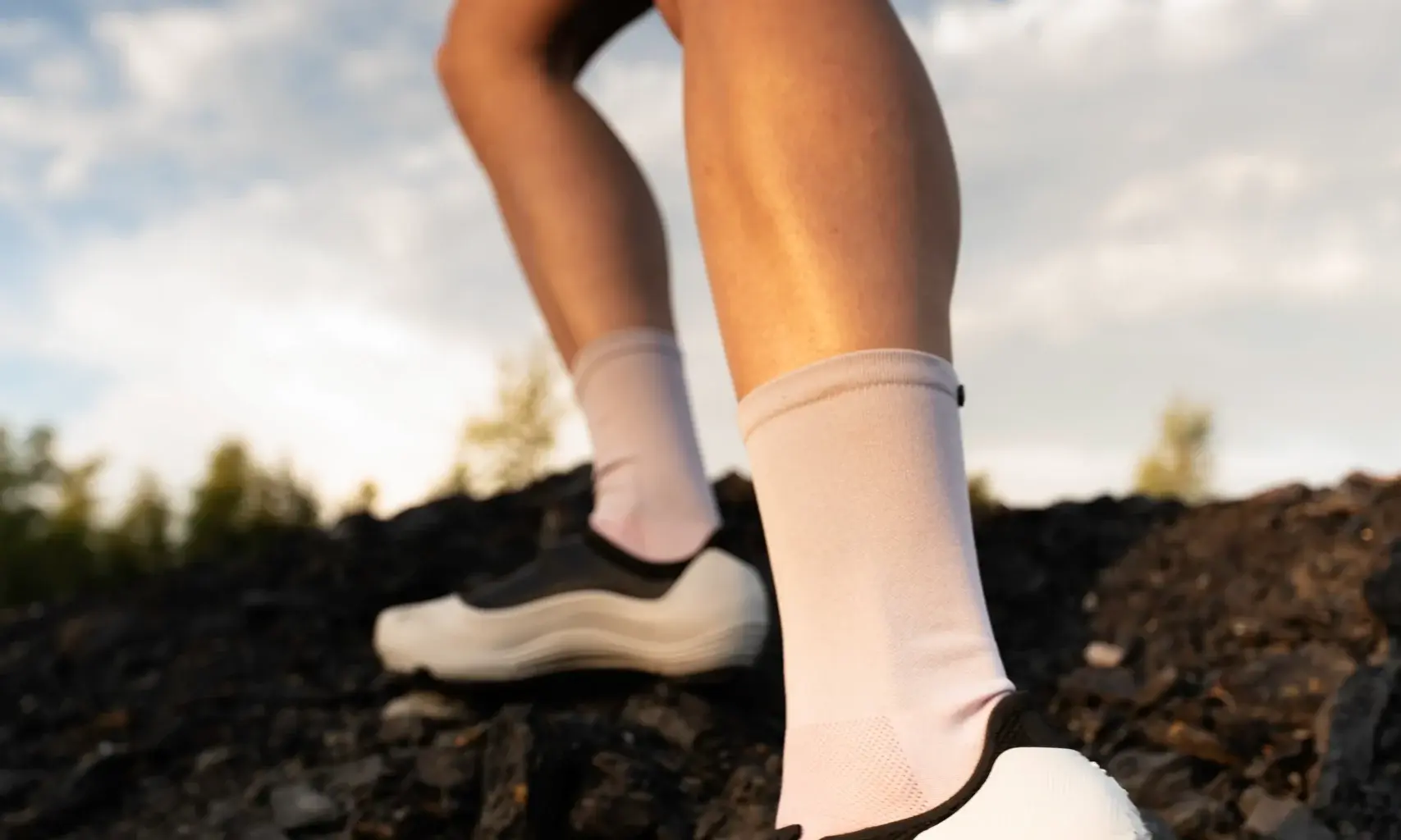
German startup HEZO has developed a made-to-order cycling shoe system that replaces standardised sizing with individual foot scans, on-demand 3D printing, and modular construction, positioning the company at the intersection of digital manufacturing and performance footwear.
Founded in February 2022 by Helen Wiehr, Carsten Kaldenhoff, and Dr. Nils Hasler, HEZO uses a smartphone app to capture around 1,000 data points per foot, feeding that data into proprietary software that generates a shoe built to the customer’s exact measurements. Every pair is produced individually in Germany after the order is placed, with no inventory.
The approach targets riders with specific anatomical requirements, asymmetrical feet, wide forefoot, or pressure-related discomfort, as well as performance-oriented cyclists seeking a more precise fit than standard footwear allows.
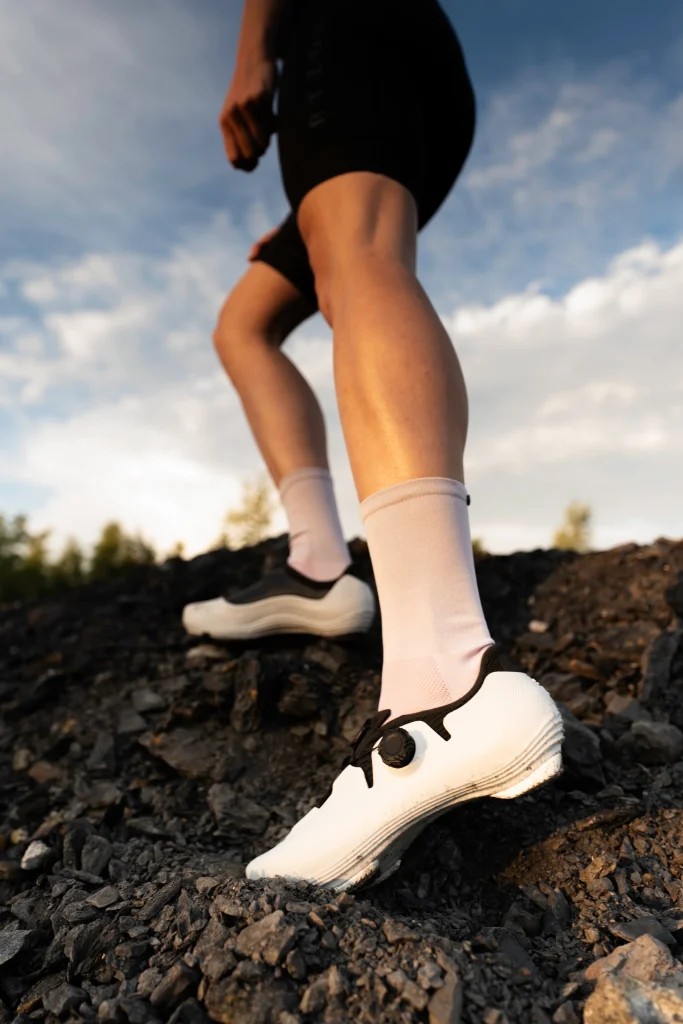 Hezo shoe. Photo via Hezo.
How the Shoes Are Actually Built
HEZO’s manufacturing process relies on FDM 3D printing with recyclable materials, assembled in Germany in a structure the company describes as layered, a soft, foamed TPU inner shoe contoured precisely to the customer’s foot, wrapped in a rigid printed outer shell called the MonoShell.
The current lineup spans three models. The Wolfland 01 is built for gravel riding, with a polypropylene MonoShell, non-slip TPU outsole, and a stiffness index of around 8 out of 10, weighing approximately 280–310 grams in a size 42.
The Helu 02 Carbon targets road performance, using a PA6 carbon-reinforced shell for maximum stiffness with minimal weight at around 250–280 grams. The Helu 03 is a road model that uses an updated polypropylene formulation in the upper that adds flex without compromising sole rigidity. Multiple colors are available across several components including the Foot Caps, inner shoe, and non-carbon MonoShells. Pricing starts at €249 for the Wolfland 01 and reaches €359 for the Helu 02 Carbon, with the Helu 03 sitting at €279.
One structural trade-off is delivery time: because every shoe is produced on demand with no pre-built inventory, customers should expect eight to twelve weeks from order to doorstep.
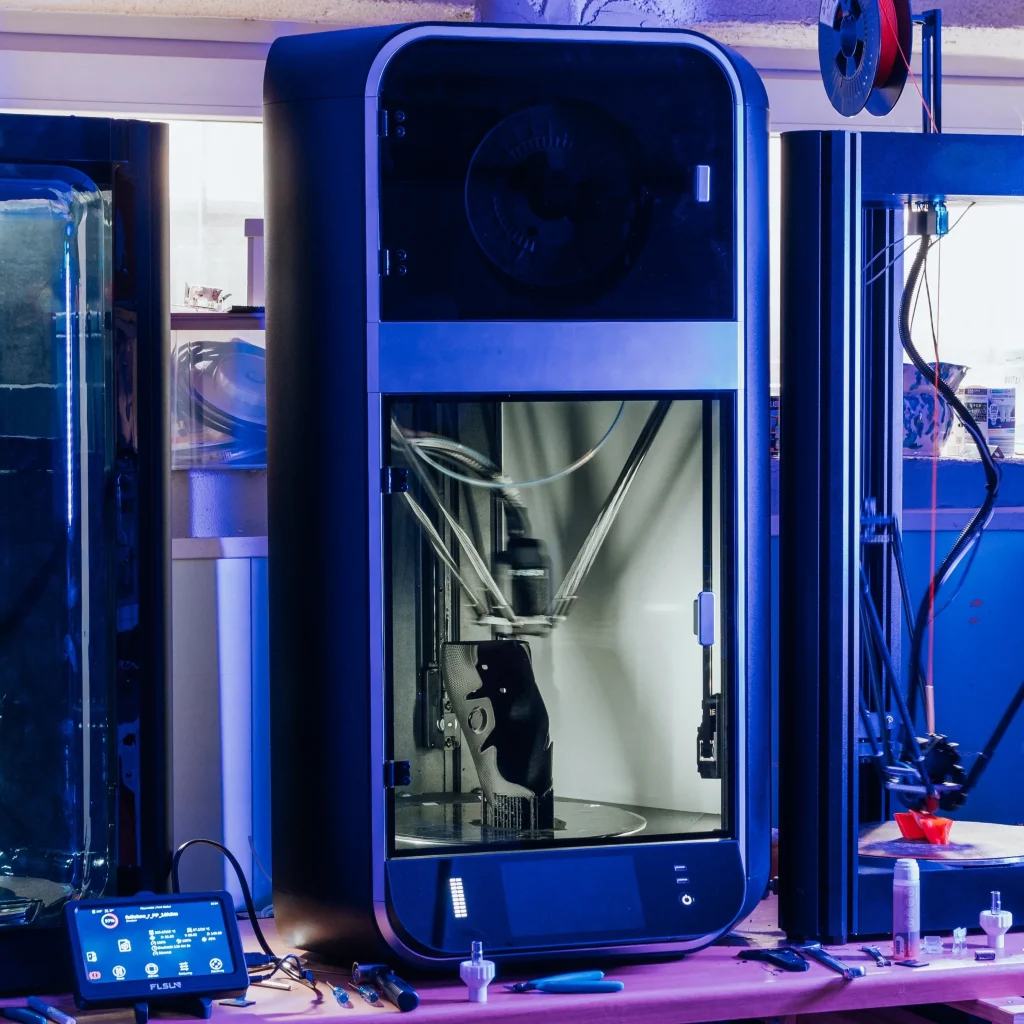 Hezo’s on demand production. Photo via Hezo.
Fit, Longevity, and the Rider
HEZO states that integrating arch support, metatarsal padding, and individual contouring directly into each shoe’s construction eliminates the need for external orthotic insoles, a consideration the company highlights for riders managing pressure points, numbness, or anatomical differences between feet.
The zero-drop construction and wide toe box differ from standard cycling shoe geometry, and HEZO advises customers to allow several rides before assessing fit, noting the additional toe room can feel unfamiliar to those accustomed to conventional footwear. Each purchase includes a sixty-day fit guarantee; if adjustments do not resolve concerns, the company offers a 50% refund. HEZO reports a 97% customer satisfaction rate.
A key aspect of HEZO’s offer is the ability to extend a shoe’s useful life well beyond what conventional footwear typically allows. Tread blocks, inner liners, and outer shells are each independently replaceable, meaning worn or damaged components can be swapped without retiring the entire shoe. HEZO accepts returns of used parts and handles recycling directly, closing the loop on components that can no longer be repaired or reused.
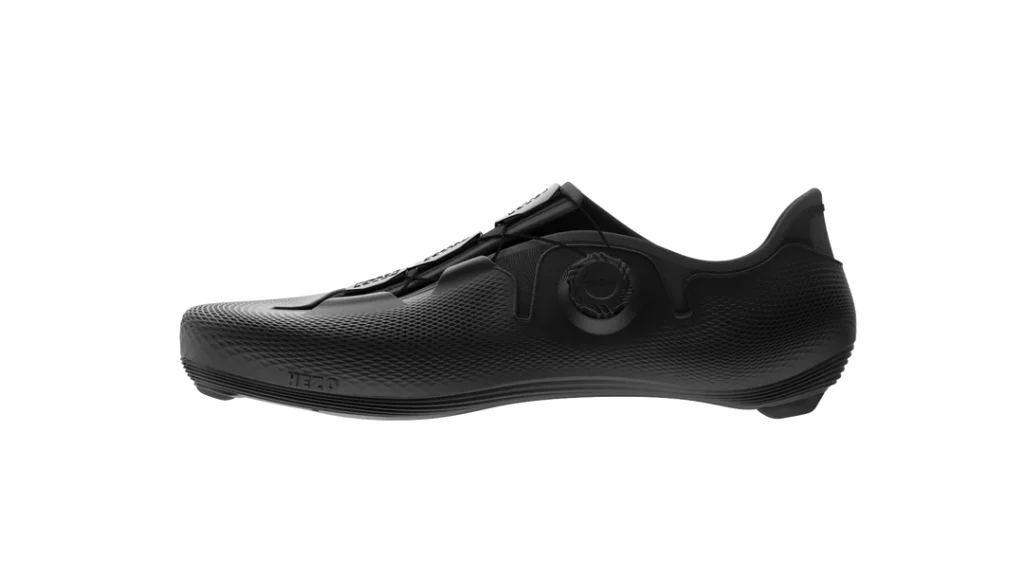 Outer shoe for Helu 02 Carbon. Photo via Hezo.
A Crowded Field With a Specific Opening
3D printed footwear is no longer a niche experiment. Manufacturers large and small have been exploring additive manufacturing as a route to both customisation and on-demand production, and the cycling segment has attracted several of the most technically ambitious efforts.
The most direct comparison is Lore Cycle, which in partnership with Lubrizol has developed scan-based custom cycling shoes. The Lore Two, with a TPU upper tailored to individual biomechanics, offers three models to suit various cycling preferences with prices starting at $1,349, a different commercial proposition to HEZO’s €249–359 range.
On the broader footwear side, Indianapolis-based Fitasy captures foot geometry via smartphone to produce contour-matched shoes, while Florida-based Syntilay applies a scanning approach to custom slides through a partnership with Zellerfeld. None of these efforts, however, combine cycling-specific engineering with consumer-accessible pricing and component-level repairability.
Nevertheless, taken together, they point to a wider industry movement toward personalisation at scale.
3D Printing Industry is inviting speakers for its 2026 Additive Manufacturing Applications (AMA) series, covering Energy, Healthcare, Automotive and Mobility, Aerospace, Space and Defense, and Software. Each online event focuses on real production deployments, qualification, and supply chain integration. Practitioners interested in contributing can complete the call for speakers form here.
To stay up to date with the latest 3D printing news, don’t forget to subscribe to the 3D Printing Industry newsletter or follow us on LinkedIn.
Explore the full Future of 3D Printing and Executive Survey series from 3D Printing Industry, featuring perspectives from CEOs, engineers, and industry leaders on the industrialization of additive manufacturing, 3D printing industry trends 2026, qualification, supply chains, and additive manufacturing industry analysis.
Featured image shows Hezo shoe. Photo via Hezo.