
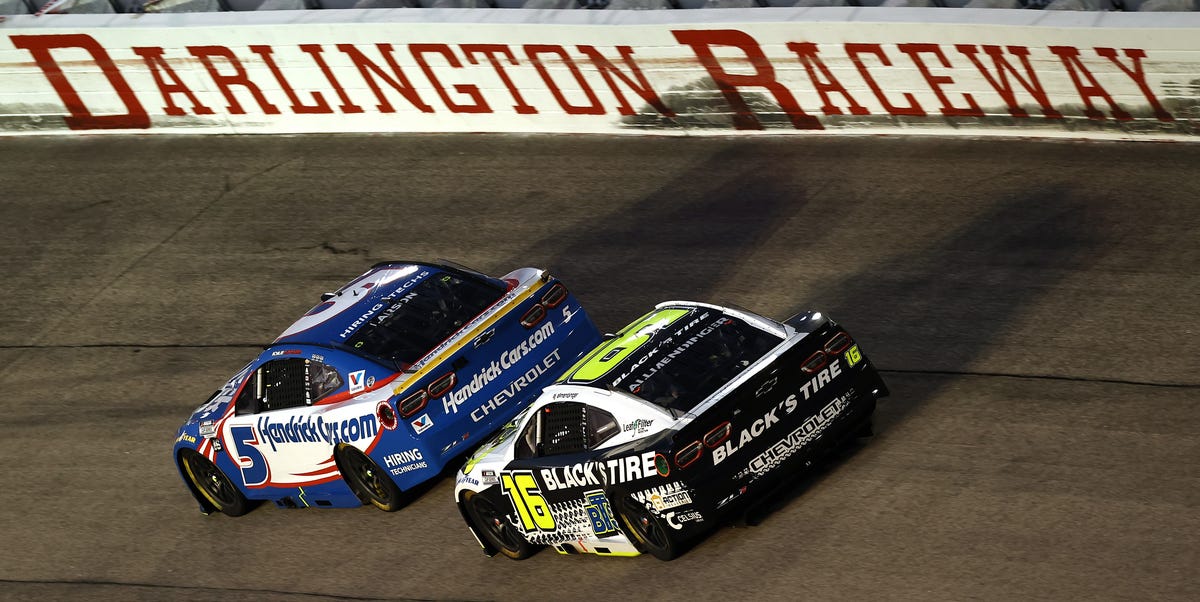
Darlington Raceway, home to this weekend’s NASCAR national-series tripleheader, remains stock car racing’s version of Fenway Park, Lambeau Field, and Cameron Indoor Stadium.
It’s the rare racetrack whose history can compete with the adventures of NASCAR’s top drivers. Its challenges—the tight racing groove and the famously oblong shape that makes it two ends radically different—remain as difficult as they were in the speedway’s early days, when the idea of racing cars for 500 miles on such a surface was sometimes thought to be something a drunken executive devised.
Related Story
Yet the Darlington NASCAR’s Cup, O’Reilly Auto Parts, and Craftsman Truck drivers will test this weekend is distinctly different from the track NASCAR visited in the 1950s and 1960s.
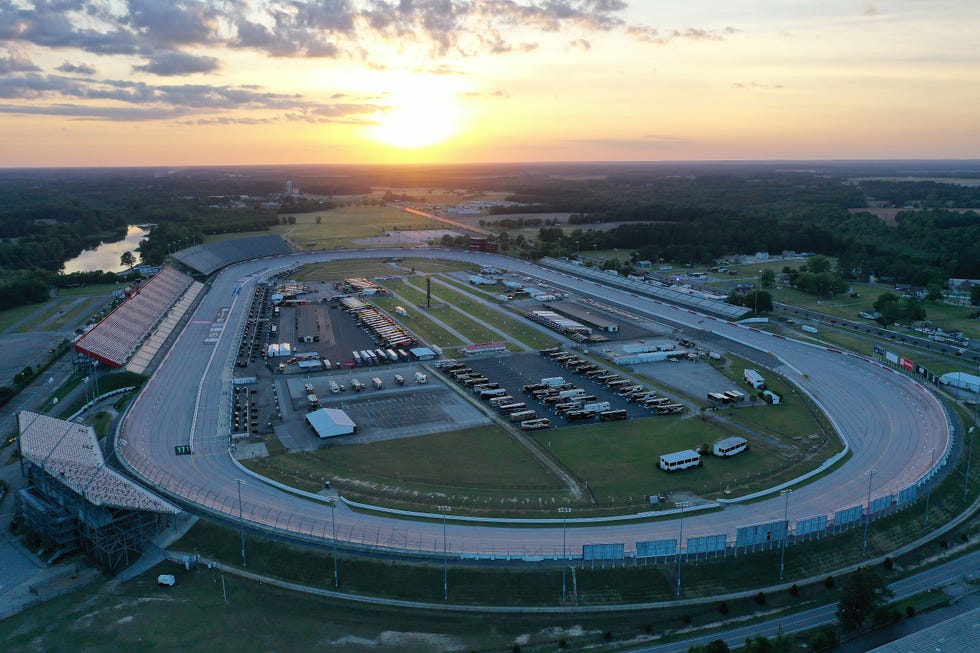
For one thing (and perhaps most dramatically), the track was “flipped” in 1997 when International Speedway Corp. officials determined that moving the start-finish line to the opposite side of the facility would open up the possibility of adding new grandstands in prime viewing areas. From 1950, the track’s first year, to 1997, the front stretch was on the South Carolina Highway 151 side of the track, and there was little space between the road and the track for additional grandstand space.
The racing surface remained the same, obviously, but race winners since 1997 have taken the checkered flag along a “new” front stretch.
Chris Graythen//Getty Images
The original front stretch part of the track had undergone another significant change in 1989 with the removal of a covered grandstand that began at the exit of what originally was turn four. The cover of the grandstand, while shielding fans from often punishing South Carolina sun, amplified the engine noise from cars roaring through the turn and onto the front straight, making that part of the speedway the loudest of its 1.366 miles. The covered grandstand isn’t especially missed, although it was a landmark part of the track for decades.
Other changes? When the track opened in 1950, its length was measured at 1.25 miles. Incredibly, a field of 70 drivers raced in the first Southern 500 that season. Johnny Mantz won in six hours, 38 minutes. The track was reconfigured for the 1953 season, with steeper banking and a new measurement that put the distance at 1.375 miles. Much later, more definitive measuring put the track length at 1.366 miles, the number it carries today.
Related Story
The track’s infamous infield also has undergone significant changes. For decades, it was considered one of the rowdiest infields in racing, and law enforcement officials set up a temporary jail for the more aggressive offenders. An infield “cafeteria” was once located in the infield near the old front stretch, and a much-traveled goat path of sorts led from the center of the infield to the cafeteria, the entrance of which was guarded by a sagging screen door for a long stretch of years.
The aging building that contains sky suites and (once upon a time) a press box outside what is now the third turn offers one of the best interior views in racing as drivers zoom out of the backstretch and attempt to navigate the turn faster than others. The cars seem to be heading directly for the building before making the sharp left. News media activities now are headquartered in a media center in the infield, and long-time journalists can be heard wistfully remembering the dramatic view from outside the racing surface.
Logan Riely//Getty Images
Darlington now has lights, an idea that was considered in the early years but ultimately rejected. Steel barriers were replaced by concrete walls (with the much later addition of SAFER barriers), and a tunnel was built near the third turn to allow for easier ingress and egress of team haulers (and, not incidentally, spectator traffic).
Gone, largely, is the Confederate flag, a mainstay (and virtually a dedicated theme) of Darlington Raceway for many years, particularly in its first two decades.
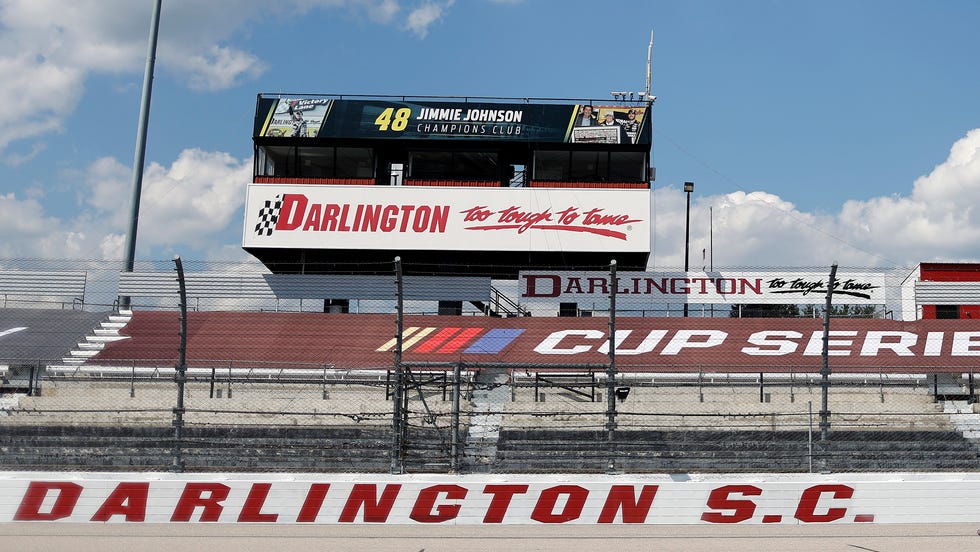
Mostly ignored now is one of the track’s first nicknames—the Lady in Black. “Too Tough To Tame” was adopted many years later and is frequently associated with the track, although several drivers “tame” it every year on the way to victory lane.
The biggest things missing from the Darlington years are the drivers who ran it so well. Despite its challenges, David Pearson, Cale Yarborough, Dale Earnhardt, and Jeff Gordon, four of NASCAR’s biggest names, enjoyed major success at the old track, Pearson often instructing newcomers on how to navigate the place but watching as none of them duplicated his mastery.

Mike Hembree has covered auto racing for numerous media outlets, including USA Today, NASCAR Scene, NBC Sports, The Greenville News and the SPEED Channel. He has been roaming garage areas and pit roads for decades (although the persistent rumor that he covered the first Indianapolis 500 is not true). Winner of numerous motorsports and other media awards, he also has covered virtually every other major sport. He lives near Gaffney, South Carolina and can be convinced to attend Bruce Springsteen concerts if you have tickets.