
A 2024 study that claimed to have discovered an entirely new source of oxygen in the deep sea — dubbed “dark oxygen” — was flawed, inconsistent with previous research, and “fundamentally at odds with thermodynamics,” critics argue in a new opinion article.
Despite this pushback, the researchers behind the 2024 study recently announced that they will deploy robots to the seafloor between Mexico and Hawaii in May to confirm the findings and determine what’s causing the phenomenon.
Article continues below
You may like
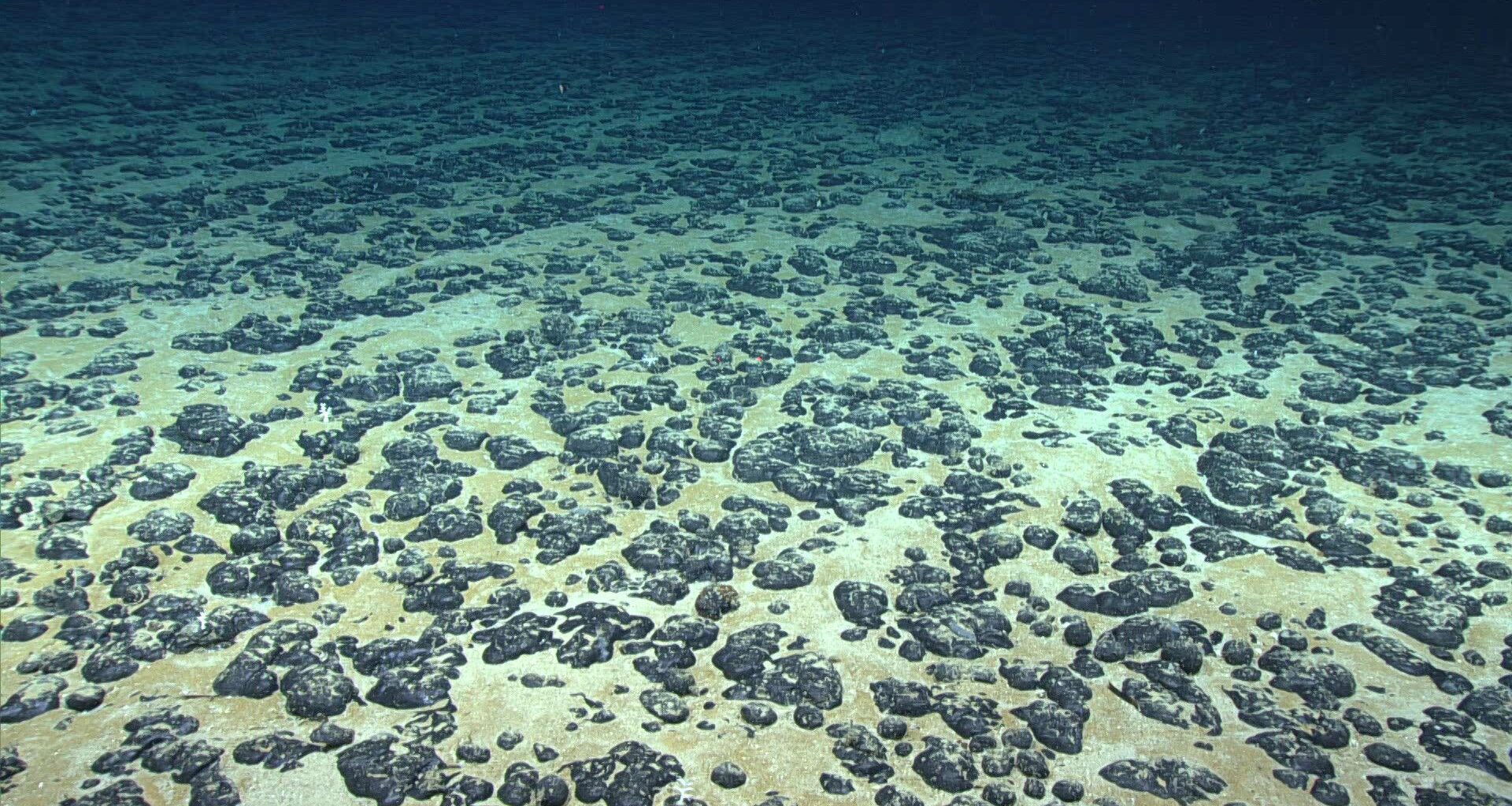
The 2024 study proposed that potato-size metallic lumps on the deep seafloor could split seawater through electrolysis to make dark oxygen, so called because there is no light involved in the suggested reaction. If the discovery stands up to scrutiny, it will radically change our understanding of natural oxygen production, challenge the widespread idea that the deep seafloor is an oxygen sink, and raise key questions about the origin of life on Earth.
But in the opinion article, published in December 2025 in the journal Frontiers in Marine Science, critics say the study’s methods were questionable and the researchers didn’t provide enough evidence to support their extraordinary claims.
“We downloaded the data and replotted everything,” said Anders Tengberg, co-author of the opinion article. “Everything just speaks against this being correct,” Tengberg, a product manager and scientific adviser at the water technology company Aanderaa-Xylem and a researcher at the University of Gothenburg in Sweden, told Live Science.
It appears that the authors of the 2024 study didn’t ventilate their measuring equipment properly once it landed on the seafloor, Tengberg and Per Hall, co-author of the opinion article and a professor emeritus of marine science at the University of Gothenburg, said in a joint interview. As a result, oxygen trapped inside the equipment may have skewed the gas concentrations measured at the seafloor — an unwanted effect that Tengberg, Hall and colleagues cautioned against in a 2021 study.
Even if Sweetman and his colleagues had measured oxygen concentrations correctly in their study, the mechanism they gave for how oxygen was produced by the metallic lumps, also known as polymetallic nodules, doesn’t make sense, said Angel Cuesta Ciscar, a professor of electrochemistry and physical chemistry at the University of Aberdeen in Scotland and co-author of the opinion article.
“That explanation of how it’s formed is simply impossible, because it violates the laws of thermodynamics,” Cuesta Ciscar told Live Science. “Thermodynamics tells you what’s possible and what’s not possible if the laws of the universe are what we think they are. Until now, there’s nobody in four centuries of science that has been able to show that the laws of thermodynamics [do not apply].”
“Experimental artifact”
Sweetman and his colleagues drew their original conclusions from experiments they conducted in the Clarion-Clipperton Zone (CCZ), a gigantic abyssal plain 13,000 to 20,000 feet (4,000 to 6,000 meters) deep in the North Pacific Ocean between Mexico and Hawaii. The CCZ is littered with polymetallic nodules, which are accretions of cobalt, nickel, manganese and other metals that are critical to produce batteries and electronics, making the area a target for deep-sea mining exploration companies.
What to read next
The researchers received funding for the study from The Metals Company, a Canadian deep-sea mining firm, and UK Seabed Resources, a subsidiary of the British arm of Lockheed Martin that focuses on deep-sea mining. Yet the results, published at what the authors of the opinion article called “a critical juncture in the development of international regulations for deep-sea mining,” implied that mining polymetallic nodules could have worse impacts on the ecosystem than previously understood.
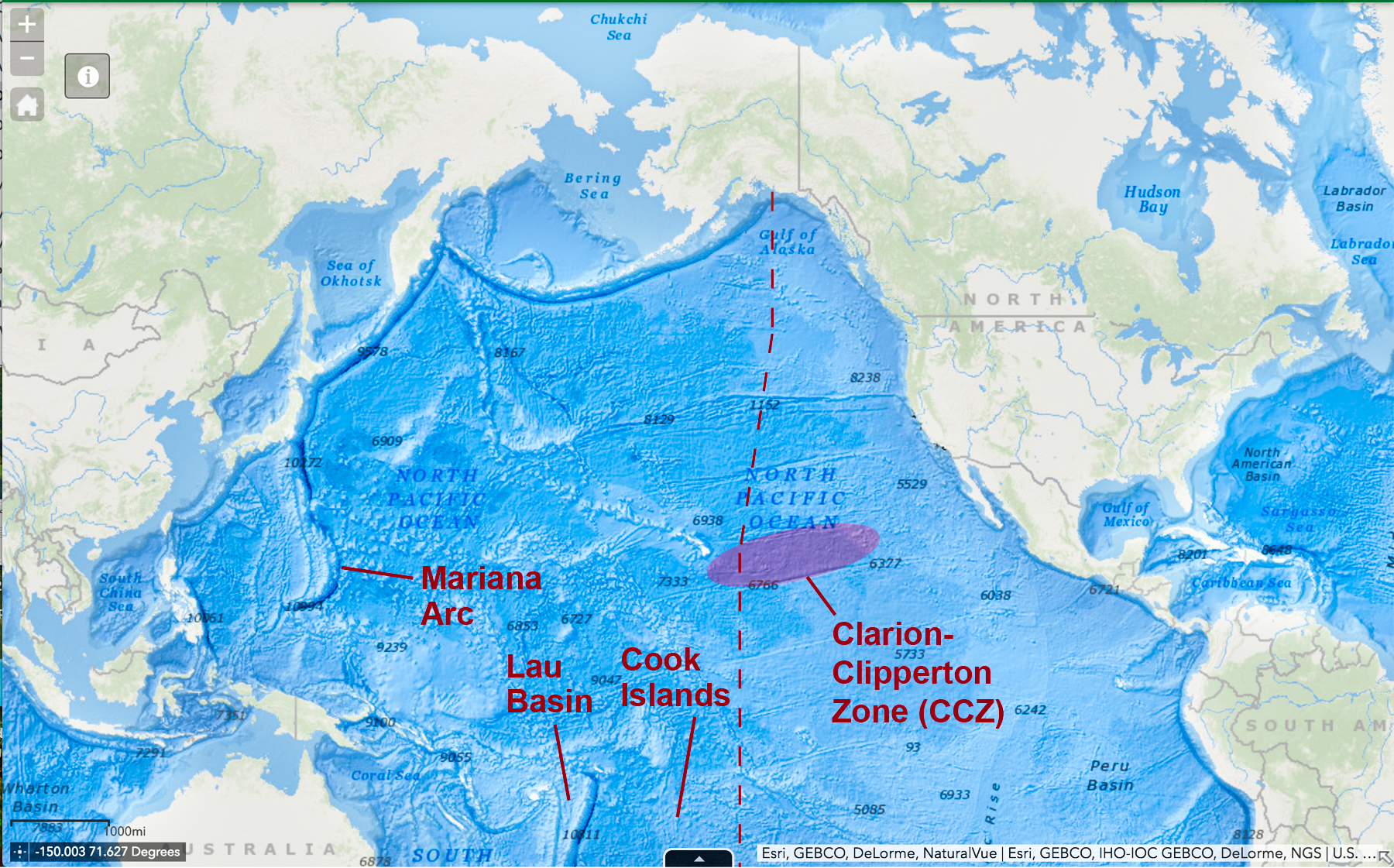
The Clarion-Clipperton Zone in the North Pacific Ocean is littered with metallic lumps called polymetallic nodules. (Image credit: U.S. Geological Survey)
The study described steady emissions of oxygen from the seabed that Sweetman and his colleagues attributed to polymetallic nodules. Specifically, the researchers proposed that the difference in electric potential between metal ions within the nodules could lead to a redistribution of electrons, triggering a charge that could split seawater into hydrogen and oxygen.
The result initially seemed significant, but when Tengberg and his colleagues looked closer, “it became clear that it could not have been true,” he said. Sweetman used special chambers to measure oxygen concentrations at the seafloor that must be flushed with bottom water before monitoring starts to avoid contamination with gas bubbles from higher up in the water column. This means that oxygen readings inside the chambers should be similar at the start of each experiment, but they are “all over the place,” Tengberg said.
“You have to start your chamber incubations with bottom water composition equal — identical — to the ambient bottom water outside the chambers,” Hall said, adding that Sweetman’s starting oxygen measurements were consistently higher than bottom oxygen concentrations usually obtained in the CCZ. “That is a clear sign that they did not do good chamber incubations and that their oxygen fluxes … cannot be trusted.”
Traditionally, experiments in the deep sea using chamber incubations also measure other gases to get a clear picture of the environment and its chemistry, but Sweetman and his colleagues did not provide this data, Tengberg said. Notably, no previous study has found oxygen production from polymetallic nodules at the seafloor, Tengberg and his colleagues wrote in the opinion article.
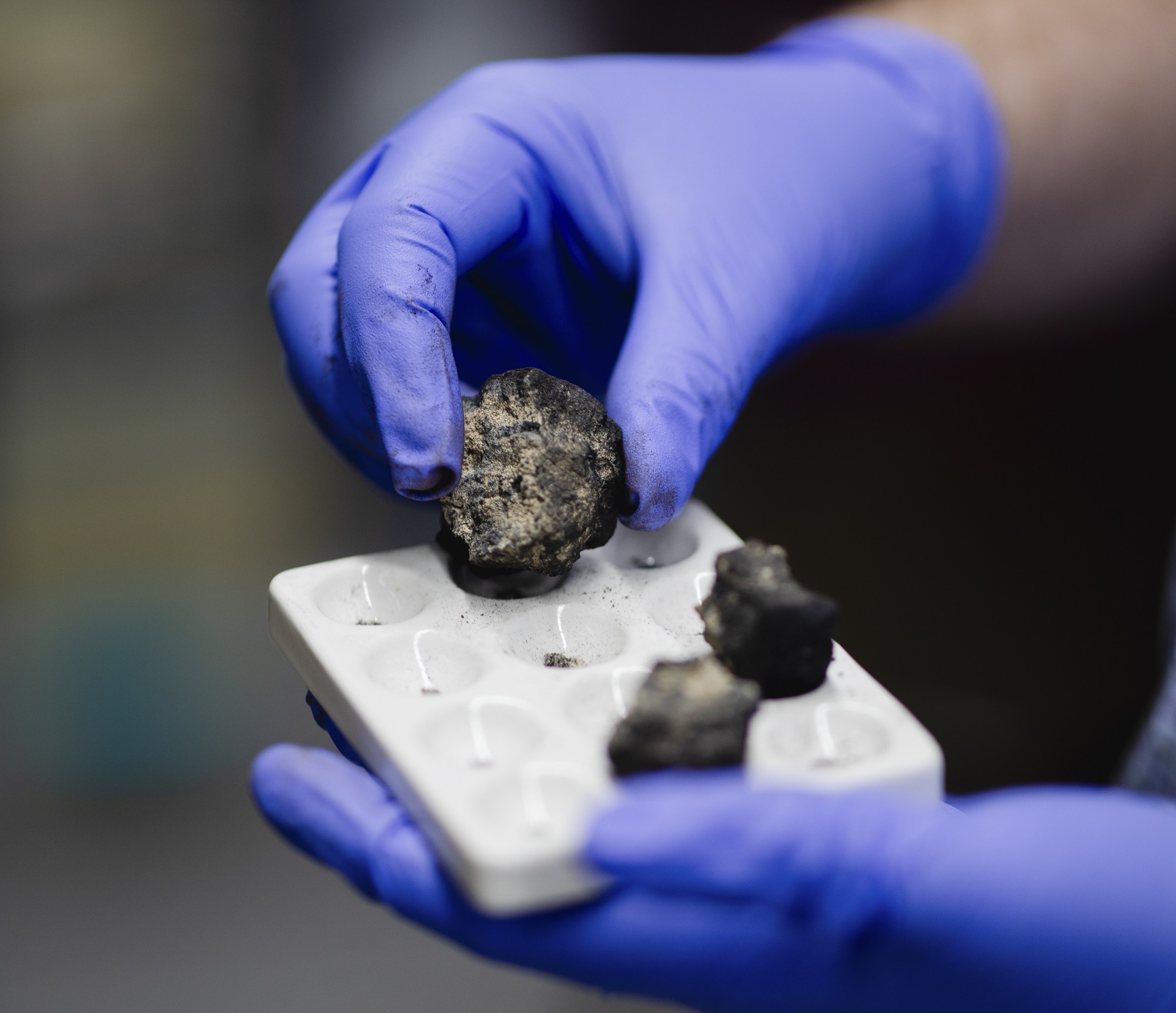
Polymetallic nodules are rich in cobalt, nickel and manganese, which are used to make batteries and electronics. (Image credit: Alex Welsh/Bloomberg via Getty Images)
The 2024 study did not present data from “negative control experiments,” which in this case would have been incubations without polymetallic nodules to confirm an absence of oxygen production when nodules aren’t present, the critics wrote. But according to the opinion article and a 2024 preprint paper on the server Earth ArXiv that has not been peer-reviewed, this data exists — and it shows oxygen production even in the absence of nodules.
“This strongly suggests that the oxygen production is an experimental artifact,” Hall said. The increase may have resulted from oxygen bubbles that got trapped and gradually dissolved inside the chambers after they reached the seafloor and sat there unventilated, he added.
Seawater electrolysis
Electrochemists on the opinion-article team gave additional arguments for why polymetallic nodules are unlikely to be a source of oxygen at the deep seafloor.
For one, seawater electrolysis requires a significant amount of energy and cannot proceed spontaneously, they argued. And Sweetman and his colleagues did not identify a source of energy big enough to generate an electric charge and split seawater, they said.
“The explanation that Sweetman and his collaborators are proposing is equivalent to suggesting that there is energy being created out of nothing, or, if you want, that things go uphill spontaneously, instead of going downhill,” Cuesta Ciscar said. “We know that the energy in the universe is constant, and it’s not being created out of nothing.”
The study also provided no hydrogen concentration measurements to support the idea of seawater electrolysis. For each oxygen molecule produced by water electrolysis, two hydrogen molecules also form, so the presence of hydrogen is a telltale sign of the reaction.
“There’s just, I would expect, an honest error that has not been recognized,” Cuesta Ciscar said.
In response to the arguments in the opinion article, Sweetman said he and his team cannot reply meaningfully until the review of their additional evidence concludes at Nature Geoscience (NG). “If the rebuttal at NG is rejected we will of course submit a response to the Frontiers piece,” he said.
The researchers are now preparing for a spring expedition to the CCZ, where they will deploy two highly specialized landers to identify exactly how dark oxygen may be produced. The project is funded by the Nippon Foundation, a private organization in Japan that promotes humanitarian work, diplomacy and industrial maritime development.
The search for dark oxygen continues, but many experts doubt it will lead to anything substantial, Hall said. “We don’t believe in this,” he said. “I hope that Nature Geoscience retracts the paper.”
Downes, P., Cuesta, A., Denny, A., Tengberg, A., Hall, P. O. J., Trellevik, L., Svellingen, W., Jaspars, M., Webber, A. P., De Freitas, F. S., Bento, J. P., Marsh, L., & Clarke, M. (2025). Extraordinary claims require extraordinary evidence: evaluating nodule-associated dark oxygen production. Frontiers in Marine Science, 12. https://doi.org/10.3389/fmars.2025.1721853