
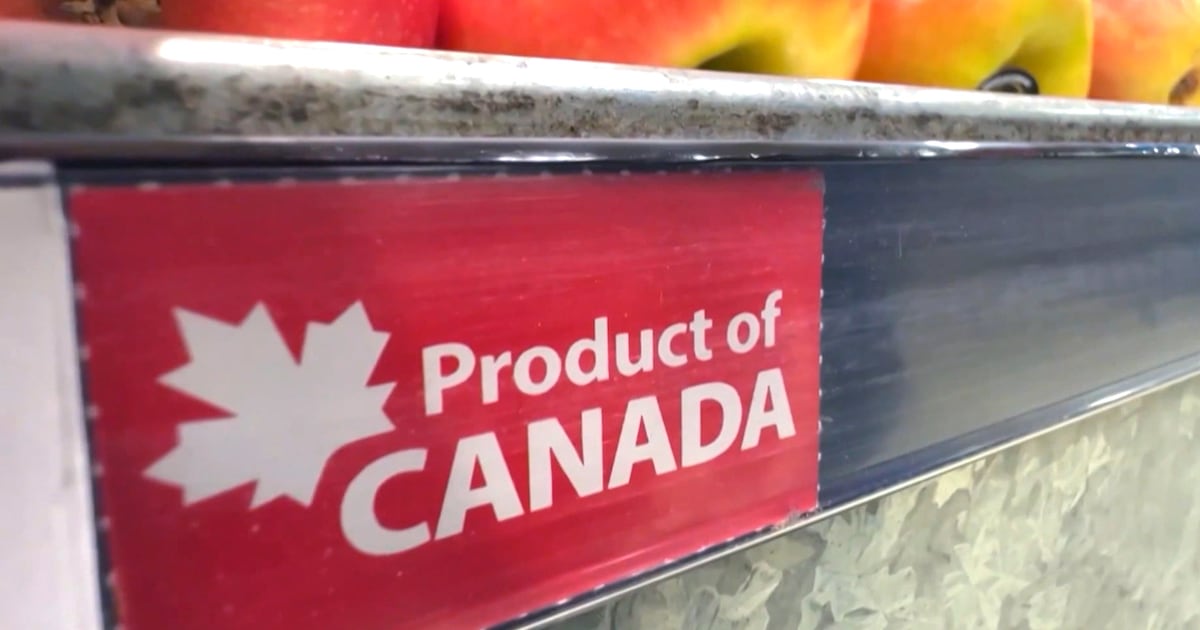
Two separate Loblaw-owned grocers in Ontario were recently fined for mislabelling some foods as Canadian, at a time where shoppers continue to scour the shelves for the maple leaf tag next to a product’s name in a push to buy Canadian amid ongoing trade tensions with the U.S.
The Canadian Food Inspection Agency (CFIA) has acknowledged the consumer desire to support local business and their products, and in an effort to ensure Canadians shopping for the right item, the agency has started doling out financial penalties to grocers found using misleading or inaccurate country of origin labels.
The agency said it has penalized five stores a combined total of $47,000 across Canada since April 1, 2025, for doing so, including a Fortinos located on Queens Plate in Etobicoke and an undisclosed Real Canadian Superstore in Toronto. These two stores were each given a $10,000 fine on Jan. 15 for alleged violations that were reported in October of last year.
The CFIA confirmed to CTV News Toronto the Fortinos used deceptive labelling or advertising on cheese and the Superstore had done the same with a package of broccoli slaw. They did not specify the exact product.
A spokesperson for Loblaw Companies Ltd. said the company takes their labelling responsibilities “seriously” and are committed to not only meeting regulatory requirements, but ensuring their customers can trust the information seen in their stores.
“With thousands of products on our shelves, many sourced from different regions throughout the year, information can change quickly,” Loblaw said in an email.
“While we work hard to keep everything current, there are times when signage may not be updated as quickly as inventory is replenished.”
The retailer confirmed these were isolated cases, and said Loblaw is reinforcing their processes to ensure this does not happen again.
Between April 1, 2025, and March 16, the CFIA said it has seen 104 non-compliances related to country-of-origin labelling through complaints, inspections and surveillance activities.
While five stores were financially penalized, the CFIA said the remaining cases were addressed through other measures, which can include a letter of non-compliance, or a suspension or cancellation of licences, registrations or permits.
“The preference for supporting Canadian business is unlike anything I’ve seen in my lifetime,” Richard Leblanc, professor of governance, law and ethics, and director of the Master of Financial Accountability program at York University, told CTV News Toronto.
“I think it’s important for grocers to get this right so we don’t have regulatory fines and we don’t have frustrated or confused consumers.”
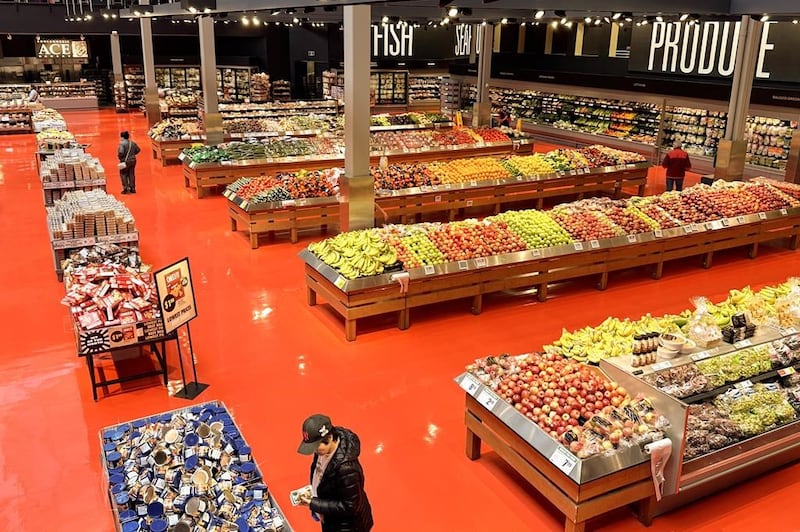 Shoppers browse goods in the produce section of a Toronto Loblaws Shoppers browse goods in the produce section of a Toronto Loblaws on Friday, May 3, 2024. THE CANADIAN PRESS/Chris Young ‘Slap on the wrist’
David Soberman, professor of marketing at the Rotman School of Management at the University of Toronto, said he sees the $10,000 fines as merely a “slap on the wrist.”
“Not really as a punitive fine because $10,000, even for a grocery store like Loblaws … is relatively small,” Soberman said in an interview with CTV News Toronto.
“Now, the reason I think it’s only a slap on the wrist, and this is just my own opinion, is that this is really caused by negligence on the part of the stores. It’s not really an effort to be deceptive.”
The retailer was the one to receive the fine, Soberman pointed out, not the company who makes the product to begin with.
“The manufacturers are very careful with whether they put ‘Made in Canada’ or ‘Product of Canada’ or ‘Prepared in Canada,’” Soberman said. “The retailers are just taking somebody else’s product and trying to draw attention to them on the part of the shoppers. This is, really, a retail problem.”
The push to buy Canadian swirled to the forefront amid the rise of U.S. President Donald Trump’s tariffs last year, prompting many grocery stores to slap a maple leaf logo on shelf tags.
Leblanc said there may be some growing pains for retailers to apply the “buy Canadian” standards. But the CFIA’s fines signals more to Leblanc.
“It’s more the reputational impairment that’s associated with a fine such as this, and also the legal risk that is there,” Leblanc told CTV News Toronto.
“I think what it signals to the market and to change in Canada. Listen, you’ve got to put the time and attention, and it will cost money to have the proper internal controls so that you don’t have mislabelling,” he said.
Leblanc says conversations are likely already being had in grocers’ boardrooms around the risks of mislabelling and what internal controls they should be implementing.
“I think boards are being seized with emerging and new risks that are caused by the tariffs and the Trump administration, and they’re compelling management teams to be completely transparent on the controls for these new risks,” Leblanc said.
Decoding ‘Canadian’ food labels
There are strict guidelines how “Canadian” a food item really is.
If “Product of Canada” is found on the label, that means all, or nearly all, of the ingredients are Canadian. It also signifies the processing and labour behind the product are Canadian, according to the CFIA’s guidelines.
The product would still be considered Canadian even if it used packaging sourced from outside of the country, the CFIA said, or used less than two per cent of ingredients that are not produced locally, such as spices.
“Made in Canada means the last substantial transformation of the product occurred in Canada,” the CFIA said on its website, providing the example that the processing of key ingredients of a pizza would be considered as such.
“Made in Canada” products also need to discern the source of origin the ingredients were used. For example, if a product contains both domestic and imported ingredients, the packaging must note that it was made in Canada with those sets of ingredients.
There are other more specific claims a product’s packaging can contain to denote its Canadian value, like whether it was canned, packaged or prepared in Canada.
The Canadian Food Inspection Agency encourages shoppers to report foods that they think are labelled in a misleading manner by lodging a complaint or concern online.