
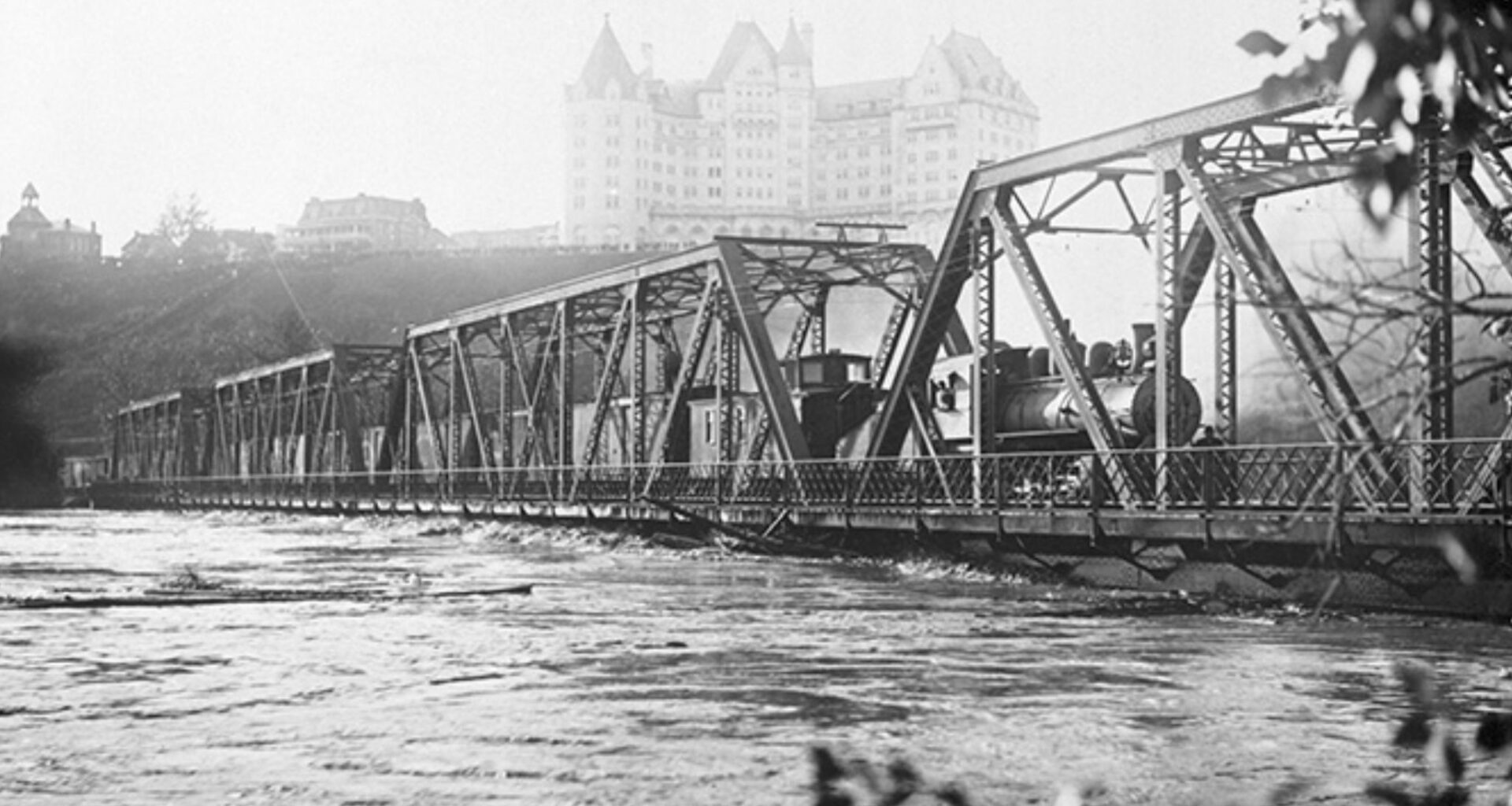
The Low Level Bridge has been a part of Edmonton’s skyline for 126 years, but something very different might be in its place today had it not been for some quick thinking many years ago.
In June 1915, rapid snowmelt in the Rocky Mountains combined with days of heavy rain sent a massive surge of water racing toward Edmonton.
Notable Walterdale resident John Walter got the first warning by phone call at 2 a.m. on June 27.
“My God, Edmonton, look out; the river is up 20 feet and still jumping!” cried the warning from Rocky Mountain House, the first notice that a massive flood was about to hit Edmonton.
Over the next 24 hours, the North Saskatchewan River rose at an alarming pace.
By 3:30 a.m. on June 28, it had already climbed 17 feet and was still rising by about a foot every hour. By 11 a.m., the city was ordering evacuations.
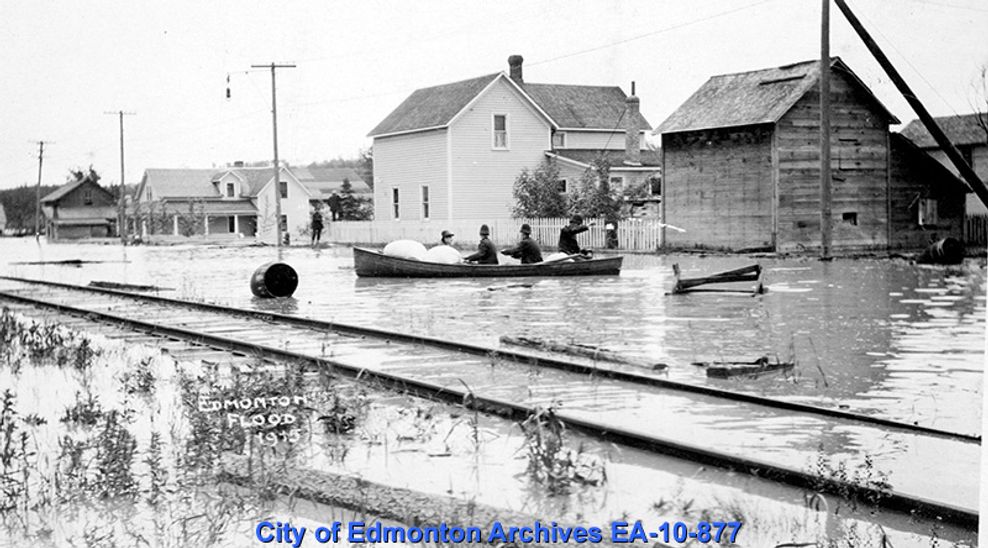
City of Edmonton Archives
By noon, the Low Level Bridge was shut down, and by 10 p.m., the City Power Plant was underwater, cutting off electricity. Just an hour and a half later, the pumping plant was forced to close, leaving residents without drinking water.
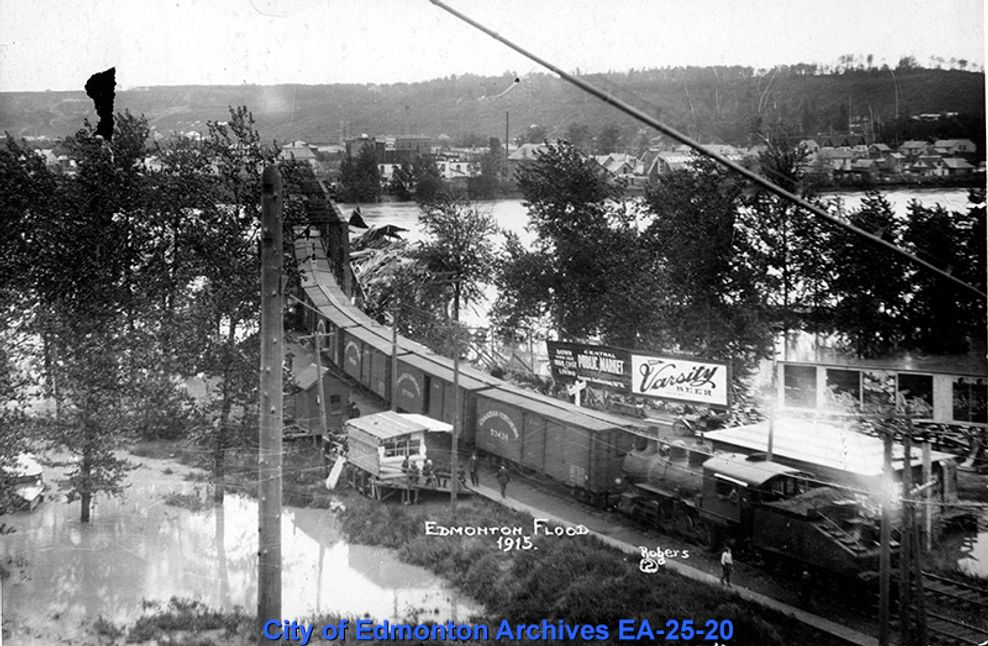
City of Edmonton Archives
By midnight, debris in the river was piled higher than the bridge’s railings.
As homes and wreckage slammed into the structure, the Canadian Northern Railway made a last-ditch call to save it by loading freight cars filled with sand onto the bridge to weigh it down.
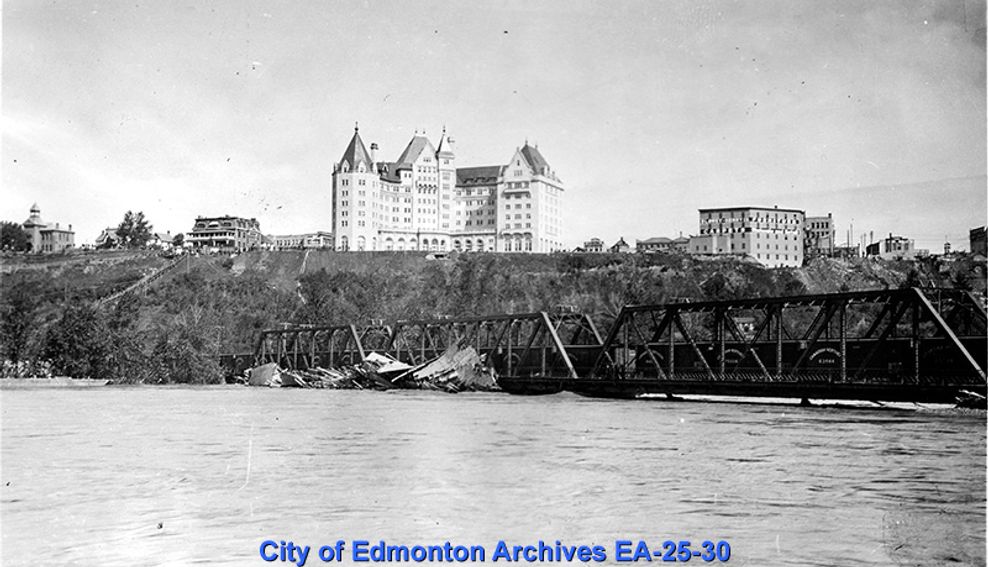
City of Edmonton Archives
It worked.
At 3 a.m. on June 29, the river peaked at more than 45 feet above its normal level, marking the worst flood in Edmonton’s recorded history.
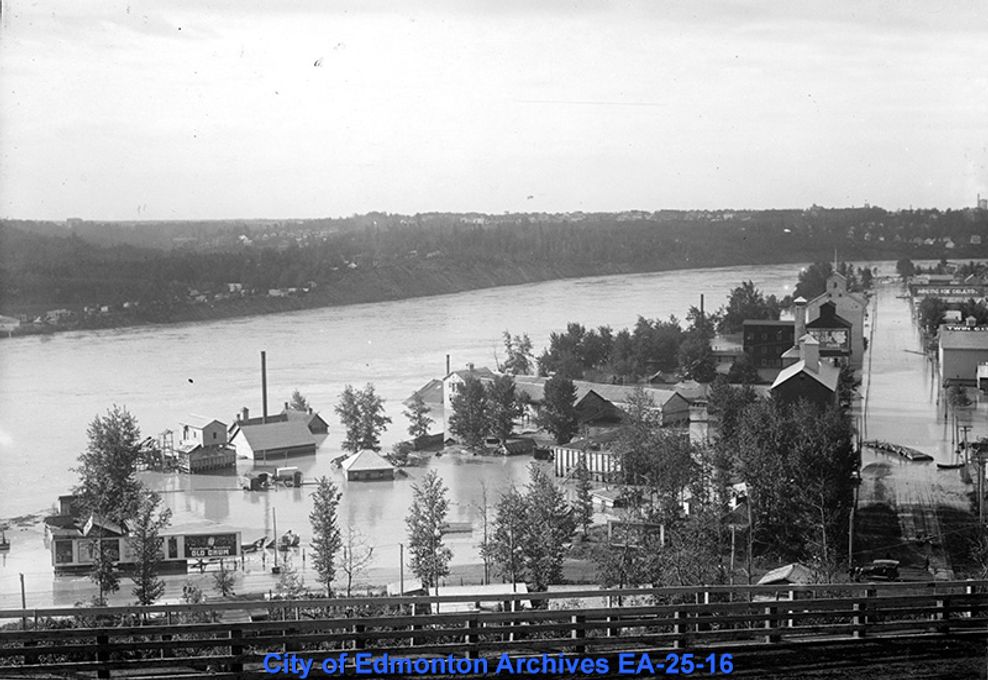
City of Edmonton Archives
From there, the river level slowly began to fall. Parts of the City Power Plant re-fired by mid-morning, and power was fully restored that evening. The following day, the river had dropped by another 20 feet, and water service was restored to residents, though still murky.
Just over a week after the flood, most residents were able to return home.
No lives were lost, but the damage was extensive. Around 2,000 people were displaced, 50 buildings were destroyed, and more than 700 homes were submerged.
If you want a sense of just how high the river reached, there are markers underneath the Walterdale Bridge today that show the height of the 1915 flood.