
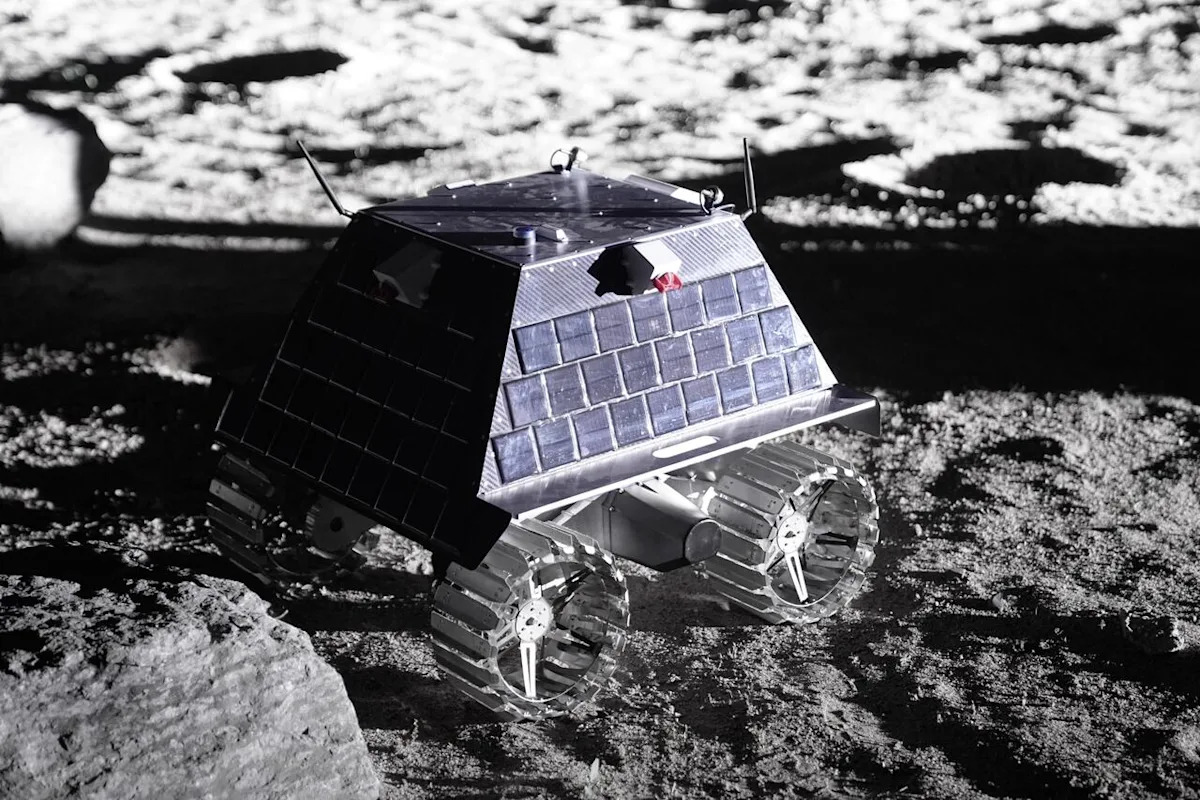
As part of its 2026-2027 departmental plan, the Canadian Space Agency (CSA) has cancelled its ambitious lunar rover mission.
The lunar rover was announced in 2022. It would have been Canada’s first rover, built by Canadensys, and hitching a ride to the moon on a commercial launch vehicle built by a private U.S. company, Firefly Aerospace.
News of the cancellation was first reported by space industry website SpaceQ.
The principal investigator of the mission, Gordon Osinski, a planetary geologist from Western University, said that he found out about a month ago, and that he was “devastated” by the news.
“It was going to be one of the most exciting missions in Canadian space history,” he said. “We were going to send Canada’s first-ever rover mission to the surface of another planetary body, which is something that we’ve been trying to do for decades.”
The rover would have landed in the south polar region of the moon, a region that is of extreme interest and importance to space exploration due to the presence of water. It is also the location of the future Artemis IV mission that is set to return humans to the lunar surface.
Artemis II, a mission in which four astronauts will fly around the moon — including Canadian Space Agency astronaut Jeremy Hansen — is set to launch in early April.
“After our little rover drove off the Firefly Lander, we would be running our own mission, which would [have been] the first time in history,” Osinski said. “Usually it’s the other way around: We’re contributing to a small piece of another mission such as the Mars rovers and things. So yeah, that was going to be very special.”
CSA responds
“The Canadian Space Agency remains committed to deep-space and lunar surface exploration and will ensure that Canada maximizes the value of the investments in the project thus far,” the CSA told CBC News in an email.
The lunar rover was part of the CSA’s Lunar Exploration Accelerator Program (LEAP), which awards businesses with contracts for lunar missions.
“The lunar rover mission led to strong collaborations between academia and industry partners. The science team, composed of 50 scientists from Canada and abroad, will be able to continue their research for the length of their grants, allowing them to gain hands-on experience to help guide science decisions for future missions,” the CSA said in the email.
“The knowledge and capabilities in robotics mobility attained so far could be used on other missions, such as the lunar utility rover, and serve commercialization purposes.”
CBC News reached out to Canadensys, but did not receive a reply by the time of publication.
Osinski said he hopes that the team’s work will live on in some way.
“We really built an entire science team around it. And I’m still very proud of that,” he said. “We’ve accomplished a lot.”