
Everyone, it seems, is split on whether the new Formula 1 era is good or bad.
But after the season’s opening two rounds, there’s one thing that cannot be denied: Ferrari being back at the front of the grid is good.
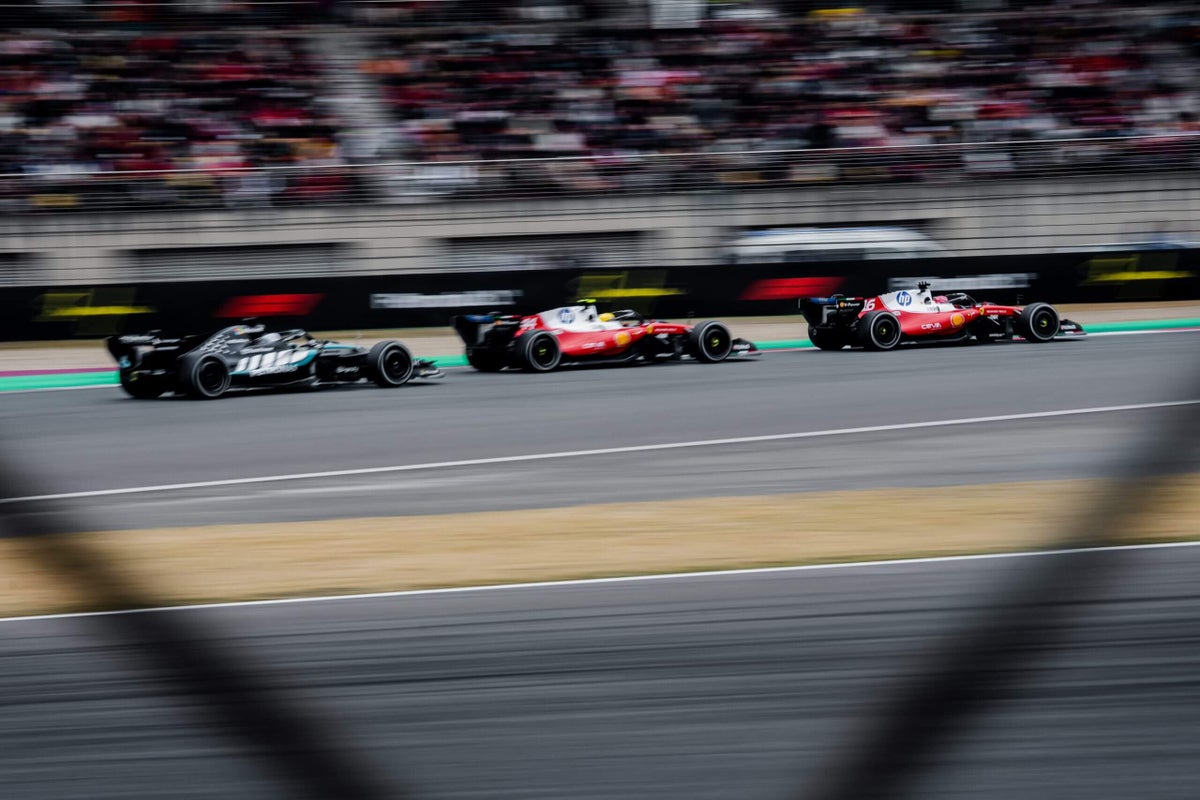
The sight of scarlet cars scrapping for position throughout most of last weekend’s Chinese Grand Prix was the spectacle many will remember most vividly from the contest. That and Kimi Antonelli’s unbridled joy at his first F1 triumph.
Lewis Hamilton and Charles Leclerc put on a show and it was a thrill to see two of the sport’s best wheel-to-wheel racers do exactly that. Though it may have made Ferrari team boss Fred Vasseur nervous, it showed that the Italian team, and Hamilton especially, are back on song with these nimbler new cars.
The Ferrari pair not only showcased their skills in close-quarters racing, but also reinforced how this new generation of cars is more neatly proportioned around the front wings and the overall chassis size. Those reductions aided every wild Leclerc slide in Shanghai and Hamilton’s firm decision-making in defense and attack.
There’s just something about Ferrari being a frontrunner that resonates with fans.
Mercedes, clear at the head of the pack right now, is a mighty automotive brand. That they’re battling with the storied Ferrari makes the battles between the two teams all the more captivating.
Ultimately, it’s the history. The decades of seeing legendary drivers in red triumph or fail; the emotions of a nation intertwined with the fortunes of a team that is Italy’s motorsports soul.
As four-time world champion Sebastian Vettel — also a 14-time race winner with Ferrari — once said: “everybody is a Ferrari fan. Even if they’re not, they are.”
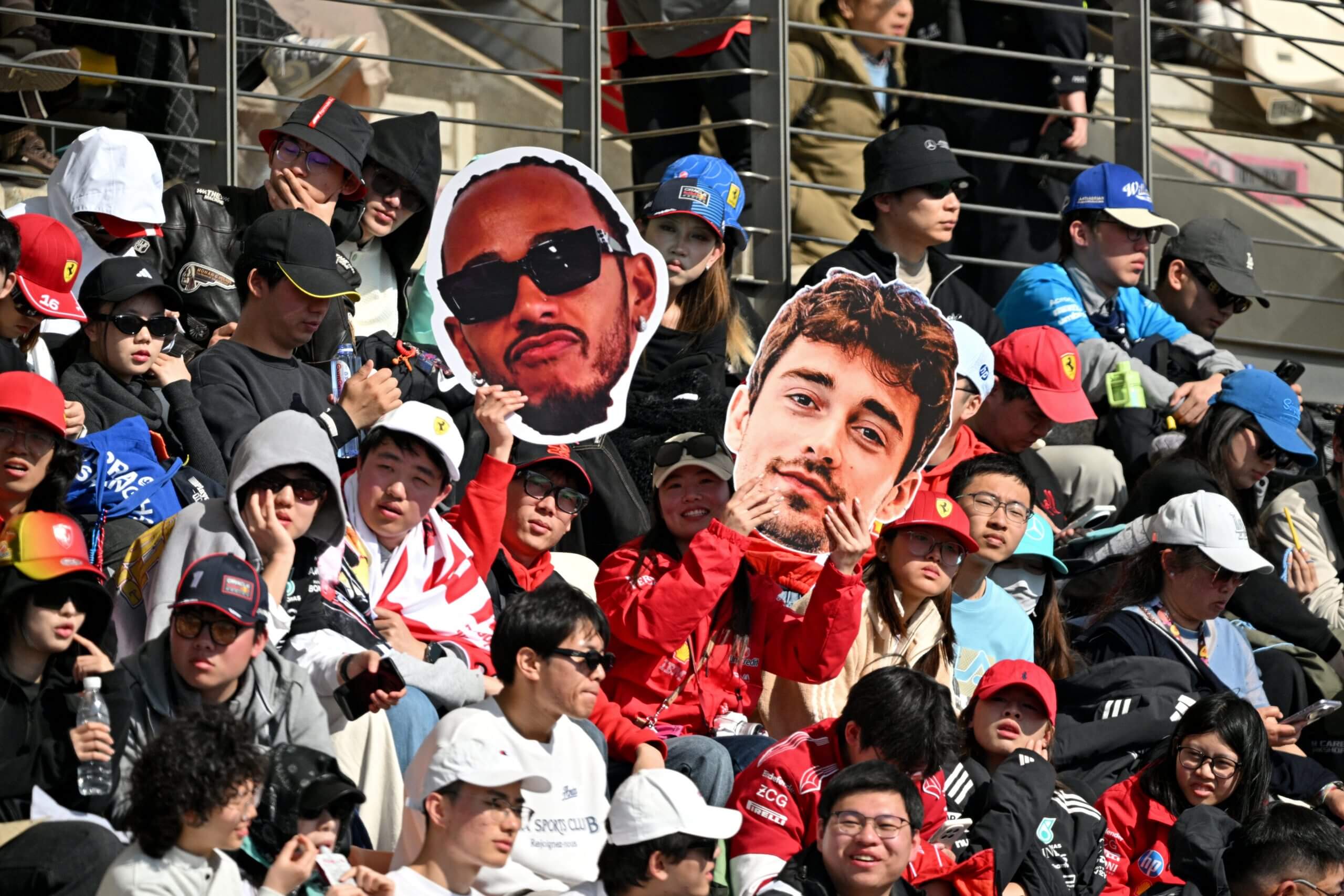
Fans cheer with cut-outs of Lewis Hamilton and Charles Leclerc before the qualifying session for the Chinese Grand Prix. (Hector Retamal / AFP via Getty Images)
In 2025, there was exasperation as Ferrari turned a 2024 car that took five wins and had the makings of a future title challenger into an also-ran. There were no wins for either Leclerc or Hamilton, whose first season with the team turned into a “nightmare.”
But Ferrari has made an excellent start to this season, although the team is still trying to end a victory drought that stretches back to Carlos Sainz’s win in the 2024 Mexico City GP. And, thanks to Ferrari’s start prowess, the opening two races of the new campaign have been enlivened.
Without Leclerc and Hamilton blasting through to lead the opening laps in Australia and China respectively (in the latter, Hamilton also did so briefly in the sprint race), the new-era narrative would have been gloomier.
Mercedes is clearly a step ahead on overall performance, the team’s edge coming from its straight-line speed.
But, unlike in 2022 when Ferrari flattered to deceive at the start of the ground-effect rules era and Leclerc blew a slim title shot, the team looks stronger. As well as its driver line-up strength, its car is being touted as being “quicker in the corners” of the leading cars, according to Mercedes’ George Russell.
Those strong starts are down to Ferrari opting for a smaller engine turbo size to capitalize on how the removal of the Motor Generator Unit-Heat (MGU-H) system from the engines means larger turbos take longer to spool up and deliver power. The MGU-H converted engine heat energy into electrical power, which was used in part to make the start systems simpler.
The Ferraris are also rapid out of slow, tight corners. This can be seen in the telemetry data across the opening two weekends. The Ferrari drivers are also generally faster on the throttle out of corners too, thanks to that cornering strength.
Combining these factors should make Ferrari the favorite to win in Monaco, now round six out of 24 after the Bahrain and Saudi Arabian races were cancelled. Leclerc’s home race is all about getting good exits from tight turns and riding lumps and bumps well.
But there is optimism for the next round in Japan, too.
The Suzuka track matches up well with Shanghai in terms of how the drivers will need to manage engine energy deployment. And the Ferrari drivers were closer to Mercedes on ultimate car pace in China, compared with Australia, where engine energy deployment made a bigger difference.
But the Shanghai circuit was built in 2004 — when F1 was obsessed with designing tracks to promote overtaking. That meant plenty of spots that provided Mercedes the opportunity to pass the Ferrari cars.
Suzuka is old school — narrow and unforgiving. When the Ferrari drivers inevitably blast to the front at the race start, the layout should make it much harder for the Mercedes drivers to recover position.
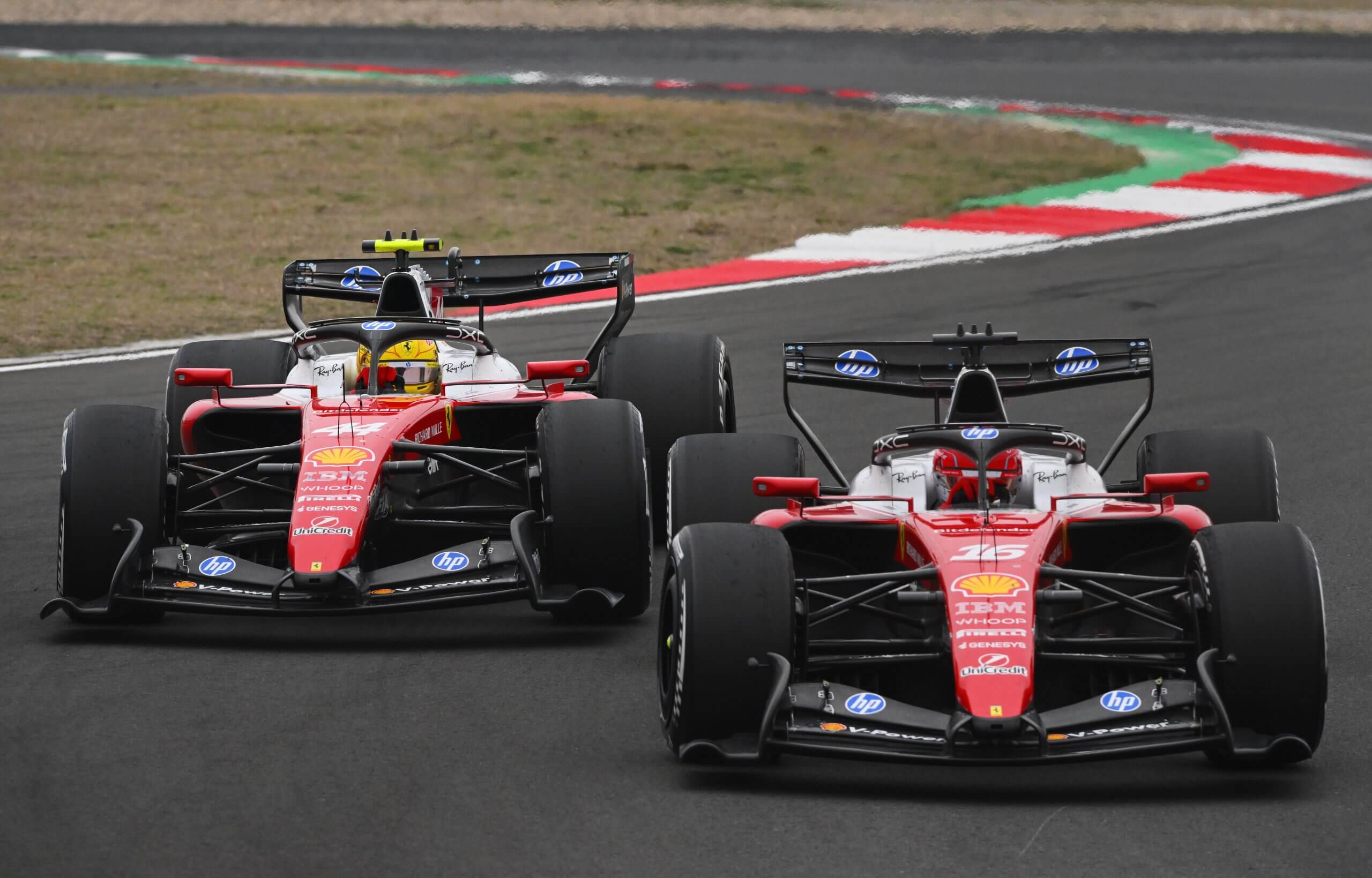
Charles Leclerc leading Lewis Hamilton during the Chinese Grand Prix, although ultimately Hamilton finished ahead of his teammate. (Rudy Carezzevoli / Getty Images)
F1 fans generally dislike one-team domination, so Ferrari beating Mercedes in Japan would do wonders for the argument that the 2026 changes actually have been positive for the sport, as would victory in Monaco.
Sure, it won’t alter dislike around drivers not pushing flat out in qualifying. Also, that Ferrari can only really succeed on certain track types is a continuation of how it operated in the last era — Leclerc was always in the mix in Monaco and the team developed a rear-wing package to be good on tracks with long straights, such as its home race at Monza.
But having this team back at the front, whether it succeeds or fails, just makes the championship more interesting. See how Ferrari’s fumble on the Melbourne virtual safety car pit-stop strategy wrecked the tussle with Russell and gave fans something to dissect afterwards.
Drama follows this team. And in a sport that thrives on narratives, its stories playing out at the front once again is a good thing come what may on the 2026 rules debate.