
Breadcrumb Trail Links
Moncton to MiramichiNew BrunswickThe IssuesEnergy & EnvironmentHealth care
NB Power, provincial government argue ongoing environment assessment will address any legitimate health risks accompanying the facility
Published Mar 19, 2026 • Last updated 1 day ago • 5 minute read
You can save this article by registering for free here. Or sign-in if you have an account.
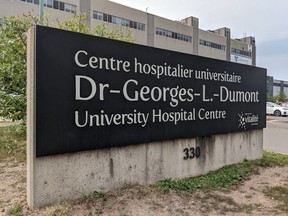 A group of doctors and dentists at the Georges-L.-Dumont University Hospital Centre say they are opposed to the proposed natural gas and diesel fueled power generation plant planned for Centre Village because of health concerns. BRUNSWICK NEWS ARCHIVESArticle content
A group of more than 300 Moncton health professionals say they are against a proposed power plant in Tantramar, citing health concerns related to pollution.
Advertisement 2
This advertisement has not loaded yet, but your article continues below.

THIS CONTENT IS RESERVED FOR SUBSCRIBERS
Subscribe now to read the latest news in your city and across Canada.
Unlimited online access to articles from across Canada with one account.Get exclusive access to the e-Edition, an electronic replica of the print edition that you can share, download and comment on.Enjoy insights and behind-the-scenes analysis from our award-winning journalists.Support local journalism and the next generation of journalists.
SUBSCRIBE TO UNLOCK MORE ARTICLES
Subscribe now to read the latest news in your city and across Canada.
Unlimited online access to articles from across Canada with one account.Get exclusive access to the e-Edition, an electronic replica of the print edition that you can share, download and comment on.Enjoy insights and behind-the-scenes analysis from our award-winning journalists.Support local journalism and the next generation of journalists.
REGISTER / SIGN IN TO UNLOCK MORE ARTICLES
Create an account or sign in to keep reading.
Access articles from across Canada with one account.Enjoy additional articles per month.Get email updates from your favourite journalists.
THIS ARTICLE IS FREE TO READ REGISTER TO UNLOCK.
Create an account or sign in to continue with your reading experience.
Access articles from across Canada with one accountShare your thoughts and join the conversation in the commentsEnjoy additional articles per monthGet email updates from your favourite authors
Article content
Le Conseil des médecins et dentistes (CMD) du CHU Dr-Georges-L.-Dumont – comprised of 331 doctors and dentists – said in an open letter that there are well-documented human health effects of facilities like the 400 megawatt natural gas plant called Renewable Integration and Grid Security (RIGS) being proposed for Centre Village.
Estimated by NB Power executives to cost $1 billion to build, the facility, if approved, would be owned by the private American company ProEnergy, with electricity then sold to NB Power for the provincial grid. NB Power has said in recent hearings before the Energy and Utilities Board the plant is needed to prevent an electricity supply shortfall expected as soon as 2028.
In a statement provided to this newspaper, NB Power spokesperson Elizabeth Fraser emphasized the plant is intended to back-up and stabilize the grid in exceptional circumstances, rather than provide constant baseload power. She also pointed to the stringency of the ongoing Environmental Impact Assessment process to safeguard health concerns.
Advertisement 3
This advertisement has not loaded yet, but your article continues below.
Article content
Dr. Geneviève Côté, a family doctor in the Memramcook area, who serves as spokesperson for the Dumont council of doctors and dentists, told Brunswick News she gave a presentation to the group Tuesday about the gas plant project. The council, which had a quorum of around 225 physicians, voted unanimously to take a stance against the project.
“We have to take a position. We have to be responsible toward our population and our province to say something,” she said. “It’s a project that has an impact on all of New Brunswick.”
Having a combustion turbine plant burning natural gas and diesel could result in health effects, such as cancer, respiratory and cardiovascular issues, and premature deaths, Côté said. People at the most risk would be children, seniors, and people with lung and heart problems, she said, referring to research cited in medical journals like the Lancet and the American Journal of Public Health.

Morning Email Telegraph-Journal
Thanks for signing up!
Article content
Advertisement 4
This advertisement has not loaded yet, but your article continues below.
Article content
Côté said longer-term impacts would be more visits to family doctors and emergency departments, causing additional costs to the health system.
“We know it will cause problems for health and economic problems in our health system that already has difficulty,” she said.
Health Minister John Dornan told media on Wednesday he was not aware of the doctors’ letter.
“It’s not my file,” he said. “I do support our energy minister’s approach to this issue.”
The Holt government has supported the plant proposal on the grounds of cost-efficiency and speed, arguing alternatives would be more expensive and couldn’t be built in time.
“This project was chosen because of its ability to be done quickly,” Premier Susan Holt told reporters at the legislature in December.
Côté worries that human health effects are not being considered in a provincial Environmental Impact Assessment that is currently underway. Final hearings before the Energy and Utilities Board, to review a possible expansion of the project to include dedicated export to Nova Scotia, are scheduled for later this month.
Advertisement 5
This advertisement has not loaded yet, but your article continues below.
Article content
In response to questions about the doctors’ letter, Fraser said on the utility’s behalf that the Environmental Impact Assessment process looks at many factors including potential impacts to health, air quality, and the environment, while also identifying any required mitigation measures before the project can proceed.
“Protecting the health and safety of New Brunswickers has always been a core consideration in all of NB Power’s planning and decision‑making,” she said. “A project will not be given the permit to proceed if concerns cannot be mitigated.”
A spokesperson for the province’s energy ministry echoed NB Power’s assurances on the impact assessment.
In a statement, Vicky Lutes said the EIA for the RIGS project is ongoing and a decision on the plant will not be made until all relevant technical issues are addressed.
Advertisement 6
This advertisement has not loaded yet, but your article continues below.
Article content
She said a “robust framework” guides the review, supported by a technical review committee comprised of subject matter experts and specialists from provincial, federal and local governments, including the provincial Department of Health and Health Canada, whose role is to ensure all potential impacts, including concerns regarding public health, are “thoroughly examined and appropriately addressed.”
“The (committee) has asked the proponent to provide information about the anticipated health impacts on populations close to the project, and the requested information has not yet been submitted,” she said. “The proponent will have to address this issue as part of the EIA review before a decision is made.”
In its response, NB Power further argued that the infrequent intended use of the plant should mitigate any potential health risks. The proposed facility would operate only as a grid‑stabilizing resource, Fraser said, and would run only when needed to support reliability during high demand, extreme weather, or when renewable generation is unavailable, which is about seven per cent of the time.
Advertisement 7
This advertisement has not loaded yet, but your article continues below.
Article content
It is not clear how that seven per cent figure would change if the export expansion proposal also clears EUB approval.
Fraser also pointed out the fuel source for the plant may change over time.
“This facility will use natural gas initially but can transition to cleaner fuels, like hydrogen or biodiesel, when they are available and cost-effective.
“Any conditions resulting from the EIA or regulatory process would be mandatory,” she said.
NB Power executives said during the EUB hearings the RIGS project would help the utility to lower its emissions overall because it would reduce reliance on facilities at Coleson Cove and Belledune, which emit more greenhouse gas.
Côté said she and her colleagues would like to see an alternative to the combustion turbine plant that did not burn natural gas or diesel, such as renewable options.
During the utility board hearings, NB Power panelists acknowledged the costs of battery storage systems were declining but added that it would take 1,000 megawatts of batteries to replace the RIGS facility and would cost about 75 per cent more.
Advertisement 8
This advertisement has not loaded yet, but your article continues below.
Article content
Côté will be making a presentation at an information session hosted by the Action Shediac Committee at the Shediac Multipurpose Centre at 7 p.m. on March 27.
The session will feature several speakers talking about the impact of the Tantramar gas plant, as well as a possible second generating plant in Scoudouc.
Brad Coady, vice-president of business development and strategic partnerships for NB Power, has said previously the utility has land in the Scoudouc Industrial Park, and even though it was passed over as a location for the Centre Village project, the company has not shut the door on a future facility at the former site.
-With files from Andrew Waugh
Article content
Share this article in your social network