

Listen to this article
Estimated 5 minutes
The audio version of this article is generated by AI-based technology. Mispronunciations can occur. We are working with our partners to continually review and improve the results.
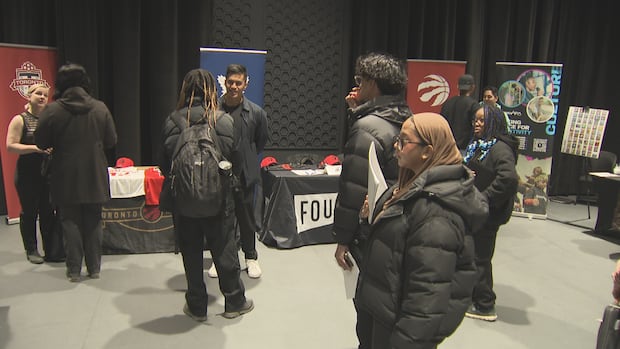
Getting a job is not the same as it used to be, a young job seeker told CBC Toronto at an employment fair in Oakwood Village earlier this week.
“You think, oh, you put your resume out there, you take initiative and make yourself seem like a good candidate, you’ll get hired … In the last couple of years it’s taken a 180,” Micah Goldsilver said.
Statistics Canada reported 84,000 jobs lost across the country in February, one of the worst monthly job losses the agency has reported in years, outside of the COVID-19 pandemic. Youth unemployment ticked over 14 per cent.
Over half of the losses were categorized as youth jobs, pushing unemployment among young people in Ontario to more than two per cent higher than Canada’s.
“You can have experience, you can have the proper qualifications, but now everyone needs experience with qualifications,” Goldsilver said. “There will be 20 other people just like you, lining up to get that same job.”
Alicia Hall is the executive director of the NIA Centre for the Arts, based in Oakwood Village, which hosted the job fair on Tuesday. She hopes the fair will help young people get their foot in the door with employers.
Hall said she hears from young people feeling worried about finding a job at a time of skyrocketing costs of living and growing youth unemployment.
“They’re feeling really insecure,” she said. “Their finances, their financial outlook as well as their outlook about the future. They don’t necessarily feel sure that they’re going to be able to afford … the lifestyle that their parents have been able to afford.”
Going without a permanent job
At the job fair, some attendees spoke about struggling to find a position that wasn’t temporary, while others commuted long distances since they were not able to find a job locally.
If young people don’t get a job early, then it can reduce their overall productivity and how much they earn in future careers, said Rafael Gomez, director of the Centre for Industrial Relations and Human Resources at the University of Toronto, as well as the CIBC chair of youth employment.
He says today’s youth need jobs so they can stimulate economic growth tomorrow.
“They’re going to be the ones that will buy their first home, buy their first car. All of that stimulates other economic activity,” Gomez said.
WATCH | Prime Minister Mark Carney addresses Feb. job losses:
Carney says U.S. trade uncertainty ‘causing big adjustments’ as Canada reports February job losses
At a news conference in Norway on Friday, Prime Minister Mark Carney was asked about Statistics Canada’s most recent report indicating that the economy lost 84,000 jobs in February while the unemployment rate edged up to 6.7 per cent.Slowing economy, COVID-19 response to blame: professor
Gomez said Canada’s slowing economy is causing older labour workers to be laid off from their jobs, meaning those experienced workers are now competing with youth for the same entry-level jobs.
“What happens is entry-level jobs that normally go to youth who don’t have experience — guess what? You hire someone now with experience. Why? Because they’re unemployed too,” Gomez said.
The fact that the pandemic made it nearly impossible for youth to earn jobs for a period of time has also affected their ability to find employment today, he said.
“[Youths] didn’t build up that experience,” Gomez said. “They didn’t build up those social networks that would allow them to now call on them, to create those jobs.”
Youth job prospects also weren’t improved by the government bringing in temporary foreign workers in response to labour shortages following the pandemic, Gomez said.
“Instead of allowing firms to improve the quality of jobs, raise wages and hire youth, we used a stopgap that, really, brought in millions of temporary foreign workers,” he said.
Employment non-profit offers advice for job seekers
There are free services that help young people find jobs and support them through the application process, Timothy Yang, president and CEO of Toronto-based non-profit Youth Employment Services, told CBC Toronto.
Yang said it is important for young people to “separate themselves from the pack” by going into the business and meeting the hiring manager in person.
“Even if they say just submit it online, they might remember you,” Yang said. “We’ve seen lots of examples where they still hire you on the spot.”
One of the most important things to do during a job search is to stay positive even when facing rejection, he said.
“You’ve got to stay positive because when you do get that opportunity to interview, if there’s any sort of negativity, that can come across,” Yang said.