
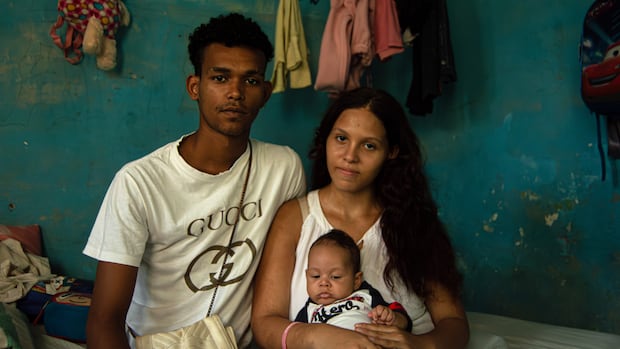
Melanie Chantelle González Barrios, 15, has two young children and says she dreams that some day, when they grow older, they’ll be able to leave Cuba and escape the daily fight for survival her family faces.
González Barrios lives in a one-bedroom home in Havana’s Buena Vista neighbourhood with her 17-year-old husband, a daughter aged one and a half, a six-month-old son and her grandmother.
The family keeps several tubs and jugs always filled with water because they never know when they’ll be hit with a power blackout, which also cuts off the water.
Blackouts have been common for years, but now, since U.S. President Donald Trump imposed an oil blockade on Cuba in hopes of forcing the country’s collapse, the interruptions have become more frequent and longer, sometimes engulfing the whole country.
Officials say the energy blockade is inflicting harm on all parts of Cuban society, and residents — many of whom relied on a tourism industry that has evaporated — struggle to secure basics like food and water.
“I think it’s something that is going to get worse,” said González Barrios. “Sometimes, because of the power, we can’t get water and people go crazy.”
WATCH | Cuba reels under Trump’s oil embargo: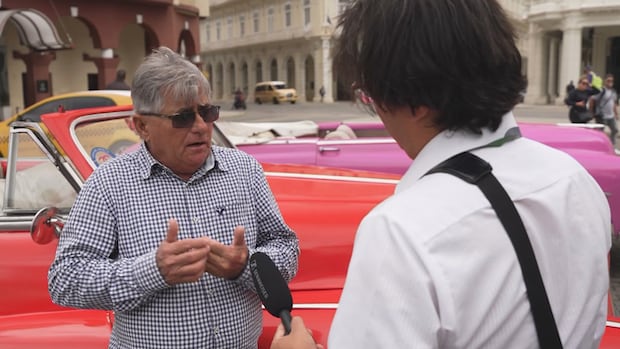
No fuel, no tourists: Cuba reels under Trump’s oil embargo
The crushing U.S. oil embargo on Cuba is making life more desperate on the impoverished island. Gasoline now sells for $10 US per litre on the black market, and a sharp drop in tourism has sapped the economy of what little foreign income it had.
The national grid completely failed this past Monday for nearly 30 hours. In Havana, the capital, power is rationed daily between neighbourhoods.
Cuba — which depends on oil for over 80 per cent of its power generation — has gone three months without receiving any petroleum shipments after Trump strong-armed Mexico and Venezuela to stop sending tankers.
The tourism industry, a major source of revenue, is in shambles after many cruise ships and airlines suspended operations to the country due to the fuel shortage. In Old Havana, many of the palatial hotels sit mostly empty.
Wide-ranging impact of fuel shortage
In the area around Central Park, by the National Capitol, a handful of taxi operators who drive iconic classic cars from the late 1940s and 1950s spend empty afternoons waiting for fares that never show.
Taxi driver Alfredo Hernandez, 75, owns a 1948, red Buick convertible imported by his grandfather. Before the oil blockade, the roughly 400 classic cars in operation could barely keep up with the tourist demand for rides, he said.
“Tourism has now almost totally collapsed,” said Hernandez.
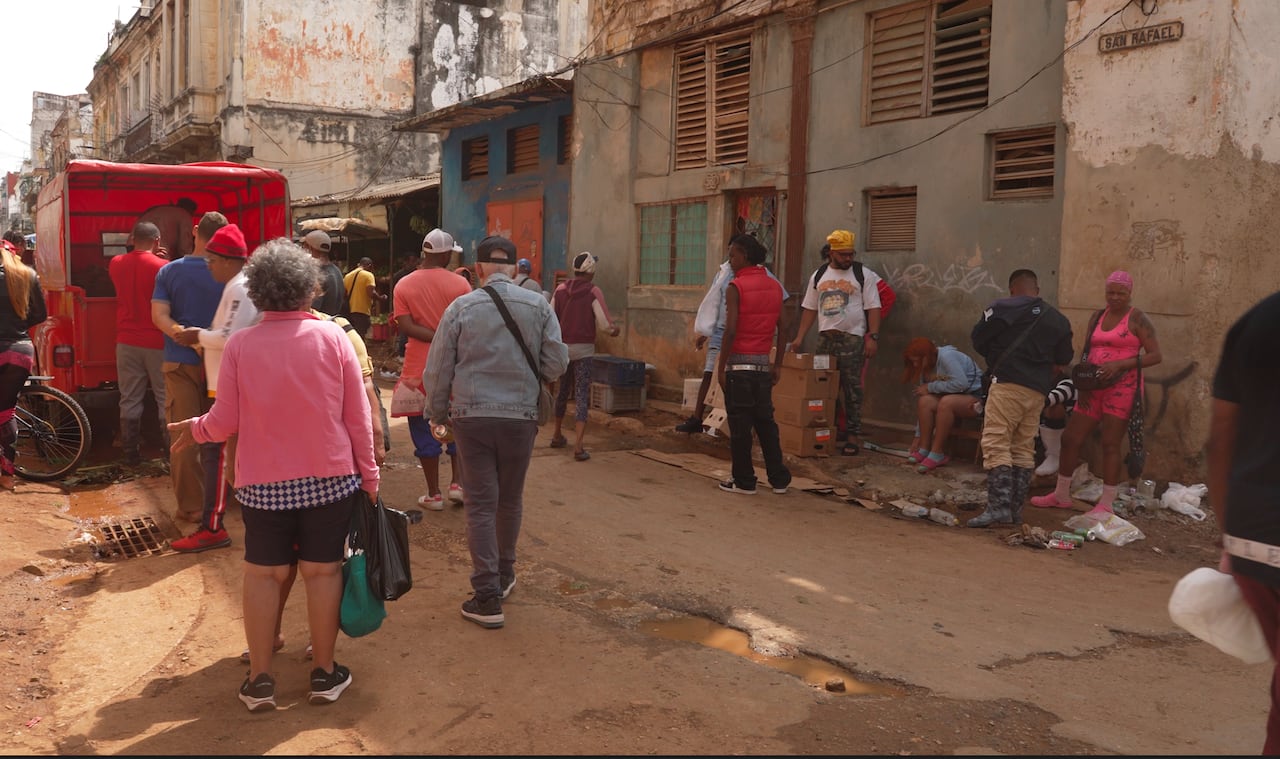 People gather near the entrance to the San Rafael Market in Havana on Friday. (Glen Kugelstadt/CBC)
The taxi drivers used to get an allotment of over 300 litres of fuel a day; now they get 20 litres, said Hernandez.
Fuel is now tightly rationed in Cuba, creating a black market where a litre of gasoline sells for about $10 US. Local traffic now flows at a fraction of its previous level, locals say.
Scooters — many of them electric — and bicycles appear to outnumber cars on the streets of Havana.
This energy crunch has created a level of hardship that the island nation — with a population of about 10 million, who are long used to facing difficult conditions created by the more than six-decade U.S. economic embargo — has never endured before, according to Zunilda Barrios Nuñez, 59, who is the grandmother of González Barrios.
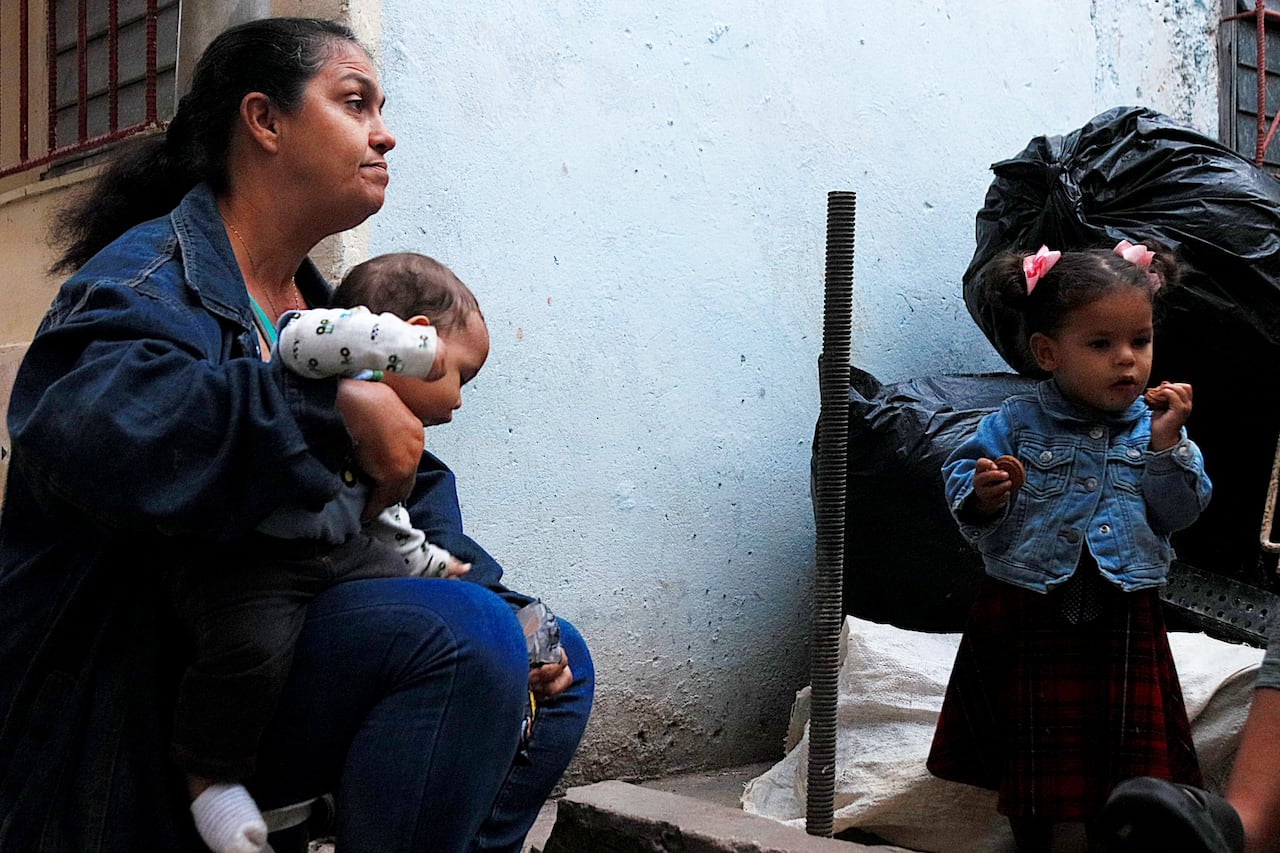 Zunilda Barrios Nuñez, 59, seen with her grandchildren, says the fuel shortage has also caused a sudden spike in the price of food that’s made it almost impossible for many people to afford basic staples. (Frangel de la Torre Nuñez/CBC)
Barrios Nuñez said this moment is tougher than Cuba’s economic crisis of the “Special Period,” following the collapse of the Soviet Union, which saw the nation face food shortages and rationing.
“That was a tough time, but not like today,” she said.
The fuel shortage has also caused a sudden spike in the price of food, which has made it almost impossible for many people to afford basic staples, said Barrios Nuñez .
She said the price of a pound of chicken (less than half a kilogram) went from about $18 Cuban pesos, to about $350 pesos a pound.
An elementary school teacher, Barrios Nuñez said the cost of buying food for the family consumes all her salary.
“You have to invent ways to survive,” she said.
The Canadian dollar was trading at about $338 pesos in Havana this week.
González Barrios doesn’t have a job because she is still finishing school and taking care of the children. Her husband, Leonardo Acosta, works at a street-side vegetable stand in a municipality southeast of Havana. He leaves every morning at 5 a.m. and gets home sometime after 10 p.m., said González Barrios.
On a good day he’ll bring home up to $2,000 pesos, while their daily food costs can hit $3,000 pesos a day, she said.
“One can go without eating, but the children can’t,” said González Barrios.
“You have to move to find even a little bit of meat, you have to do what you can. Children can’t go without food.”
U.S. ‘abusing its power’: deputy minister
Carlos Fernández de Cossío, Cuba’s deputy minister of foreign affairs, said the population of Cuba is a victim of U.S. aggression.
“The United States is acting like a rogue state, abusing its power,” said Fernández de Cossío.
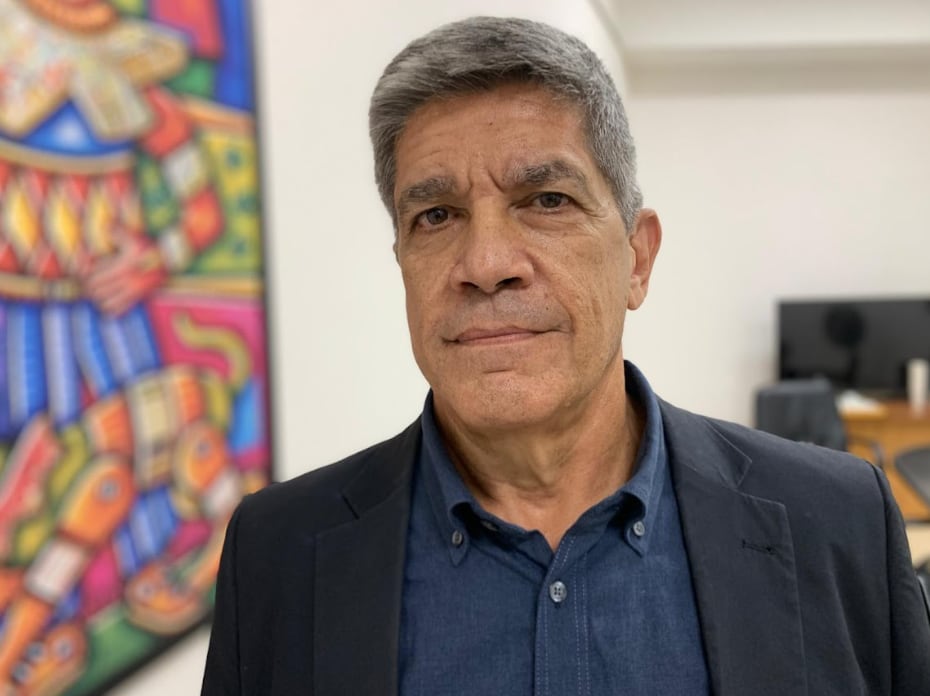 Carlos Fernández de Cossío, Cuba’s deputy minister of foreign affairs, said the population of Cuba is a victim of U.S. aggression. (Sylvia Thomson/CBC)
The U.S. energy blockade is inflicting harm on all parts of Cuban society, including the health care and education systems, its agricultural and industrial sector, its transportation networks, along with the ability of Cuban citizens to have a livelihood, he said.
“This is a criminal activity against the people of Cuba,” said Fernández de Cossío, during a news conference Friday.
He said that Cuba’s system of government was not on the negotiating table in ongoing talks with the U.S.
Alexander Rondón, 49, a soccer coach and a father of three children, aged seven to 18, said people should leave politics to the politicians.
“If things get better, good. If they don’t, we continue the struggle until it does get better,” he said.
Rondón said there are a wide range of views on the streets of Havana, including some who believe that Trump should come and wipe the slate clean in Cuba.
“That’s how they think, you can’t take that from them,” he said. “But no, the problem has to be fixed among us [Cubans].”
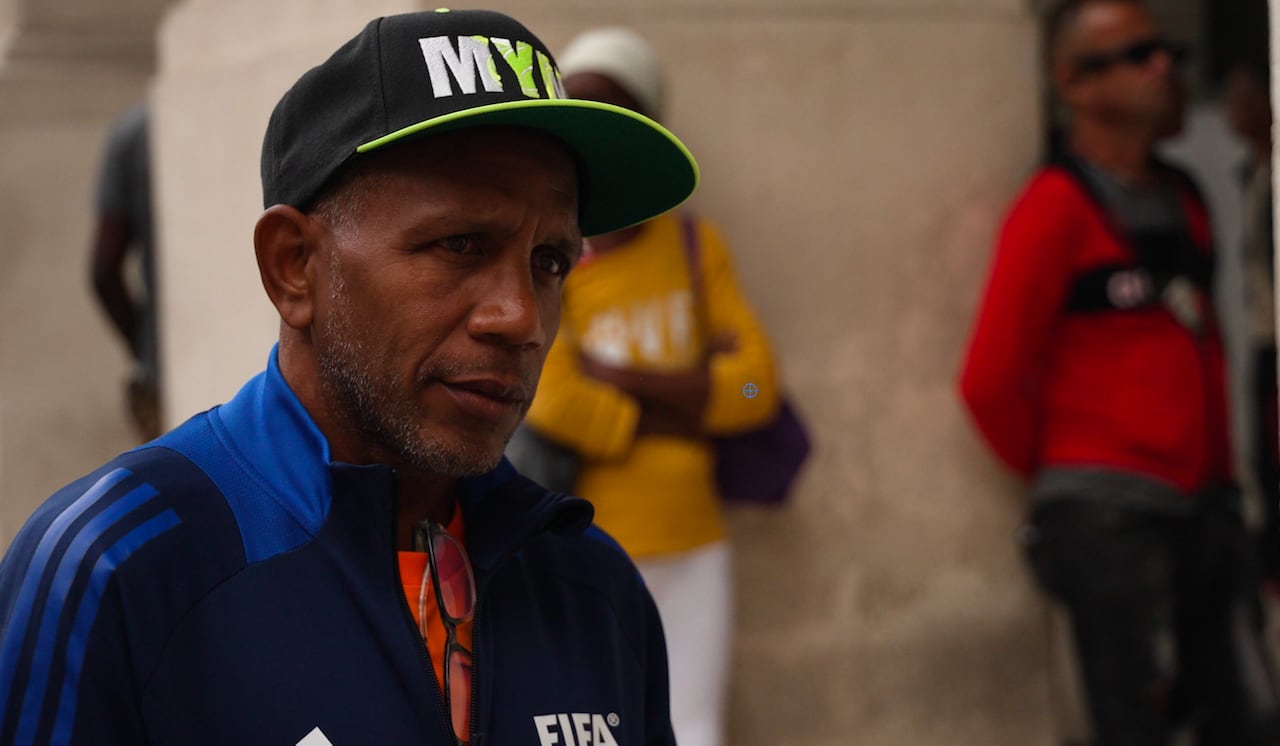 Alexander Rondón, 49, is a soccer coach in Cuba and a father of three children, aged seven to 18. (Glen Kugelstadt/CBC)
There have been violent flare-ups during the blackouts, including in the city of Morón, which sits about 460 kilometres west of Havana, where people earlier this month ransacked a Communist Party office.
People in several neighbourhoods have also protested by banging pots and pans.
Barrios Nuñez said she doubts there will ever be widespread unrest.
“I see that as really far from reality,” she said.
People spend all their energy on surviving day-to-day, said Barrios Nuñez .
“Things won’t get better,” she said.
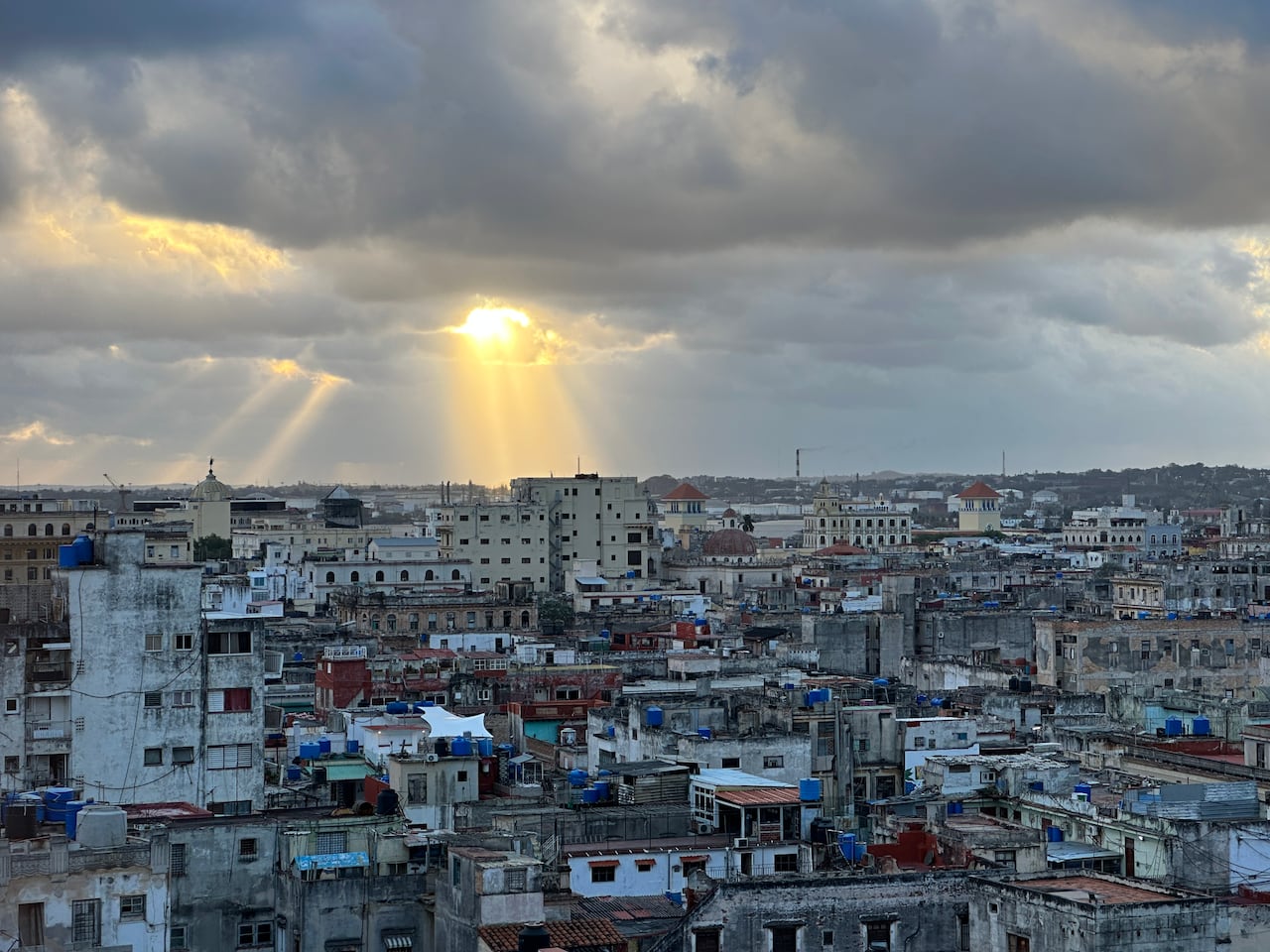 The sun breaks through clouds over Havana on Saturday. (Jorge Barrera/CBC)