
What to know
Dozens of activists and organizations are raising concerns that the city’s redesign of Barbara Hall Park could diminish the significance of the longstanding Toronto AIDS Memorial.
The “Echoes” proposal calls for restoring and expanding the memorial while adding new elements that reflect both the ongoing HIV/AIDS crisis and decades of activism.
Supporters argue the current city plans feel disconnected from community input and fail to meaningfully honour those lost or those still living with HIV.
The City of Toronto says it is considering feedback and exploring ways to integrate elements of Echoes, while maintaining its focus on accessibility, safety, and park improvements.
For people frequenting and living in Toronto’s Church and Wellesley Village, the redesign of the neighbourhood’s Barbara Hall Park has been a long time coming. But many members of the community have a concern: the future of Toronto’s longstanding AIDS memorial.
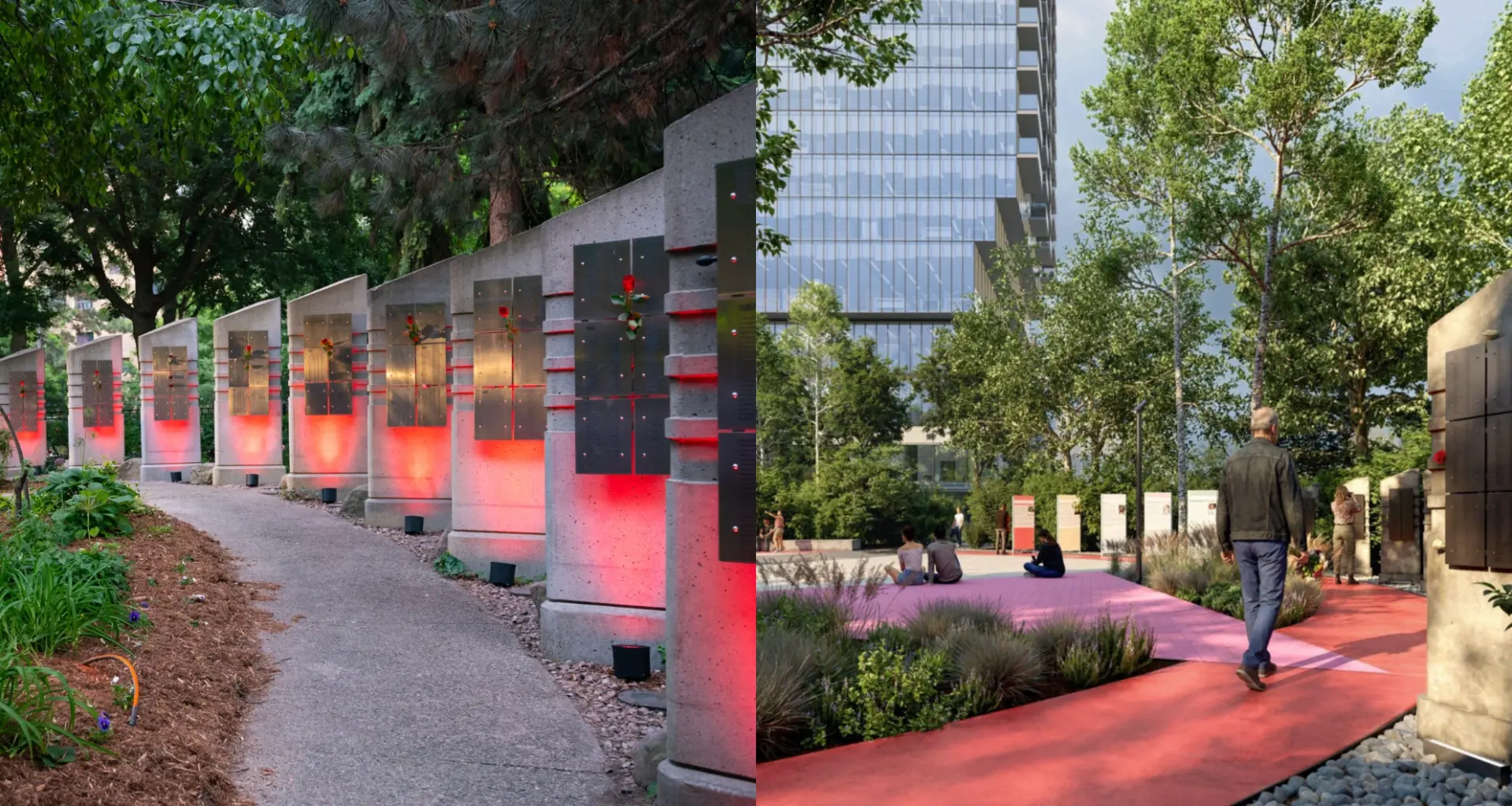
The Toronto AIDS Memorial had several temporary iterations in the late 1980s and early 90s. First erected in the downtown park in 1993, the current permanent memorial features cement pillars in a crescent shape towards the back of the park, each bearing plaques with the names of those who lost their lives to HIV/AIDS. However, the first pillar bears a plaque with poems “Cry” by Michael Lynch and “Circle of Stones” by Shoshanna J. Addley. These engravings honour those who died of HIV/AIDS but remain unnamed.
Read More
Drug use by patrons, a lack of upkeep, and various encampments in the park have drawn the ire of many residents and regulars in the predominantly 2SLGBTQ+ neighbourhood for years. As such, it’s now the subject of an ongoing redesign, but not everyone is in favour of the city’s new plans, which include changes to the existing memorial.
The Echoes proposal
David is the Toronto-based activist spearheading the Echoes proposal, a reimagining of the AIDS Memorial that honours those who lost their lives to HIV, while also recognizing the historic and ongoing advocacy for awareness surrounding the disease.
A member of the HIV-positive community, he says that while the current memorial was powerful in the 1990s, it now fails to recognize the ongoing epidemic.
“At the time, for a lot of people, this was the first time they saw their friend’s name, mourned together, or even learned someone had passed. It was a living document of the crisis,” David told Queer & Now.
“Now, for most folks under the age of 45, they don’t know any names up there,” he continued. “So it’s really shifted into feeling like it’s a memorial to something that’s over, even though we’re still in the midst of this epidemic – it’s just changed.”
This is especially relevant in Canada. Despite global HIV numbers trending downwards, recent reports show that Canadian HIV numbers are on the rise.
Read More
The proposal features elements including a restoration of the existing pillars, and an expansion for more names to be added. It also includes new pillars, and a pink, triangular stage as a symbol of queer strength and liberation. The project proposal explains that this honours the gay and bi men that make up over 70 per cent of AIDS deaths in Canada.
Various seating is featured in the design, as well as artistic elements like the Poz Art Screen, a continuous steel artwork honouring HIV-positive creators, a red pathway called the “Circle of Care” and two light-based installations. The Echoes proposal also features greenery, including a five-metre-deep garden serving as a buffer, providing both enclosure and acoustic protection, and leaves the existing neighbouring Trans Memorial in place, with a shared bench linking the two sites in solidarity.
David explained that since the city started the redevelopment of the park in 2023, people in Toronto living with HIV have been raising concerns about a lack of adequate engagement with the HIV-positive community. David shared that when consultations did take place, the feedback gathered about the memorial was not meaningfully incorporated into the redesign.
“The City has effectively destroyed the memorial through neglect, tearing out the rose bushes and leaving the plaques to be covered with graffiti and scratches. Now the City’s proposed design continues to reduce focus on the people we’ve lost,” the activist shared.
“Echoes is about preserving the reverberations of the lives taken by the AIDS epidemic, finding new ways to amplify their memories, and echoing them outwards and into the future,” he continued, calling his redesign proposal a restorative framework to enhance the park while illuminating the experiences of all people living with HIV today, while affording dignity to those who were denied it in their final moments.
He explained that the process of developing and producing plans for the Echoes proposal involved months of historical research, conversations with long-term survivors, and consultations with neighbourhood stakeholders.
Read More
The major goal of the proposal is to combat apathy and ignorance about HIV and AIDS by creating a humanizing landmark that acknowledges the ongoing HIV/AIDS crisis, historical and ongoing activism.
David shared that Echoes is already endorsed and supported by more than a dozen organizations servicing people with HIV/AIDS, including the Canadian AIDS Society and Pozitive Pathways Community Services. It has also garnered support from various activists in the city, including Tim McCaskell.
Toronto AIDS Memorial: Community voices
Active in Toronto’s Queer community for more than 50 years, McCaskell was diagnosed HIV positive in the 1980s and has since worked as an advocate for those living with the condition.
A co-founder of AIDS ACTION NOW!, a now defunct organization that first came to life in 1988, McCaskell worked alongside other Toronto activists like Michael Lynch to also establish Toronto’s first AIDS Memorial.
“For me, the memorial is a living site. It records the names of many of my friends and colleagues,” McCaskell said in a statement. “As well as being the venue for the annual AIDS vigil, one only has to visit the memorial and see the flowers and mementos that are regularly left on the pillars to understand the importance of this site to those of my generation.”
He explained that he is among those who are concerned by what he calls a slow deterioration of the site in recent years. Explaining that he has studied the city’s plans for revitalizing the park, calling them both half-hearted and disconnected from the community.
“They do not live up to the memorial’s potential to honour those who died, or to transmit the lessons of that historical experience to future generations,” he explained.
McCaskell is, however, in support of the Echoes proposal.
Read More
“It reimagines the memorial in a way that would both make it relevant to future generations, and preserve the community’s memory of what my generation endured and our resilience in the face of a terrible moment in history.”
Like David, McCaskell is calling on Toronto to create an AIDS memorial that “lives up to its potential.”
“It is time to listen to community voices and make this site something meaningful that we can all be proud of,” McCaskell continued.
Fellow longtime activist Anthony Mohamed adds that the current memorial holds a special place in the hearts of thousands of residents who have lost someone due to complications related to HIV/AIDS.
A fellow member of AIDS Action Now! And coming out in 1993, at the height of the AIDS Pandemic, Mohamed was an advocate for sexual orientation to be added as a protected ground to the Student Rights & Responsibilities Handbook in Toronto.
“At the time, everyone who was doing 2SLGBTIQ+ rights work, immediately started supporting and demanding care for our friends and lovers who were literally dying,” he explained.
He is also in favour of the Echoes proposal, sharing that it creates space to remember those who have died, while simultaneously recognizing decades of activism.
“This re-design proposal creates a community space that honours those we have lost, the decades of community activism that led to the current successes in prevention, support and treatment options and goes beyond AIDS to others we have lost within the 2SLGBTIQ+ communities,” Mohamed shared.
“Specifically, people who are Trans who disproportionately continue to face misunderstanding, discrimination and violence.”
City of Toronto responds
The city currently has a handful of park redesign options, including one that features a pathway in the shape of a red HIV/AIDS awareness ribbon, another enhances the existing memorial with a triangular plaza with space for reflection or programming, while the third includes a red ribbon pathway from the northern edge of The 519, through the AIDS Memorial toward Cawthra Square. All three designs include keeping the existing triangular stage and pillars.
In a statement to Queer & Now, city spokesperson Jas Baweja explained that the city has received the Echoes proposal and is in ongoing communication with the group, and continues to look at how the plan that’s already in development could integrate elements of Echoes.
Baweja says the current plan focuses on park improvements that address accessibility, maintenance and safety requirements. She also shared that staff continue to service the memorial long-term, cleaning litter and vandalism, and planting bulbs nearby, though plants are often destroyed by pedestrians.
Saying that officials look forward to collaboration in the third phase of the engagement process, Baweja shared that the city recognizes the importance of the memorial. She explained that city staff engaged with members of the HIV/AIDS communities over three years ago through workshops, meetings, and invitations to the community advisory committee on the project.
“The next iteration of the design process will address the outstanding feedback including specifics to the AIDS Memorial,” she shared. “It’s a top priority for us to ensure the AIDS Memorial remains legible and recognizable, and both the Memorial and the voices of all those who have participated in the process are respected.”
But David says the outcomes of previous community consultations felt reductive.
“If you’re going to do three years of consultation, you need to actually listen to it.”