
Summary
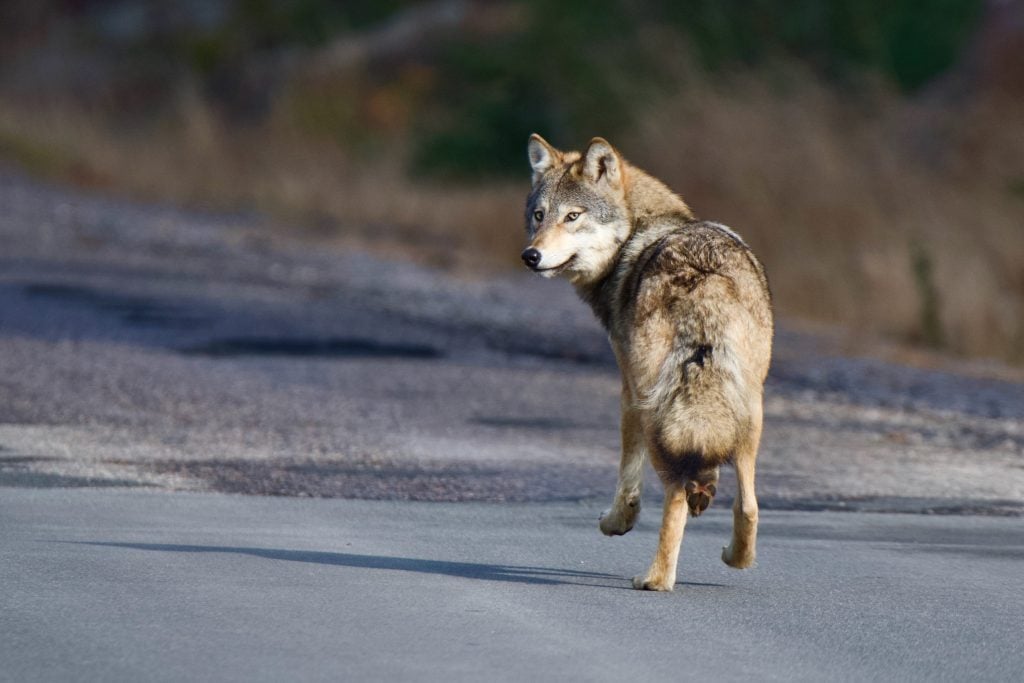
Internal documents reveal the Ontario government does not intend to publicly release recovery plans for several endangered species, including the eastern wolf.
Conservation scientists say species recovery plans are important tools that guide their work and inform decision-making around where to invest resources.
Recent legislative changes under Bill 5 have removed the requirement for Ontario to prepare recovery plans for endangered species, but the plans in question were already under development when those changes came into effect.
We’re trying out staff-written summaries. Did you find this useful? YesNo
Ontario’s plans to recover struggling wolf, butterfly and bat populations will not be released to the public, The Narwhal has learned.
Last April, the Doug Ford government announced it planned to amend and then ultimately replace the Endangered Species Act, slashing the requirement to develop recovery strategies that set out the steps to bring endangered species back from the brink.
Now, a set of internal emails released through freedom of information legislation show the province intends to continue with a few strategies that were underway when Bill 5 passed — and also intends not to share them with the public.
Since 2007, the province has been required to not only publish recovery strategies but to put them into action, under the Endangered Species Act. That ended in June, with the passage of Bill 5, the Protect Ontario by Unleashing our Economy Act.
The emails show a handful of recovery plans were in the works when the Protect Ontario act became law, and confusion inside the Ministry of Environment, Conservation and Parks about what to do next.
The draft plans represent years of work researching the habitat and current state of the eastern wolf, a butterfly called the northern oak hairstreak and three migratory bat species.
The strategy for the eastern wolf, for example, has been nearly a decade in the making, with a draft put out for public consultation in 2018 and revised in 2025. The 2018 draft to protect the animal — which has a unique genetic ancestry not found anywhere else in the world — was once available on the Environmental Registry of Ontario, but is not there any longer.
In the fall, The Narwhal asked the Ministry of Environment, Conservation and Parks, which is responsible for producing recovery plans, whether the strategy for the eastern wolf would be made public. The ministry did not respond to The Narwhal’s questions in the fall, nor to repeated requests for comment on this story made between Jan. 28 and March 5.
But the emails released through freedom of information legislation chronicle staff in the at-risk species branch of the Ministry of Environment attempting to confirm up the chain the next steps for drafted recovery plans before and after Bill 5 passed. One email thread is in response to a question from a private contractor hired to write one of the strategies, asking how to move forward.
Dive deeper on this topic
The week after the bill was proposed, on April 17, internal government emails note “the plan is to proceed with the recovery strategy agreements that are underway” up to the stage where drafts are usually posted publicly, but “We are not likely to proceed with the public posting at this time (given changes underway).”
Laura Bowman, an environmental lawyer, told The Narwhal keeping the recovery strategies private tramples the right of public groups, including First Nations, researchers and conservationists, to know how Ontario is managing endangered species.
It also limits anyone seeking permits and approvals for work that affects endangered species.
“One would think they would want to be making reference to the recovery strategy and what mitigation measures might be appropriate,” she said. “So to keep that internal and not post it seems like a very strange move, even just from that perspective.”
The recovery plans that were in the works when Bill 5 passed were, according to the email, still being circulated for review by other provincial ministries and federal agencies, such as the Canadian Wildlife Service and Parks Canada.
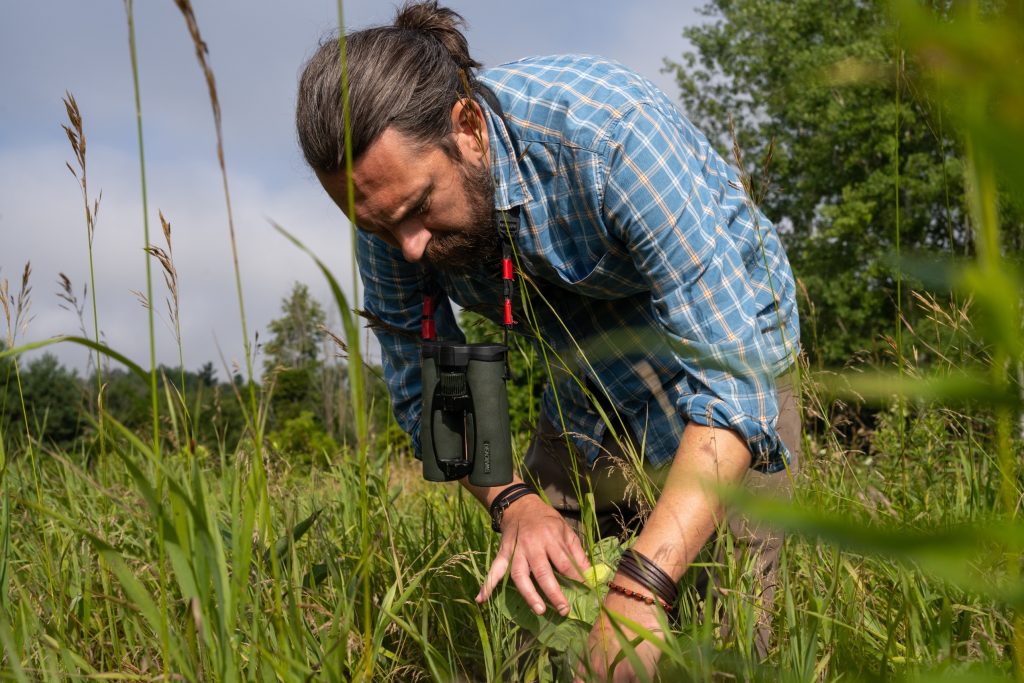 Ryan Norris has worked to stabilize populations of the mottled duskywing, an endangered butterfly, in southern Ontario. He says the province’s recovery plan for the species has guided his team’s efforts. Photo: Katherine Cheng / The Narwhal
Emails from the at-risk species branch to those departments, seeking feedback on the eastern wolf recovery plan, said the province is still “committed to providing information and guidance on the conservation of species in Ontario” even though recovery plans are no longer legislatively required.
“Under the amended [Endangered Species Act], the ministry has the flexibility to focus the development of conservation guidance when and where it is needed and makes sense to do so,” the email said.
The Endangered Species Act is being replaced by the Species Conservation Act. Ten months after Bill 5 passed, regulations for that have not yet been announced.
Recovery strategies no longer required in Ontario following passage of Bill 5
The mottled duskywing, a medium-sized brown-speckled butterfly, has a strong preference for a prairie shrub called New Jersey tea. It’s hard to come by in southern Ontario.
As a result, the butterfly that depends on it was listed as endangered across Canada in 2012 and in Ontario in 2014. Under the Endangered Species Act, a recovery plan for the mottled duskywing was published in 2015.
Ryan Norris, a professor of wildlife biology at the University of Guelph, has been working with a team trying to stabilize duskywing populations in Ontario. In 2020, the team of researchers received federal funding to re-introduce the species to two locations in Ontario.
“In putting that grant proposal together, we used the recovery strategy as a guiding document for what needed to be done,” Norris said. The strategy provided crucial information about existing populations and the butterfly’s habitat — including tallgrass savannas where fire is needed for plants including New Jersey tea to regenerate.
The team’s efforts paid off at Pinery Provincial Park near London, Ont., where controlled burns have restored the oak savanna, letting New Jersey Tea thrive. In 2022, a mottled duskywing was spotted at the park for the first time in 30 years.
Dive deeper on this topic
The foremost expert on mottled duskywing — in fact, the scientist who wrote the recovery strategy for the province — led Norris’s team. So they, specifically, could have pulled off their win without the recovery strategy to guide them. But a loss of thoroughly researched public plans limits who can be involved in bringing species back, he said.
“Imagining somebody else being interested in it, mottled duskywing, and wanting to recover it but not having any background. That would be extremely hard,” Norris said.
It’s an example of the value of recovery strategies, which are themselves seemingly going extinct.
The strategies also guide government experts as they offer feedback to teams like his or approve funding for species recovery.
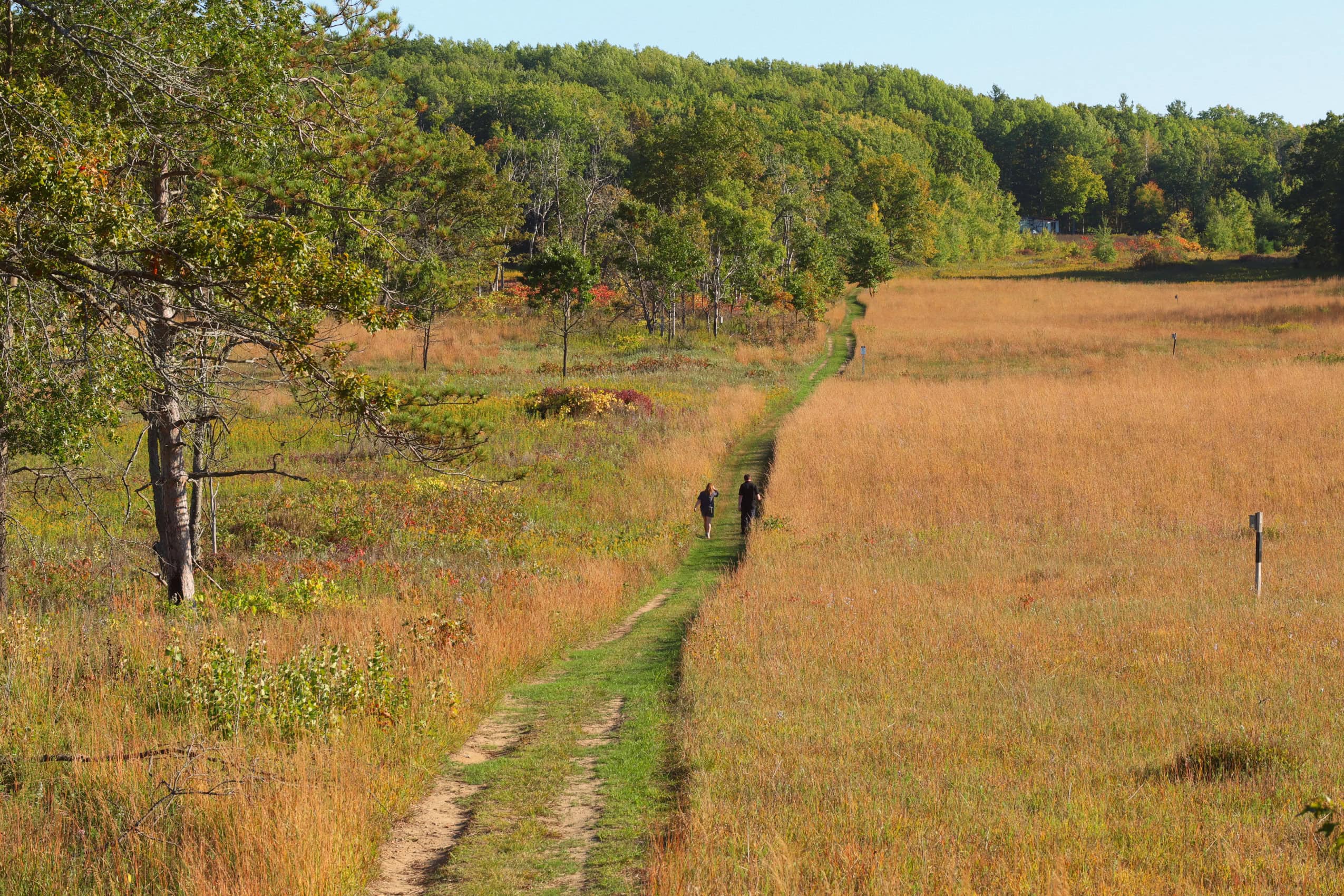 Mottled duskywing and frosted elfin are at-risk butterfly species that thrive in savanna habitats, which have become increasingly rare in Ontario. In some places, like Alderville First Nation, here, controlled burns are bringing them back. Photo: Gabrielle McMann / The Narwhal
Now, Norris is part of a group working to reintroduce another savanna-loving butterfly, frosted elfin, which is extirpated, or locally extinct, in Ontario. The group has applied for funding under the provincial Species Conservation Fund, but had yet to hear back as of early March.
“The recovery strategies acted as a guidepost for them to assess the applications,” he said, as researchers often highlight specific points in the recovery plan and explain how their proposal could address them.
“So, it’s important for the government. It’s important for the practitioners, the researchers and so forth,” Norris said. “I don’t know why you would get rid of it.”
Eastern wolves and other species with private plans for recovery
On June 9, four days after Bill 5 passed, a coordinator in the at-risk species branch emailed the branch director at the Ministry of Environment, seeking approval to move ahead with provincial and federal agency reviews of the draft recovery strategy for the eastern wolf. After that, the strategy author would consider any comments for another revision. The email notes the same was being done with the recovery strategies for the northern oak hairstreak and migratory bats.
The email continues, including bolded text, that, “The proposed approach for those strategies is to complete Stage 2, but to withhold any public posting on the Environmental Registry of Ontario until further direction is given … .”
The coordinator’s email said this approach would leave the ministry with a near-final recovery strategy for the species, “which can be used (if needed) as the basis for some new conservation guidance for the species down the road, once the ministry has selected its new streamlined approach to issuing conservation guidance ….”
About a week later, on June 17, that approval came.
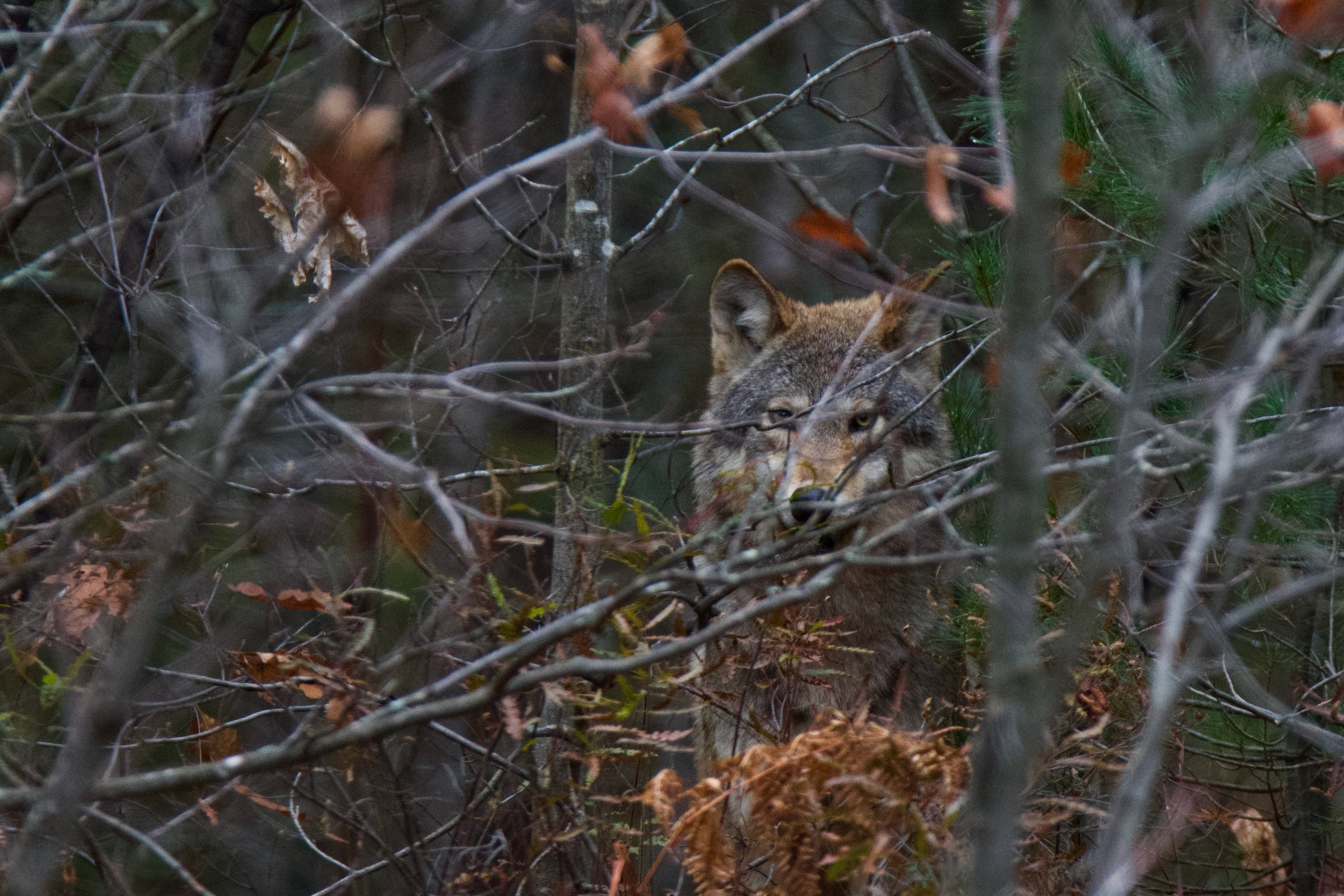 There are between 350 and 1,000 eastern wolves left in Ontario, according to a provincial estimate, with most living in and around Algonquin Park, where they are protected from hunting. An early draft of the eastern wolf’s recovery plan recommended creating a larger protection zone for the species. Photo: Paul Gains
Linda Rutledge is an adjunct professor in forestry and conservation at both University of British Columbia and Trent University. She has contributed to reports on endangered species and written on how Bill 5 could impact the eastern wolf’s recovery. She said there needs to be transparency around the province’s decision not to publish the remaining recovery strategies, in part because recovery plans are an important educational tool.
“Without it being publicly available, it makes it feel like the government is really limiting the public knowledge base,” she said, adding that there are more stakeholders than just the public and those working to conserve eastern wolves. “I would think that there would be a lot of industry who would want to know what their impact is going to be on this iconic species.”
Rutledge said an enormous amount of work goes into developing these plans to set a clear path forward. For the eastern wolf, Rutledge said, that path was clearly laid out in the 2018 draft that is no longer public: create a recovery zone.
Dive deeper on this topic
Right now, the wolves are protected from hunting and trapping only within and immediately around a few provincial parks, including Algonquin, Killarney, Kawartha Highlands and Queen Elizabeth II Wildlands. A recovery zone would provide safe corridors for the wolves to move between them.
“You can’t have a patchwork of protection for a wide-ranging animal like a wolf,” Rutledge said. “They don’t pay attention to park borders or things like that.” When wolves leave those boundaries, they’re at risk of hunting and trapping, as well as roads.
“So this one single thing the government could do, that is very straightforward, is expand the harvest ban to that recovery zone,” Rutledge said. While some hunter and trapper organizations are resistant, she said there’s a lot of shared interest across the province in seeing the eastern wolf population thrive.
“I think, in the middle, most people really want the same thing, and this is the protection of natural heritage and the ability to appreciate wildlife and the outdoors,” she said.
The idea of cutting red tape, Rutledge said, isn’t a bad thing; she’s experienced bureaucratic barriers in her own work. And she appreciates the concerns around threats to Canada’s economy as a result of U.S. tariffs. But, she said, the lack of clarity and transparency on the decisions being made creates concern.
She hopes the province is working with the federal government to put protections in place for endangered species, including the eastern wolf, even if they aren’t planning to inform the public about them.
“I’m hopeful that the next time Prime Minister Carney and Premier Ford are sharing a drink by the fire at his Muskoka cottage,” she said, “that they hear these wolves howling in the background, and know their move to recognize that the economy isn’t the only thing that’s worthy of their attention and cooperation.”