
The city of Surrey, which is known for a high crime rate and is said to be the epicentre of Canada’s extortion crisis, has seen a steady decline in shootings linked to extortion, as authorities continue to use deterrents such as deportation.
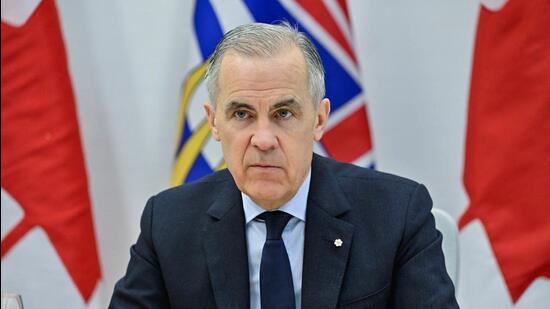
 Canada’s Prime Minister Mark Carney. (REUTERS)
In a video update, Norm Lipinski, chief constable of the Surrey Police Service or SPS, said that so far in March, there have been “zero” incidents of shootings linked to extortions, compared to one in February and 10 in January. However, four extortion cases were still reported this month.
Police have also undertaken community outreach including meetings with international students at local colleges and universities, according to the outlet Vancouver Sun.
It cited a local committee member as saying he had heard that recruiters offered international students CA$ 10,000 to participate in the criminal activity.
“Tuition is a lot more expensive than what they thought, it’s harder to get a job and that weight is bearing down on you, and then someone says, ‘If you just go commit this harmless crime, then you’re not going to get caught, and we’re going to pay you.’ You’re willing to take that risk,” Malik was quoted as saying. Others, he said, came to Canada for criminal purposes or were forced do so if their families were intimidated back in Punjab.
However, Shinder Purewal, professor of political science at the Kwantlen Polytechnic University, felt that deportation as a deterrent should come after those arrested served their full sentences. “Once people are charged, they should be punished and then publicly deported. That will be bigger deterrent,” he told the Hindustan Times.
He added while the Bishnoi gang is often blamed for the extortion cases, it is just one among approximately 70 large gangs from Punjab that have chapters in Canada.
Local mediaperson Maninder Singh Gill said, “It is true that international students have been exploited as foot soldiers by criminal gangs, but it is hard to draw any generalization.
Gill, who is the managing director of Radio India, added, “Temporary foreign workers have also been found involved in criminal networks.”
The extortion crisis became evident over the last two years, impacting the Lower Mainland area of British Columbia where Surrey is located as well as the Greater Toronto Area and the cities of Calgary and Edmonton in the province of Alberta.
Last week, the Canadian Border Services Agency said in August 2025, it “began formally monitoring immigration enforcement cases potentially linked to extortion” in the Pacific and Prairie Regions, expanding this work to the Greater Toronto Area in November 2025. These cases come to CBSA’s attention through many sources, including collaboration with extortion task forces, tips from partner agencies and the public, and its own investigative work.
In that context, it said, as of March 12, 2026, it had opened 372 immigration investigations, 70 removal orders were issued for various inadmissibility grounds, and 35 removals were enforced.