
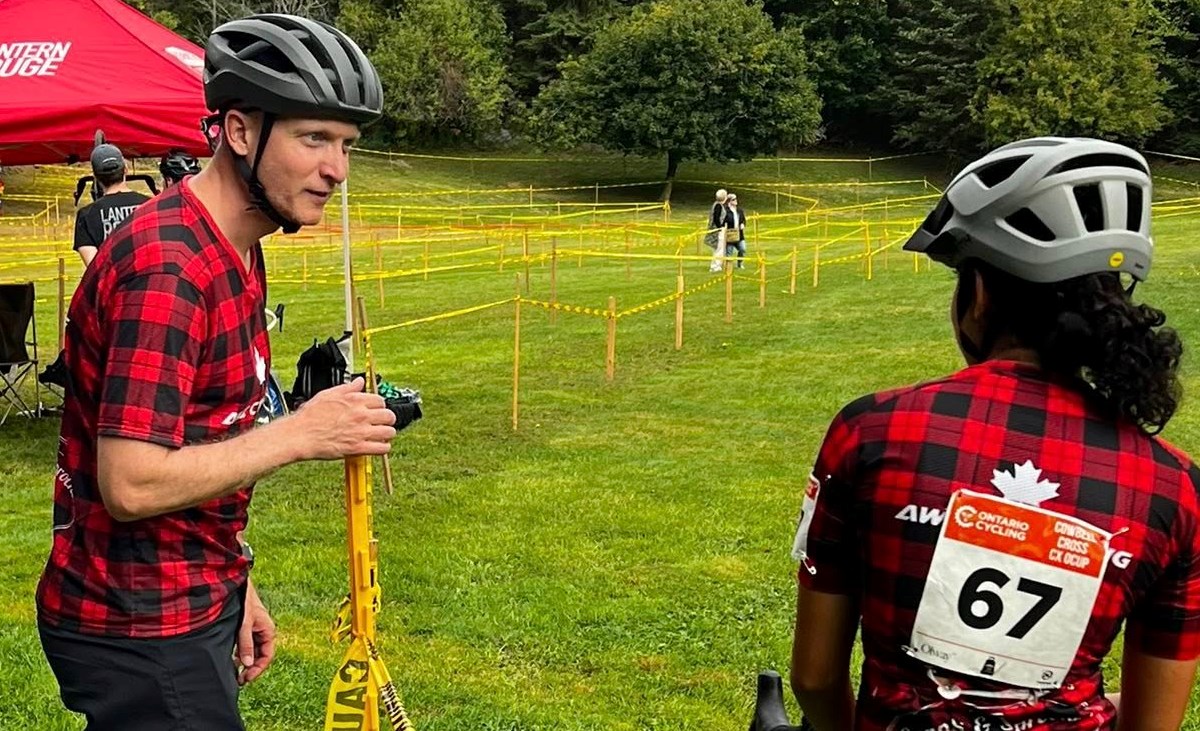
Mountain bike coach Andrew Watson says it’s ‘very rewarding to see athletes progress through the sport’ and encourages people to give the sport a try
Oro-Medonte’s Andrew Watson was recently named coach of the year by Cycling Canada.
“It’s nice. It was a bit of a surprise,” he says about the national recognition.
Watson, passionate about mountain biking since he was a kid, started competitive racing at 13.
He then developed a career as a professional athlete and raced internationally on Canada’s team. He has won four Canada Cup championships, and multiple provincial championships in mountain biking, road racing and cyclocross.
About a decade ago, Watson transitioned to a coaching career, training athletes who had similar ambitions. He has run programs for various ages, including learn-to-ride which is geared toward children.
Partnered with Hardwood Ski and Bike, he now runs a youth development program for teens interested in competitive cycling.
The world of coaching differs from being an athlete with racing goals. Watson compares being a coach to a Jack-of-all-trades.
“We have to be knowledgeable in physiology, but we’re not a physiologist. We have to be knowledgeable in nutrition, but we’re not a nutritionist. We have to be knowledgeable about how to fix a bike, but we’re not necessarily bike mechanics,” he says.
Although he still participates in races himself, as a coach Watson is aligned with the goals of his athletes. This is true whether it’s the groups at Hardwood Ski and Bike or the one-on-one training he does through his business, AWI Coaching.
“As an athlete, you have to almost be a little bit selfish,” he says of the personal sacrifices made in order to excel at a professional level.
Life events might be missed by athletes who spend a lot of time travelling, he explained.
As a coach, the opposite is true. The role flips to one of selflessness.
“It’s not my training ride, it’s the athlete’s. So sometimes that means going harder than I want to go, or faster, and sometimes that means I’m going a lot slower than I would normally go on my own,” he says.
A piece of advice he has for his athletes is to put the work in.
“There’s no shortcuts,” he says.
He does his best to meet each athlete where they are, he explains, and strives to ensure his athletes are on track to reach their goals. He blends their feedback with the type of training they’re doing, making adjustments to intensity and focus area.
“It can be a lonely sport … It serves a person who is very intrinsically motivated,” he says.
Despite the team environment, cyclists typically race individually. He helps them balance this dichotomy.
One challenge, Watson says, is the misconception that mountain-biking is an extreme sport. He compares it to skiing or snowboarding. Instructors teach their students how to prevent falls, thus eliminating the dangers. But the fear of harm or injury is what makes some people not allow their kids to mountain bike, he explains.
Due to the technicality of the sport, Watson also says there is a need for more coaches.
Often, students who age out of the development program will return as coaches. The ratio, at most, is five students per coach. Currently, there are more kids wanting to learn than there are coaches who can teach.
In general, cyclists face other challenges, he explained.
“Cycling in Canada isn’t accepted from a societal level,” Watson says.
He explains that once training professionally, athletes aren’t on bike paths in parks but on roadways.
“It can be a hostile environment if you’re not in a very bike-friendly place,” he says.
In his experience, “99 per cent of motorists are awesome,” and pass with ample space. Others are either nervous and don’t know what to do, or they are angry.
Defined as a vehicle in Ontario’s Highway Traffic Act, cyclists must obey the same rules as motorists. They also deserve the same rights.
“That’s a big hurdle for cyclists, I’d say, and even for our programs when athletes get to the age where they almost need to start riding on the road to get the volume in. Parents and families are very hesitant about it, and I don’t blame them. I am too,” he says.
At the same time, Watson counts himself and his athletes lucky. Oro-Medonte has 300 kilometres of single track mountain bike trails, he says. Along with places like Hardwood Ski and Bike, Horseshoe Valley, and the Copeland Forest, there are plenty of safe options for people interested in the sport.
“One way I’d love to see the sport grow and help where we can is to have more programs like ours in different areas of the province. It’s a tremendous amount of work to get off the ground and keep running smoothly but very rewarding to see athletes progress through the sport,” he says.
Learn more about Cycling Canada’s annual award here.